Canada Macro Daily(Beta Mode)
BoC Signals More Hikes as Inflation Fight Persists
Market Snapshot
| Asset | Level | Change |
|---|---|---|
| S&P/TSX | 36,170.50 | -0.76% |
| USD/CAD | 1.42 | +0.76% |
| EUR/CAD | 1.58 | -0.06% |
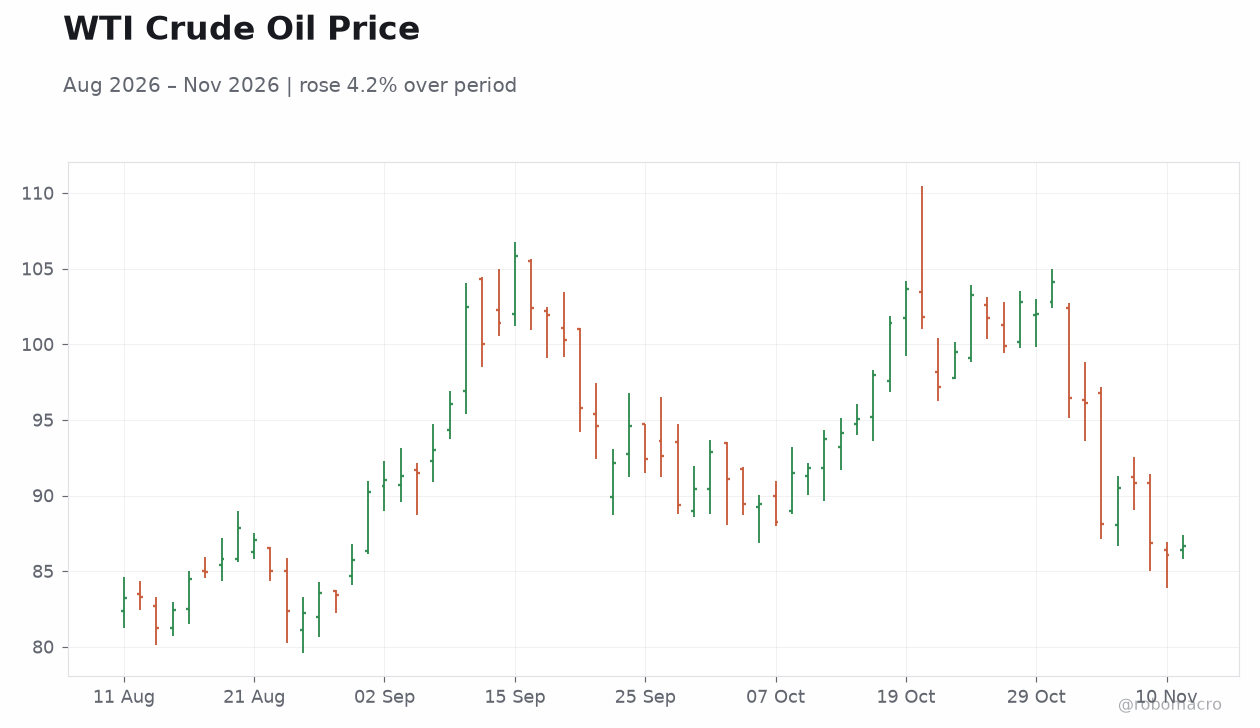
| WTI Crude | 86.69 | +0.76% |
| Natural Gas | 3.31 | +0.42% |
| Gold | 4,062.60 | +0.80% |
| Brent Crude | 92.83 | +1.46% |
| Bitcoin | 73,973.15 | +0.34% |
| Canada 2Y Govt Yield | 3.13% | +1 bp |
| Canada 10Y Govt Yield | 3.63% | -2 bp |
Prior Economic Events
| Data | Prior | Cons | Actual |
|---|---|---|---|
| No events available | |||
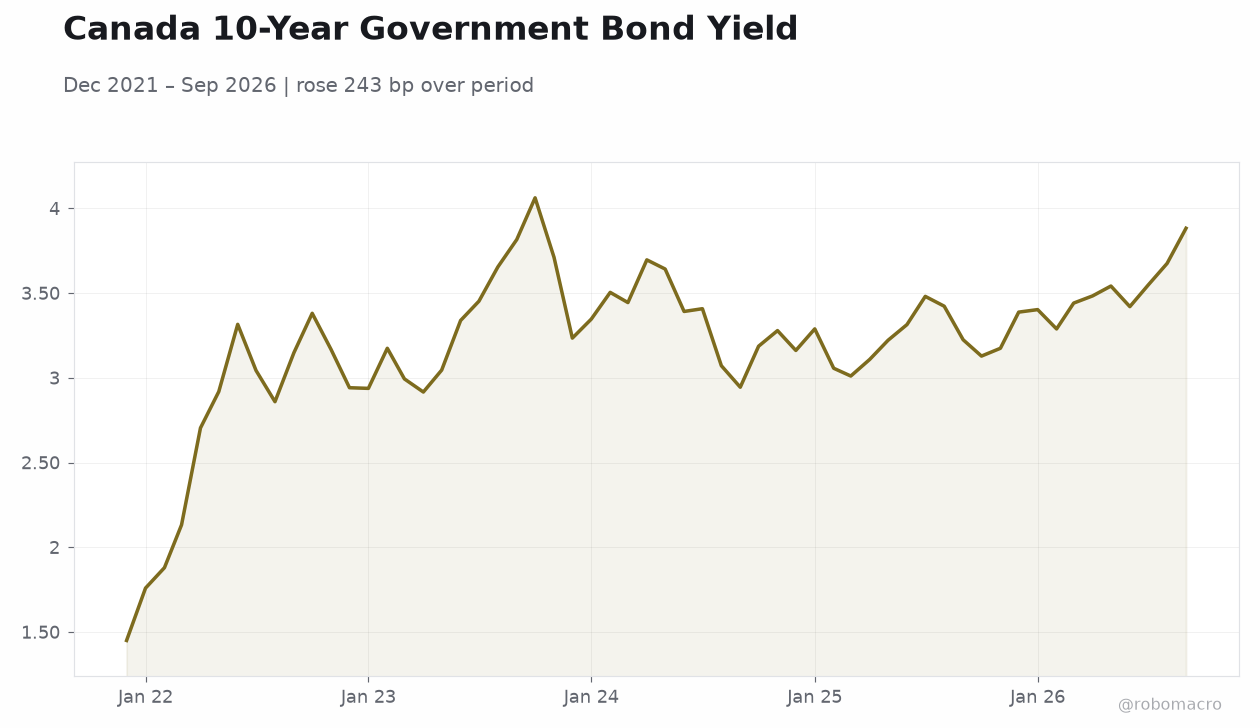
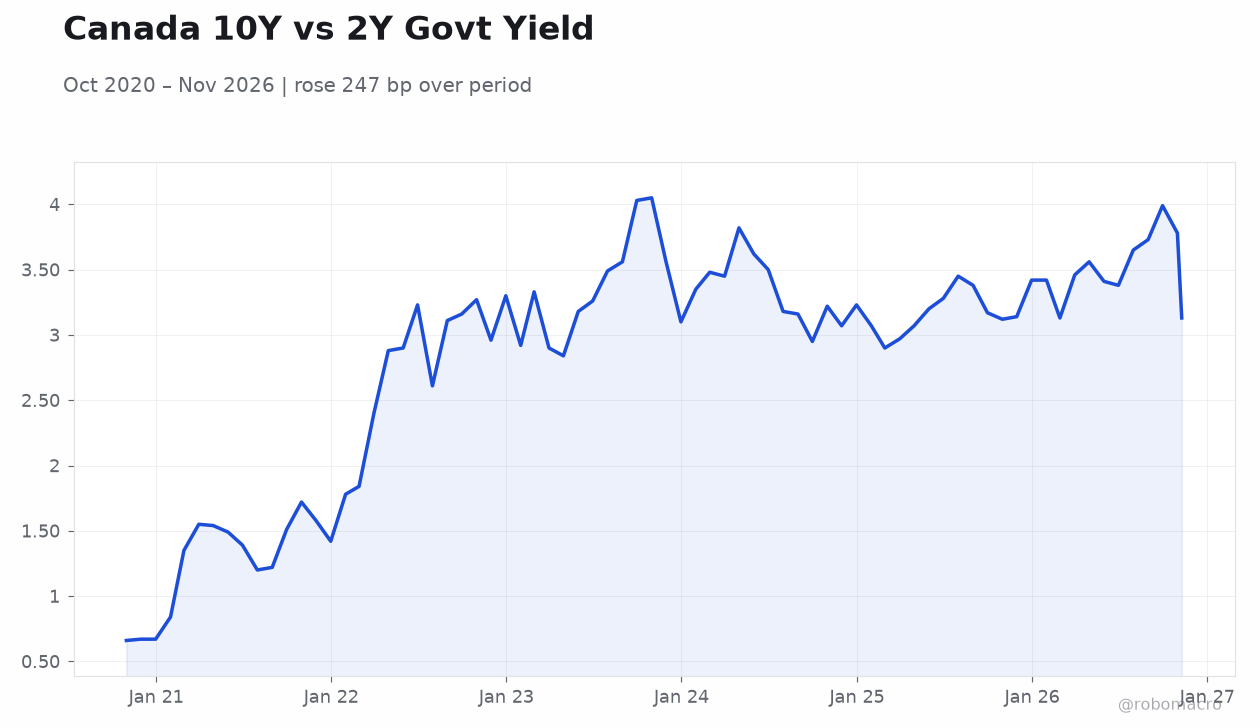 Canada 10Y vs 2Y Govt Yield | Type: macro_line | 10Y Yield %: 3.63 (2026-11-09) | Range: 1.42–4.05 | Trend(5pt): 1.58,3.33,3.62,3.38,3.63 | 2Y Yield %: 3.13 (2026-11-09) | Range: 0.5–5.19 | Trend(6pt): 0.53,4.52,4.8,3.76,4.46,4.56
Today's Economic Events
| Data | Prior | Cons | Time |
|---|---|---|---|
| No events available | |||
- BoC deliberations show cautious but open path to further hikes; Macklem pledges to "proceed carefully" on additional increases
- TSX slips 0.76% to 36,170.50 as CAD weakens to 1.42 on softer oil and US CPI jitters
- Curve steepens modestly: 2Y +1 bp to 3.13%, 10Y -2 bp to 3.63% as markets weigh energy-driven inflation risks
Yesterday's Recap
Canadian markets delivered a mixed session on November 10, with the S&P/TSX shedding 0.76% to close at 36,170.50 as energy and rate-sensitive sectors weighed on the index. The loonie weakened, with USD/CAD climbing 0.76% to 1.42, pressured by positioning ahead of the US CPI release. Government of Canada yields moved in opposite directions: the 2-year yield edged up 1 bp to 3.13% while the 10-year eased 2 bp to 3.63%, a modest steepening that reflects near-term policy risk against a softer long-end growth outlook.
WTI crude rose 0.76% to $86.69 and Brent gained 1.46% to $92.83, though both remain well off recent highs as geopolitical risk premia compress. Gold advanced 0.80% to $4,062.60, underscoring persistent demand for inflation hedges. No major Canadian data releases were scheduled, leaving markets to trade on BoC communications and cross-border rate dynamics.
The Day Ahead
The Canadian calendar is light on November 11, with no tier-one domestic releases scheduled, so attention shifts squarely to US CPI and its spillovers into CAD and GoC yields. Traders will watch the US inflation print closely given its implications for Fed policy and the US-Canada rate differential, which has been a dominant driver of USD/CAD. Any upside surprise in US prices could extend the loonie's slide toward 1.43, while a soft print would offer relief to the CAD and front-end yields.
Domestically, market participants will continue to parse the BoC's meeting summary and Macklem's remarks for clues on the December 9 decision. With the policy rate at 2.50% following the October 28 hike, the bar for another move remains data-dependent, and energy-driven inflation risks are the key variable to monitor.
Other Economic Notes
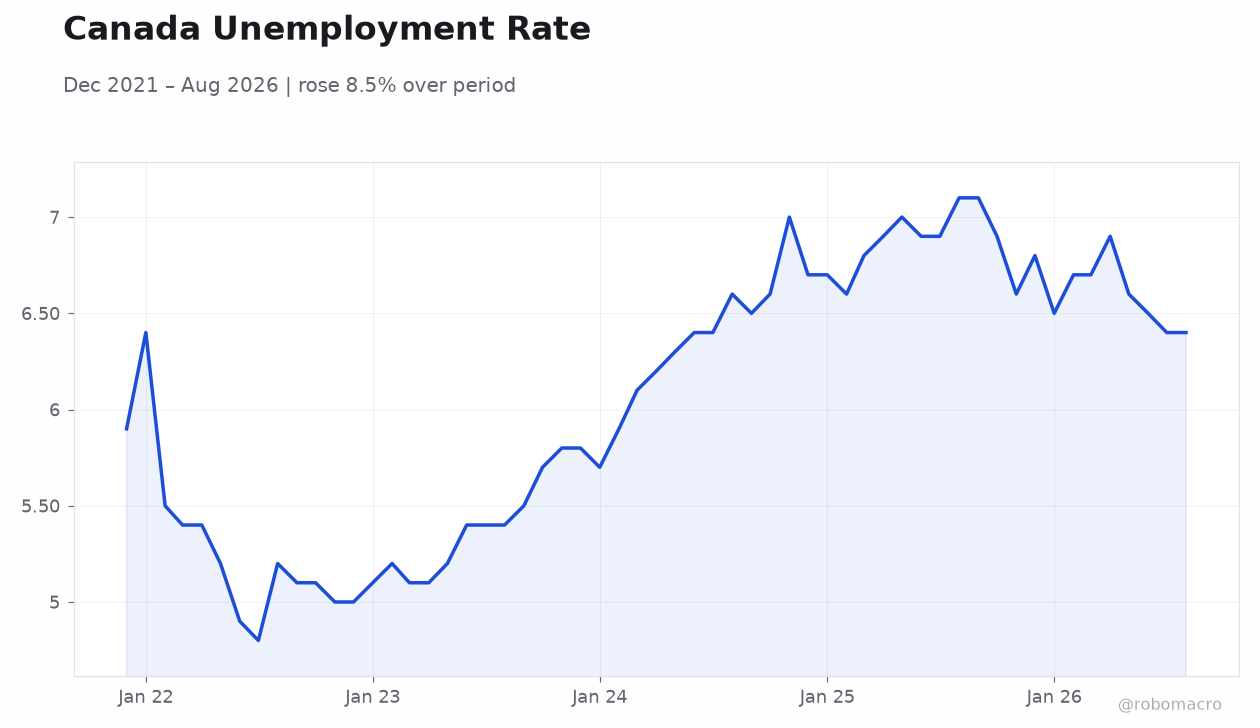
Canada's inflation backdrop remains uncomfortable, with CPI running at 3.09% year-over-year as of September 30, well above the 2% target and driven largely by energy pass-through. The BoC's own survey reportedly flags its rate hikes as a top threat to the economy, highlighting the tension between inflation control and growth preservation. Housing and household leverage remain structural vulnerabilities, and the renewed "rate shock" narrative suggests mortgage renewals will continue to weigh on consumption into 2027.
↓ p.2