Canada Macro Daily(Beta Mode)
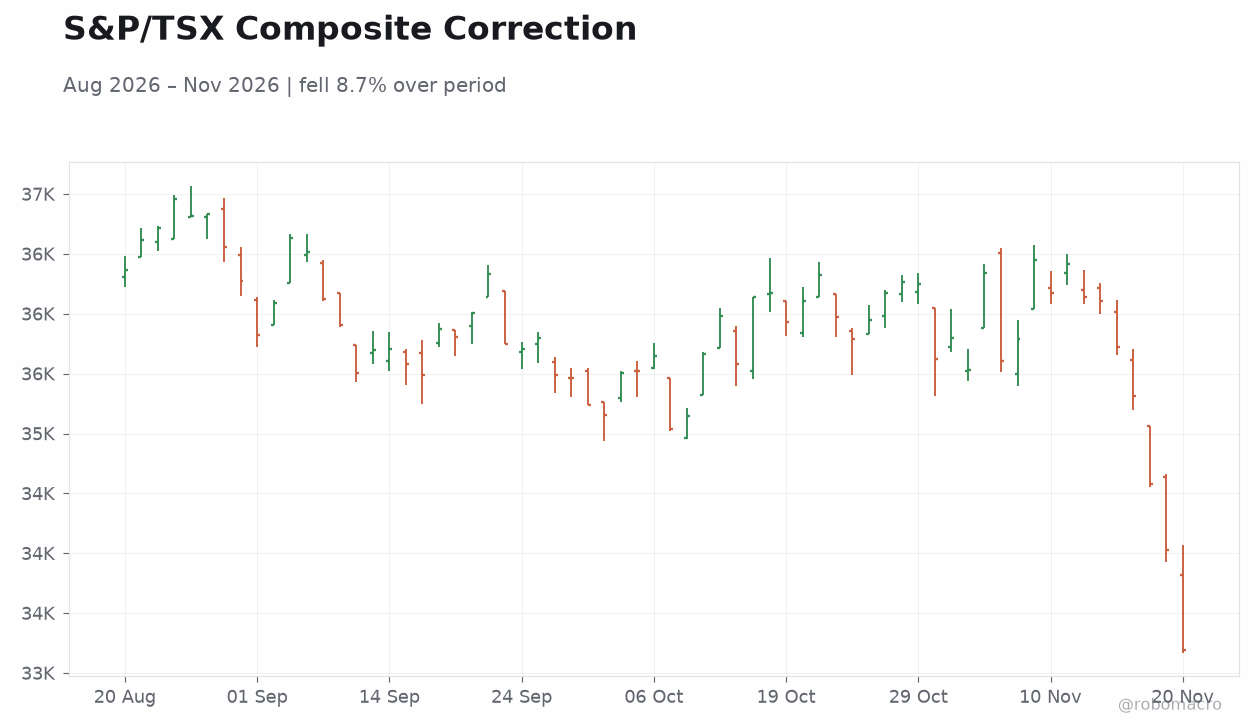
TSX Enters Correction as Risk-Off Deepens
Market Snapshot
| Asset | Level | Change |
|---|---|---|
| S&P/TSX | 33,189.90 | -2.46% |
| USD/CAD | 1.43 | +0.09% |
| EUR/CAD | 1.57 | +0.06% |
| WTI Crude | 82.13 | -2.20% |
| Natural Gas | 3.49 | +2.40% |
| Gold | 3,621.00 | +3.00% |
| Brent Crude | 88.35 | -4.56% |
| Bitcoin | 61,326.72 | +0.27% |
| Canada 2Y Govt Yield | 3.30% | 0 bp |
| Canada 10Y Govt Yield | 3.81% | +1 bp |
Prior Economic Events
| Data | Prior | Cons | Actual |
|---|---|---|---|
| No events available | |||
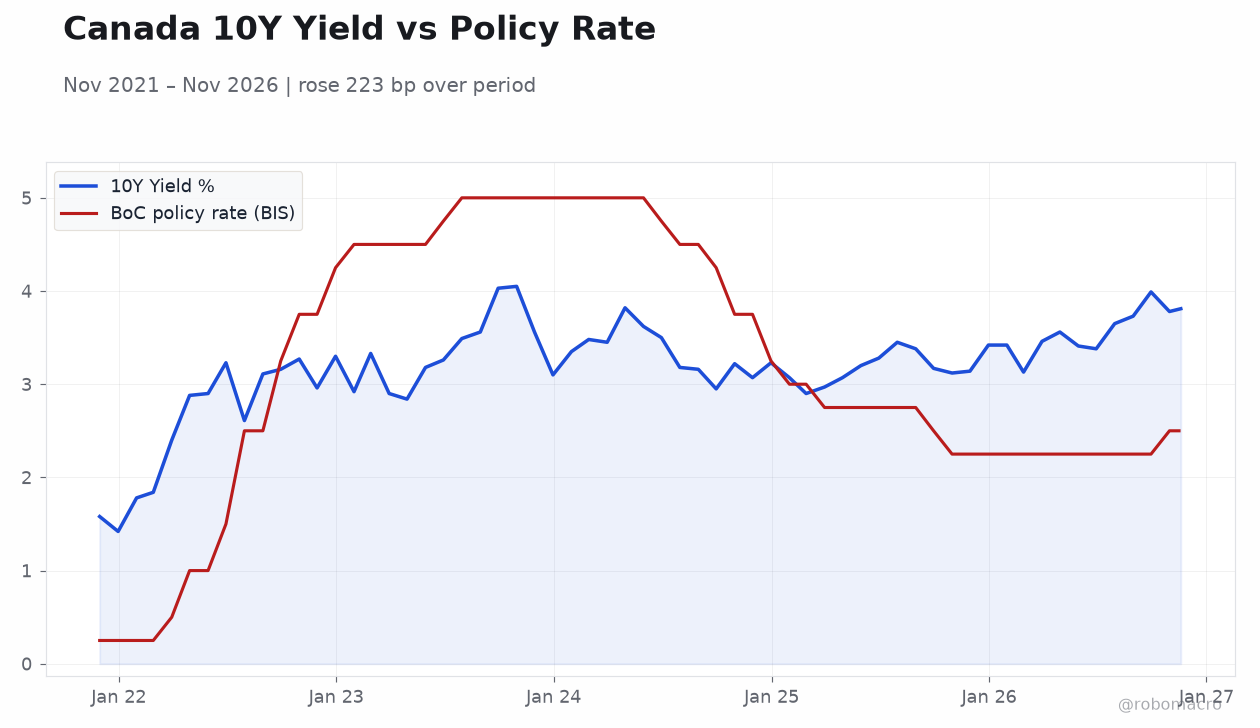
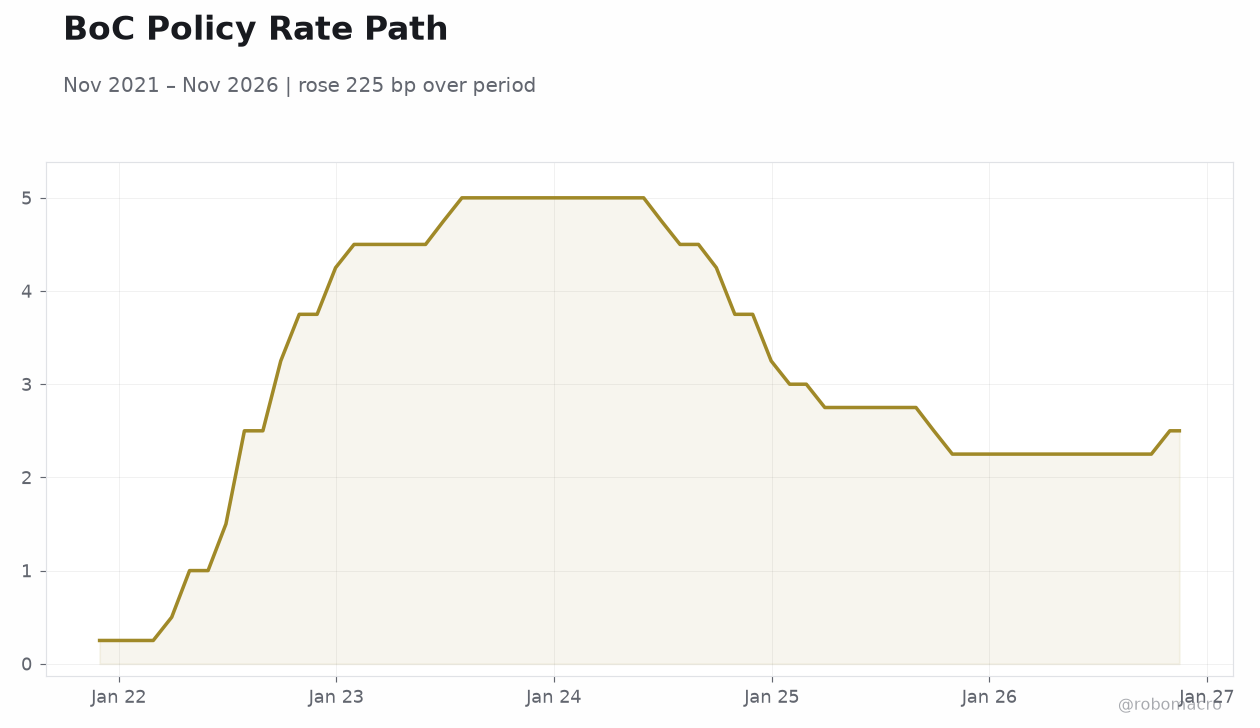 BoC Policy Rate Path | Type: macro_line | Policy Rate %: 2.5 (2026-11-16) | Range: 0.25–5 | Trend(5pt): 0.25,4.5,5,2.75,2.5
Today's Economic Events
| Data | Prior | Cons | Time |
|---|---|---|---|
| No events available | |||
- S&P/TSX plunges 2.46% to 33,189.90, entering correction territory after a 10% drawdown from recent highs
- BoC policy rate sits at 2.50% following the October 28 +25bp hike; next decision December 9
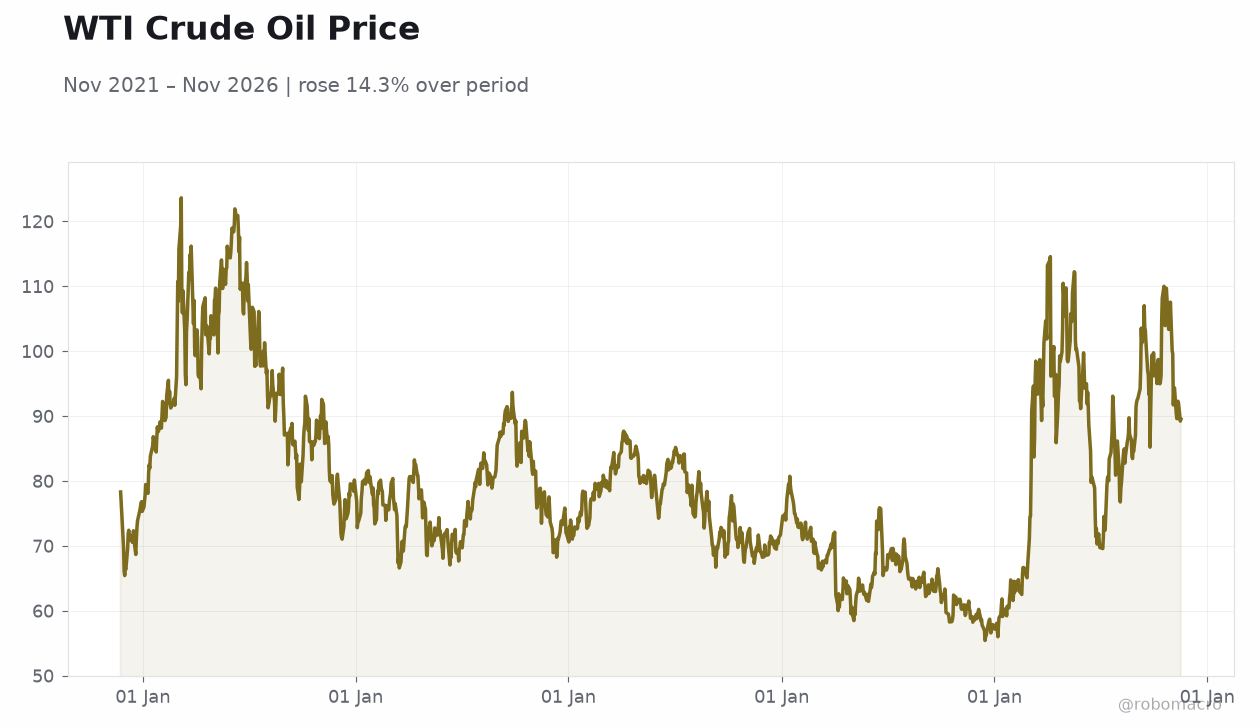
- Oil collapses with Brent down 4.56% to $88.35 and WTI off 2.20% to $82.13; gold surges 3.00% to $3,621
Yesterday's Recap
Canadian equities suffered a sharp risk-off session, with the S&P/TSX Composite tumbling 2.46% to 33,189.90 and confirming correction territory after a cumulative 10% decline. The selloff was broad and tech-driven, mirroring the Nasdaq's wipeout of its 2026 gains as U.S. and Canadian indices fell into correction.
Energy was a major drag: Brent crude dropped 4.56% to $88.35 and WTI fell 2.20% to $82.13 amid shifting Middle East flows and persistent shipping and refinery disruptions. Natural gas bucked the trend, rising 2.40% to $3.49, while gold surged 3.00% to $3,621 as investors rotated into havens. The Canadian dollar was roughly flat, with USD/CAD at 1.43 (+0.09%) and EUR/CAD at 1.57 (+0.06%).
Rates were steady — the Canada 2-year yield held at 3.30% (0 bp) and the 10-year edged up 1 bp to 3.81% — suggesting the equity rout was not yet transmitting into a duration rally.
The Day Ahead
The Canadian calendar is empty for November 23, leaving markets to digest Friday's correction and position around the week's key event. Attention turns to Tuesday, November 24, when Bank of Canada Governor Tiff Macklem speaks before the Economic Club of Canada — the first substantive policy communication since the October 28 decision. Traders will parse the speech for signals on whether the 2.50% policy rate is sufficiently restrictive given CPI holding at 3.10%.
South of the border, U.S. PCE data this week will shape cross-border rate expectations and CAD sentiment. With no domestic prints to anchor direction, TSX flows will likely track oil and U.S.
equity futures.
Other Economic Notes
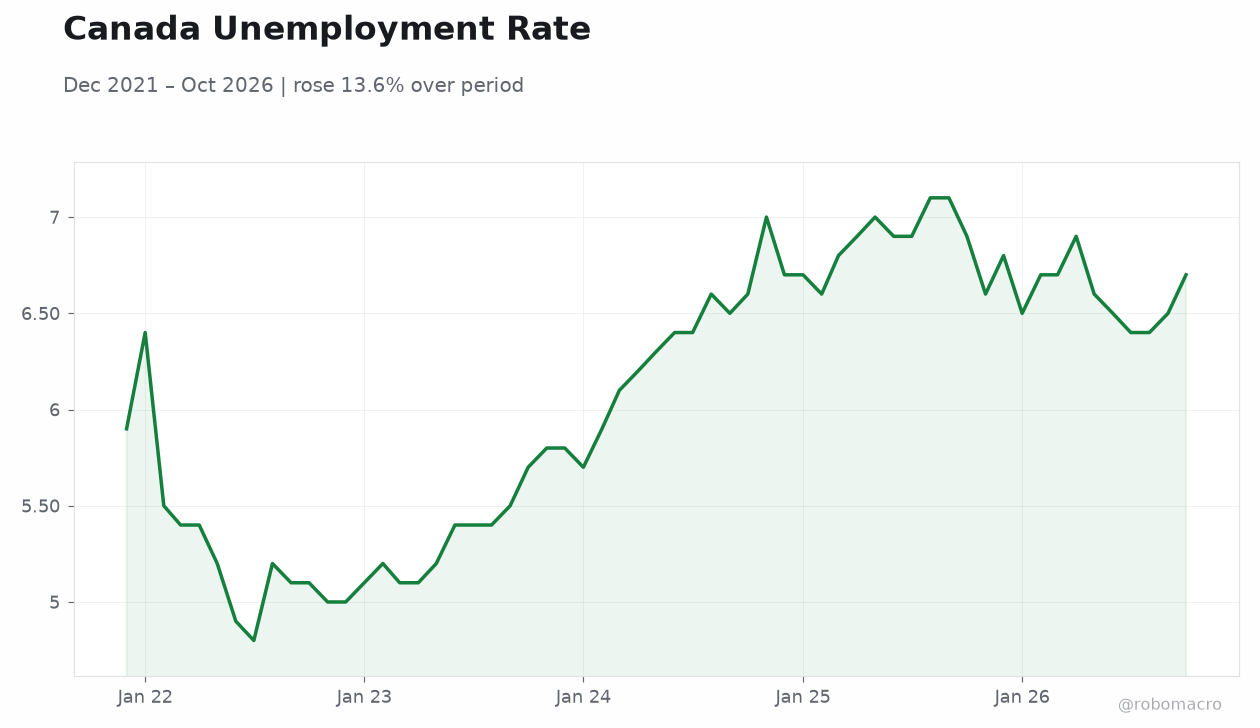
Canada's inflation picture remains sticky, with CPI at 3.10% year-over-year as of October — still above target and complicating the BoC's path after its October hike. The combination of elevated inflation and a sharp equity correction creates an uncomfortable backdrop for policymakers balancing price stability against financial conditions. Energy volatility is a key transmission channel: the collapse in crude prices, if sustained, could ease headline inflation but simultaneously pressure the TSX's energy weighting and provincial fiscal outlooks.
↓ p.2