Emerging Europe Macro Daily(Beta Mode)
Poland CPI Breaches NBP Band, Turkey Trade Narrows
Market Snapshot
| Asset | Level | Change |
|---|---|---|
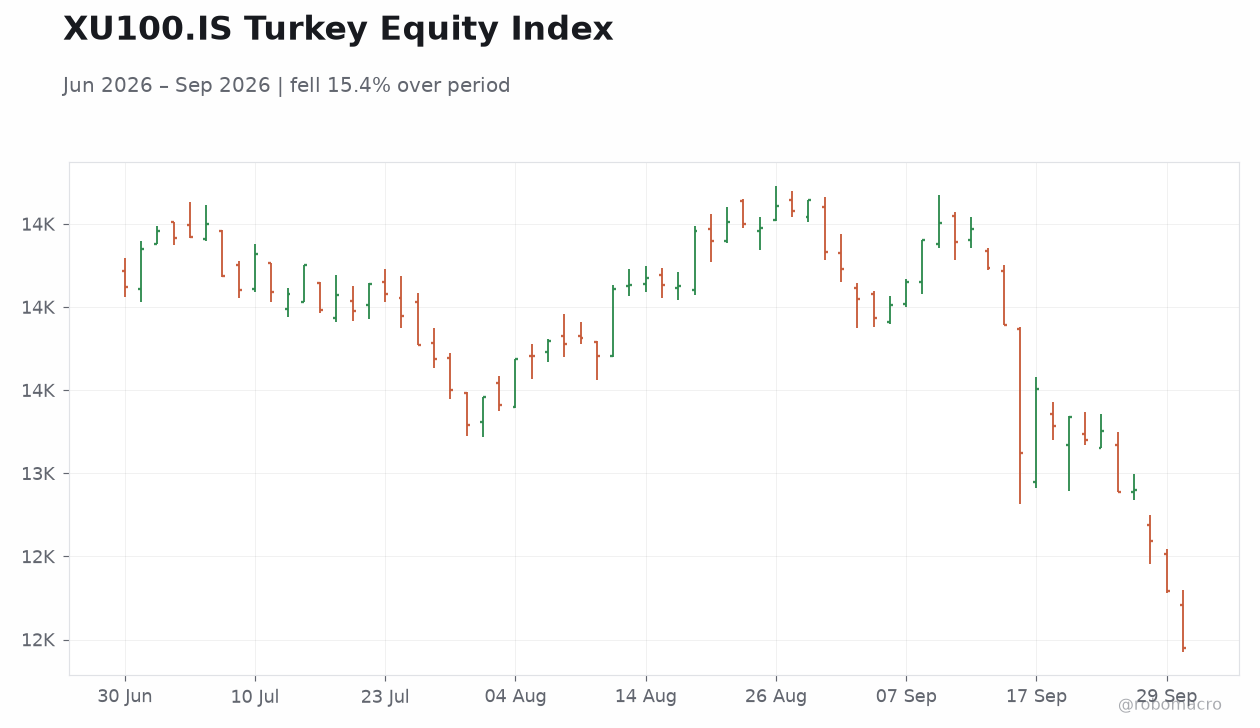
| BIST 100 | 11,947.20 | -2.79% |
| iShares Poland | 44.80 | +1.37% |
| EUR/PLN | 4.36 | -0.10% |
| EUR/HUF | 366.17 | -0.13% |
| EUR/CZK | 24.44 | +0.08% |
| USD/TRY | 49.02 | +0.03% |
| Brent Crude | 96.85 | -6.45% |
| Gold | 4,210.30 | +0.56% |
| Bitcoin | 84,175.37 | +0.66% |
| Poland 10Y Govt Yield | - | - |
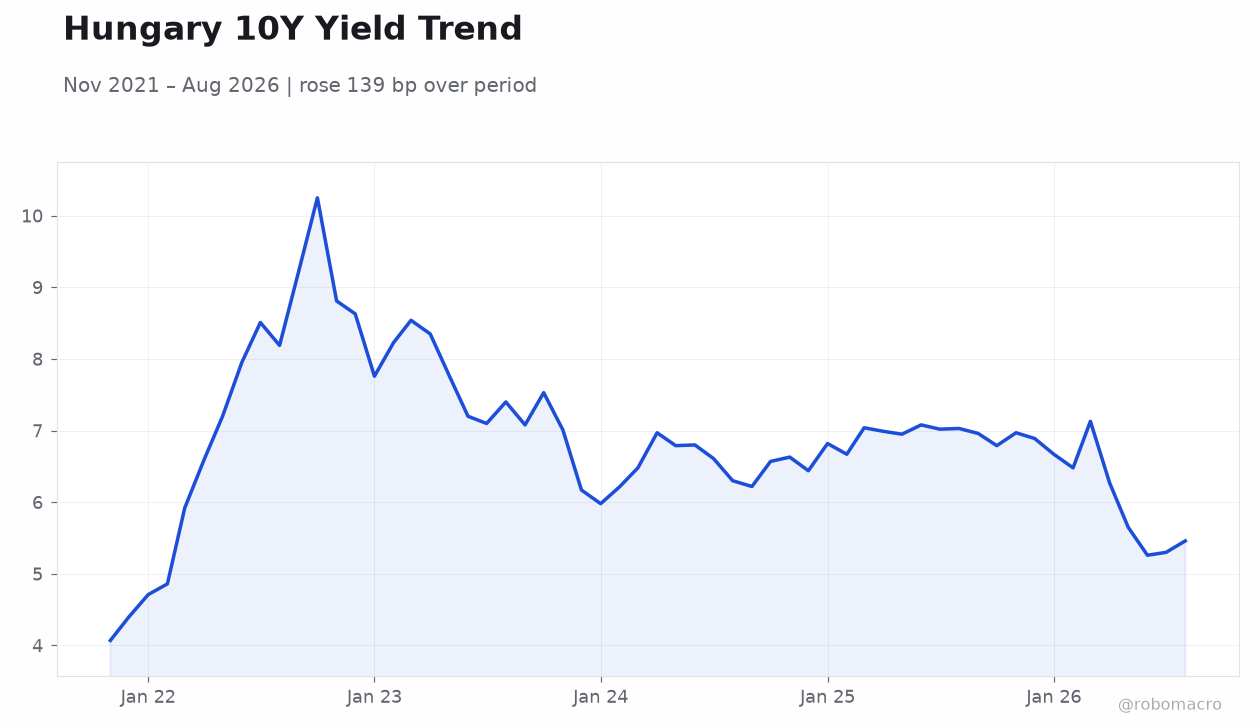
| Hungary 10Y Govt Yield | - | - |
Prior Economic Events
| Data | Prior | Cons | Actual |
|---|---|---|---|
| Balance of Trade Final | -7,340m | -5,240m | -5,240m |
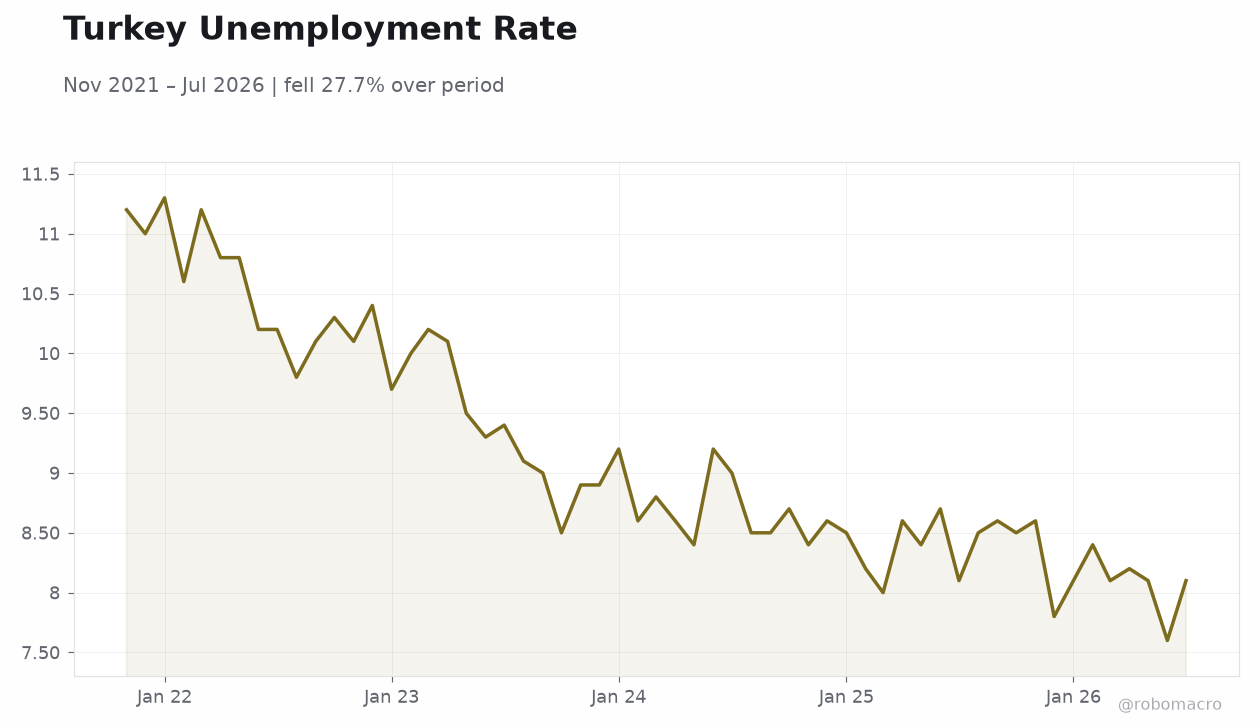
| Headline Unemployment Rate | 8.10 | - | 7.80 |
| Inflation Rate Year-over-Year Preliminary | 3.40 | 4.10 | 4 |
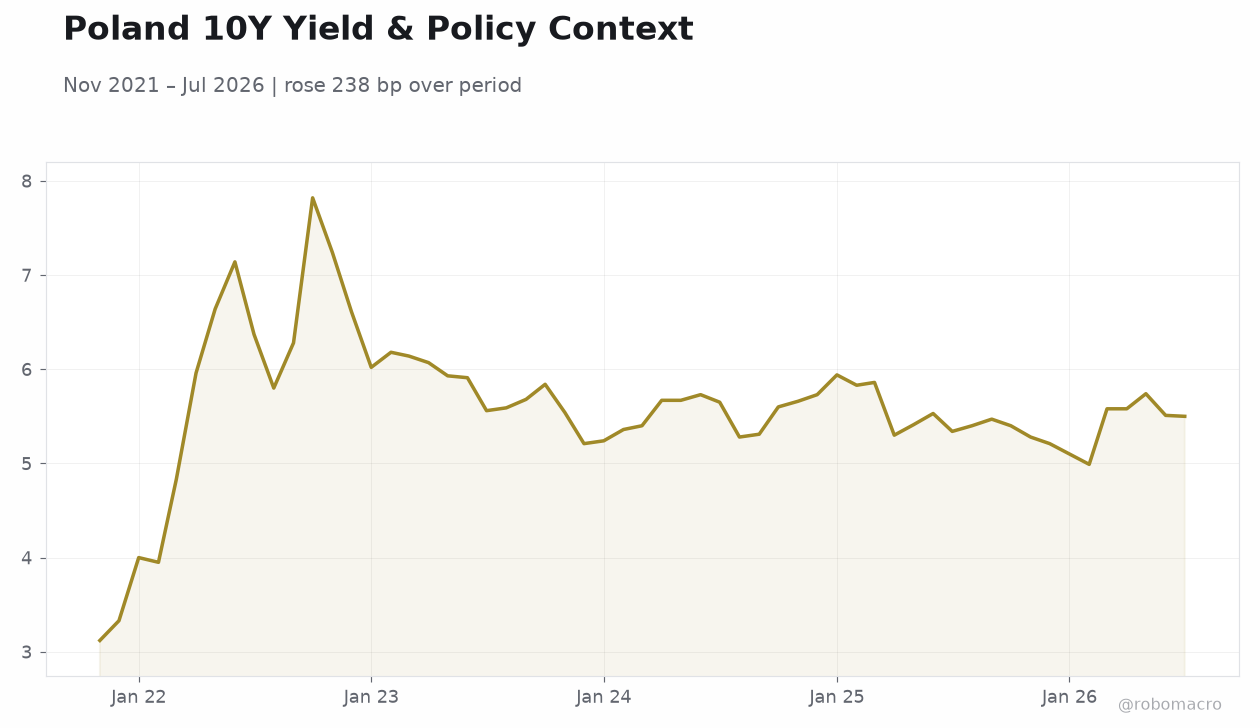 Poland 10Y Yield & Policy Context | Type: macro_line | 10Y Yield %: 5.5 (2026-07-01) | Range: 3.12–7.82 | Trend(5pt): 3.12,6.02,5.4,5.41,5.5
Today's Economic Events
| Data | Prior | Cons | Time |
|---|---|---|---|
| No events available | |||
- Poland’s September CPI rose 4.0% YoY, breaching the NBP upper target and lifting the case for steady policy.
- Turkey’s Q2 current-account deficit and September trade balance both matched forecasts while unemployment fell to 7.8%.
- Regional FX stayed stable with EUR/PLN easing 0.10% and BIST 100 falling 2.79% amid lower Brent crude.
Yesterday's Recap
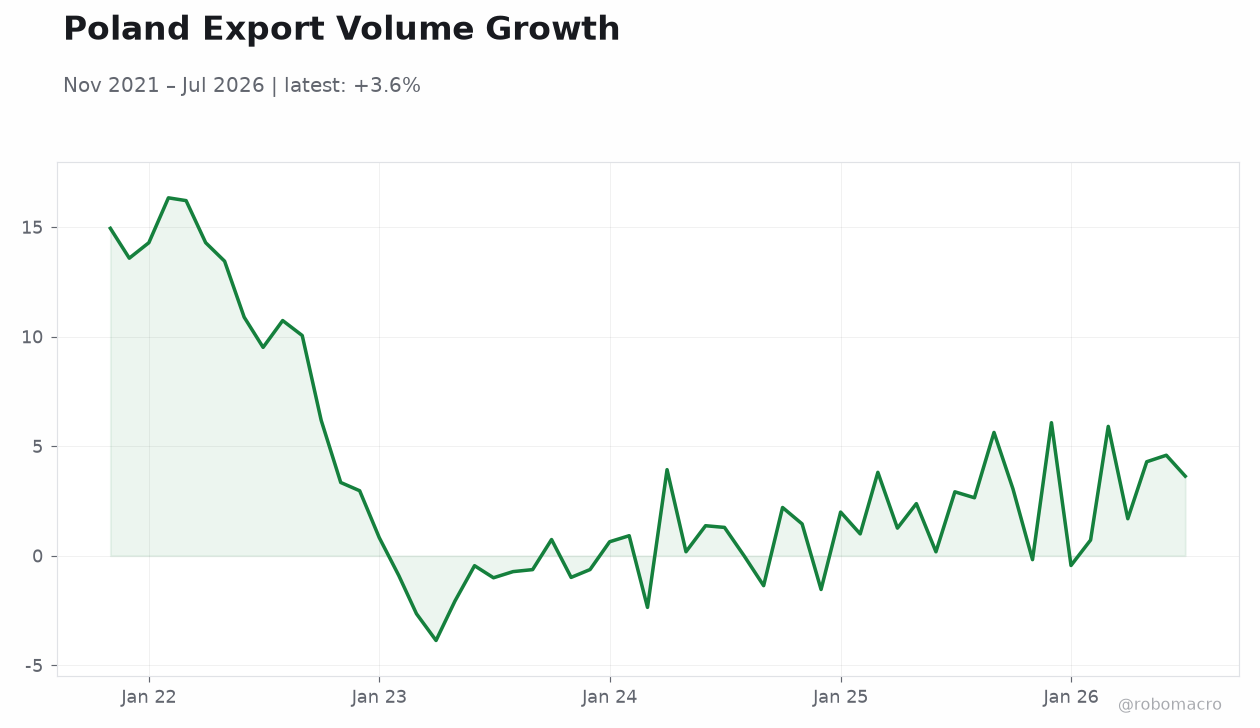
Poland’s preliminary September inflation print of 4.0% YoY exceeded the prior 3.4% rate and came just below the 4.1% consensus, pushing the reading above the NBP’s upper bound for the first time since June 2025. The outturn coincided with the strongest Polish export-volume growth since 2021, driven by computer equipment, which narrowed the Q2 current-account deficit to 26.5 billion PLN. In Turkey the September trade deficit printed at -5.24 billion USD in line with consensus and improved from -7.34 billion, while the unemployment rate declined to 7.8% from 8.1%.
Equity markets diverged: the BIST 100 dropped 2.79% to 11,947.20 while iShares Poland rose 1.37% to 44.80. FX moves remained contained, with EUR/PLN easing 0.10% to 4.36, EUR/HUF falling 0.13% to 366.17 and EUR/CZK rising 0.08% to 24.44. Brent crude’s 6.45% decline to 96.85 provided a modest tailwind for regional importers.
No new data emerged from the Czech Republic, Hungary or Romania. Circular-economy workshops in Warsaw are translating EU sustainability rules into concrete corporate investment decisions, supporting medium-term productivity gains.
The Day Ahead
The economic calendar for 1 October contains no scheduled releases across the five markets. Traders will therefore focus on incoming comments from NBP and CBRT officials and any follow-through from yesterday’s Polish inflation surprise. Polish Prime Minister Tusk’s planned late-October business mission to India with 100 firms may generate early positioning in PLN assets.
Regional markets will also track euro-area energy-price developments given the ECB’s repeated warnings that the energy crisis remains the chief threat to growth. With no data prints expected, attention will shift to any ECB or Fed speakers whose remarks could influence rate expectations for the CNB and MNB. Month-end flows may produce modest technical support for CEE currencies.
Hungary’s forint showed modest strength against the euro, consistent with steady policy expectations.
Other Economic Notes
Poland’s export acceleration and narrower current-account gap illustrate the resilience of its manufacturing base despite higher energy costs. Turkey’s on-consensus trade and labour figures offer limited relief but leave the structural inflation challenge untouched. ↓ p.2