NBP Holds Seventh Month; PLN Leads CEE Gains
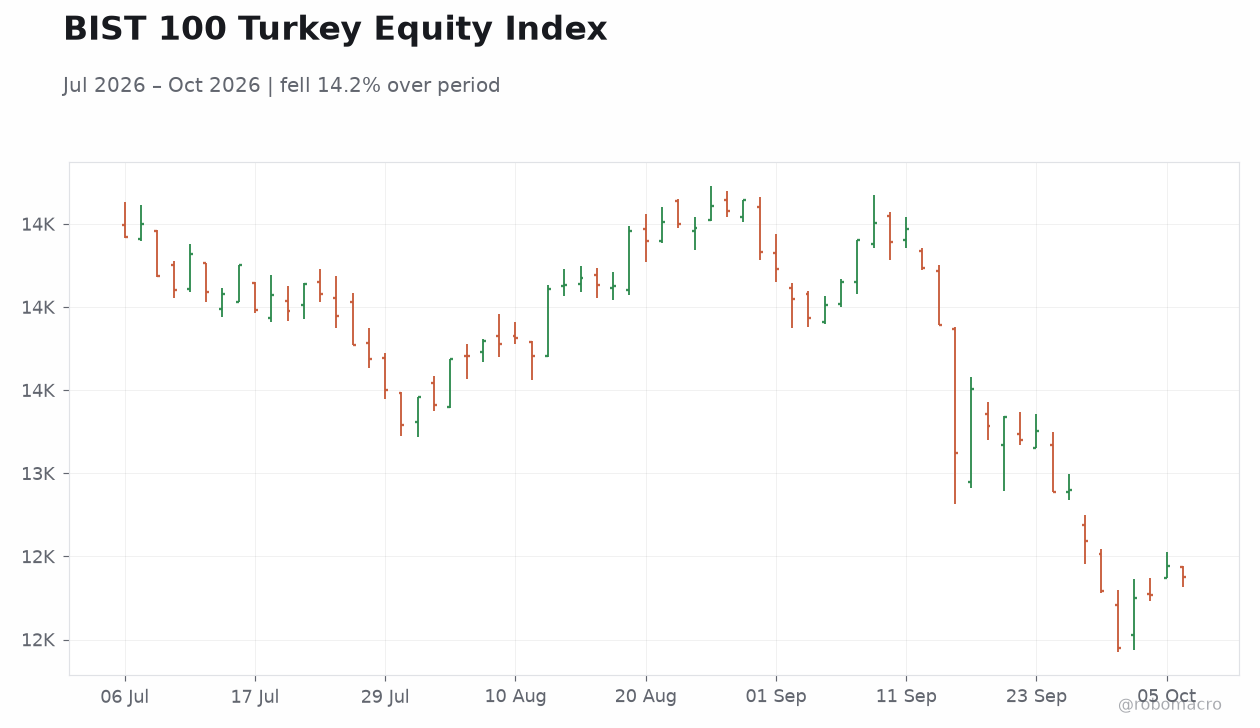
BIST 10012,374.30-0.56%
iShares Poland44.39+2.02%
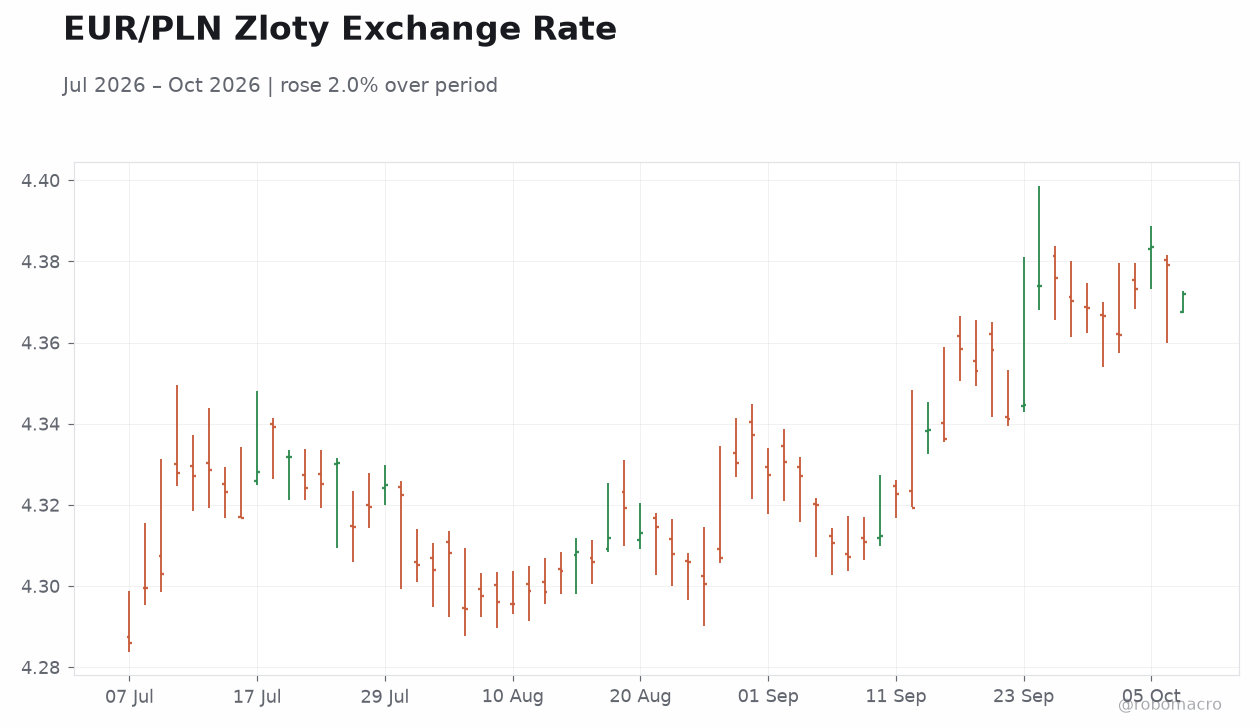
EUR/PLN4.37-0.17%
EUR/HUF365.02-0.46%
Market Snapshot
| Asset | Level | Change |
|---|
| BIST 100 | 12,374.30 | -0.56% |
| iShares Poland | 44.39 | +2.02% |
| EUR/PLN | 4.37 | -0.17% |
| EUR/HUF | 365.02 | -0.46% |
| EUR/CZK | 24.40 | -0.13% |
| USD/TRY | 49.19 | +0.09% |
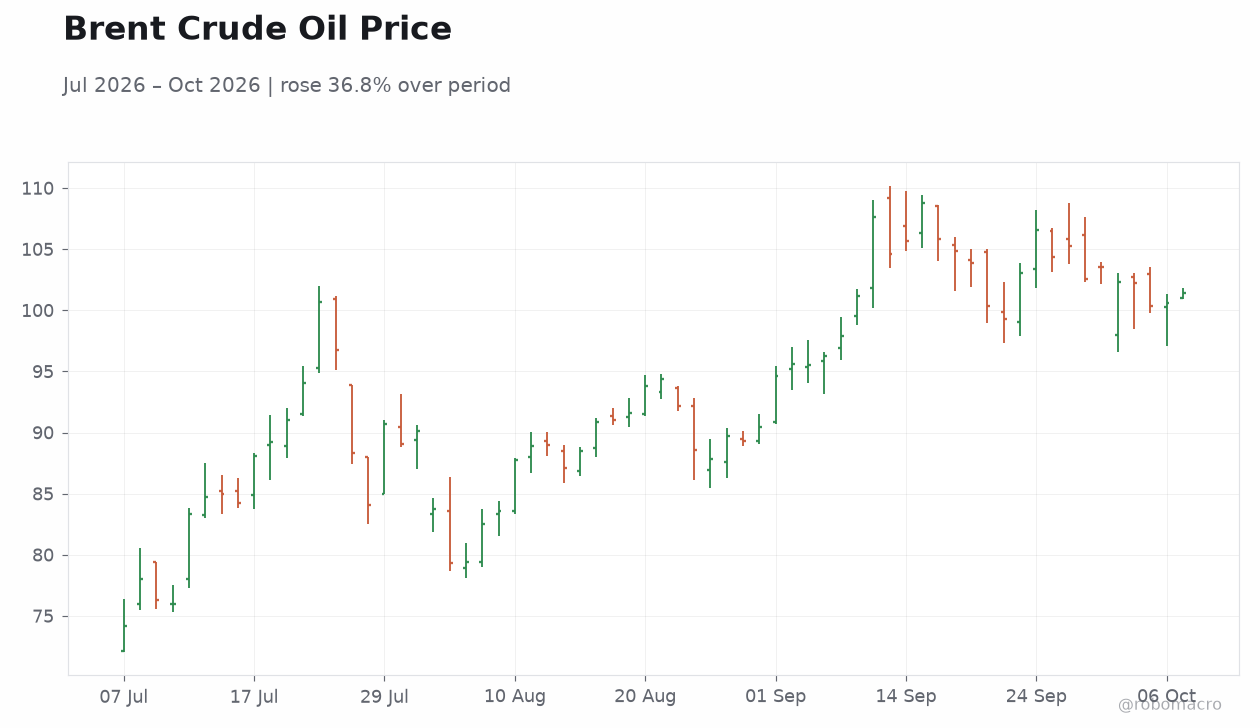
| Brent Crude | 101.46 | +0.87% |
| Gold | 4,160.30 | -0.64% |
| Bitcoin | 84,147.81 | -1.91% |
| Poland 10Y Govt Yield | - | - |
| Hungary 10Y Govt Yield | - | - |
Prior Economic Events
| Data |
Prior |
Cons |
Actual |
| No events available |
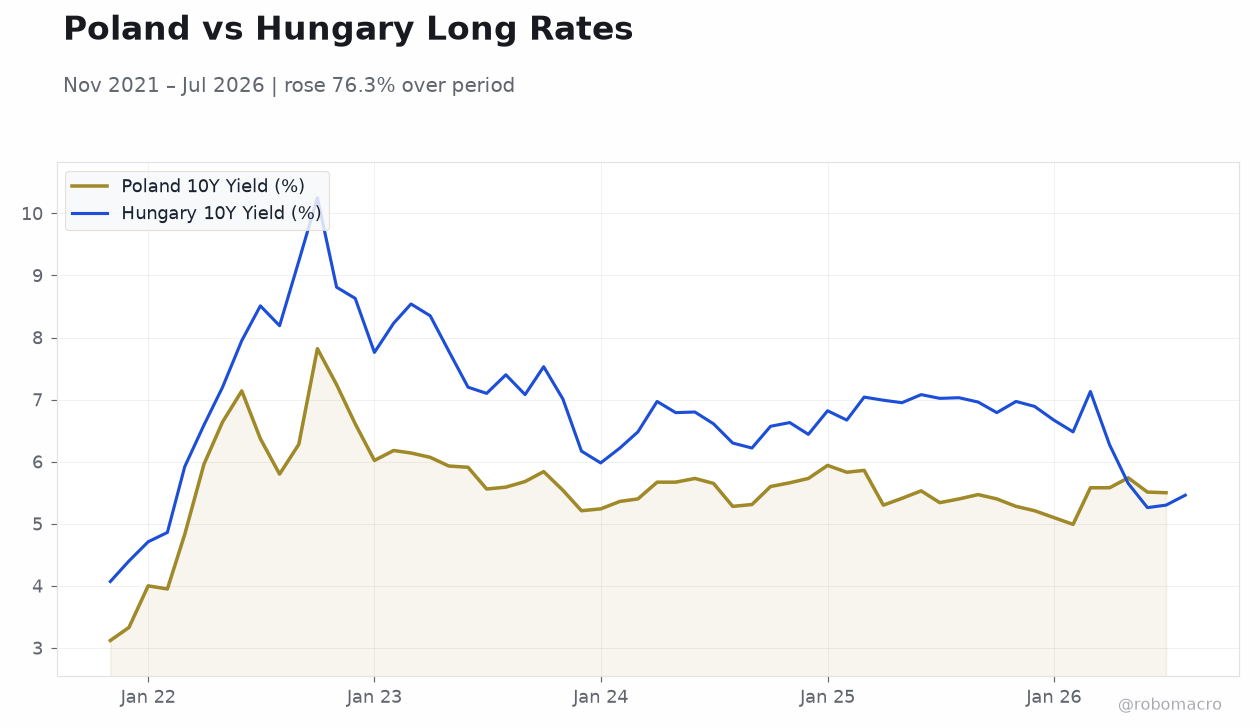 Poland vs Hungary Long Rates | Type: macro_line | Poland 10Y Yield (%): 5.5 (2026-07-01) | Range: 3.12–7.82 | Trend(5pt): 3.12,6.02,5.4,5.41,5.5 | Hungary 10Y Yield (%): 5.46 (2026-08-01) | Range: 4.07–10.25 | Trend(6pt): 4.07,7.76,6.48,6.95,5.3,5.46
Today's Economic Events
| Data |
Prior |
Cons |
Time |
| No events available |
- NBP expected to hold its policy rate for a seventh straight meeting as the government's fuel-price cap cools inflation; the decision is the week's key CEE event.
- CEE currencies firmed against the euro, with the forint leading gains at -0.46% on EUR/HUF; iShares Poland ETF jumped 2.02% on the equity rally.
- Brent crude climbed 0.87% to $101.46, a tailwind for energy-importing Hungary and Poland but supportive for Romania's fiscal picture.
Yesterday's Recap
Emerging Europe markets closed Tuesday with a risk-on tilt led by Poland, where the iShares Poland ETF rallied 2.02% to 44.39, signaling broad strength in Warsaw equities. The zloty appreciated 0.17% against the euro to 4.37, while the Czech koruna firmed 0.13% to 24.40 and the Hungarian forint outperformed the region with a 0.46% gain to 365.02. Turkish assets were more subdued: the BIST 100 slipped 0.56% to 12,374.30 and the lira was broadly flat at 49.19 against the dollar, edging just 0.09% weaker.
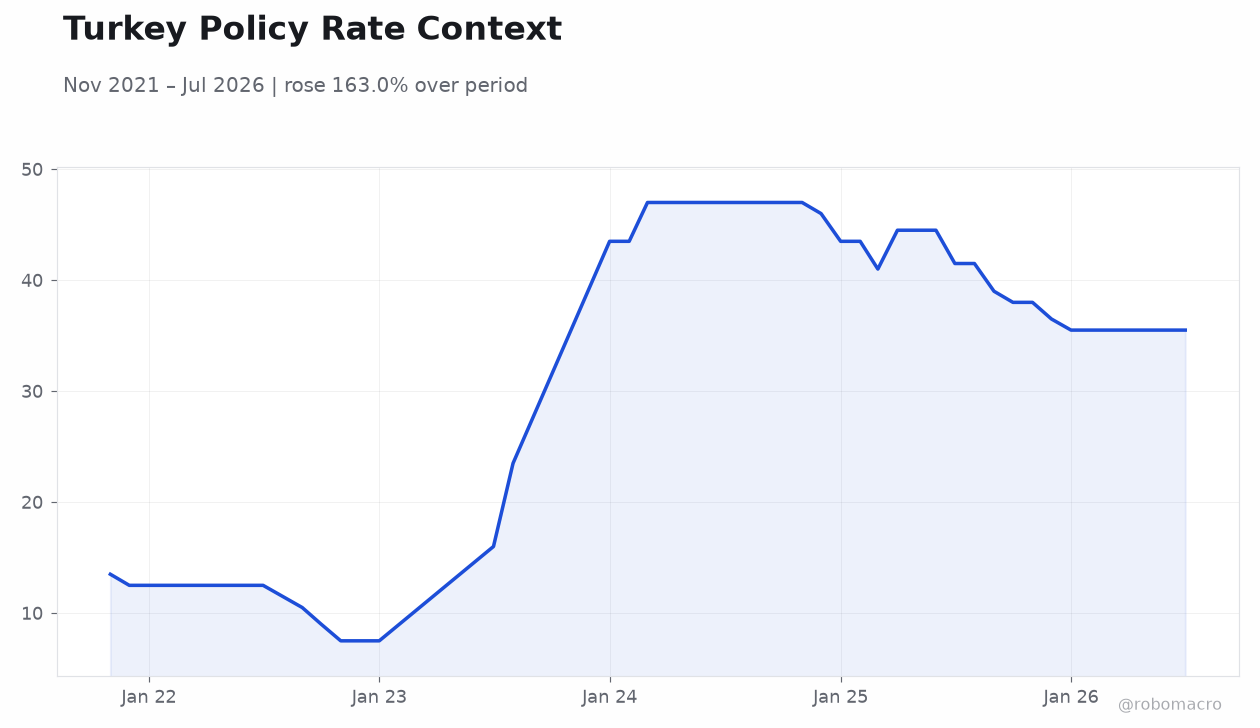
The lira's stability contrasts with the euro-bloc strength elsewhere in the region, reflecting Turkey's distinct macro dynamics and continued reliance on managed FX policy. Commodity moves shaped the day, with Brent crude rising 0.87% to $101.46 — a mixed blessing for the region's energy importers — while gold eased 0.64% to $4,160.30. Bitcoin's 1.91% decline to $84,147.81 underscored softer global risk appetite in crypto-adjacent trades.
Government bond yields for Poland and Hungary were not available in Tuesday's data, leaving the rates picture to be filled by today's sessions. The day's tone was set by the Bloomberg report that Poland's central bank will likely hold rates for a seventh month, with the fuel-price cap seen cooling inflation into year-end.
The Day Ahead
Today's calendar is light on scheduled data releases, with no confirmed prints from Poland, Czechia, Hungary, Romania, or Turkey. Attention shifts to the NBP's rate decision context, where the seventh consecutive hold is widely anticipated as the fuel-price cap works through the inflation basket. Markets will watch for any guidance on the timing of eventual cuts, particularly given the government's intervention in fuel prices.
The region will also track euro-area sentiment indicators for spillover cues, given CEE's tight trade linkage with the eurozone. Turkish observers will monitor any signals on CBRT's reserve accumulation and the lira's managed trajectory. With no major domestic prints, FX and equity flows will dominate the regional narrative into the close.
Page 1
Never miss an issue
Subscribe to Emerging Europe Macro Daily and get each new issue delivered to your inbox.
Already a member? Visit robomacro.com
to log in and manage subscriptions, or use Forgot Password to set a password.