NBP Board Standoff, PLN Steady, BIST Slips
BIST 10012,150.70-0.94%
iShares Poland43.82+0.87%
EUR/PLN4.38+0.21%
EUR/HUF364.42-0.10%
Market Snapshot
| Asset | Level | Change |
|---|
| BIST 100 | 12,150.70 | -0.94% |
| iShares Poland | 43.82 | +0.87% |
| EUR/PLN | 4.38 | +0.21% |
| EUR/HUF | 364.42 | -0.10% |
| EUR/CZK | 24.37 | +0.02% |
| USD/TRY | 49.34 | +0.05% |
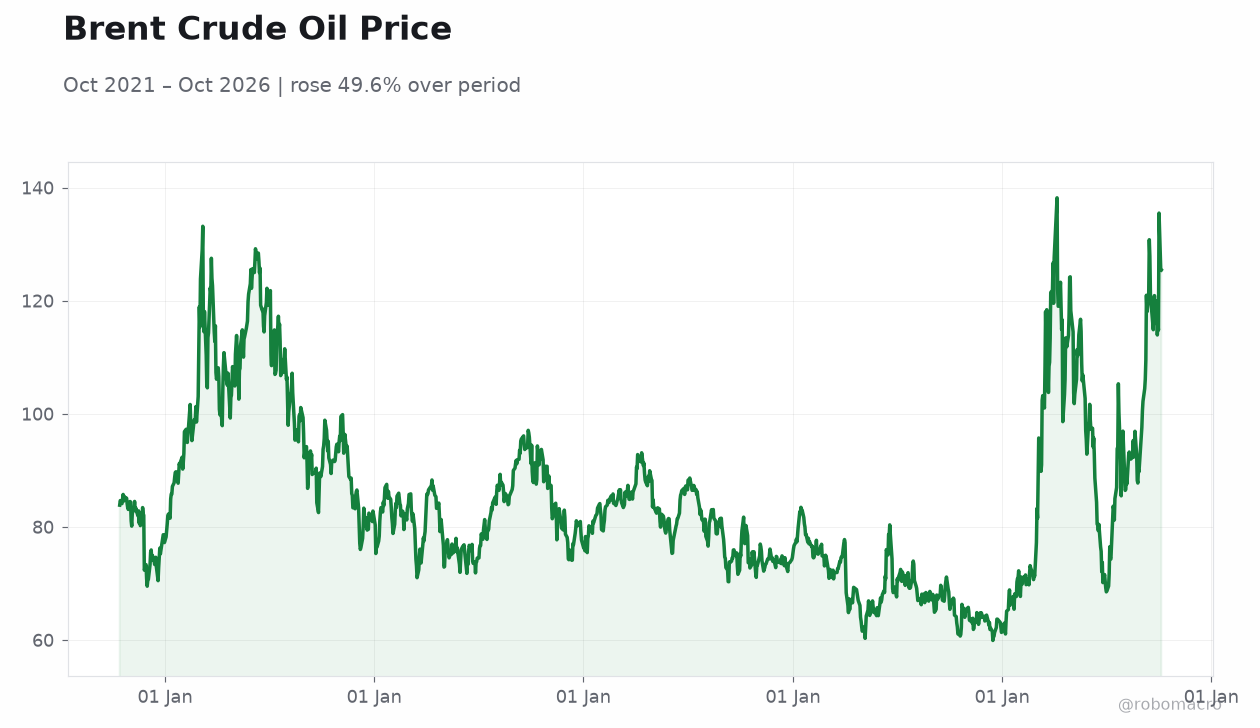
| Brent Crude | 105.43 | -1.14% |
| Gold | 4,221.90 | +0.75% |
| Bitcoin | 83,465.11 | -0.26% |
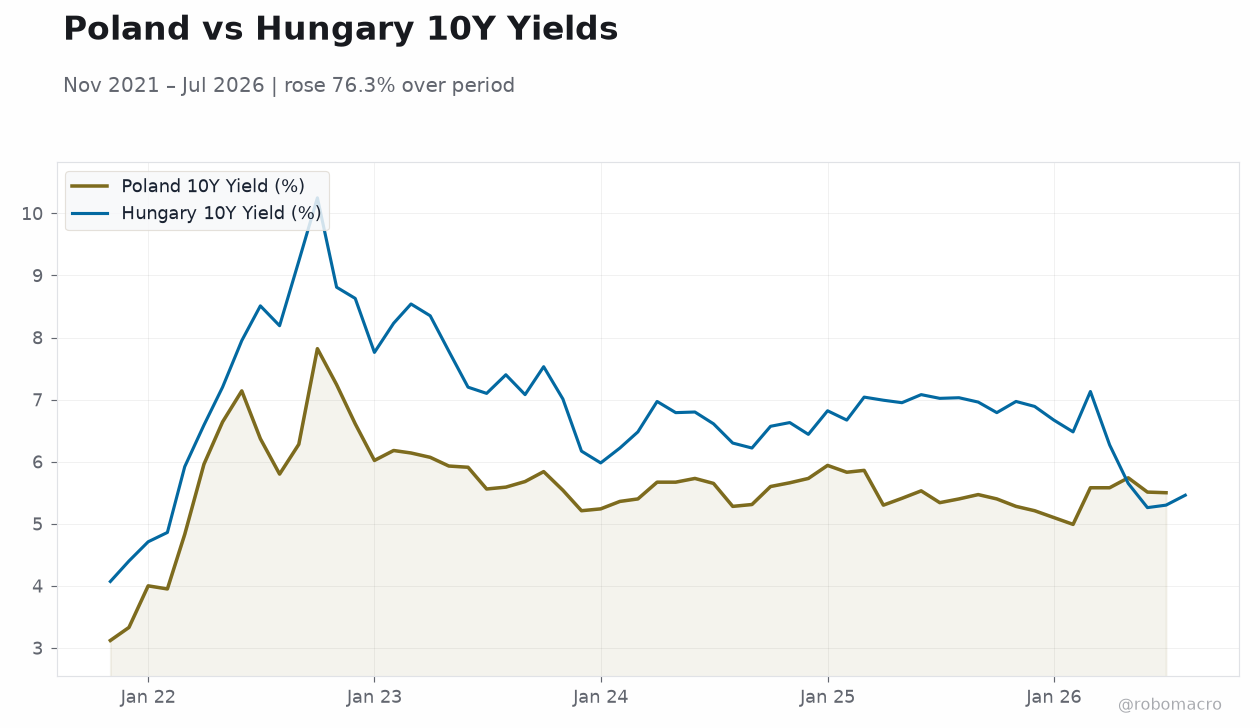
| Poland 10Y Govt Yield | - | - |
| Hungary 10Y Govt Yield | - | - |
Prior Economic Events
| Data |
Prior |
Cons |
Actual |
| No events available |
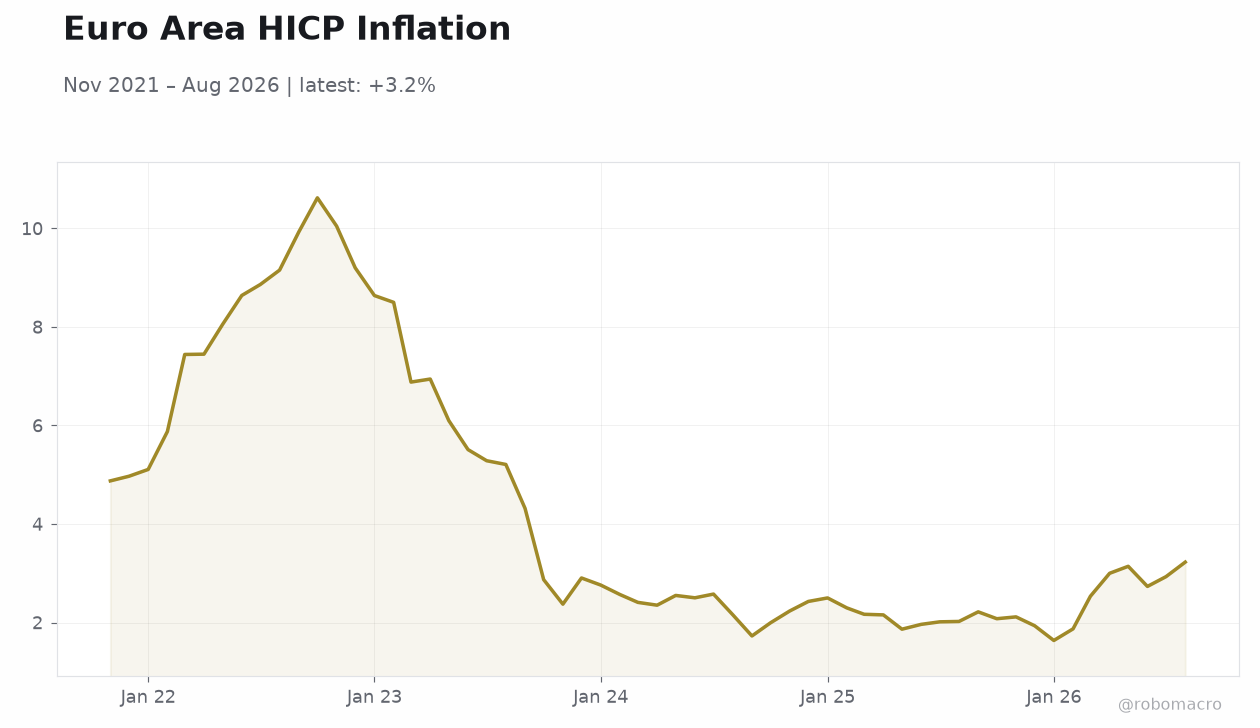 Euro Area HICP Inflation | Type: macro_line | HICP Index Level: 3.226 (2026-08-01) | Range: 1.636–10.62 | Trend(6pt): 4.875,8.638,2.409,1.865,2.932,3.226
Today's Economic Events
| Data |
Prior |
Cons |
Time |
| No events available |
- NBP renews appeal to President to fill vacant board seats, adding governance uncertainty to Poland's rate-setting outlook
- Poland's economy minister urges Europe against a return to Russian energy, keeping energy-diversification policy in focus
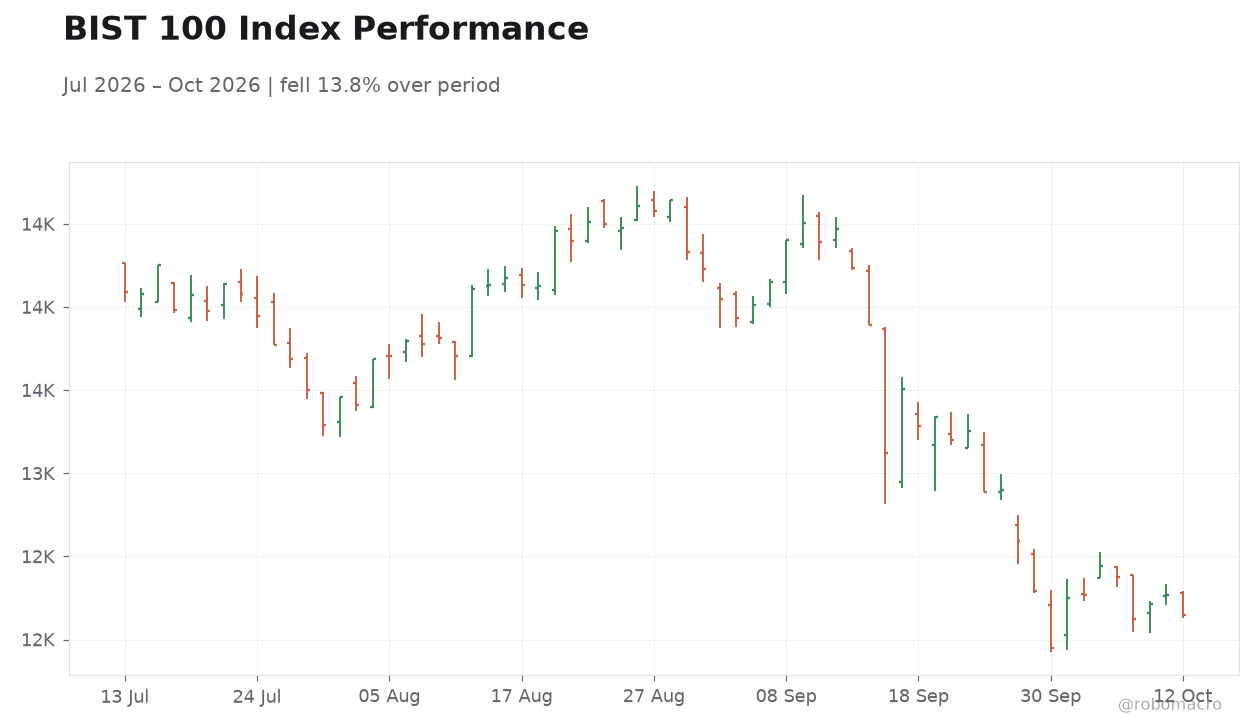
- BIST 100 falls 0.94% to 12,150.70 while iShares Poland gains 0.87%; zloty softens 0.21% vs EUR
Yesterday's Recap
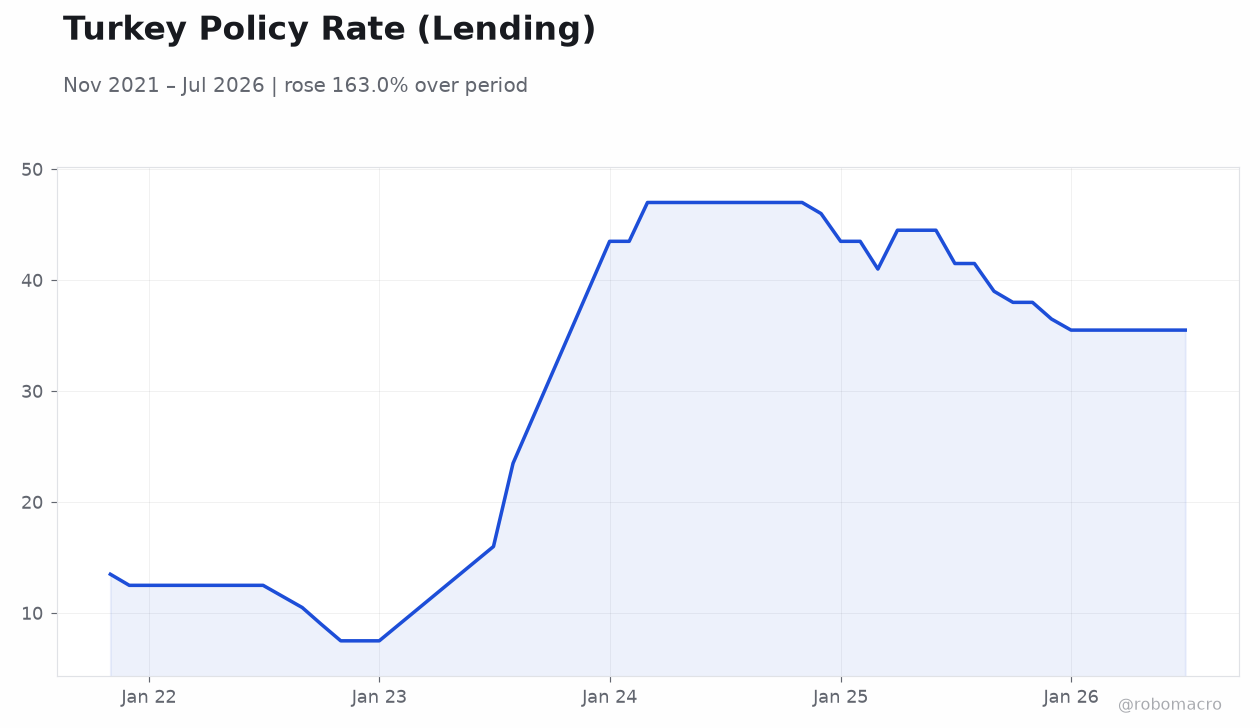
Emerging Europe traded mixed on Monday, October 12, with equity dispersion the dominant theme. Turkey's BIST 100 slipped 0.94% to 12,150.70, the region's weakest performance, as the lira held near 49.34 against the dollar, edging just 0.05% weaker. Polish assets outperformed: the iShares Poland ETF rose 0.87%, though the zloty gave back ground with EUR/PLN up 0.21% to 4.38.
The forint firmed marginally, with EUR/HUF down 0.10% at 364.42, while the koruna was essentially flat at 24.37 per euro. On the news flow, Poland's economy minister warned Europe against reverting to Russian energy supplies, reinforcing Warsaw's push for supply diversification — a structural theme for the region's energy-import-dependent economies. Domestically, the standoff at Narodowy Bank Polski intensified: the central bank said it had again written to the President requesting appointment of new board members, a dispute that touches the governance of rate-setting at the region's largest EU economy.
Foreign Minister Radosław Sikorski added that NATO should prepare for potentially deadly Russian 'hybrid' attacks, citing an escalating sabotage campaign on European soil — relevant for the security premium embedded in CEE assets. There were no scheduled macro prints for the region on the calendar, leaving price action driven by flows and headlines.
The Day Ahead
Tuesday, October 13 carries no scheduled Emerging Europe data releases on the calendar, so attention shifts to policy and political developments. In Poland, watch for further movement on the NBP board appointments saga, which has now seen a second formal appeal to the President and could shape expectations for the October council meeting. Hungary remains in focus as investors assess whether the political transition can credibly advance the euro-adoption agenda, a multi-year project with implications for BUX positioning and the forint's convergence path.
Turkish markets will continue to digest the BIST pullback and the stability of USD/TRY near 49.34, with reserve dynamics and the CBRT's communication the key swing factors. Across the region, FX pairs against the euro — PLN, HUF and CZK — will take their cue from euro-area sentiment and any follow-through from ECB pricing. Energy headlines out of Warsaw on Russian supply policy bear monitoring for gas-price spillovers into the region's import bills.
Page 1
Never miss an issue
Subscribe to Emerging Europe Macro Daily and get each new issue delivered to your inbox.
Already a member? Visit robomacro.com
to log in and manage subscriptions, or use Forgot Password to set a password.