Emerging Europe Macro Daily(Beta Mode)
Poland CPI Eyed as Forint Firms, Turkey Data Mixed
Market Snapshot
| Asset | Level | Change |
|---|---|---|
| BIST 100 | 11,165.40 | +0.13% |
| iShares Poland | 44.62 | +0.90% |
| EUR/PLN | 4.39 | -0.29% |
| EUR/HUF | 365.44 | -0.15% |
| EUR/CZK | 24.33 | -0.03% |
| USD/TRY | 49.93 | +0.19% |
| Brent Crude | 112.10 | -2.42% |
| Gold | 4,002.00 | -0.73% |
| Bitcoin | 78,113.39 | -3.88% |
| Poland 10Y Govt Yield | - | - |
| Hungary 10Y Govt Yield | - | - |
Prior Economic Events
| Data | Prior | Cons | Actual |
|---|---|---|---|
| Headline Unemployment Rate | 7.90 | - | 8.40 |
| Balance of Trade Final | -5,240m | -5,230m | -5,160m |
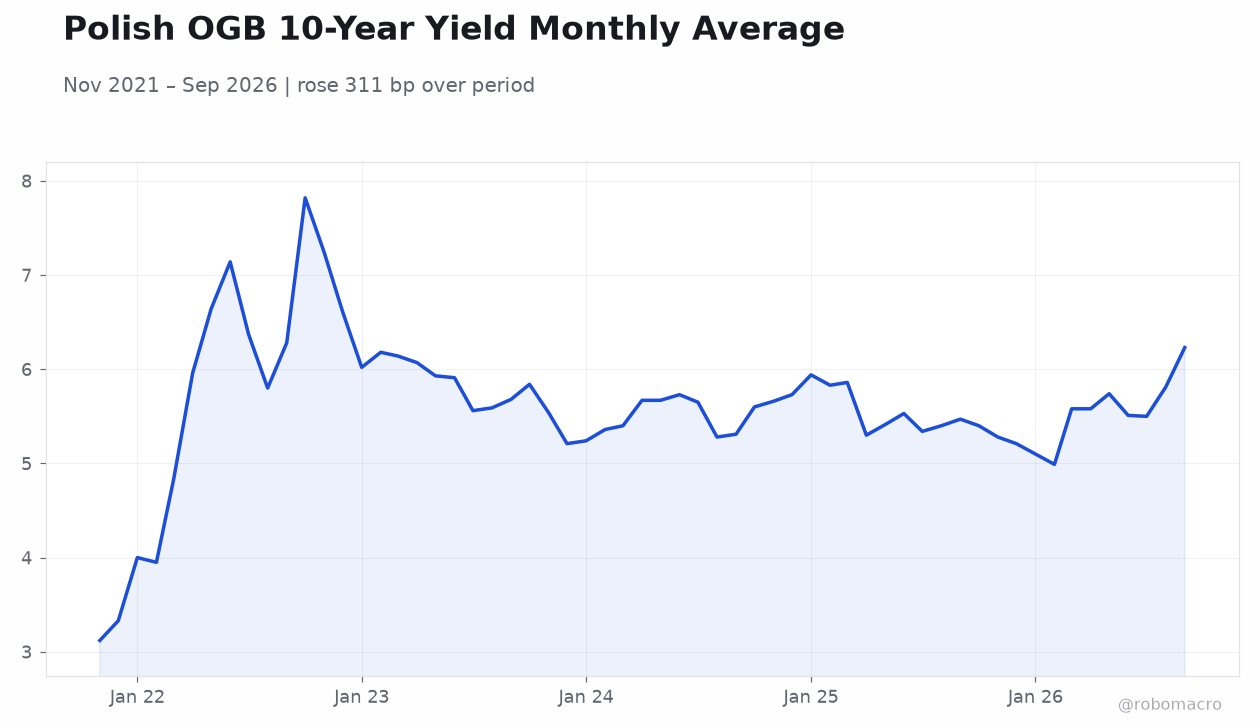
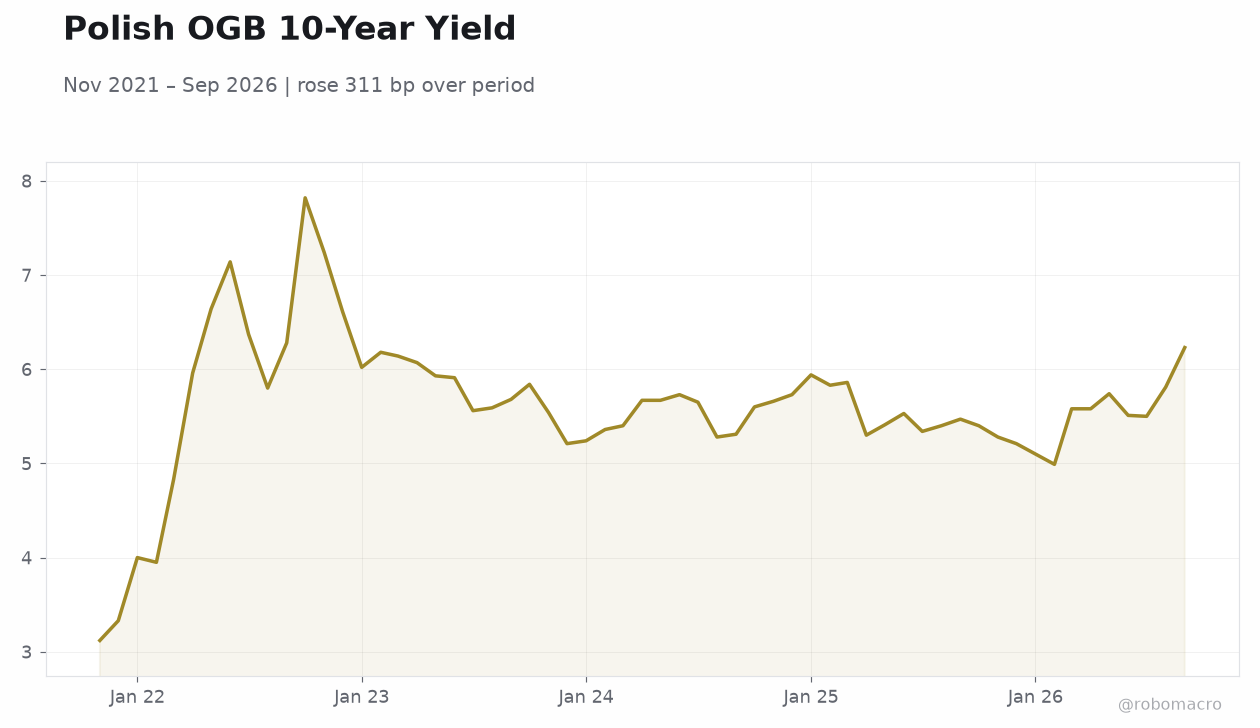 Polish OGB 10-Year Yield | Type: macro_line | Polish OGB 10-Year Yield: 6.23 (2026-09-01) | Range: 3.12–7.82 | Trend(6pt): 3.12,6.02,5.4,5.41,5.5,6.23
Today's Economic Events
| Data | Prior | Cons | Time |
|---|---|---|---|
| Inflation Rate Year-over-Year Preliminary | 4.10 | - | 04:30 |
- Poland's preliminary October CPI is the day's sole regional release, with the prior print at 4.1% y/y keeping NBP firmly on hold at 3.75%.
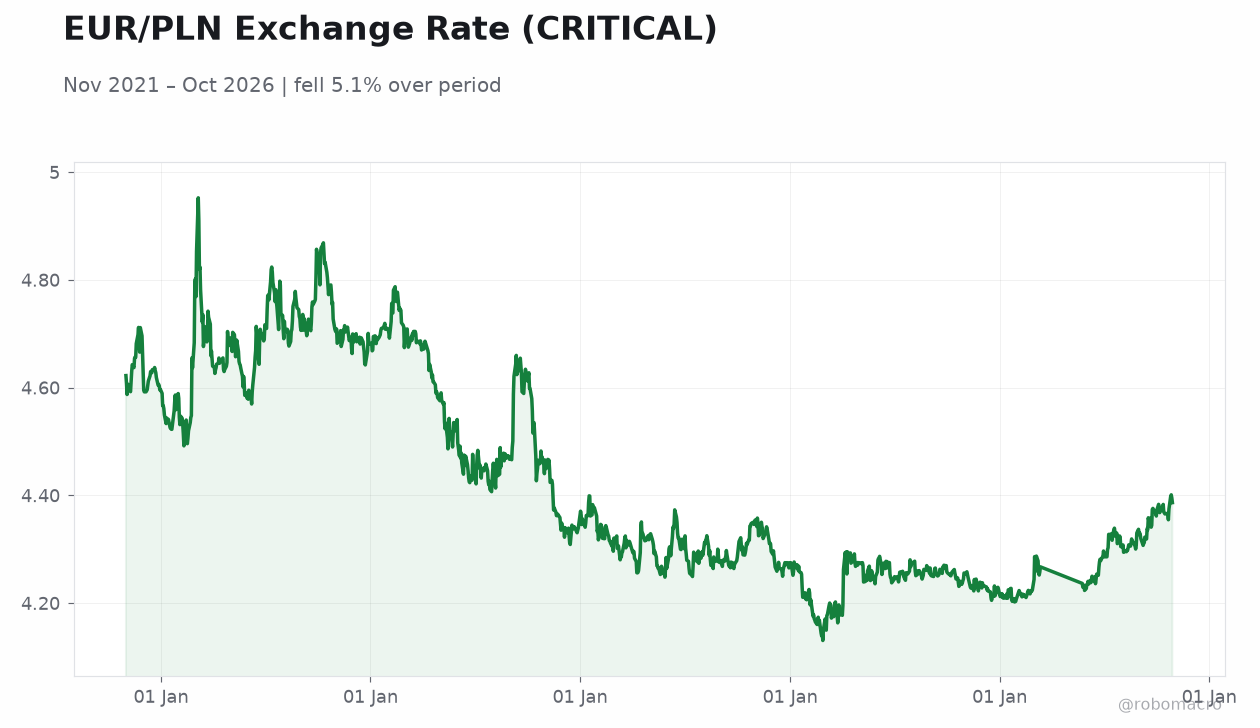
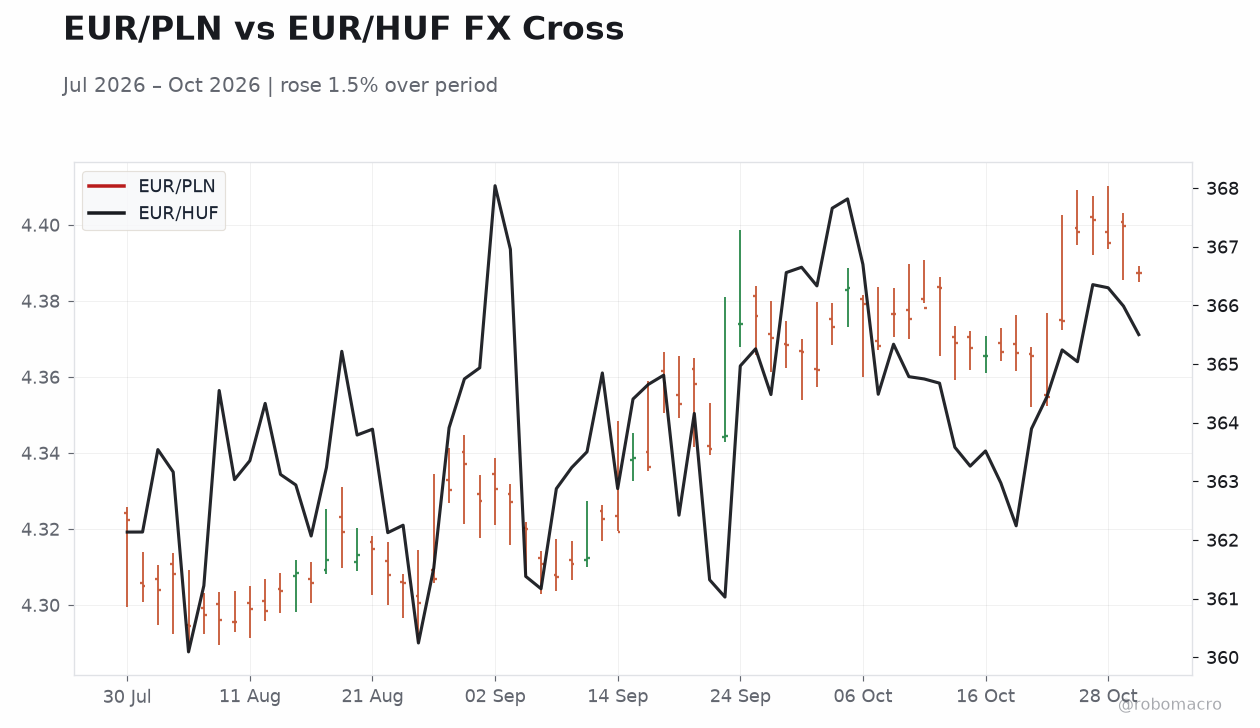
- The forint firmed through 365 versus the euro as markets positioned for US GDP and ECB signals; EUR/PLN slipped 0.29% to 4.39.
- Turkey's unemployment rose to 8.4% while the trade deficit narrowed to USD 5.16bn, underscoring uneven rebalancing under the CBRT's tight stance.
Yesterday's Recap
Turkey's headline unemployment rate printed at 8.4% on October 27, up from 7.9% previously, signaling softening in the labor market even as the CBRT maintains one of the region's tightest policy stances. The final October balance of trade showed a deficit of USD 5.16bn, modestly narrower than both the prior USD 5.24bn and consensus of USD 5.23bn, a marginal positive for the external adjustment story. Regional FX markets were constructive: EUR/PLN fell 0.29% to 4.39 and EUR/HUF declined 0.15% to 365.44, with the forint holding firm despite a softer euro against the dollar.
EUR/CZK was essentially flat at 24.33. USD/TRY edged up 0.19% to 49.93, reflecting continued managed depreciation. Equities were mixed-to-positive, with iShares Poland up 0.90% and the BIST 100 adding 0.13%.
Brent crude's 2.42% slide to USD 112.10 offered relief to the region's energy-import-dependent economies.
The Day Ahead
Poland releases its preliminary October inflation rate at 04:30 ET, the only scheduled Emerging Europe data point today. The prior reading stood at 4.1% y/y, and the print will be scrutinized for whether disinflation toward the NBP's target is resuming after a sticky stretch. A downside surprise would reinforce the case for the NBP's extended hold at 3.75%, while an upside print could revive tightening chatter.
Beyond Poland, the calendar is empty across Czech Republic, Hungary, Romania, and Turkey, leaving regional markets to trade off global risk sentiment and euro-area rate expectations. Liquidity may thin ahead of month-end.
Other Economic Notes
Hungary and the US signed an agreement on the "Trump Peace Pipelines Framework," strengthening cooperation on regional natural gas and oil infrastructure — a meaningful diversification signal for a region still working to reduce Russian energy exposure. The MNB also appointed a supervisory commissioner to Quartz Fund Management, an administrative action tied to the Matolcsy-era controversy that bears watching for Hungarian financial-sector governance. Across the region, energy import dependency remains the shared vulnerability, with Brent's pullback providing only temporary relief.
↓ p.2