Emerging Europe Macro Daily(Beta Mode)
NBP Holds as Turkish Inflation, Deficit Diverge
Market Snapshot
| Asset | Level | Change |
|---|---|---|
| BIST 100 | 11,478.10 | +4.12% |
| iShares Poland | 43.98 | +3.07% |
| EUR/PLN | 4.39 | -0.52% |
| EUR/HUF | 361.86 | -0.56% |
| EUR/CZK | 24.28 | -0.24% |
| USD/TRY | 50.04 | +0.06% |
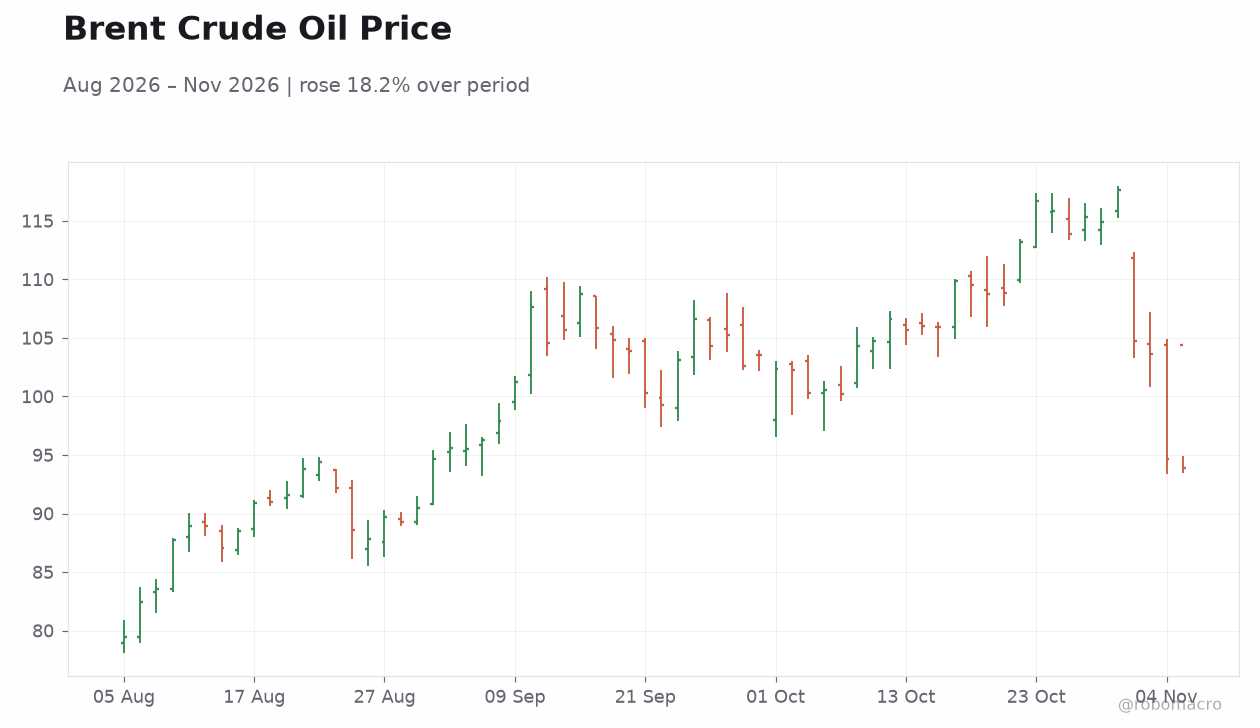
| Brent Crude | 93.90 | -0.76% |
| Gold | 4,142.20 | +1.70% |
| Bitcoin | 80,345.47 | +3.88% |
| Poland 10Y Govt Yield | - | - |
| Hungary 10Y Govt Yield | - | - |
Prior Economic Events
| Data | Prior | Cons | Actual |
|---|---|---|---|
| Inflation Rate Month-over-Month | 1.84 | 2.40 | 2.58 |
| Inflation Rate Year-over-Year | 29.73 | 29.56 | 29.77 |
| Balance of Trade Prel | -5,160m | - | -6,700m |
| Central Bank Interest Rate Decision | 3.75 | 3.75 | 3.75 |
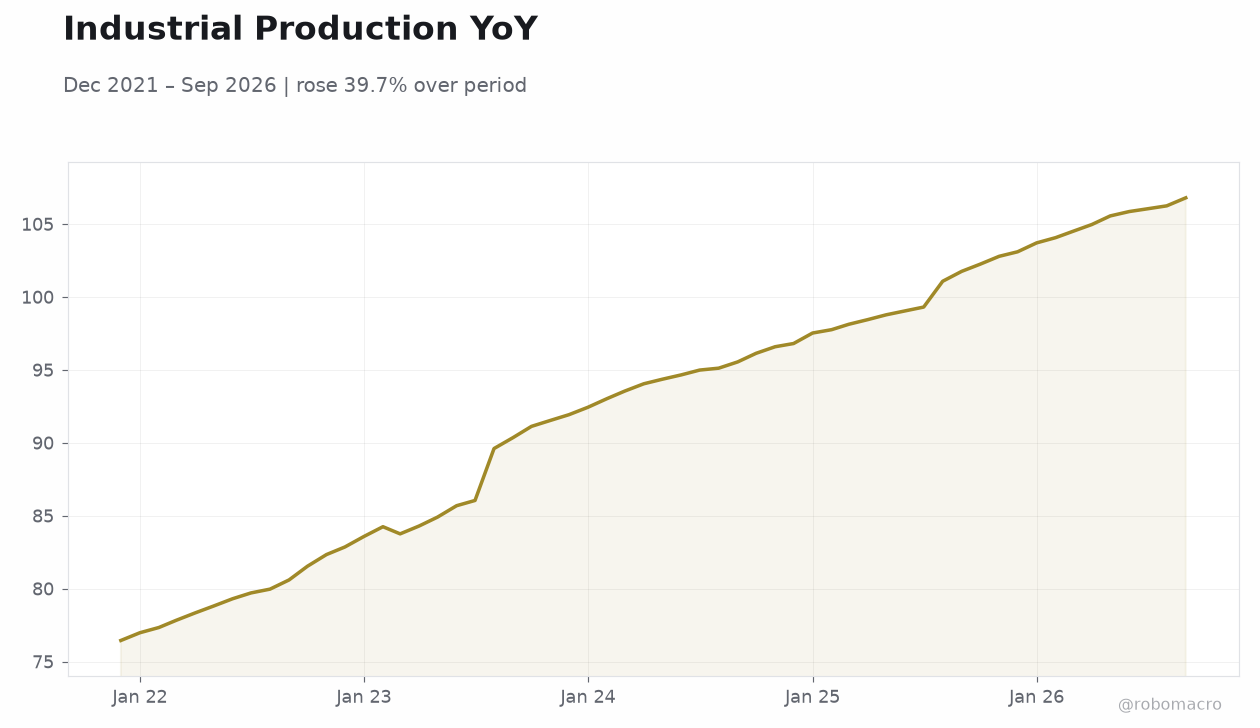 Industrial Production YoY | Type: macro_line | Industrial Production YoY: 106.8 (2026-09-01) | Range: 76.45–106.8 | Trend(6pt): 76.45,84.25,94.05,99.05,106.2,106.8
Today's Economic Events
| Data | Prior | Cons | Time |
|---|---|---|---|
| No events available | |||
- NBP held its policy rate at 3.75% on November 4, in line with consensus, keeping Poland's easing cycle paused amid CPI at 3.21%.
- Turkish CPI printed 2.58% m/m and 29.77% y/y, above consensus, while the preliminary trade deficit widened sharply to -$6.7bn.
- Regional FX firmed against the euro (EUR/PLN -0.52%, EUR/HUF -0.56%), with BIST 100 surging 4.12% and iShares Poland up 3.07%.
Yesterday's Recap
Turkey dominated yesterday's data flow, and the prints were uncomfortable. November 3 releases showed Turkish CPI at 2.58% m/m against a 2.4% consensus, with the y/y rate at 29.77% versus 29.56% expected — a marginal upside surprise that keeps the CBRT's disinflation path under scrutiny. The preliminary trade balance deteriorated to -$6.7bn from -$5.16bn previously, a widening gap that complicates the external adjustment story.
Poland's NBP rate decision on November 4 delivered a hold at 3.75%, exactly as consensus expected, leaving the policy rate effective since March 5 unchanged. Markets read the Polish hold as neutral-to-dovish given CPI at 3.21%, and Polish assets rallied hard: iShares Poland gained 3.07% and EUR/PLN fell 0.52% to 4.39. The forint also strengthened, EUR/HUF down 0.56% to 361.86, while EUR/CZK edged 0.24% lower to 24.28.
BIST 100 was the standout, up 4.12% to 11,478.10, even as USD/TRY held near 50.04 (+0.06%).
The Day Ahead
The Emerging Europe calendar is empty for both today (November 5) and tomorrow (November 6), so price action will be driven by positioning around yesterday's Turkish inflation surprise and the Polish hold. With no domestic prints to anchor trading, regional FX and rates will likely take their cue from euro-area and global risk sentiment. The next scheduled event risk sits further out: MNB's November 17 meeting and CNB's December 17 decision are the nearest central bank catalysts.
In the interim, markets will watch whether the lira can hold the 50 level against the dollar and whether the zloty's post-NBP strength persists. Turkish trade and inflation follow-through will be monitored for signs the deficit widening is structural rather than seasonal.
Other Economic Notes
Hungary's policy backdrop is generating notable commentary. Portfolio.hu reports an Erste view that Hungary's mortgage market could contract by HUF 1,000bn, with the banking sector still awaiting a structural overhaul, while the Otthon Start program has doubled mortgage uptake in recent weeks — pulling forward demand. Separately, Virovácz Péter argues the Hungarian base rate could be frozen for as long as a year and that the forint is settling into a narrow band, with asset prices now driven mainly by global conditions rather than domestic policy credibility.
↓ p.2