Emerging Europe Macro Daily(Beta Mode)
NBP Holds at 3.75%, Turkish CPI Stays Near 30%
Market Snapshot
| Asset | Level | Change |
|---|---|---|
| BIST 100 | 11,333.30 | -1.26% |
| iShares Poland | 43.52 | -1.18% |
| EUR/PLN | 4.40 | +0.44% |
| EUR/HUF | 364.22 | +0.65% |
| EUR/CZK | 24.34 | +0.35% |
| USD/TRY | 50.10 | +0.13% |
| Brent Crude | 99.49 | +1.22% |
| Gold | 4,051.70 | -1.50% |
| Bitcoin | 75,370.36 | -6.26% |
| Poland 10Y Govt Yield | - | - |
| Hungary 10Y Govt Yield | - | - |
Prior Economic Events
| Data | Prior | Cons | Actual |
|---|---|---|---|
| Inflation Rate Month-over-Month | 1.84 | 2.40 | 2.58 |
| Inflation Rate Year-over-Year | 29.73 | 29.56 | 29.77 |
| Balance of Trade Prel | -5,160m | - | -6,700m |
| Central Bank Interest Rate Decision | 3.75 | 3.75 | 3.75 |
 Turkey Policy Rate Path | Type: macro_line | CBRT Policy Rate (%): 36 (2026-11-03) | Range: 8.5–50 | Trend(5pt): 15,8.5,50,43,36
Today's Economic Events
| Data | Prior | Cons | Time |
|---|---|---|---|
| No events available | |||
- The NBP held its policy rate at 3.75% on Nov 4, in line with consensus, with Polish CPI at 3.21% YoY keeping real rates positive.
- Turkey's November inflation print came in hot: 2.58% MoM versus 2.4% consensus, with YoY at 29.77% — slightly above the 29.56% expected.
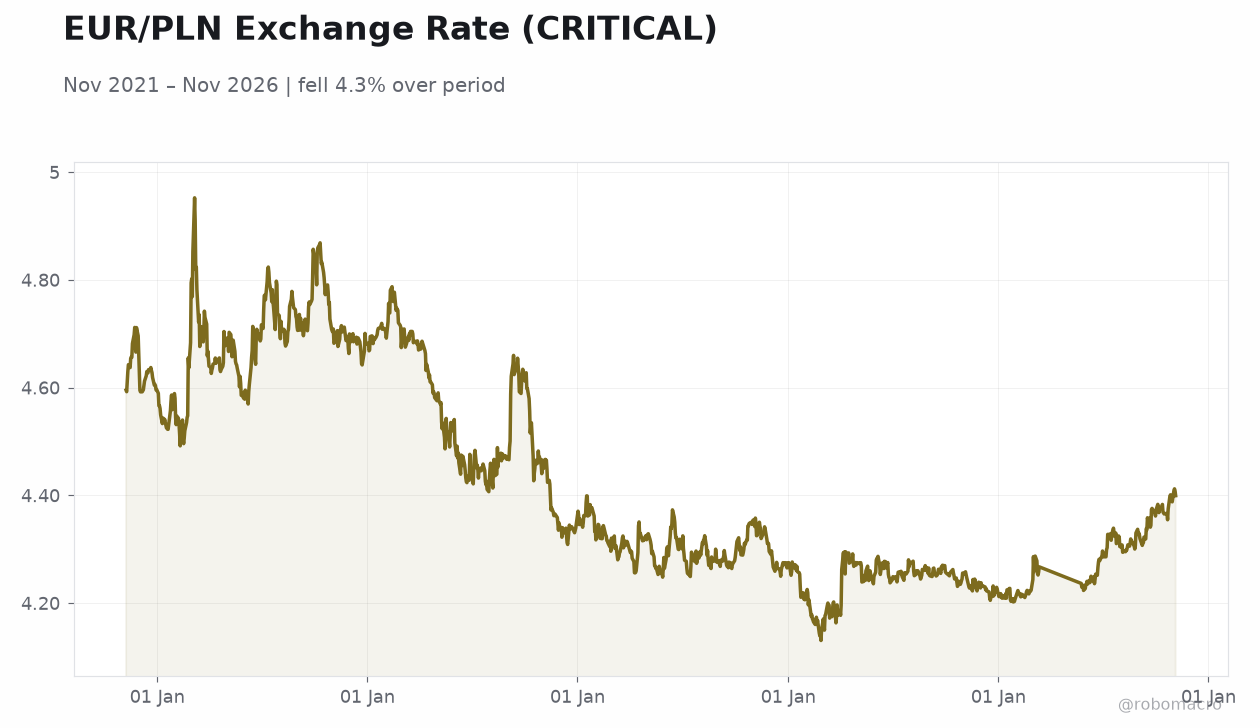
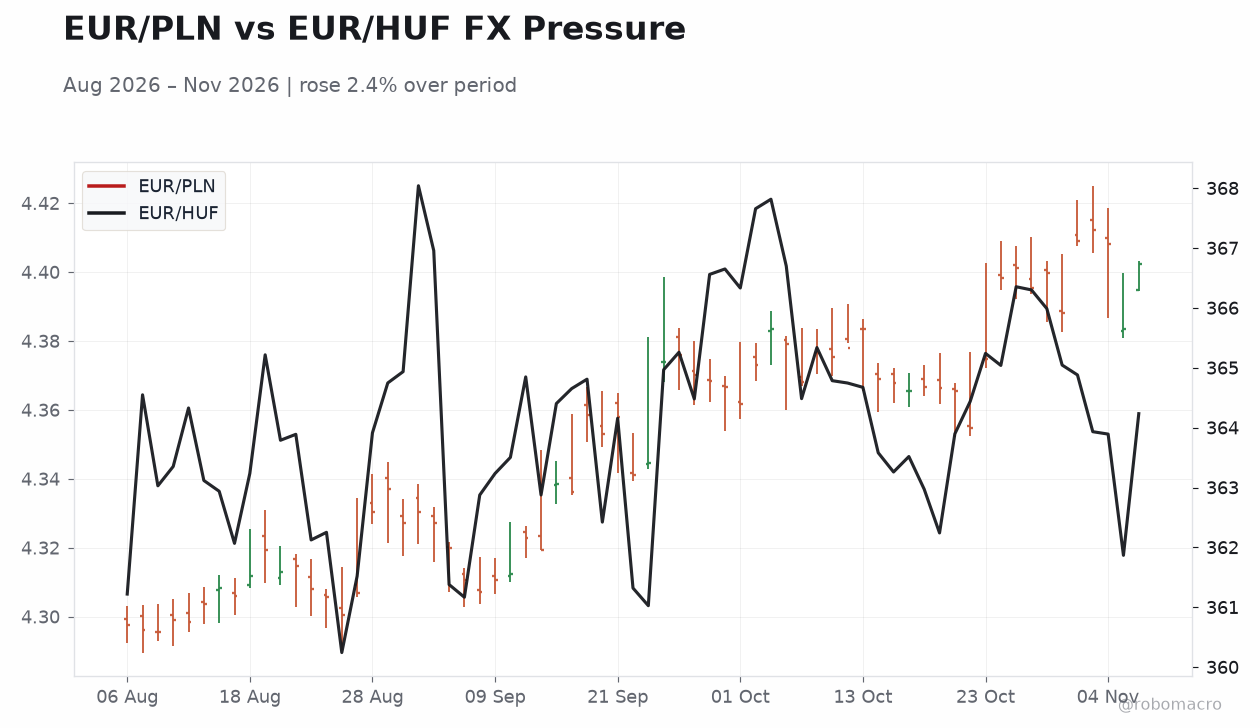
- CEE FX weakened broadly against the euro Thursday, with EUR/HUF up 0.65% and EUR/PLN up 0.44%, as the forint gave back its post-US midterm gains.
Yesterday's Recap
Turkey dominated the regional data calendar. November CPI printed at 2.58% MoM against a 2.4% consensus, while YoY inflation came in at 29.77% versus 29.56% expected — a marginal upside surprise that keeps the CBRT's disinflation path under scrutiny. The preliminary trade balance widened sharply to a -$6.7bn deficit from -$5.16bn previously, underscoring resilient domestic demand and energy import costs with Brent near $99.49.
In Poland, the NBP held its policy rate at 3.75% on Nov 4, exactly as consensus expected, with Polish CPI at 3.21% YoY leaving real rates comfortably positive. Markets reacted defensively: the BIST 100 fell 1.26% and iShares Poland dropped 1.18%. CEE currencies softened against the euro — EUR/HUF rose 0.65% to 364.22, EUR/PLN 0.44% to 4.40, and EUR/CZK 0.35% to 24.34 — as the forint surrendered its midterm-election-driven rally.
USD/TRY edged up 0.13% to 50.10, with the lira's managed crawl intact.
The Day Ahead
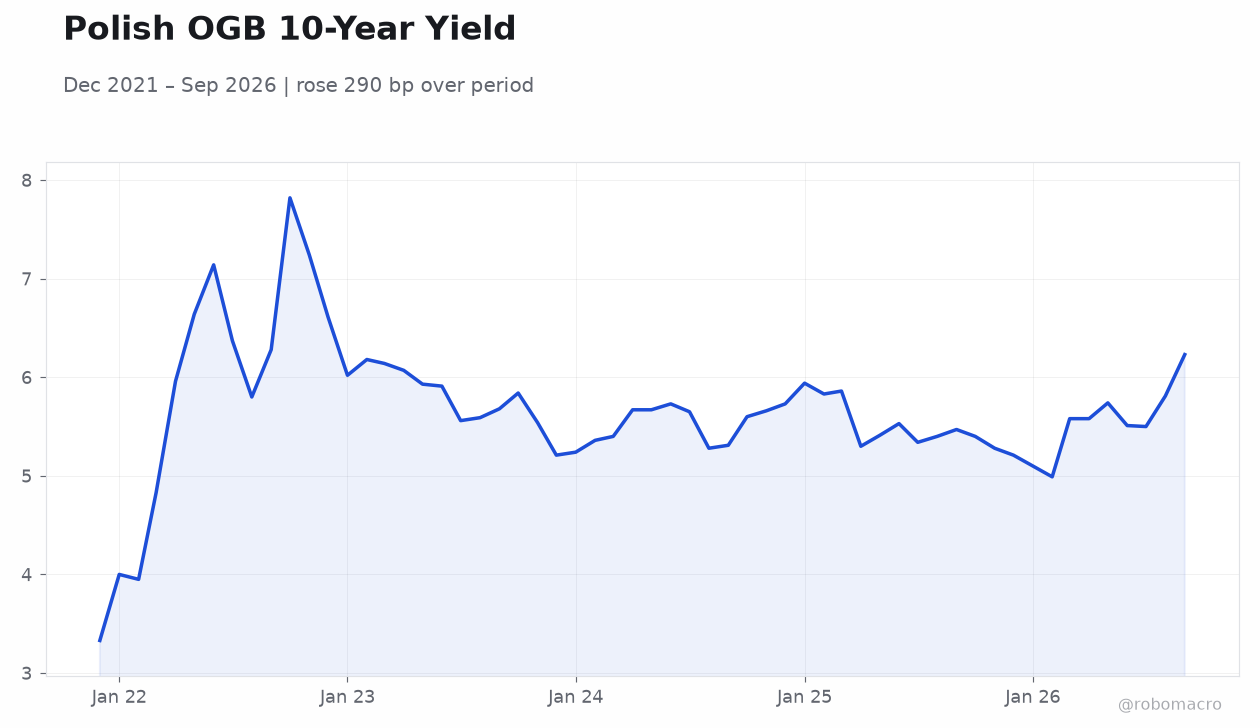
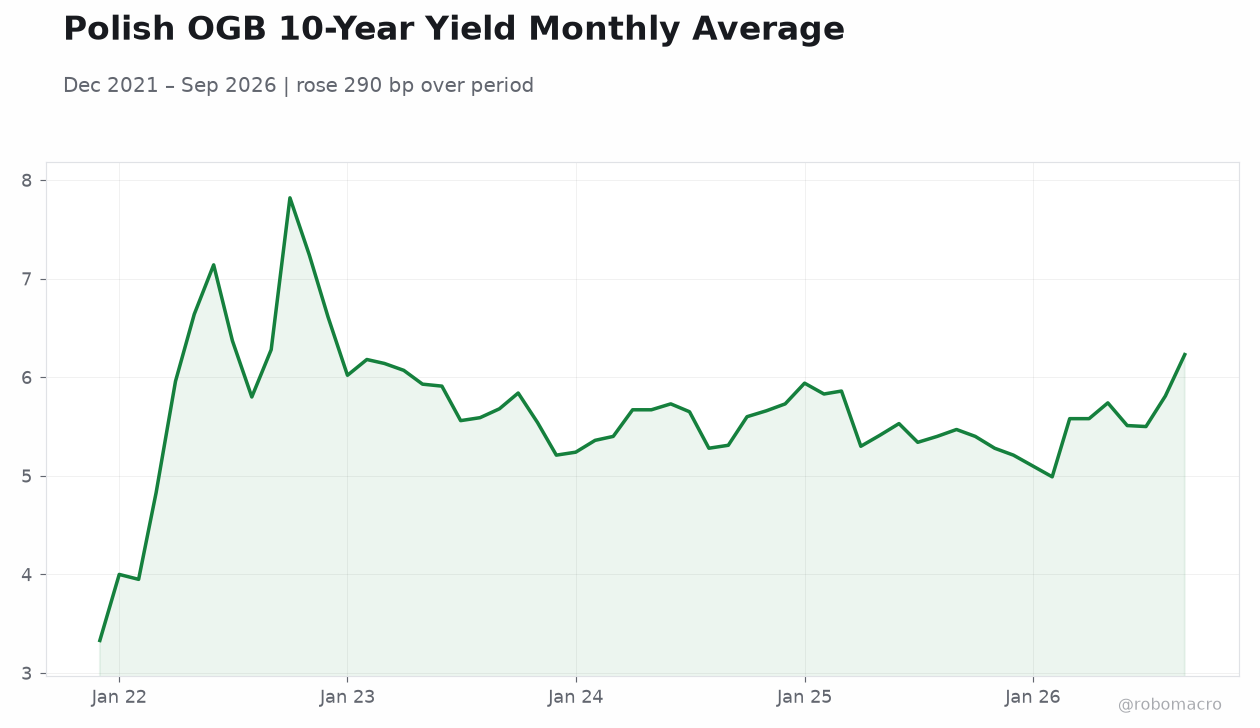
The regional calendar is empty for both today (Nov 6) and tomorrow (Nov 7), leaving markets to trade off external drivers and positioning ahead of the MNB's next meeting on Nov 17. With no domestic prints, CEE FX will take direction from euro-area rates and the dollar, where post-midterm volatility remains elevated. Polish and Hungarian 10-year yields will be watched for spillover from the BoE's hawkish hike and the Czech National Bank's decision yesterday.
Liquidity may thin into the weekend, amplifying moves in the forint, which has been the region's most volatile unit this week. Traders will also begin pricing Turkey's November inflation trajectory following the upside MoM surprise.
Other Economic Notes
Turkey's widening trade deficit is a structural vulnerability given its energy import bill, with Brent above $99 adding pressure to the current account and lira management. Poland's Innovate Poland program is drawing institutional capital — Erste Group as first foreign investor alongside Pekao and PKO BP committing PLN 500mn — signaling growing domestic appetite for innovation financing. The region's shared exposure to energy import costs remains the key common shock, particularly for Hungary and Czechia where industrial competitiveness is gas-intensive.
↓ p.2