Turkey IP in Focus as CEE FX Drifts, Fed Rhetoric Heats Up
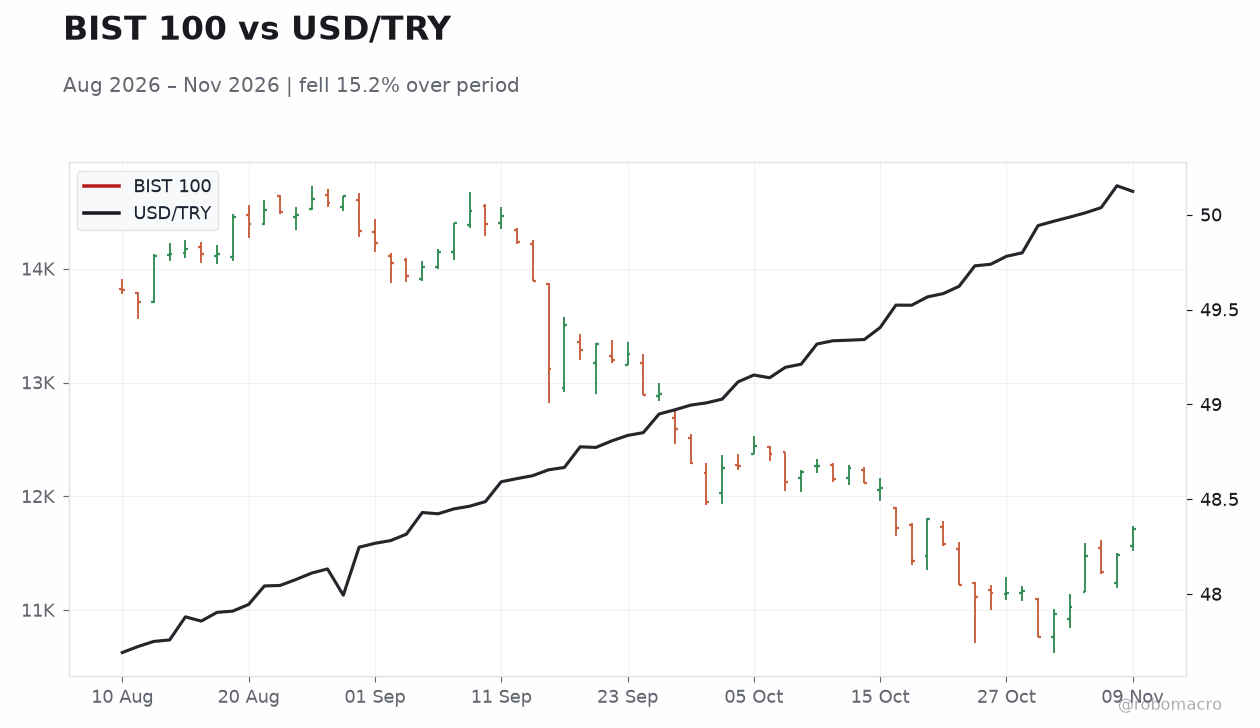
BIST 10011,712.70+2.00%
iShares Poland42.79-1.41%
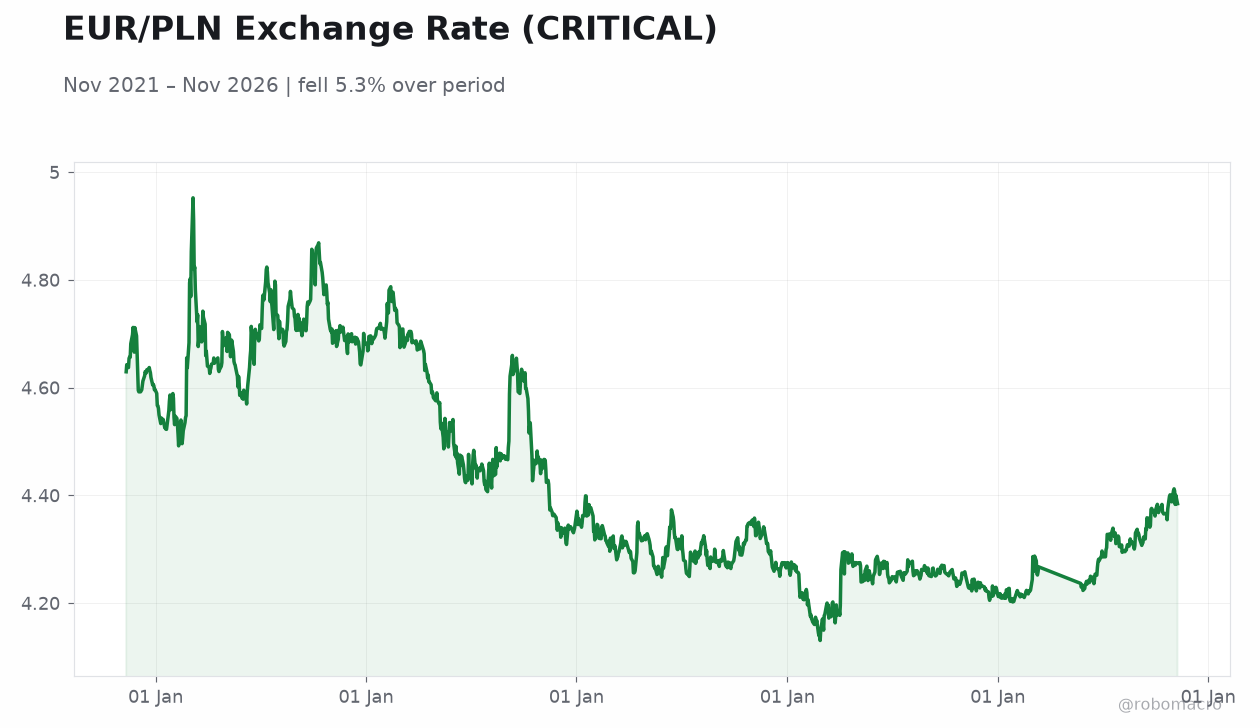
EUR/PLN4.38-0.16%
EUR/HUF362.02-0.04%
Market Snapshot
| Asset | Level | Change |
|---|
| BIST 100 | 11,712.70 | +2.00% |
| iShares Poland | 42.79 | -1.41% |
| EUR/PLN | 4.38 | -0.16% |
| EUR/HUF | 362.02 | -0.04% |
| EUR/CZK | 24.34 | +0.10% |
| USD/TRY | 50.22 | +0.20% |
| Brent Crude | 91.54 | -1.11% |
| Gold | 4,125.90 | +0.28% |
| Bitcoin | 74,714.37 | +0.17% |
| Poland 10Y Govt Yield | - | - |
| Hungary 10Y Govt Yield | - | - |
Prior Economic Events
| Data |
Prior |
Cons |
Actual |
| No events available |
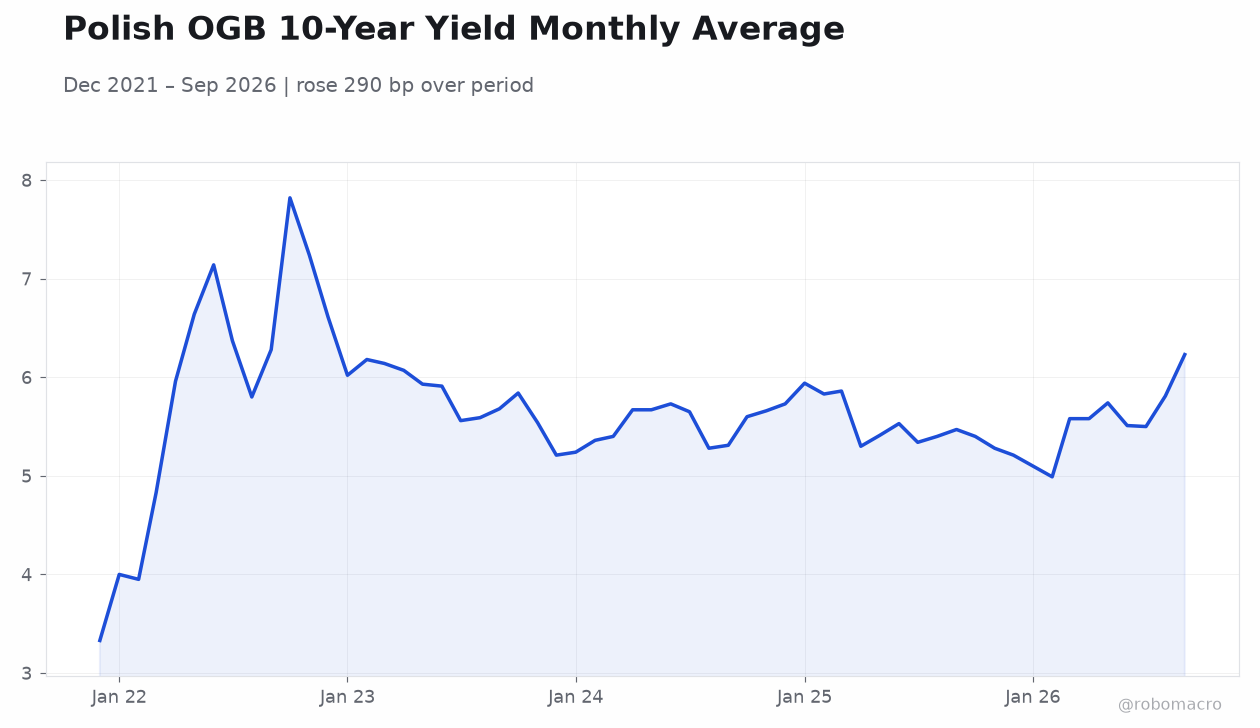
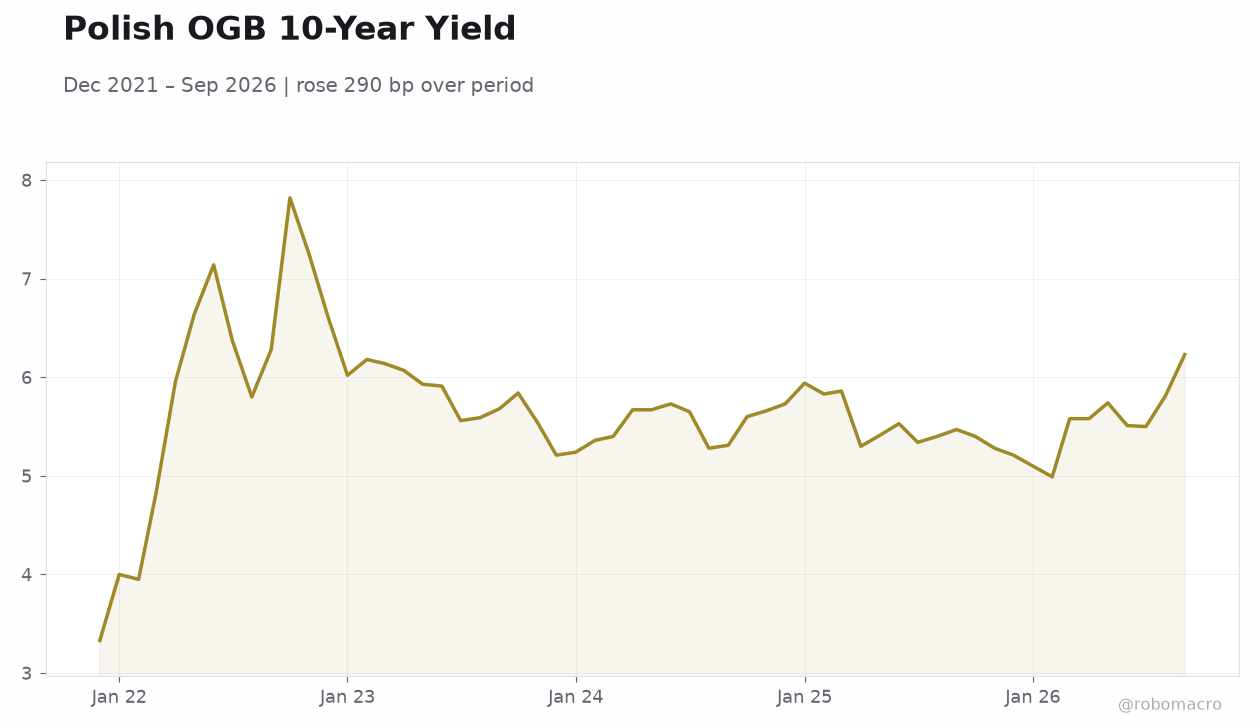 Polish OGB 10-Year Yield | Type: macro_line | Polish OGB 10-Year Yield: 6.23 (2026-09-01) | Range: 3.33–7.82 | Trend(6pt): 3.33,6.18,5.67,5.53,5.81,6.23
Today's Economic Events
| Data |
Prior |
Cons |
Time |
| Industrial Production Year-over-Year | -1.90 | - | 02:00 |
- Turkish industrial production for September is the sole regional calendar item today, with consensus absent after August's -1.9% YoY contraction; BIST 100 extended its rally +2.00% while the lira slipped to 50.22/USD.
- CEE FX was near-flat versus the euro (EUR/PLN 4.38, -0.16%; EUR/HUF 362.02, -0.04%; EUR/CZK 24.34, +0.10%), with iShares Poland off 1.41% as Warsaw equities lagged the region.
- Fed's Goolsbee flagged data-center buildout "overheating" the economy and inflation failure as a live policy concern — a reminder that core-rate paths, not regional data, are steering EMEU flows.
Yesterday's Recap
Monday's session was thin on regional macro prints, leaving markets to trade off global risk sentiment and positioning. Turkey was the clear outperformer, with the BIST 100 surging 2.00% to 11,712.70 even as USD/TRY edged 0.20% higher to 50.22, suggesting equity inflows rather than lira strength drove the move. Poland underperformed: iShares Poland fell 1.41% to 42.79, and EUR/PLN eased 0.16% to 4.38, a combination consistent with foreign investors trimming Warsaw exposure rather than a domestic macro shock.
The forint was essentially unchanged at 362.02 versus the euro, and the koruna softened marginally to 24.34. On the Polish data front, NBP's September deposit statistics showed a modest pickup in newly opened term deposits and slightly higher offered rates, a sign that households are gradually reallocating toward bank paper as rate-cut expectations build. Hungary's MFB disbursed HUF 34bn to the Demján Sándor private-capital investment fund, part of a broader state-led capex push.
Bond-yield levels for Poland and Hungary were not populated in the feed, so no yield moves can be quoted.
The Day Ahead
The only scheduled regional release is Turkey's September industrial production year-over-year at 02:00 ET, with no consensus published and August's print at -1.9%. Given the BIST's strong run and the lira's gradual crawl, a softer-than-August reading would reinforce the case that Turkish manufacturing is stabilizing after a prolonged contraction, while a deeper negative print would sharpen questions about the CBRT's growth-inflation trade-off. No Polish, Czech, Hungarian, or Romanian data are due, so CEE markets will likely take their cue from euro-area rates and global risk appetite.
The next meaningful regional catalyst is MNB's November 17 meeting, which will frame forint positioning into month-end. With the calendar this light, expect FX ranges to stay compressed and liquidity to remain thin.
Page 1
Never miss an issue
Subscribe to Emerging Europe Macro Daily and get each new issue delivered to your inbox.
Already a member? Visit robomacro.com
to log in and manage subscriptions, or use Forgot Password to set a password.