GCC Macro Daily(Beta Mode)
Saudi Deficit Widens as Oil Slumps
Market Snapshot
| Asset | Level | Change |
|---|---|---|
| Saudi Aramco | 26.24 | +0.31% |
| MSCI Saudi | 35.08 | +2.23% |
| MSCI UAE | 20.08 | +4.47% |
| MSCI Qatar | 17.46 | +3.13% |
| MSCI Kuwait | 35.45 | +0.80% |
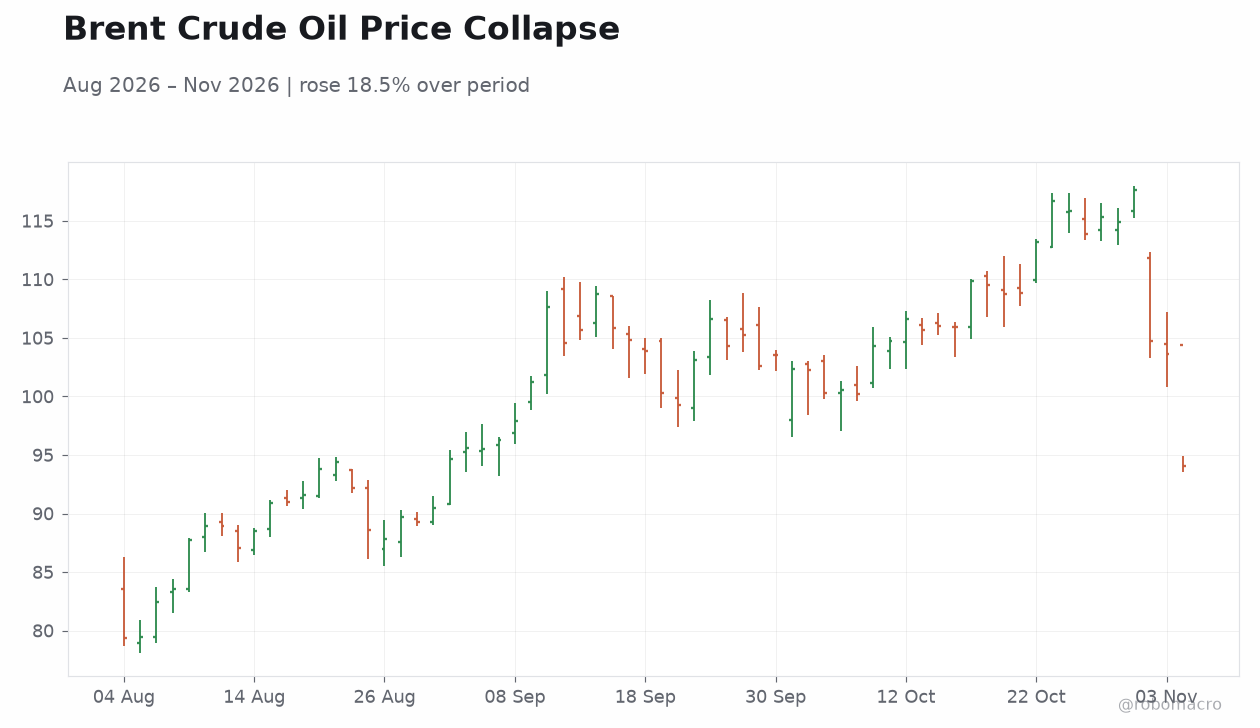
| Brent Crude | 94.12 | -9.15% |
| WTI Crude | 87.48 | -8.96% |
| Gold | 4,136.20 | +4.97% |
| USD/SAR | 3.75 | +2.90% |
| USD/AED | 3.67 | -0.01% |
| USD/KWD | 0.31 | +0.03% |
| Bitcoin | 80,732.50 | +4.38% |
Prior Economic Events
| Data | Prior | Cons | Actual |
|---|---|---|---|
| No events available | |||
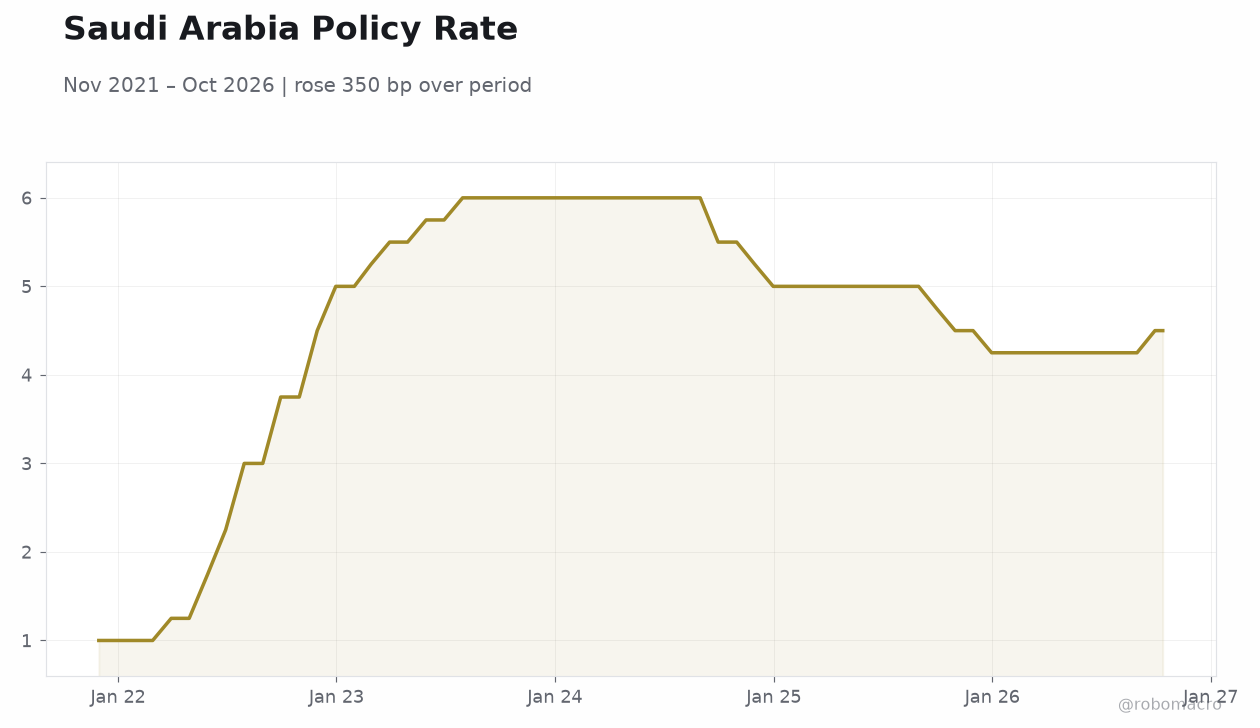 Saudi Arabia Policy Rate | Type: macro_line | Saudi policy rate: 4.5 (2026-10-13) | Range: 1–6 | Trend(5pt): 1,5.25,6,5,4.5
Today's Economic Events
| Data | Prior | Cons | Time |
|---|---|---|---|
| No events available | |||
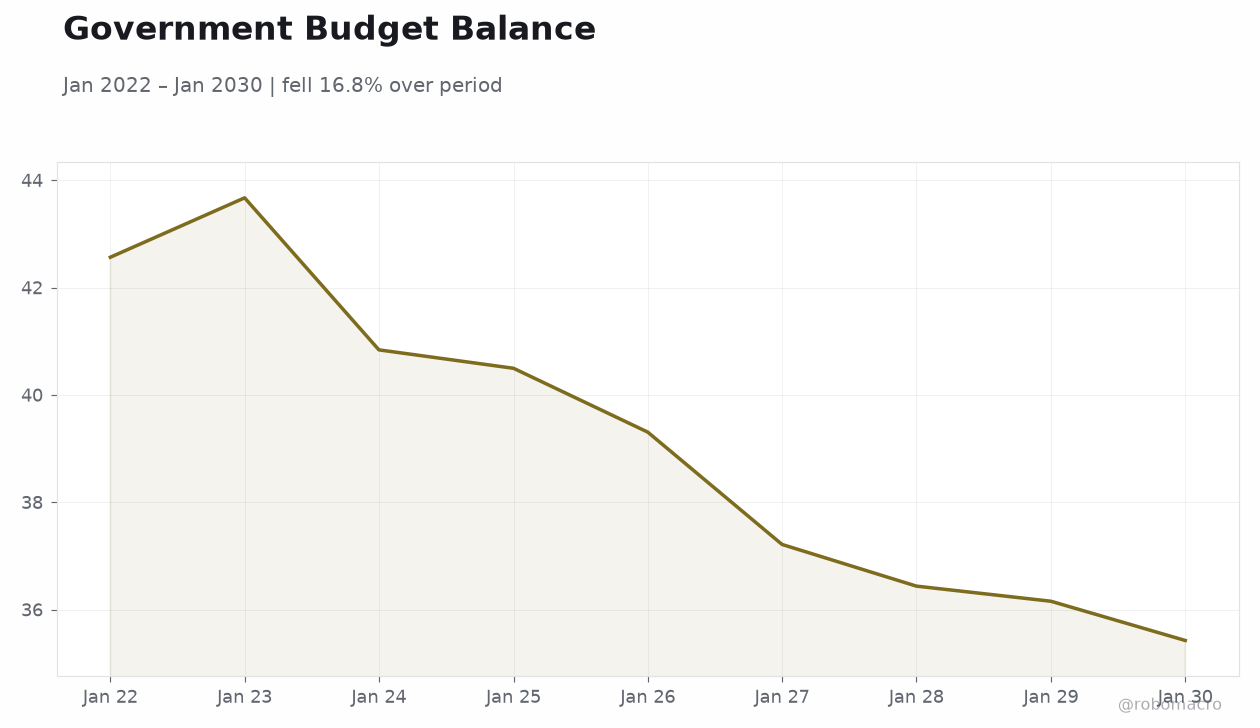
- Saudi Arabia posted a $22.38bn Q3 budget deficit as war-related spending and Aramco fees weighed on the fiscal position, even as Aramco profits surged 34.6% and FDI inflows jumped 33.5% to $42.4bn in 2025.
- Brent crude collapsed 9.15% to $94.12 and WTI fell 8.96% to $87.48, a sharp risk-off move that pressures fiscal breakevens across all six GCC economies.
- GCC equities rallied despite the oil selloff — MSCI UAE +4.47%, MSCI Qatar +3.13%, MSCI Saudi +2.23% — while gold surged 4.97% to $4,136.20 and Bitcoin gained 4.38%.
Yesterday's Recap
Saudi Arabia dominated the macro tape, reporting a Q3 budget deficit of $22.38bn that more than doubled year-on-year on war-related expenditure and Aramco fee obligations, per Bloomberg and Arab News. The fiscal strain contrasts with strong corporate and external metrics: Aramco profits rose 34.6% in Q3, and FDI inflows surged 33.5% to $42.4bn in 2025, underscoring the Kingdom's external position strength despite regional conflict. The UAE non-oil PMI eased to 54.8 as price pressures intensified, still firmly in expansionary territory but signaling margin compression.
Regional equity markets staged a broad rally — MSCI UAE +4.47%, MSCI Qatar +3.13%, MSCI Saudi +2.23%, MSCI Kuwait +0.80% — even as Brent crude plunged 9.15% to $94.12, an unusual decoupling that suggests markets are pricing geopolitical de-escalation optimism. Gold's 4.97% surge to $4,136.20 and Bitcoin's 4.38% gain to $80,732.50 point to persistent hedging demand. The USD/SAR printed at 3.75 with a 2.90% change, a mechanical reflection of the peg band rather than a fundamental re-rating.
The Day Ahead
No scheduled GCC macro data releases appear on the calendar for today or tomorrow, leaving markets to digest the Saudi fiscal print and oil price action. Traders will watch for follow-through in regional equity indices after yesterday's sharp rally, particularly whether the UAE and Qatar gains hold without an oil tailwind. Qatar's LNG positioning remains in focus after reports it is set to become the world's biggest buyer of US LNG by 2033, a strategic shift with long-term fiscal and trade implications.
Saudi Aramco's profit surge may prompt analyst revisions to dividend assumptions underpinning the Kingdom's fiscal framework. With no data catalysts, sentiment will be driven by oil price stabilization attempts and any regional security headlines.
Other Economic Notes
The Saudi fiscal trajectory is the key watch item — a $22.38bn quarterly deficit against surging Aramco profits and record FDI highlights the tension between Vision 2030 spending commitments and oil revenue volatility. ↓ p.2