GCC Macro Daily(Beta Mode)
Oil Plunges 6.6% Despite Aramco Infrastructure Strikes
Market Snapshot
| Asset | Level | Change |
|---|---|---|
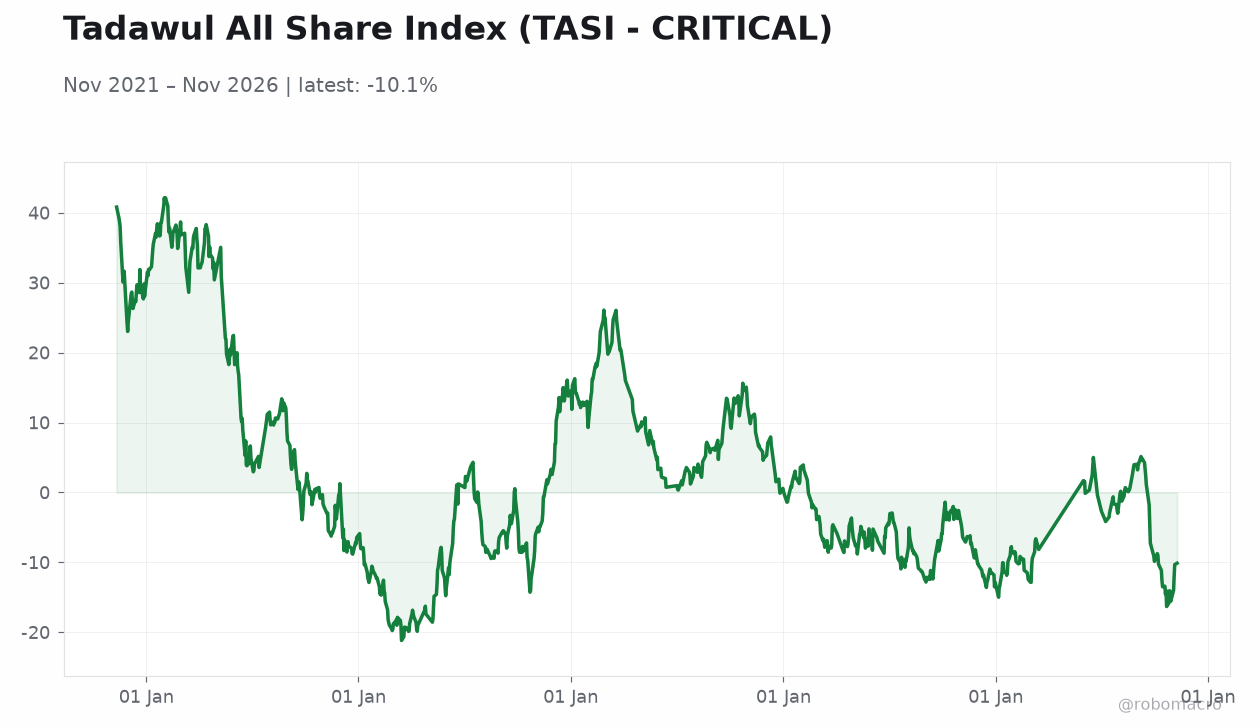
| Saudi Aramco | 26.16 | -0.30% |
| MSCI Saudi | 35.03 | +0.23% |
| MSCI UAE | 19.86 | +1.02% |
| MSCI Qatar | 17.60 | +0.74% |
| MSCI Kuwait | 36.00 | -0.68% |
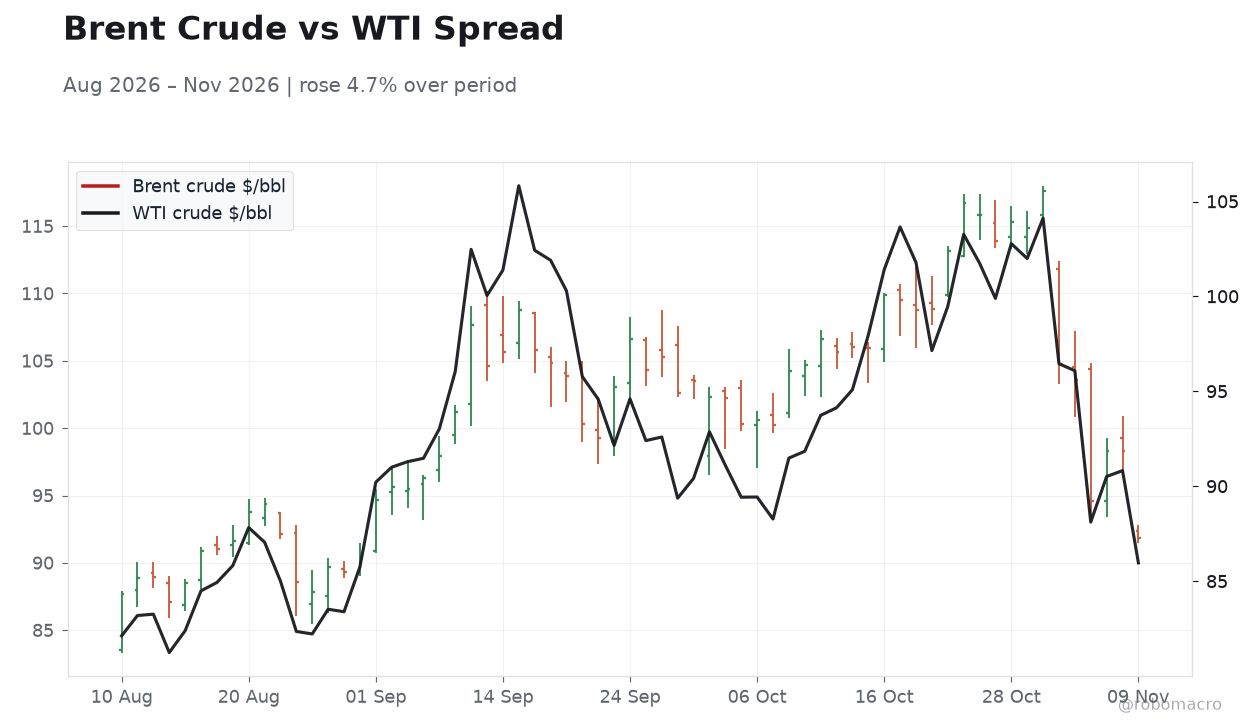
| Brent Crude | 91.85 | -6.58% |
| WTI Crude | 86.02 | -5.30% |
| Gold | 4,135.00 | +1.47% |
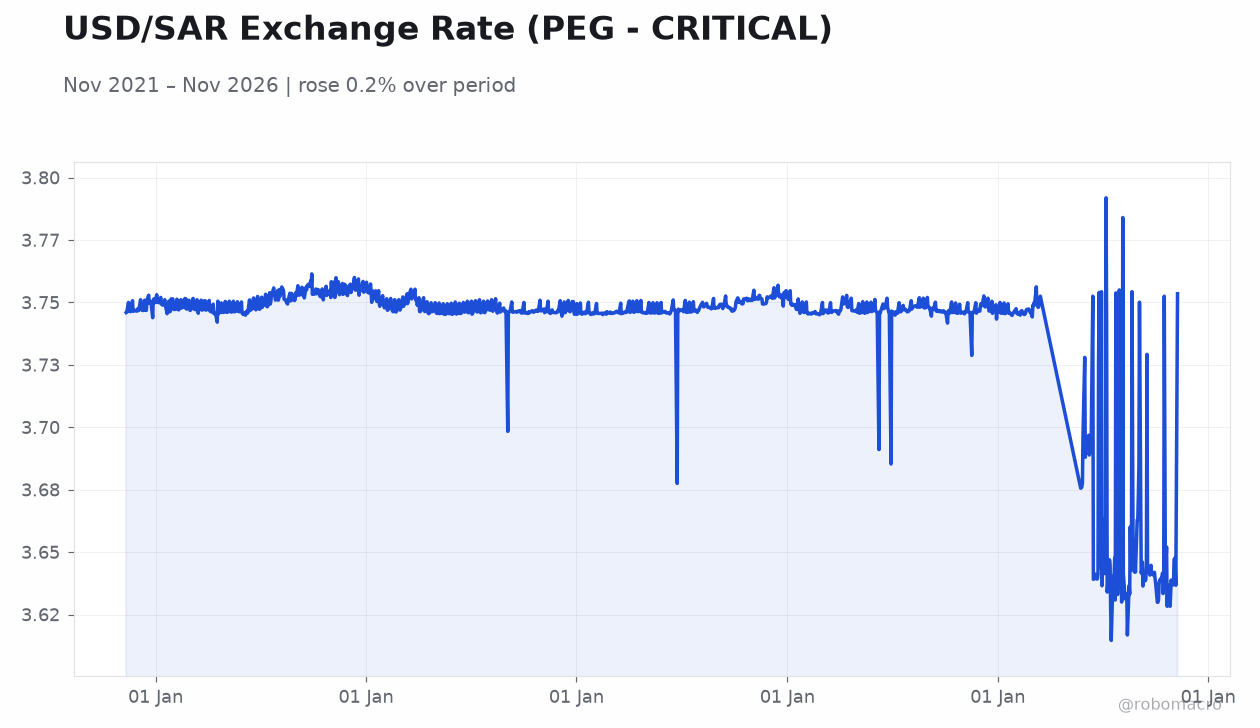
| USD/SAR | 3.75 | +3.06% |
| USD/AED | 3.67 | +0.02% |
| USD/KWD | 0.31 | +0.09% |
| Bitcoin | 74,928.33 | +0.46% |
Prior Economic Events
| Data | Prior | Cons | Actual |
|---|---|---|---|
| No events available | |||
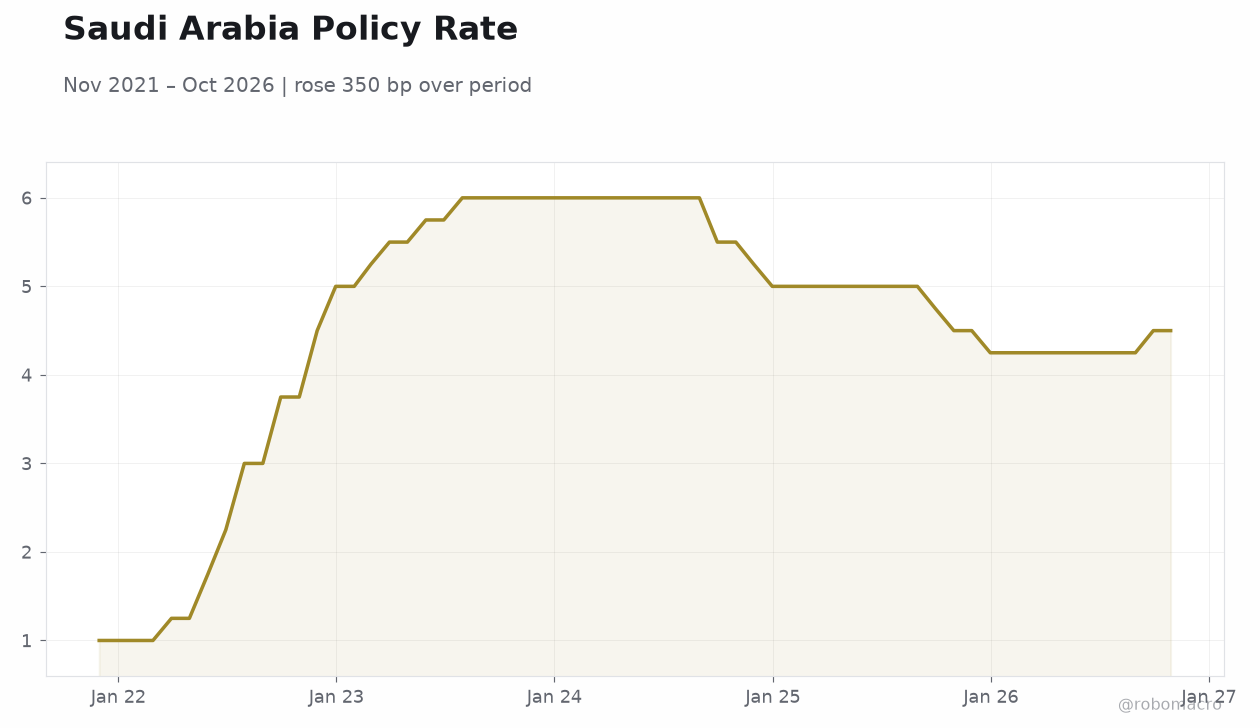 Saudi Arabia Policy Rate | Type: macro_line | SAMA policy rate %: 4.5 (2026-10-29) | Range: 1–6 | Trend(5pt): 1,5.25,6,5,4.5
Today's Economic Events
| Data | Prior | Cons | Time |
|---|---|---|---|
| No events available | |||
- Brent crude collapsed 6.58% to $91.85/bbl and WTI fell 5.30% to $86.02 despite Houthi attacks targeting Saudi Aramco infrastructure and the East-West pipeline
- Saudi Aramco reported surging profits even as its Riyadh building was struck; operations reportedly unaffected, but the security premium is being priced out
- UAE non-oil trade hit a record $802bn, underscoring diversification momentum while regional equity markets diverged sharply
Yesterday's Recap
Saudi Arabia dominated the tape as Houthi attacks targeted the East-West pipeline and an Aramco building in Riyadh, with operations reported unaffected and no casualties. The strikes coincided with a sharp 6.58% drop in Brent to $91.85/bbl, a counterintuitive move suggesting the market had already priced supply risk or is reacting to demand-side concerns. Saudi Aramco shares slipped 0.30% to SAR 26.16 while the MSCI Saudi index edged up 0.23% to 35.03.
The UAE strongly condemned the Houthi attacks, and Abu Dhabi's ADNOC signed a 10-year LNG supply deal with India's Gujarat Energy for 4 million tonnes. UAE equities outperformed, with MSCI UAE rising 1.02% to 19.86 and MSCI Qatar gaining 0.74% to 17.60, while MSCI Kuwait fell 0.68% to 36.00. The UAE reported record non-oil trade of $802bn, reinforcing the emirate's diversification trajectory.
Gold surged 1.47% to $4,135/oz, signaling persistent safe-haven demand despite the oil selloff.
The Day Ahead
No scheduled GCC macro data releases are on the calendar for Monday, leaving markets to digest weekend geopolitical developments and the sharp oil move. Traders will watch for any official statements from SAMA or Aramco regarding pipeline integrity and export continuity following the East-West pipeline strike. Regional equity markets will open against a backdrop of lower crude and elevated gold, testing the resilience of the recent UAE and Qatar rally.
Qatar's role as mediator in US-Iran talks remains in focus after a reported 45-minute Trump-Qatari PM meeting described as "positive." With no prints due, attention shifts to midweek liquidity conditions and any unscheduled sovereign commentary.
Other Economic Notes
Saudi Arabia continues to fortify its economy against external shocks, with the Red Sea seabed mapping initiative supporting a sustainable marine economy and a renewed $3bn lifeline to Pakistan reflecting Riyadh's regional influence strategy. Aramco was ranked the world's second-most valuable oil and gas brand at $47.3bn by Brand Finance, reinforcing its balance-sheet strength. The UAE property boom accelerated as IREIS 2026 opened in Abu Dhabi, while Dubai's food innovation hub won a top industry award.
↓ p.2