Yuan Hits Four-Year High as PBoC Backs Market FX
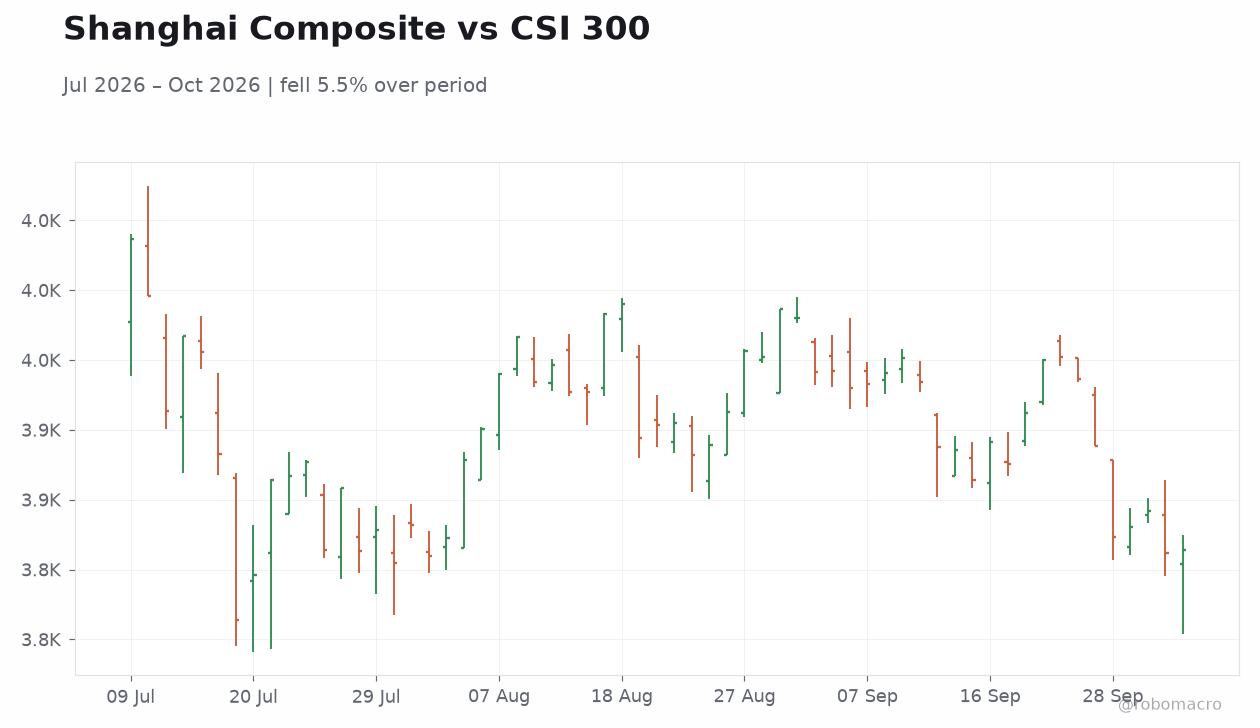
Shanghai Composite3,813.79+0.05%
CSI 3004,317.25+0.16%
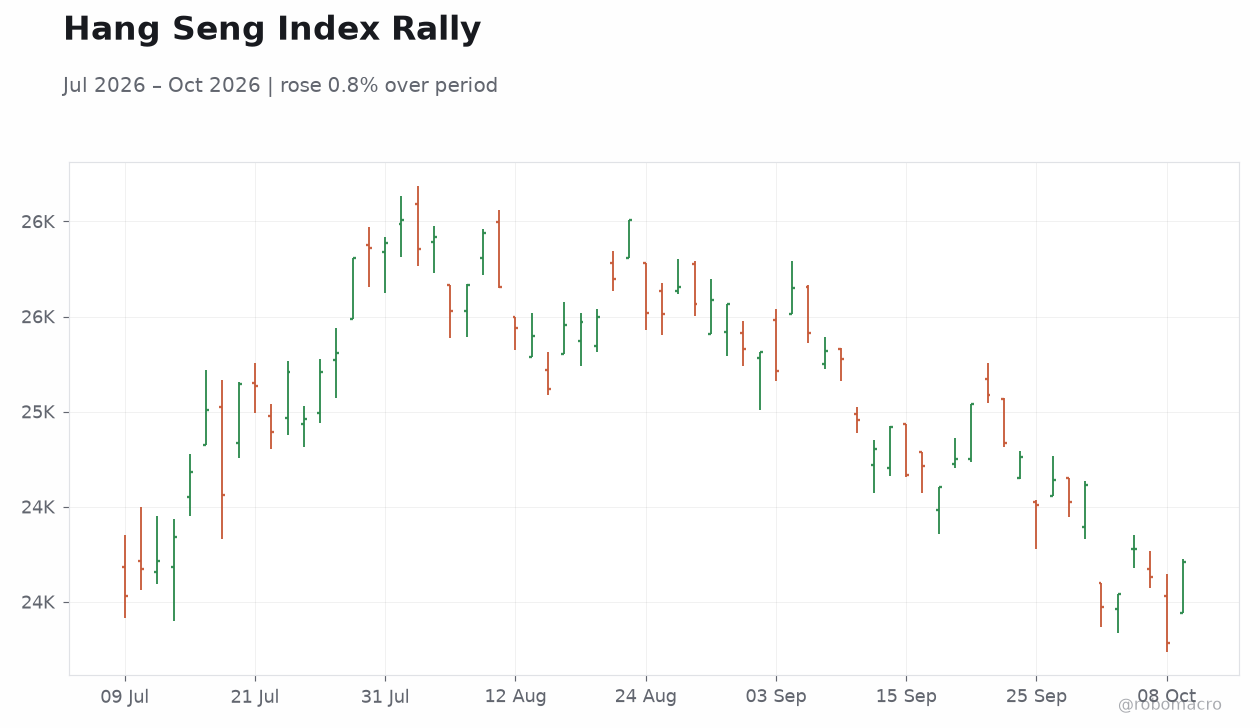
Hang Seng24,211.35+1.79%
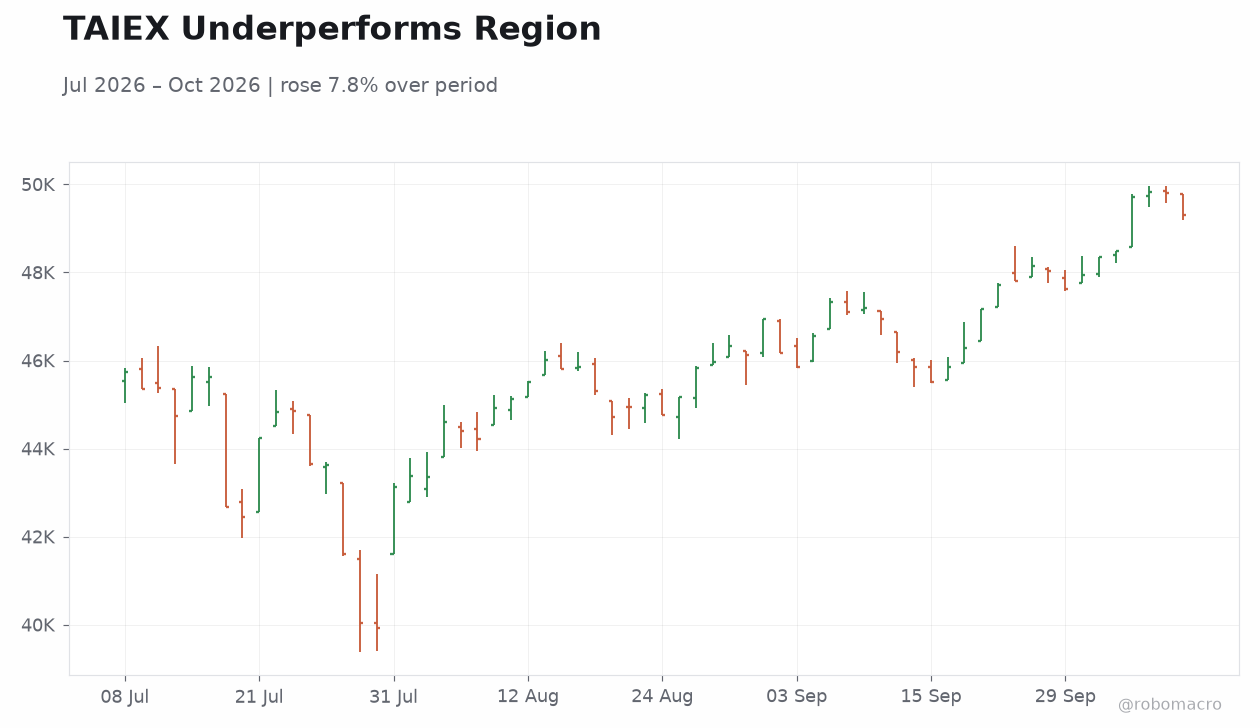
TAIEX49,313.44-0.99%
Market Snapshot
| Asset | Level | Change |
|---|
| Shanghai Composite | 3,813.79 | +0.05% |
| CSI 300 | 4,317.25 | +0.16% |
| Hang Seng | 24,211.35 | +1.79% |
| TAIEX | 49,313.44 | -0.99% |
| USD/CNY | 6.68 | -0.28% |
| USD/HKD | 7.85 | -0.01% |
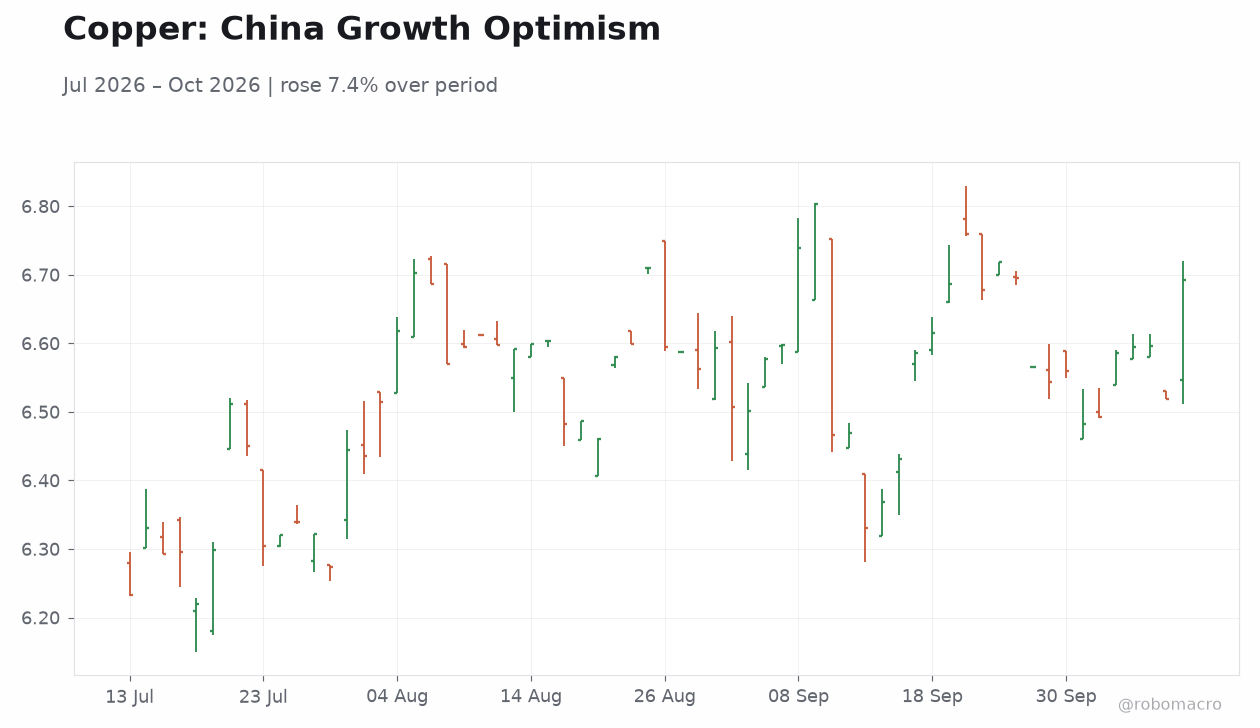
| Copper | 6.69 | +2.65% |
| Brent Crude | 104.72 | +0.42% |
| Gold | 4,216.30 | +1.43% |
| Bitcoin | 83,353.57 | +0.53% |
| China 2Y Govt Yield | - | - |
| China 10Y Govt Yield | - | - |
Prior Economic Events
| Data |
Prior |
Cons |
Actual |
| No events available |
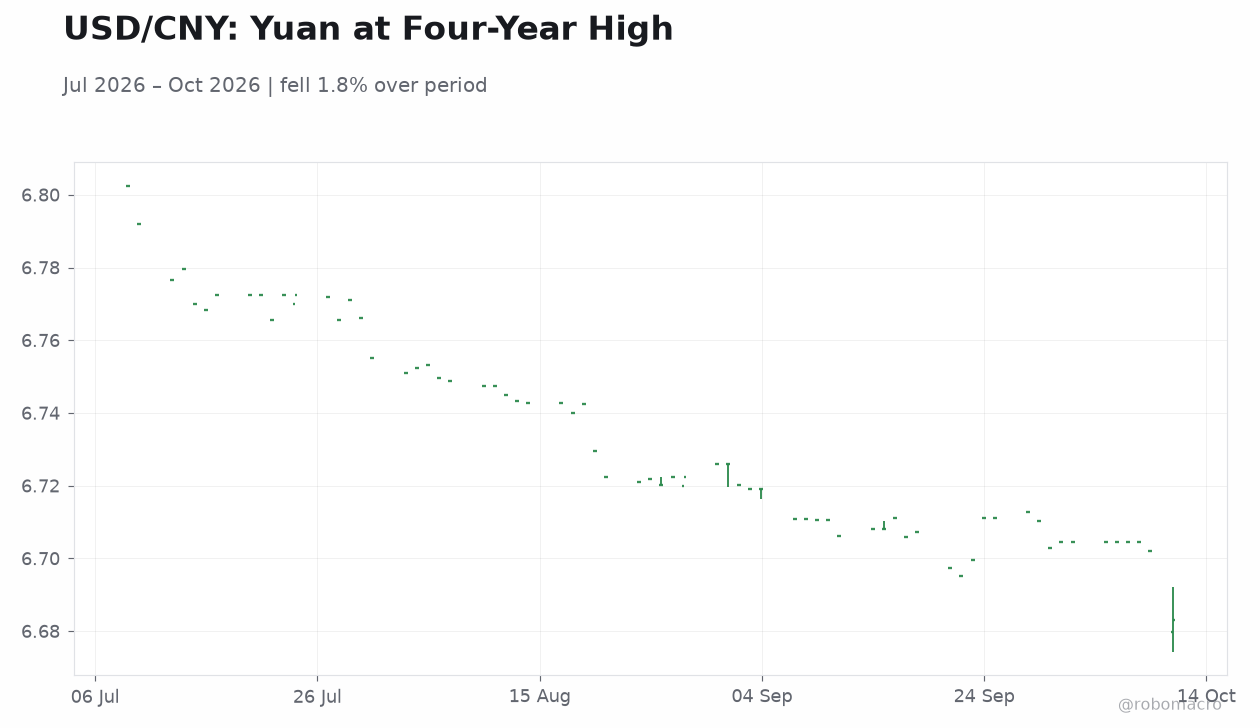 USD/CNY: Yuan at Four-Year High | Type: market_hloc | USD/CNY: 6.683 (2026-10-11) | Range: 6.683–6.802 | Trend(5pt): 6.802,6.751,6.72,6.707,6.683
Today's Economic Events
| Data |
Prior |
Cons |
Time |
| No events available |
- The yuan climbed to a four-year high against its trade-weighted basket after the PBoC rejected claims the currency is undervalued, insisting market forces set the exchange rate.
- Equities diverged: Hang Seng surged 1.79% to 24,211.35 while TAIEX slipped 0.99% to 49,313.44; copper jumped 2.65% on China growth optimism.
- USD/CNY firmed 0.28% to 6.68 as PBoC messaging reinforced a stronger-yuan bias without explicit intervention.
Yesterday's Recap
Mainland China dominated the macro tape as the People's Bank of China mounted a concerted communications push on the currency. The yuan advanced to a four-year high against a basket of trading-partner currencies, with USD/CNY strengthening 0.28% to 6.68, after the central bank rejected suggestions that the renminbi is undervalued and a key driver of the country's export surplus. PBoC officials reiterated that the market determines the exchange rate, a framing designed to deflect Western pressure for appreciation while still accommodating a firmer currency.
Commerzbank analysts characterized the rhetoric as a defense of the yuan narrative rather than a commitment to a specific level. Equity markets rewarded the stability trade: the Hang Seng Index rallied 1.79% to 24,211.35, while the Shanghai Composite edged up 0.05% to 3,813.79 and the CSI 300 gained 0.16% to 4,317.25. Taiwan's TAIEX bucked the regional advance, falling 0.99% to 49,313.44 as semiconductor heavyweights digested a cautious outlook from Bank of Korea Governor Rhee Chang-yong, who warned he could not guarantee a decade-long chip boom.
In cross-strait news, the US State Department accused China of destabilizing conduct in waters east of Taiwan, adding a geopolitical undertone to the session. Copper, a key China growth proxy, surged 2.65% to 6.69, while gold climbed 1.43% to 4,216.30 and Brent held near 104.72.
The Day Ahead
The calendar is thin into the new week, with no major mainland China, Hong Kong, or Taiwan data releases scheduled for Sunday. Attention shifts to Monday's open, where traders will assess whether the yuan's basket strength persists and whether the PBoC sets a firmer daily fixing to validate the move. Hong Kong money markets will be watched for HIBOR dynamics around the 7.85 handle in USD/HKD, which eased marginally by 0.01%, keeping the peg near the weak-side convertibility undertaking.
Regulator approval of active ETFs in mainland China, flagged by CITIC CLSA strategists, could shape A-share fund flows early in the week. Taiwan's equity market resumes with focus on semiconductor earnings previews and the Nikkei's ability to hold above key levels as a regional risk barometer. ↓ p.2
Page 1
Never miss an issue
Subscribe to Greater China Macro Daily and get each new issue delivered to your inbox.
Already a member? Visit robomacro.com
to log in and manage subscriptions, or use Forgot Password to set a password.