India Macro Daily(Beta Mode)
Rupee Rallies on RBI Defence; CPI at 5.54%
Market Snapshot
| Asset | Level | Change |
|---|---|---|
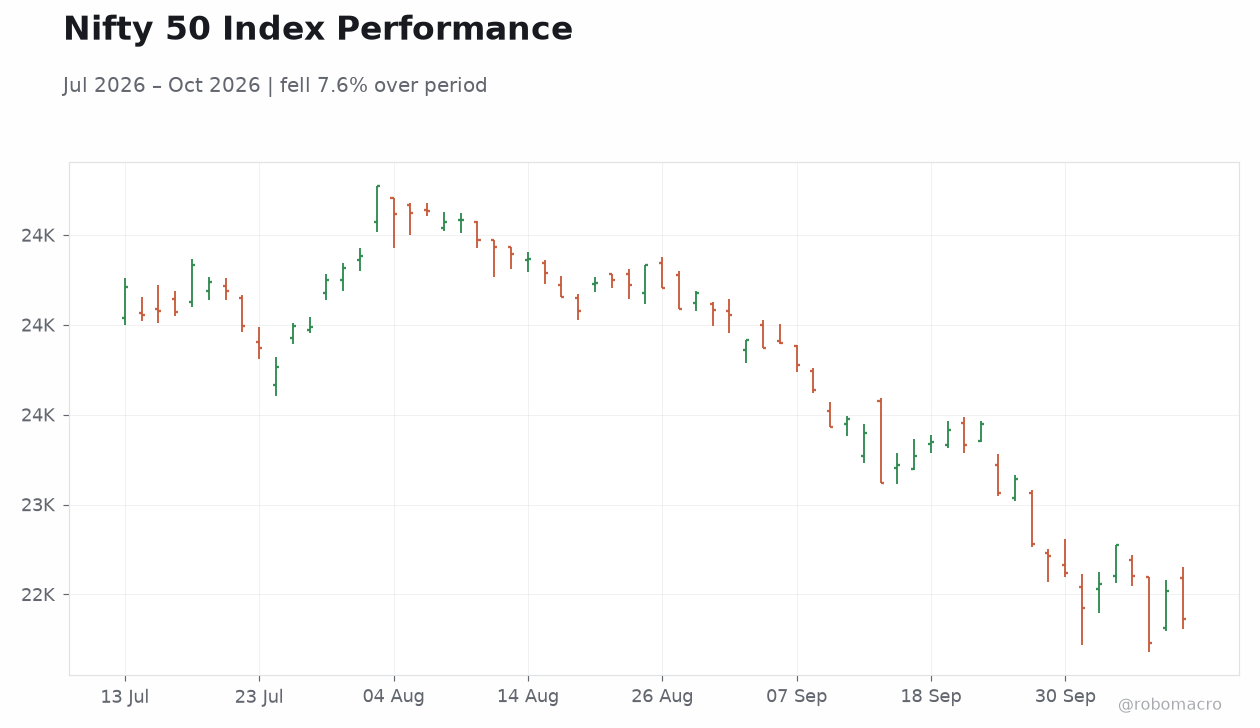
| Nifty 50 | 22,363.35 | -0.70% |
| Sensex | 71,924.68 | -0.76% |
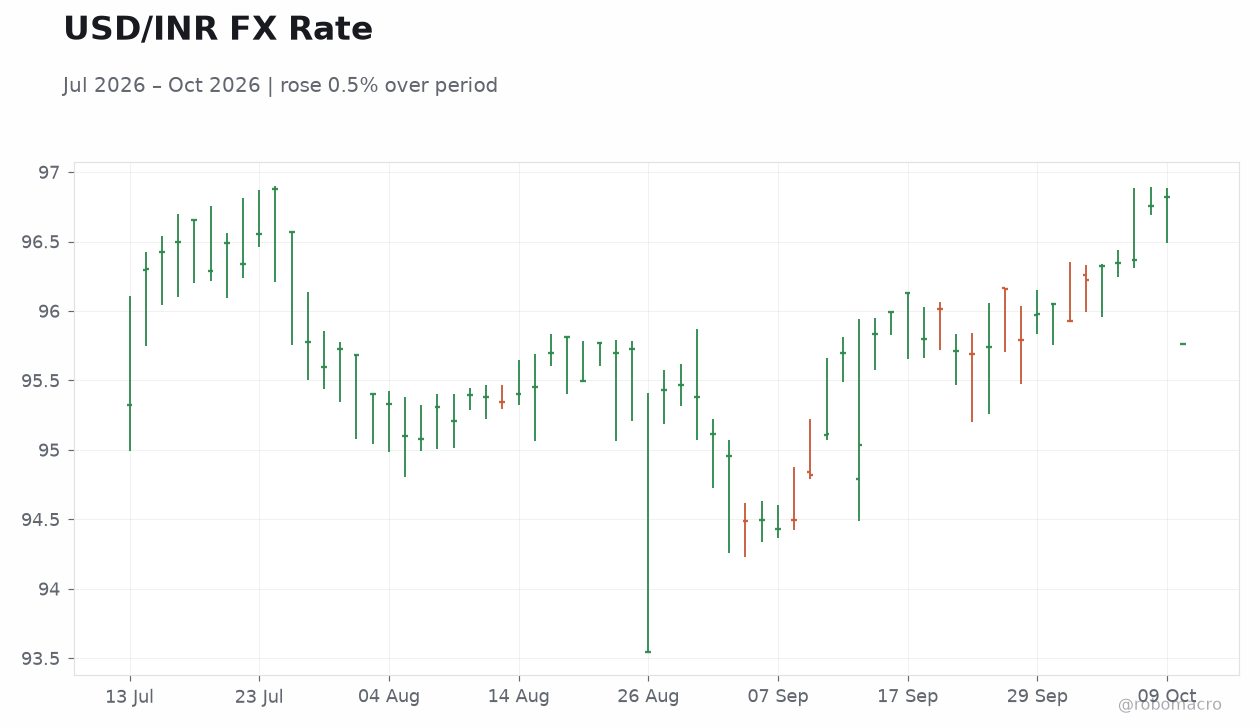
| USD/INR | 95.76 | -1.10% |
| EUR/INR | 106.97 | -1.36% |
| Reliance | 1,170.30 | -0.65% |
| HDFC Bank | 707.25 | +2.17% |
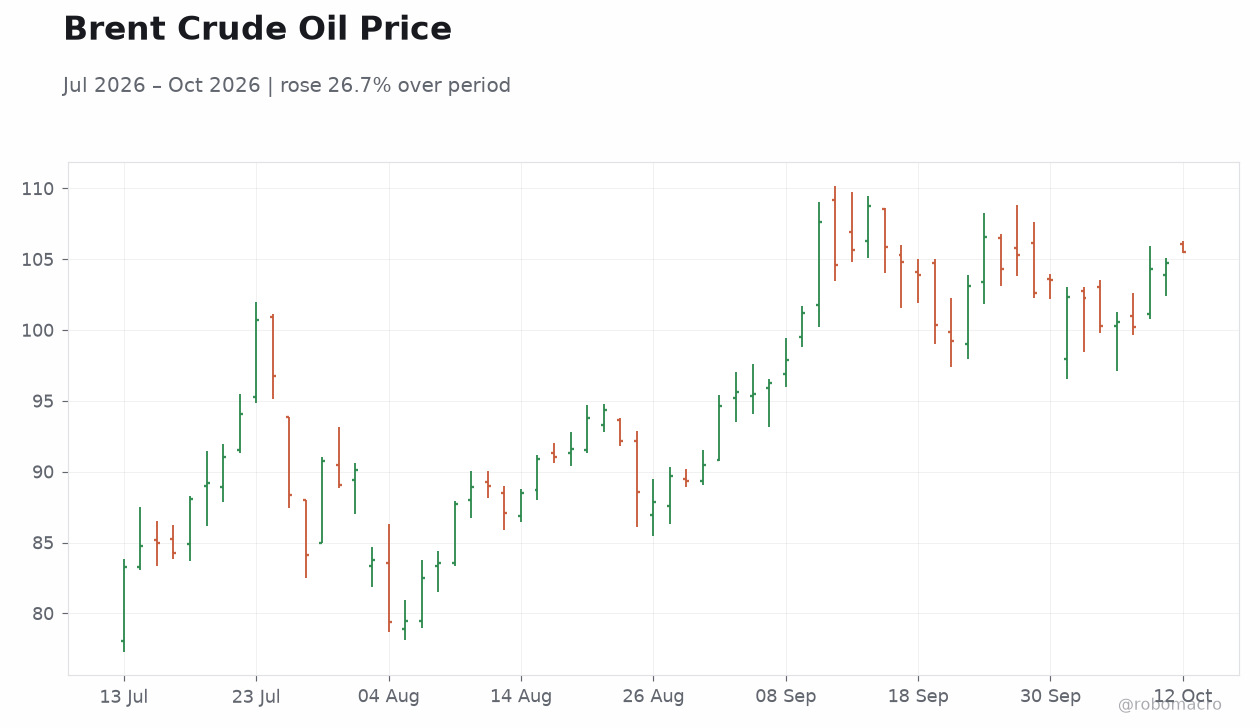
| Brent Crude | 105.52 | +0.76% |
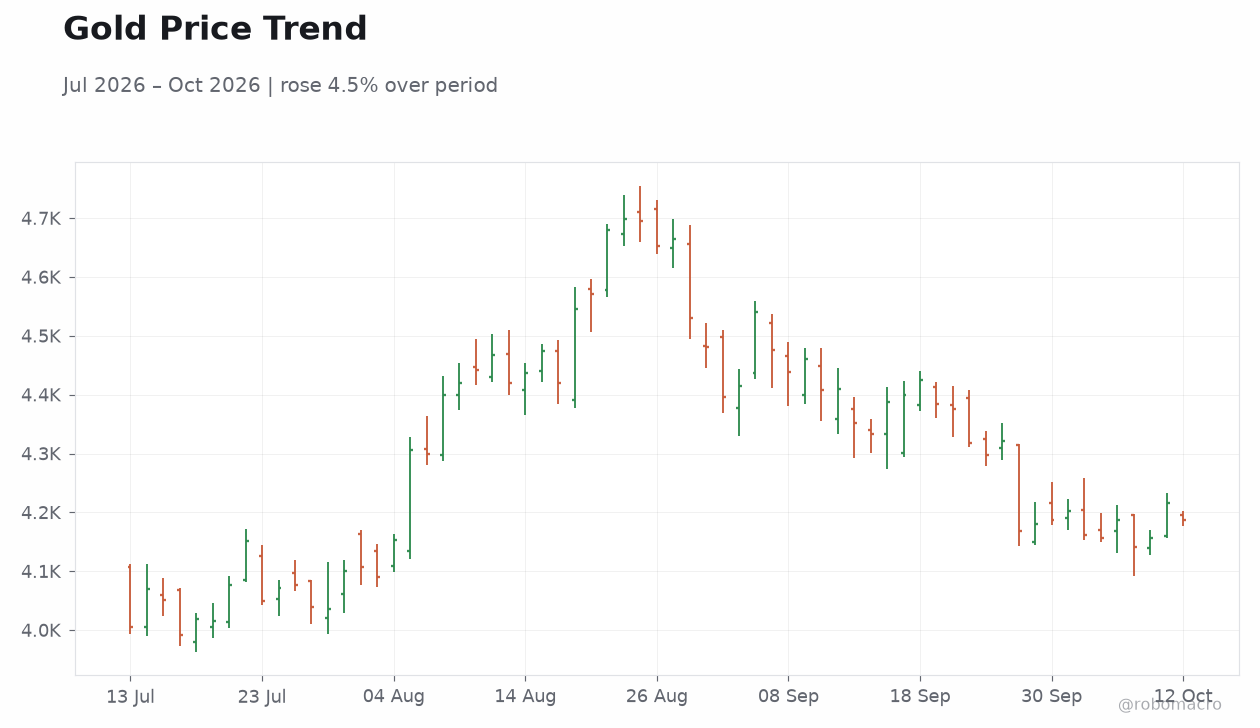
| Gold | 4,191.50 | -0.59% |
| Bitcoin | 81,980.77 | -2.03% |
| India 2Y Govt Yield | - | - |
| India 10Y Govt Yield | - | - |
Prior Economic Events
| Data | Prior | Cons | Actual |
|---|---|---|---|
| Inflation Rate Year-over-Year | 4.82 | 5.40 | 5.54 |
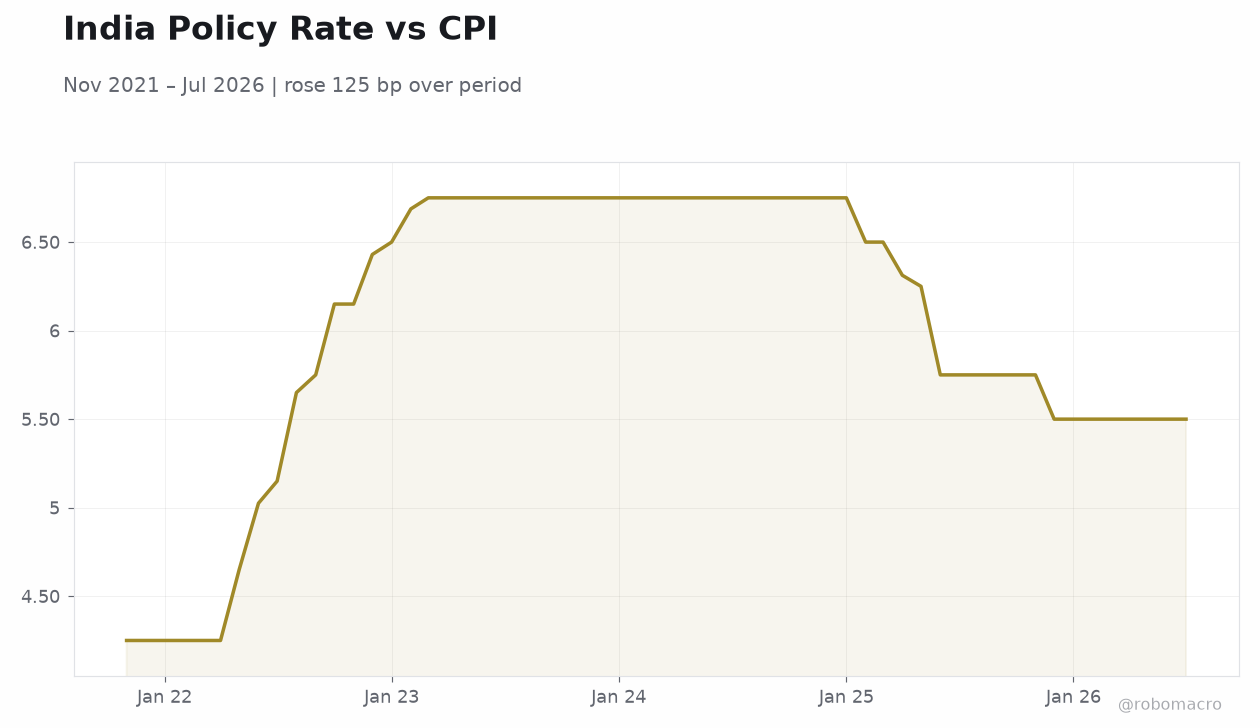 India Policy Rate vs CPI | Type: macro_line | Short-Term Rate (%): 5.5 (2026-07-01) | Range: 4.25–6.75 | Trend(5pt): 4.25,6.5,6.75,6.25,5.5
Today's Economic Events
| Data | Prior | Cons | Time |
|---|---|---|---|
| No events available | |||
- India CPI inflation printed at 5.54% YoY, above the 5.4% consensus and up from the prior 4.82% reading, landing just as the RBI intensifies its rupee defence.
- The rupee strengthened sharply after the RBI unveiled measures to curb dollar demand, with USD/INR falling 1.10% to 95.76, though banks sought clarity on implementation.
- Equities slid, with Nifty 50 down 0.70% to 22,363.35 and Sensex off 0.76%, as liquidity measures and higher yields weighed on lenders; HDFC Bank bucked the trend, up 2.17%.
Yesterday's Recap
India's headline CPI inflation for September printed at 5.54% year-over-year, exceeding the 5.4% consensus and marking an acceleration from the prior 4.82% reading. The upside surprise lands at a delicate moment, with the RBI actively working to stabilize a rupee that had been under sustained pressure. Equity markets closed lower, with the Nifty 50 shedding 0.70% to settle at 22,363.35 and the Sensex declining 0.76% to 71,924.68.
Bank stocks bore the brunt of the selling as the RBI's liquidity management measures and rising bond yields weighed on lender margins. HDFC Bank was a notable outlier, climbing 2.17% to 707.25, while Reliance Industries slipped 0.65% to 1,170.30. The rupee itself staged a strong recovery, with USD/INR falling 1.10% to 95.76 after the central bank unveiled steps to cool dollar demand.
Brent crude added 0.76% to $105.52, keeping India's import bill and external account in focus.
The Day Ahead
The calendar is light on scheduled macro releases for Tuesday, with no major data prints expected, shifting attention to secondary flows and policy commentary. Markets will continue to digest the RBI's rupee-support package, watching for follow-through in the currency and any additional measures from the central bank. Traders will monitor how bond yields settle after the liquidity measures pressured bank stocks in the prior session, with government bond yields a key gauge of funding conditions.
Equity investors will look for stabilization after Friday's sharp reversal, when the Sensex finished roughly 950 points below its intraday high. Offshore rupee non-deliverable forwards and the India VIX will offer early signals on hedging demand and volatility expectations. Any statements from the Chief Economic Adviser on MSME NPA classification reforms could also move sentiment in financials.
Other Economic Notes
India's growth trajectory continues to outperform expectations, with the economy repeatedly beating consensus forecasts despite global headwinds — a theme highlighted in recent analysis of upside surprises to official GDP estimates. ↓ p.2