India Macro Daily(Beta Mode)
Rupee Carry Star, Equities Crack
Market Snapshot
| Asset | Level | Change |
|---|---|---|
| Nifty 50 | 25,349.65 | -1.75% |
| Sensex | 82,435.99 | -1.77% |
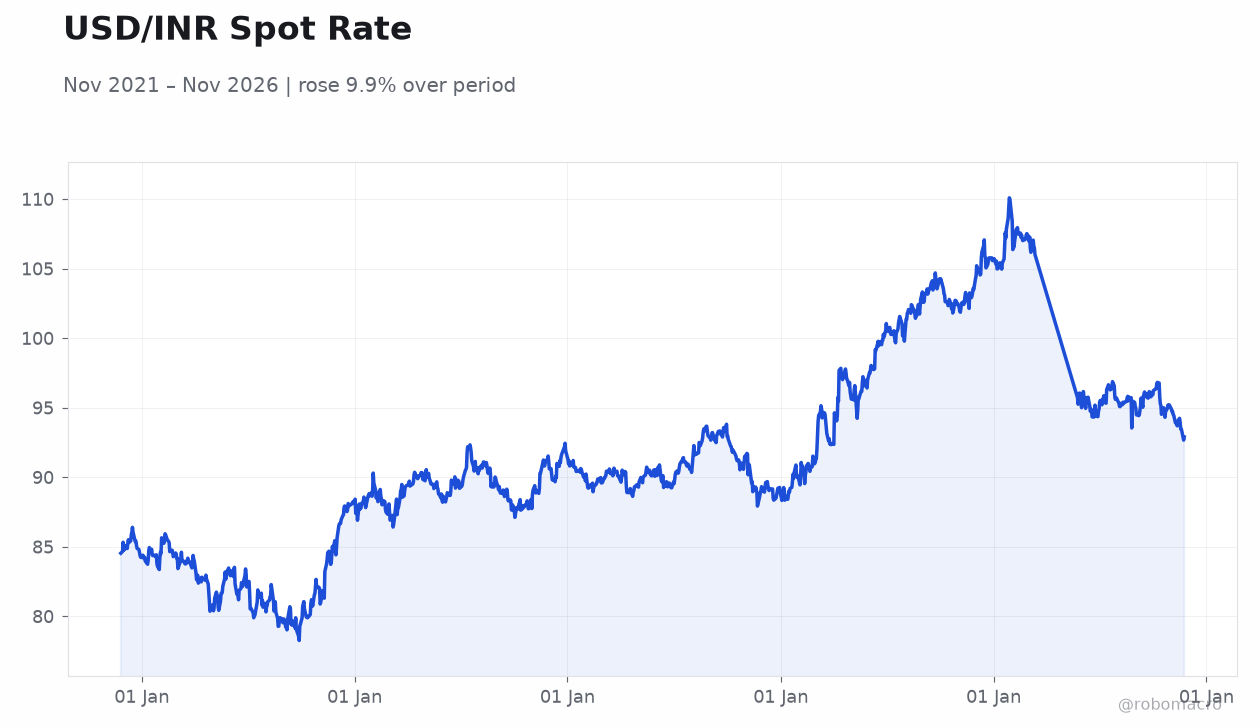
| USD/INR | 92.92 | +0.26% |
| EUR/INR | 101.27 | -0.04% |
| Reliance | 1,351.00 | -1.92% |
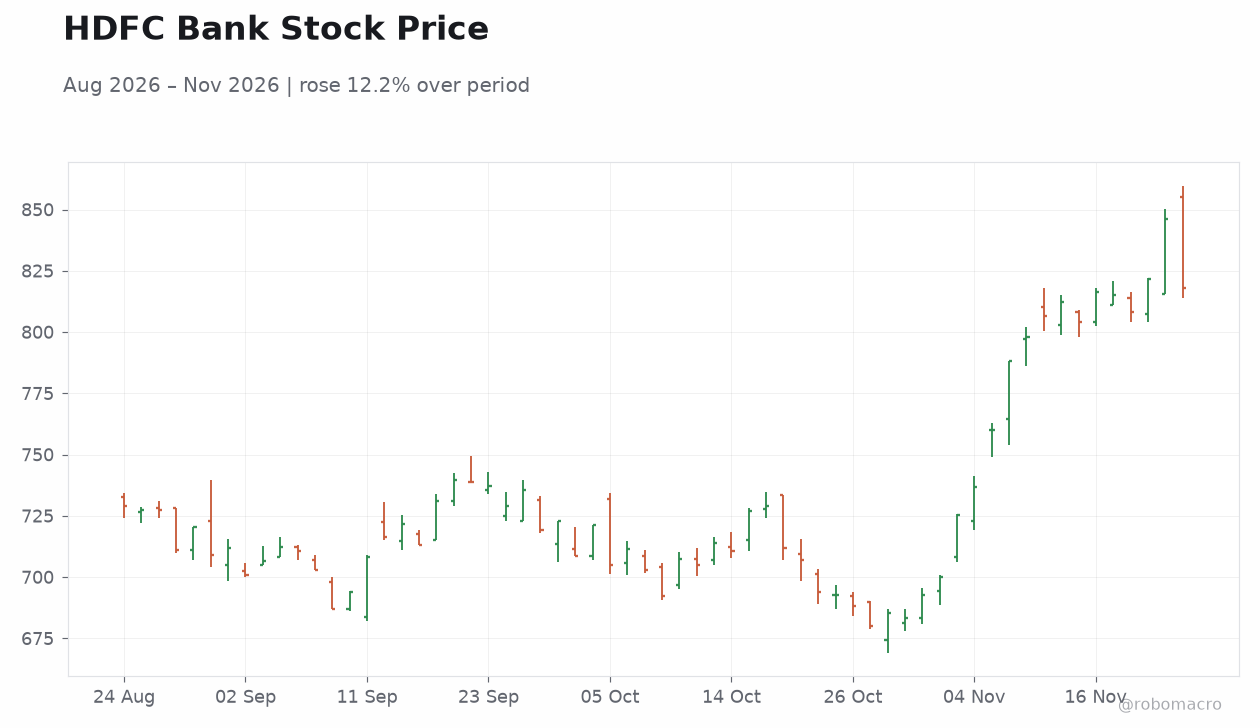
| HDFC Bank | 817.80 | -3.33% |
| Brent Crude | 88.51 | -0.96% |
| Gold | 3,539.90 | -3.05% |
| Bitcoin | 59,456.47 | -2.87% |
| India 2Y Govt Yield | - | - |
| India 10Y Govt Yield | - | - |
Prior Economic Events
| Data | Prior | Cons | Actual |
|---|---|---|---|
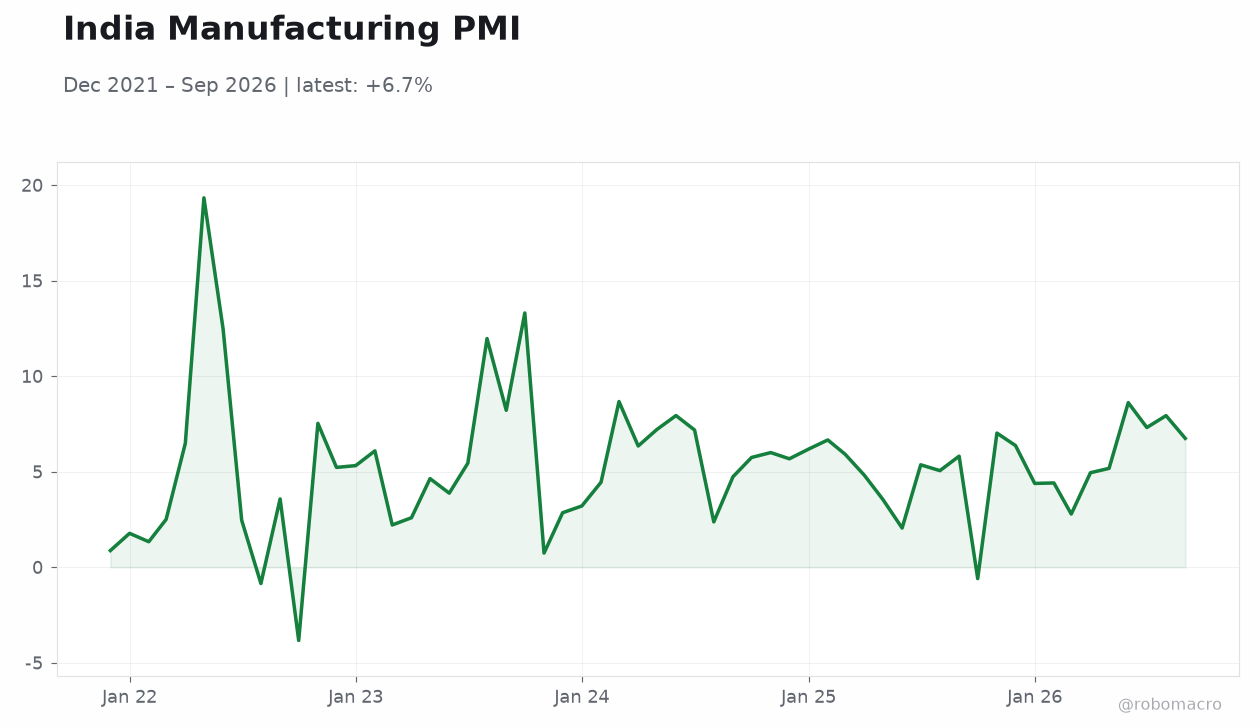
| HSBC Composite PMI Flash | 56.20 | 56.30 | 56.30 |
| HSBC Manufacturing PMI Flash | 54.70 | 54.50 | 56 |
| HSBC Services PMI Flash | 55.80 | 56 | 55.30 |
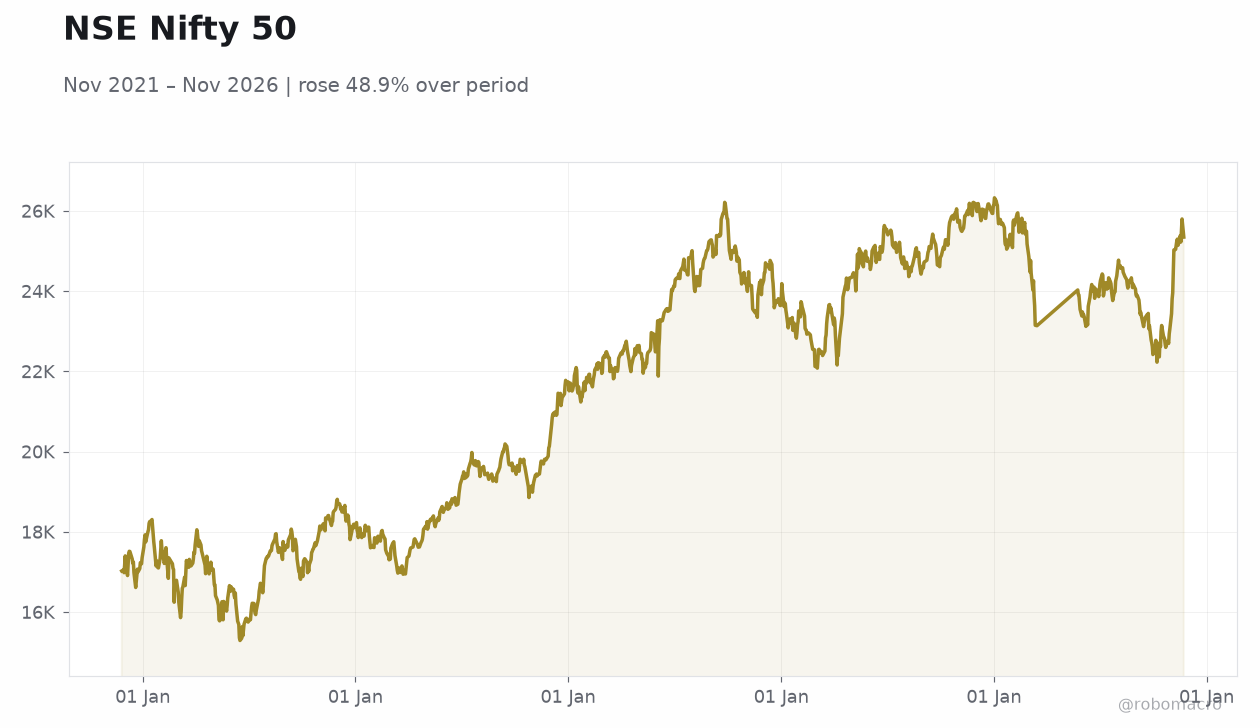 NSE Nifty 50 | Type: macro_line | NSE Nifty 50: 2.535e+04 (2026-11-23) | Range: 1.529e+04–2.633e+04 | Trend(5pt): 1.703e+04,1.785e+04,2.24e+04,2.546e+04,2.535e+04
Today's Economic Events
| Data | Prior | Cons | Time |
|---|---|---|---|
| No events available | |||
- HSBC Flash PMIs show manufacturing accelerating to 56.0 while services cool to 55.3; composite holds at 56.3
- Nifty and Sensex plunge ~1.75%, HDFC Bank drops 3.33% as profit-booking hits financials
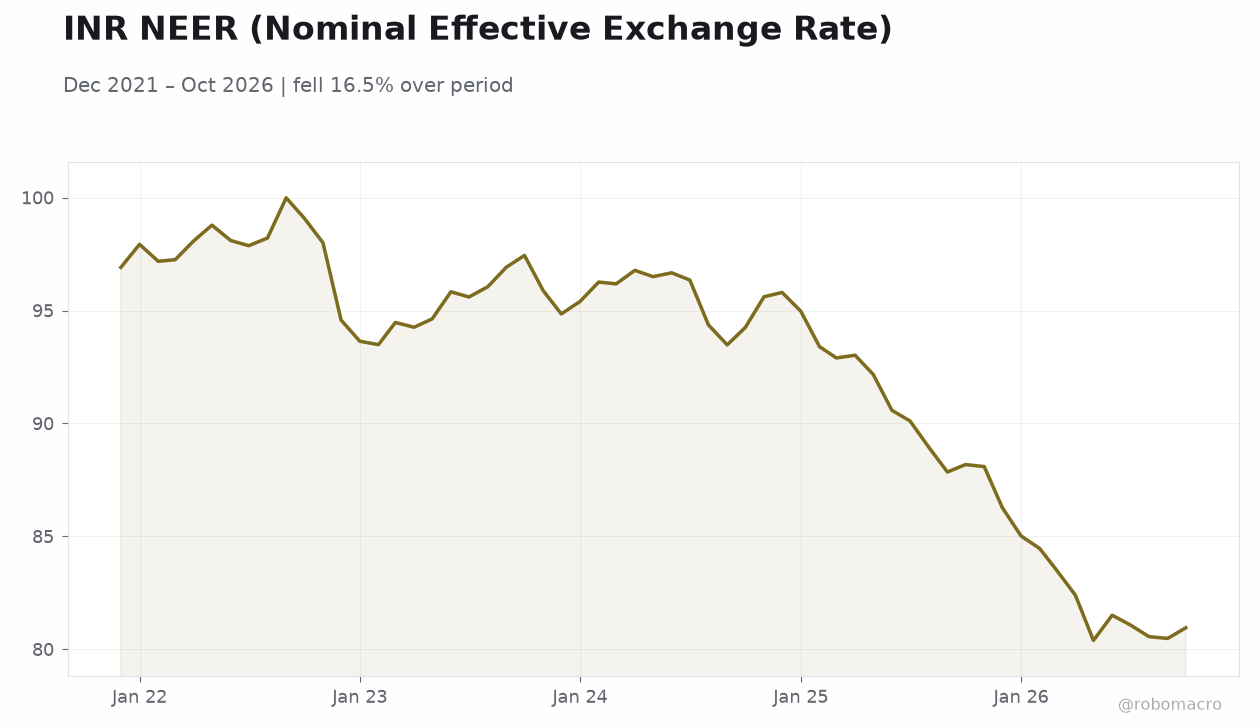
- Rupee emerges as an "accidental carry star" even as USD/INR edges up 0.26% to 92.92
Yesterday's Recap
India's private sector activity held firm in November, with HSBC's Flash Manufacturing PMI rising to 56.0 from 54.7 previously, beating the 54.5 consensus, while the Flash Services PMI eased to 55.3 from 55.8. The Flash Composite PMI printed at 56.3, matching consensus and holding near October's 56.2, with demand improving at the fastest pace since June. Despite the resilient activity data, equities sold off hard: the Nifty 50 fell 1.75% to 25,349.65 and the Sensex dropped 1.77% to 82,435.99, with the index crashing roughly 1,800 points from its intraday high on profit-booking.
Financials led the decline, with HDFC Bank down 3.33% and Reliance off 1.92%. The rupee weakened modestly, with USD/INR up 0.26% to 92.92, even as coverage highlighted the currency's growing appeal as a carry trade. Brent crude slipped 0.96% to $88.51, gold tumbled 3.05% to $3,539.90, and Bitcoin fell 2.87% to $59,456.47.
The Day Ahead
The domestic calendar is empty for November 24, leaving markets to digest Monday's sharp equity reversal and the PMI mix. With no scheduled data releases, price action will likely be driven by global risk sentiment and positioning ahead of the RBI's December 4 policy decision. Traders will watch whether the rupee's carry-trade narrative sustains foreign inflows into short-term debt, particularly after India Inc rushed to raise $2.7 billion in debt ahead of an expected rate hike.
Banking-system liquidity has flipped into deficit for the first time since June, a development that could sharpen sensitivity to RBI's liquidity operations. Attention also turns to state government securities, with a switch auction on the calendar.
Other Economic Notes
The November flash PMI confirms India's private sector remains in robust expansion territory, with manufacturers reporting the strongest demand momentum since mid-year. Corporate bond issuance is running hot, with India Inc raising $2.7 billion ahead of an anticipated RBI hike, suggesting firms are front-loading borrowing before financing costs rise further. The shift of banking-system liquidity into deficit for the first time since June is a meaningful development, tightening the operating environment for lenders and raising the cost of marginal funds.
↓ p.2