Japan Macro Daily(Beta Mode)
BoJ Holds at 1.25%, Signals December in Play
Market Snapshot
| Asset | Level | Change |
|---|---|---|
| Nikkei 225 | 63,290.11 | -2.12% |
| USD/JPY | 157.93 | +0.08% |
| EUR/JPY | 176.47 | +0.23% |
| GBP/JPY | 211.10 | +0.37% |
| Gold | 3,956.80 | +1.49% |
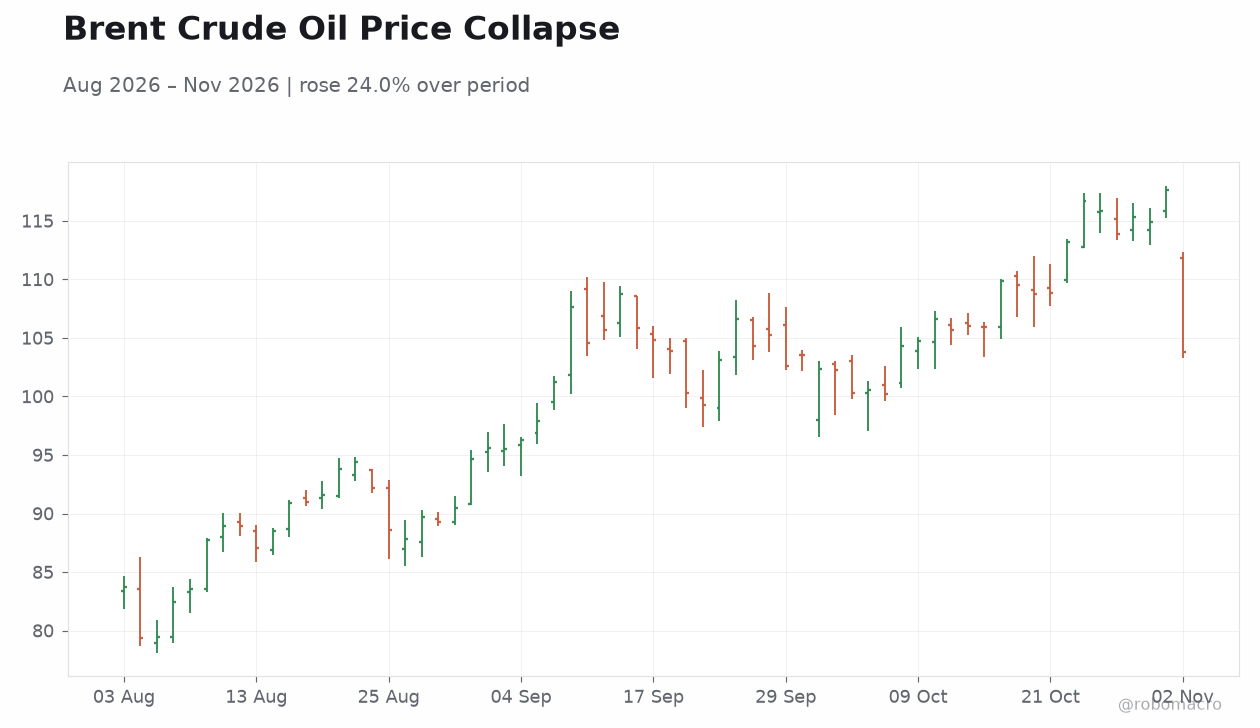
| Brent Crude | 103.86 | -11.71% |
| Bitcoin | 76,666.31 | -2.02% |
| Japan 2Y Govt Yield | 1.88% | -2 bp |
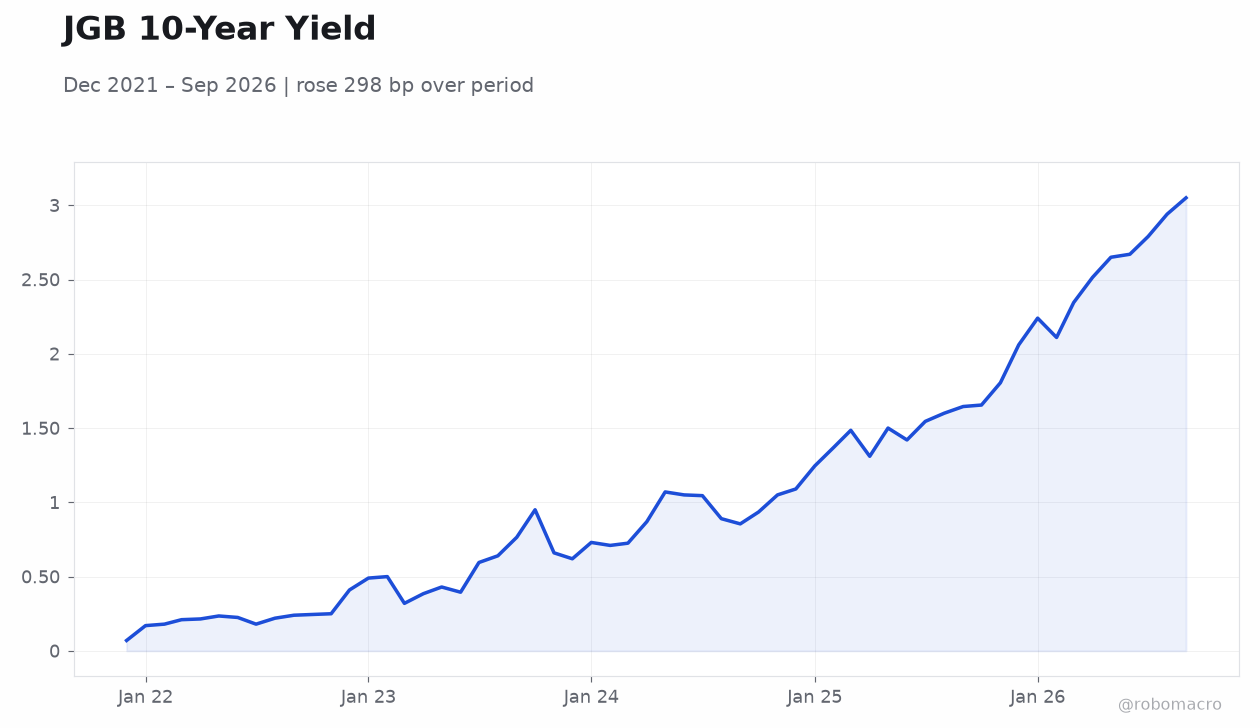
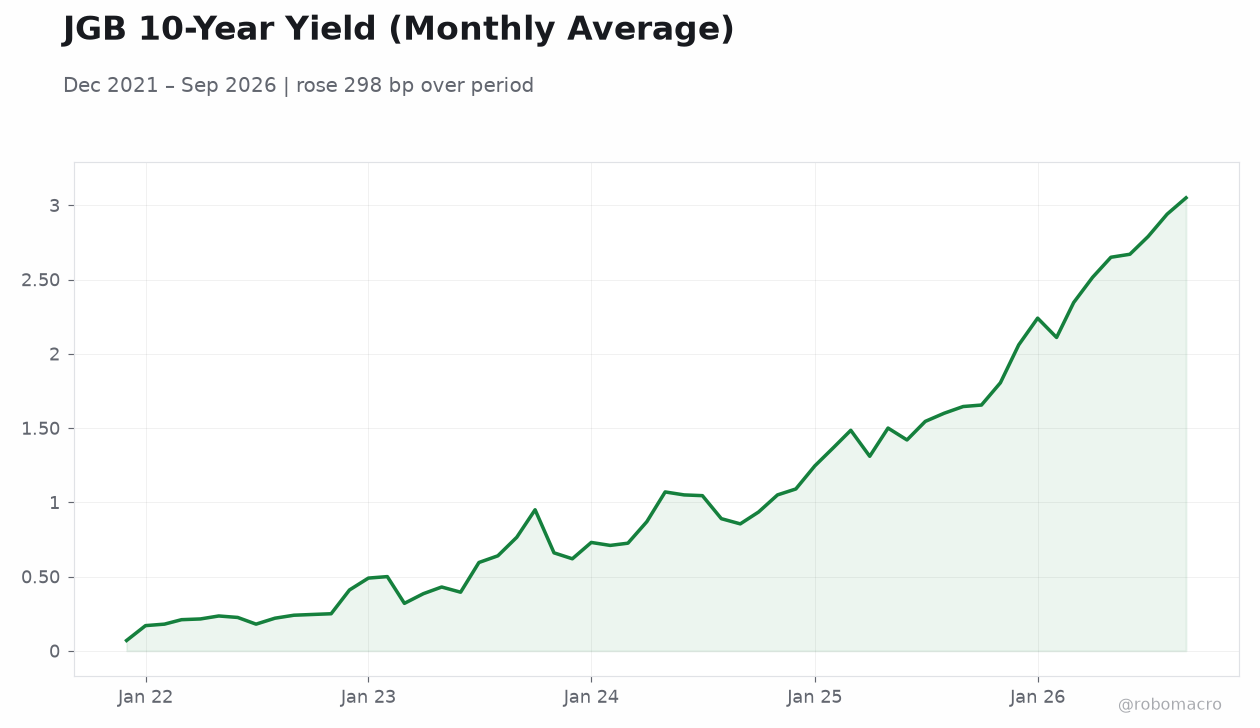
| Japan 10Y Govt Yield | 2.82% | -6 bp |
Prior Economic Events
| Data | Prior | Cons | Actual |
|---|---|---|---|
| No events available | |||
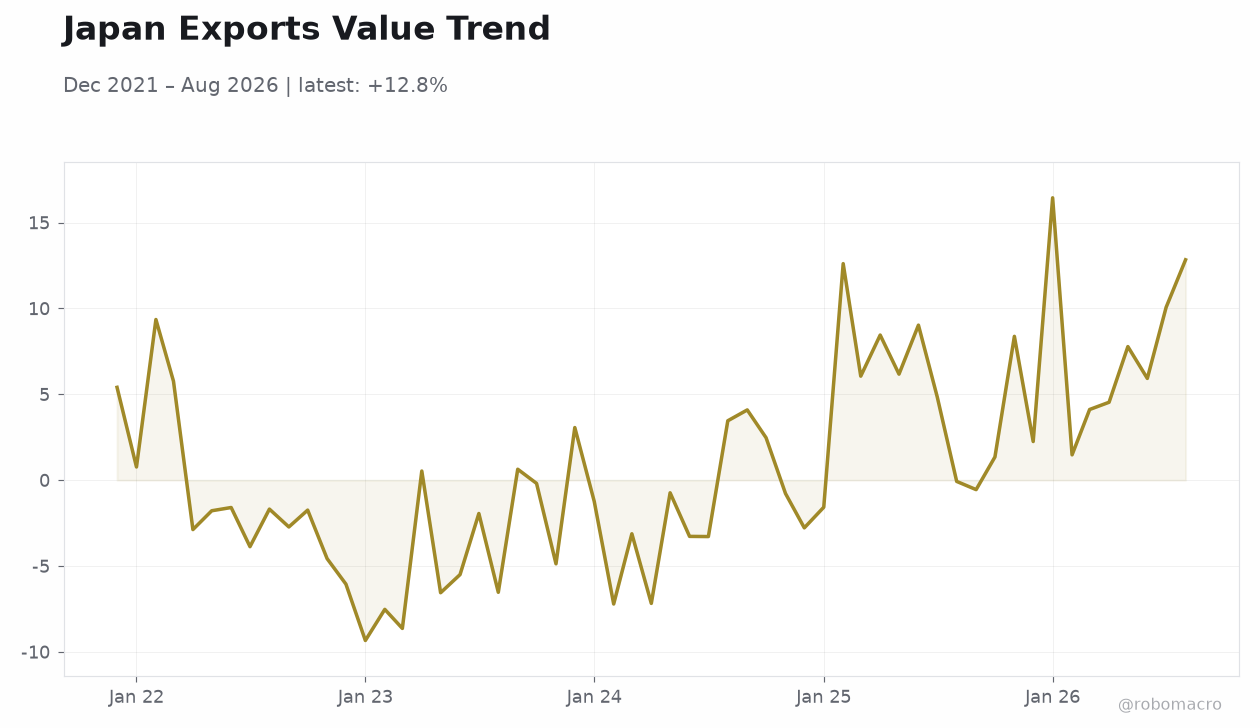 Japan Exports Value Trend | Type: macro_line | Exports (JPY): 12.83 (2026-08-01) | Range: -9.335–16.44 | Trend(5pt): 5.405,-7.523,-7.176,9.026,12.83
Today's Economic Events
| Data | Prior | Cons | Time |
|---|---|---|---|
| Wednesday (2026-11-04) | |||
| BoJ Monetary Policy Meeting Minutes | - | - | 18:50 |
- BoJ held its policy rate at 1.25% on 2026-10-30 and stated the 2% inflation target has been "generally achieved," a landmark framing shift that keeps a December 18 hike firmly on the table.
- JGBs rallied post-decision, with the 10-year yield easing 6 bp to 2.82% and the 2-year down 2 bp to 1.88%, even as the BoJ flagged that real interest rates have risen recently.
- The yen remains anchored near 158 per dollar despite softer USD, while the Nikkei 225 fell 2.12% to 63,290.11 as risk appetite soured and Brent crude collapsed 11.71%.
Yesterday's Recap
There were no Japanese data releases on November 1, leaving the market to digest the prior week's BoJ decision. The central bank's confirmation that its 2% price stability target has been "generally achieved" marked a major turning point for Japanese monetary policy, per domestic coverage, and shifted the policy debate toward sustaining that outcome rather than reaching it. JGBs extended their post-meeting rally, with the 10-year yield easing 6 bp to 2.82% and the 2-year down 2 bp to 1.88% as of October 30.
Equities moved the other way: the Nikkei 225 dropped 2.12% to 63,290.11, tracking a broad global risk-off tone. In FX, USD/JPY held near 157.93 (+0.08%), EUR/JPY at 176.47 (+0.23%) and GBP/JPY at 211.10 (+0.37%), with the yen failing to capitalize on softer dollar conditions. Safe havens rallied, with gold up 1.49% to 3,956.80, while Brent crude plunged 11.71% to 103.86 and Bitcoin fell 2.02%.
The Day Ahead
The calendar is light, with the next scheduled Japanese event being the BoJ Monetary Policy Meeting Minutes on Wednesday, November 4 at 18:50 ET (high impact). Those minutes will be scrutinized for the internal debate behind the October 30 hold and for how forcefully board members argued that the inflation target has been met. With no tier-one data due, positioning ahead of the December 18 BoJ meeting will dominate.
Yen traders will watch whether USD/JPY can hold below 158, and JGB desks will gauge whether the post-decision yield decline extends or reverses. Global cues, particularly oil's collapse and US rates, are likely to drive Japanese asset moves in the interim.
Other Economic Notes
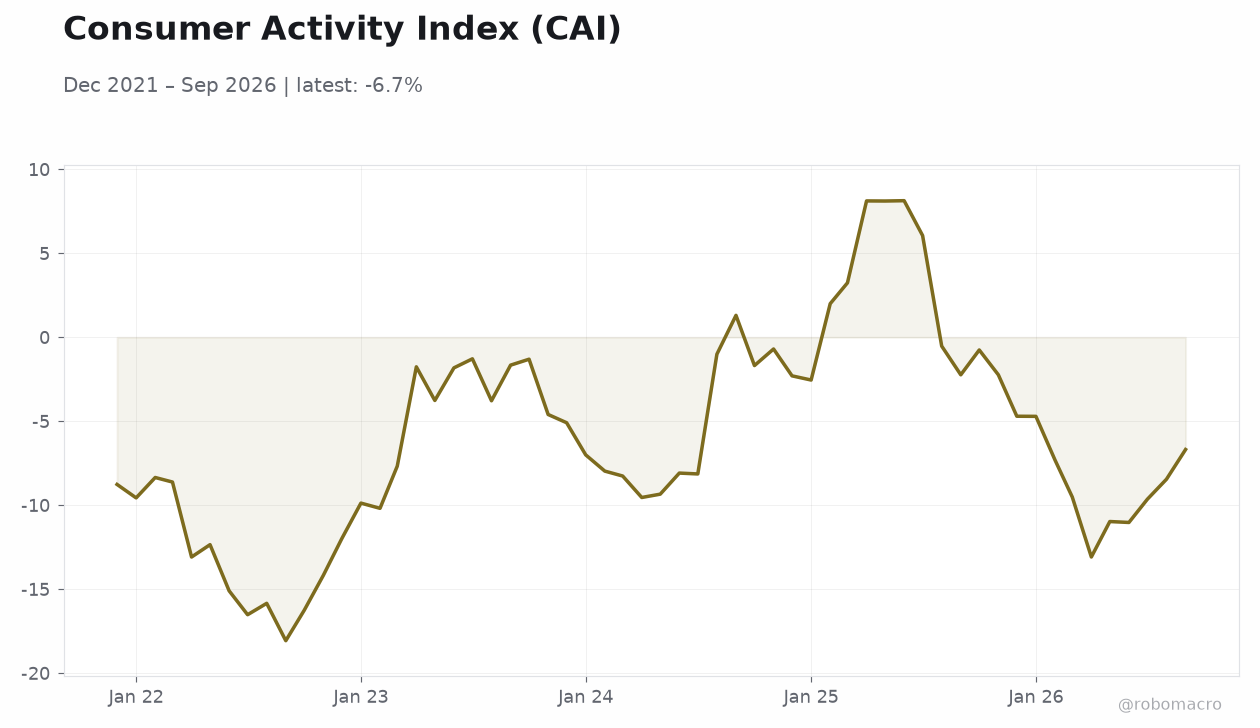
Japan's inflation picture is now the central macro question: CPI running at 2.10% year-on-year as of September 30 has satisfied the BoJ's target in headline terms, but coverage highlights that households continue to struggle with the cost of living. The BoJ itself has noted that real interest rates have risen recently, a subtle acknowledgment that policy settings are tightening in real terms even as the nominal rate stays at 1.25%. That dynamic matters for domestic demand and for the durability of the inflation overshoot.
↓ p.2