Korea Macro Daily(Beta Mode)
Exports Beat, Inflation Eases to 2.9%
Market Snapshot
| Asset | Level | Change |
|---|---|---|
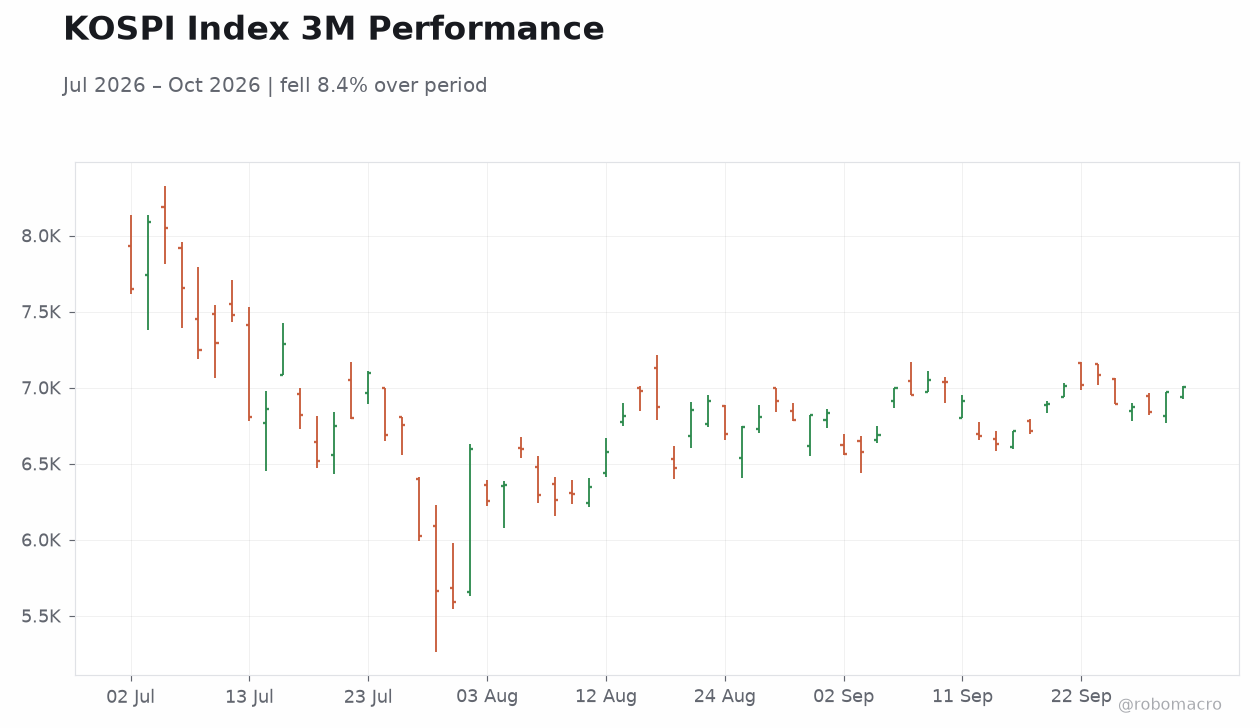
| KOSPI | 7,003.74 | +0.46% |
| KOSDAQ | 893.29 | -0.11% |
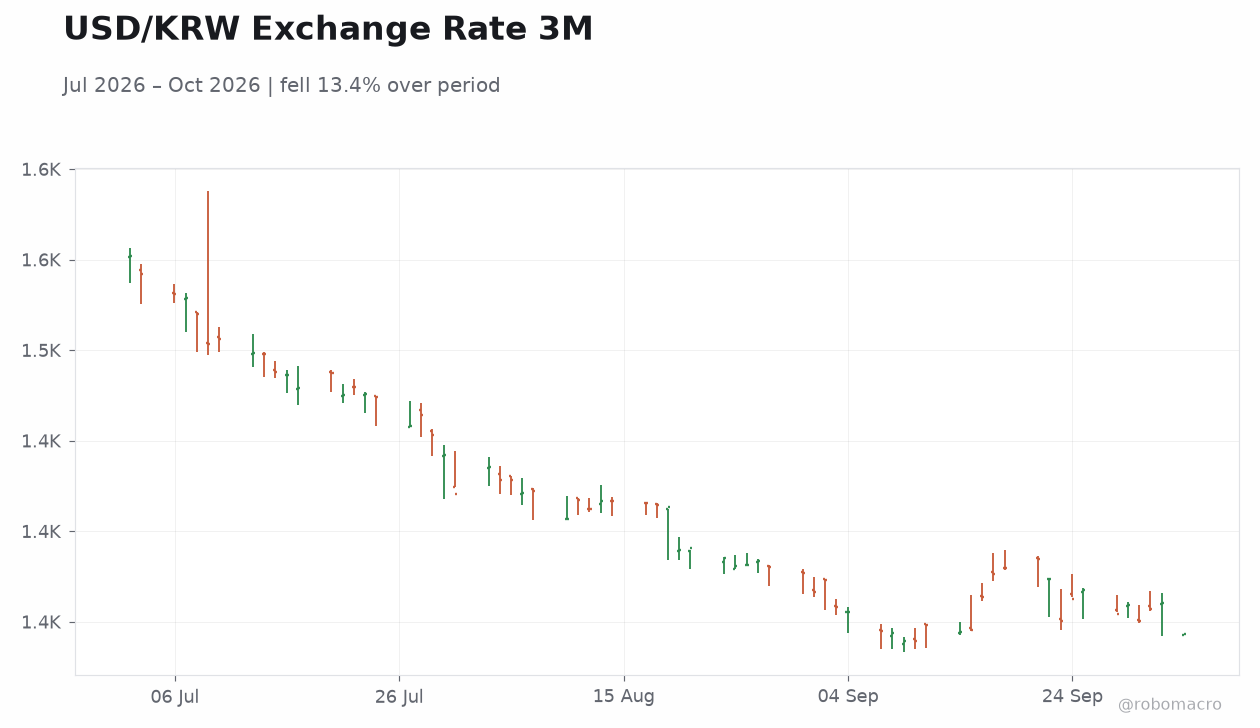
| USD/KRW | 1,343.34 | -1.27% |
| Samsung | 276,000.00 | +0.00% |
| SK Hynix | 1,841,000.00 | +0.44% |
| Brent Crude | 102.25 | -0.06% |
| Gold | 4,162.30 | -0.95% |
| Bitcoin | 85,850.64 | +1.28% |
| Korea 3Y Govt Yield | 4.01% | 0 bp |
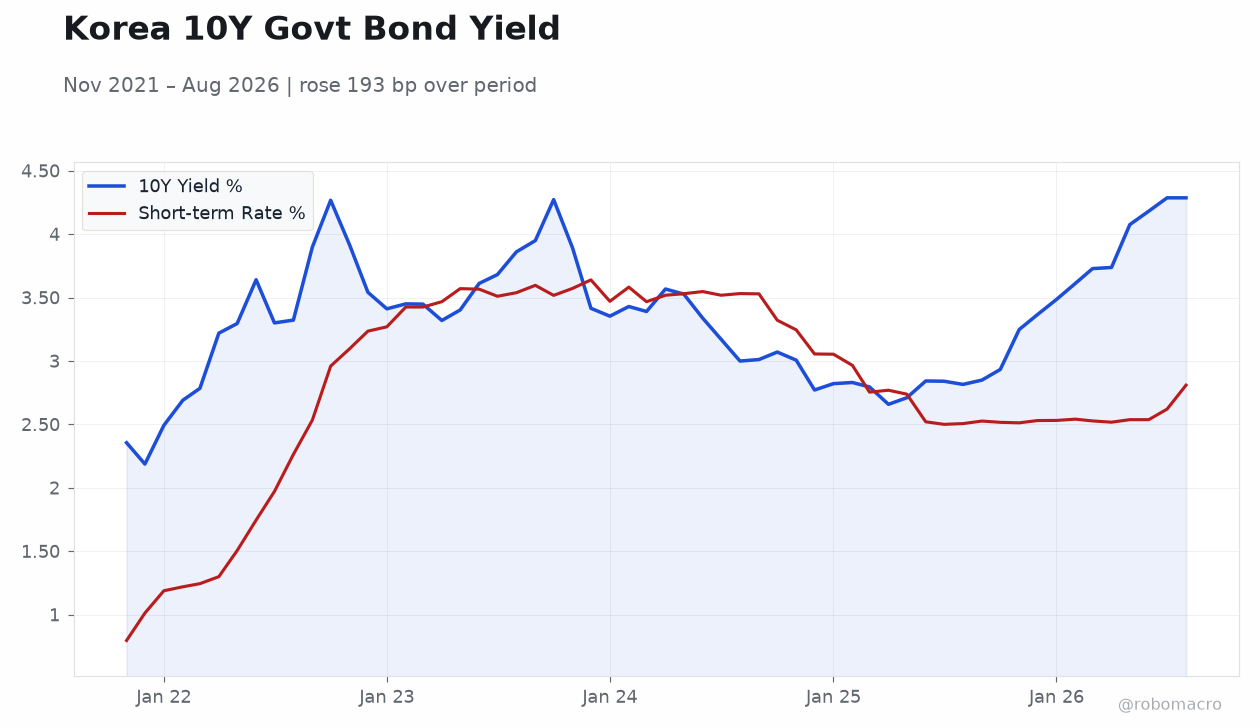
| Korea 10Y Govt Yield | 4.44% | +3 bp |
Prior Economic Events
| Data | Prior | Cons | Actual |
|---|---|---|---|
| Business Confidence Index | 81 | - | 79 |
| Exports Year-over-Year | 68.70 | 61.70 | 83.50 |
| S&P Global Manufacturing PMI Index | 52.30 | - | 53.90 |
| Inflation Rate Year-over-Year | 3.10 | 2.90 | 2.90 |
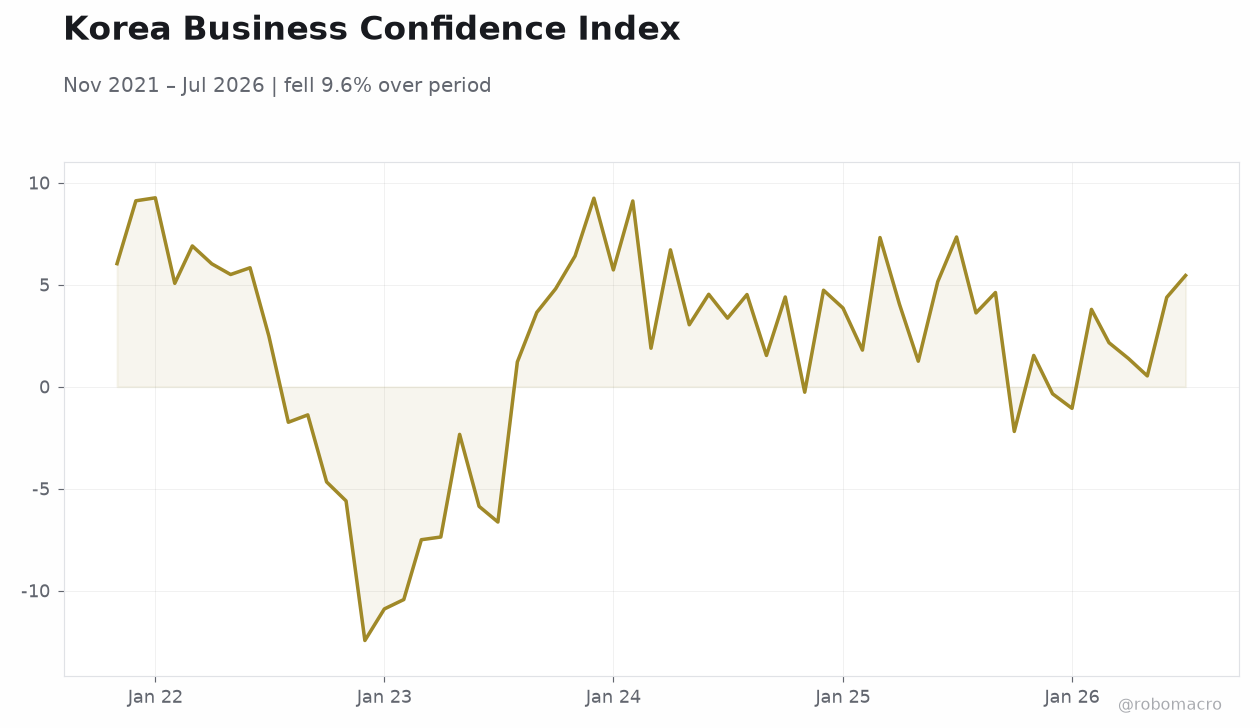 Korea Business Confidence Index | Type: macro_line | Business Confidence: 5.455 (2026-07-01) | Range: -12.45–9.263 | Trend(5pt): 6.034,-10.9,1.887,1.251,5.455
Today's Economic Events
| Data | Prior | Cons | Time |
|---|---|---|---|
| No events available | |||
- Exports jumped 83.5% y/y, beating consensus by a wide margin and lifting external demand outlook.
- September CPI printed at 2.9% y/y as expected, while manufacturing PMI rose to 53.9.
- KOSPI reclaimed 7,000 on tech buying as the won strengthened 1.27% versus the dollar.
Yesterday's Recap
South Korea’s September exports surged 83.5% y/y, well above the 61.7% consensus and prior 68.7%, signaling robust semiconductor and global demand. The S&P Global Manufacturing PMI climbed to 53.9 from 52.3, confirming expansion in factory activity. Consumer prices rose 2.9% y/y, matching forecasts and easing from 3.1% in August, while business confidence slipped to 79 from 81.
Equity markets responded positively, with the KOSPI advancing 0.46% to 7,003.74 on bargain hunting in technology names and SK Hynix gaining 0.44%. The won strengthened sharply as USD/KRW fell 1.27% to 1,343.34. The Korea 10-year government yield rose 3 bp to 4.44% while the 3-year yield held steady at 4.01%.
Samsung shares closed unchanged at 276,000.
The Day Ahead
No major economic releases or Bank of Korea events are scheduled for 4 October, leaving markets to digest yesterday’s data. Focus will remain on follow-through in the won and KOSPI after the export surprise and inflation print. Participants will monitor any further comments from officials on underlying price pressures ahead of the next policy meeting.
Global risk sentiment and U.S. Treasury moves may continue to influence local yields and currency flows. Semiconductor supply-chain updates could also affect SK Hynix and Samsung performance.
Traders will watch for any signs of sustained won strength prompting additional Bank of Korea intervention.
Other Economic Notes
M&A activity reached 62 trillion won in the first nine months, already exceeding the full-year 2025 total and underscoring corporate restructuring momentum. High-rate mortgage shares at the big-five banks have risen sharply, raising household debt-service concerns amid still-elevated borrowing costs. The Bank of Korea noted that underlying price pressures are building even as headline inflation moderated, keeping October readings near 3%.
These developments highlight the tension between export-led growth and domestic financial-stability risks. Strong external demand continues to support the current-account position despite softer business sentiment.