Korea Macro Daily(Beta Mode)
KOSPI Slides as Yields Ease; BoK in Focus
Market Snapshot
| Asset | Level | Change |
|---|---|---|
| KOSPI | 6,625.93 | -2.62% |
| KOSDAQ | 892.27 | -0.69% |
| USD/KRW | 1,333.89 | -0.68% |
| Samsung | 262,000.00 | -2.42% |
| SK Hynix | 1,681,000.00 | -2.44% |
| Brent Crude | 106.03 | +1.25% |
| Gold | 4,195.80 | -0.49% |
| Bitcoin | 82,757.92 | -1.10% |
| Korea 3Y Govt Yield | 3.92% | -6 bp |
| Korea 10Y Govt Yield | 4.31% | -8 bp |
Prior Economic Events
| Data | Prior | Cons | Actual |
|---|---|---|---|
| No events available | |||
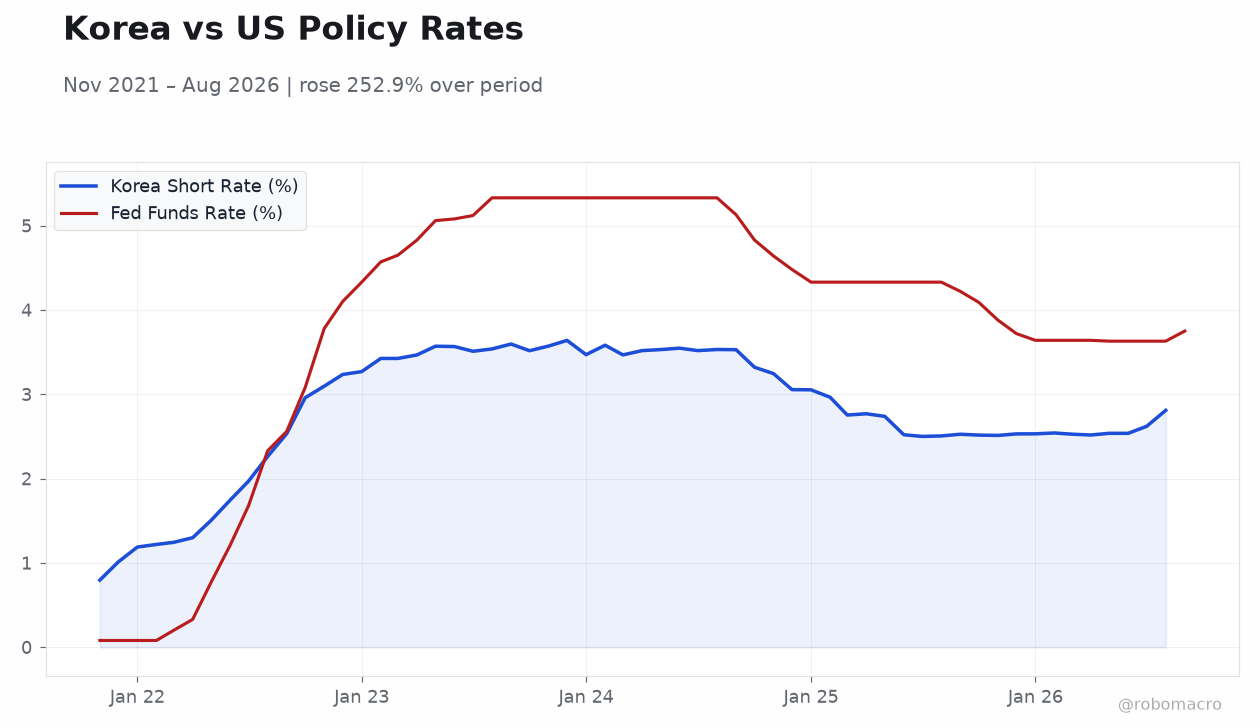
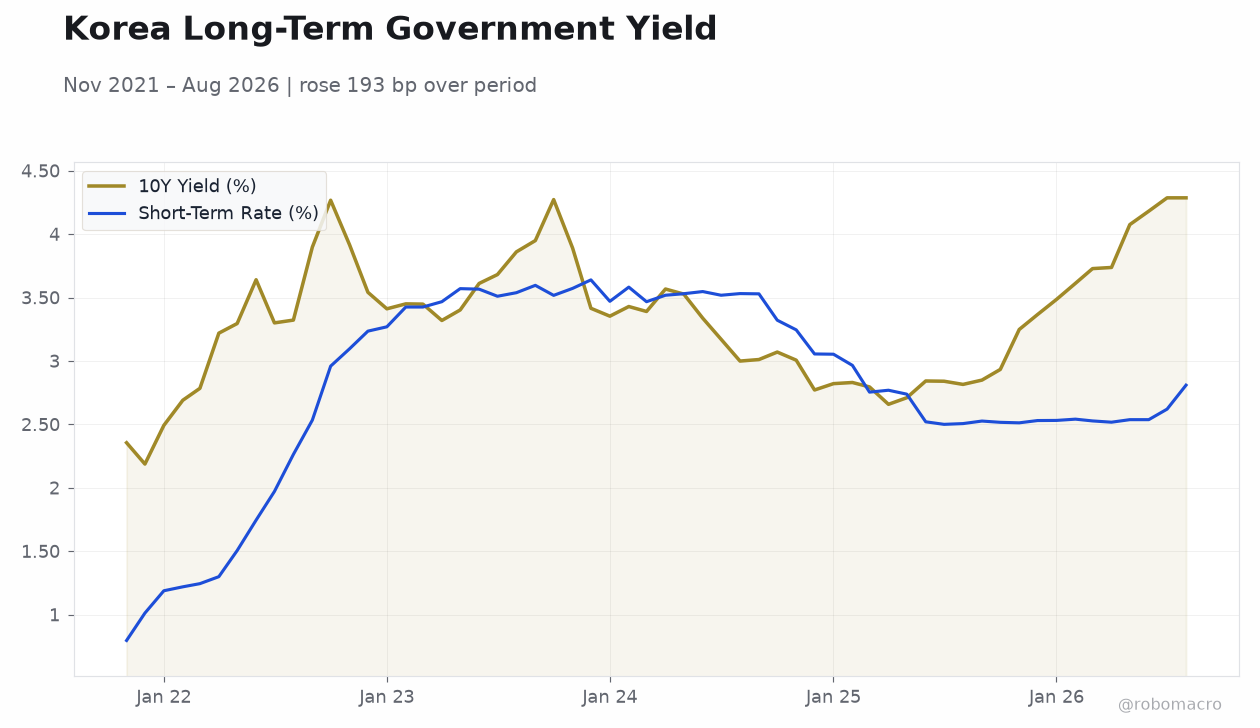 Korea Long-Term Government Yield | Type: macro_line | 10Y Yield (%): 4.286 (2026-08-01) | Range: 2.187–4.286 | Trend(5pt): 2.355,3.411,3.39,2.71,4.286 | Short-Term Rate (%): 2.809 (2026-08-01) | Range: 0.796–3.639 | Trend(6pt): 0.796,3.269,3.467,2.738,2.62,2.809
Today's Economic Events
| Data | Prior | Cons | Time |
|---|---|---|---|
| Thursday (2026-10-15) | |||
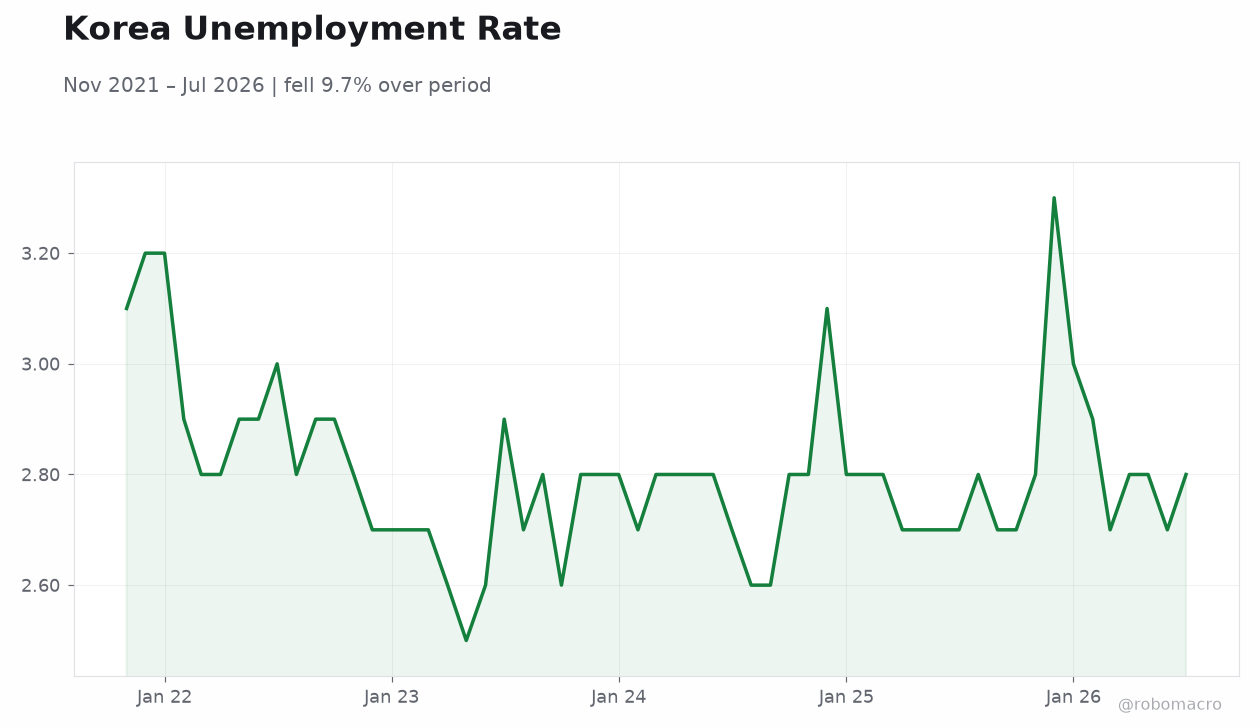
| Headline Unemployment Rate | 2.70 | - | 19:00 |
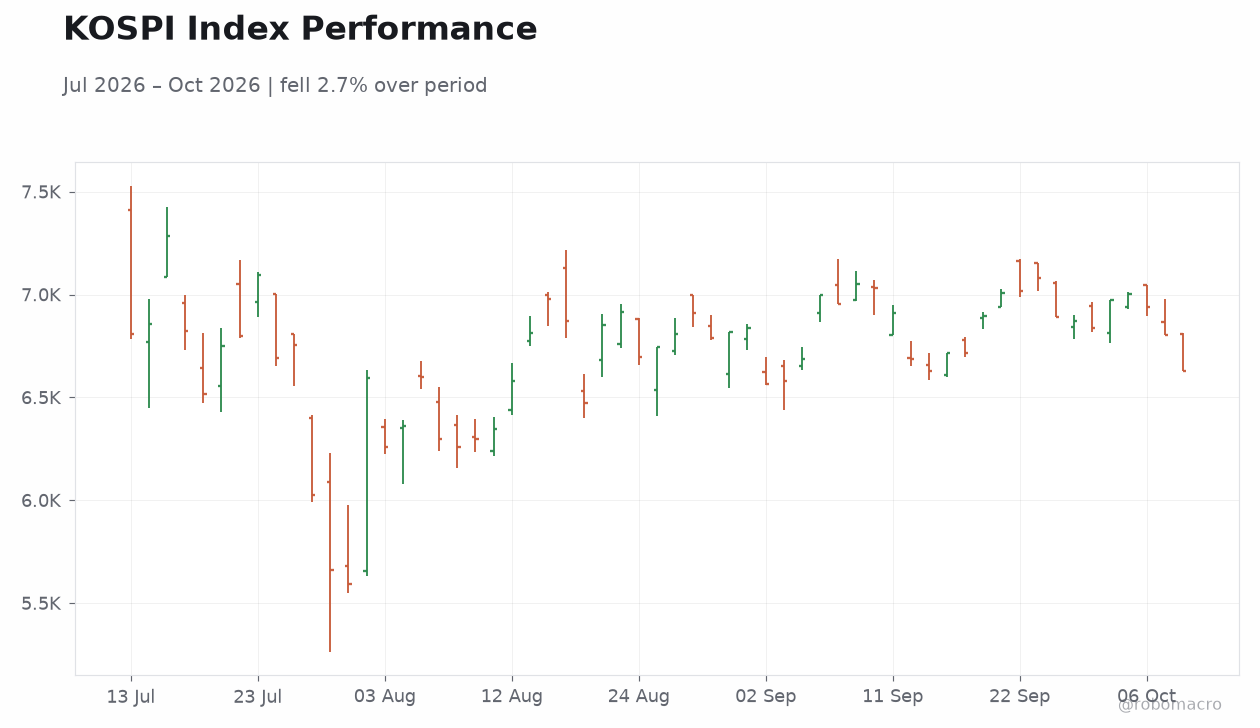
- KOSPI fell 2.62% to 6,625.93 despite record Samsung earnings; Samsung and SK Hynix both dropped over 2.4%.
- Korean government bonds rallied, with the 10-year yield easing 8 bp to 4.31% and the 3-year down 6 bp to 3.92%.
- The won strengthened, with USD/KRW slipping 0.68% to 1,333.89, while Brent crude rose 1.25% to $106.03 on Middle East tensions.
Yesterday's Recap
Korean equities opened lower and extended losses through the session, with the KOSPI closing down 2.62% at 6,625.93 and the KOSDAQ shedding a more modest 0.69% to 892.27. The decline came despite Samsung Electronics reporting record earnings, with headlines flagging record results driven by surging AI chip demand. Samsung shares fell 2.42% to 262,000 won and SK Hynix dropped 2.44% to 1,681,000 won, suggesting profit-taking dominated the tape after a strong run.
Fixed income told a different story: the 10-year government yield eased 8 bp to 4.31% and the 3-year fell 6 bp to 3.92%, a bull-steepening pattern consistent with rate-cut expectations firming. The won appreciated 0.68% against the dollar to 1,333.89, supported by the bond rally and foreign inflows. In the commodity complex, Brent crude climbed 1.25% to $106.03 on supply concerns tied to Middle East geopolitical risks, a headwind for Korea's energy-import-heavy economy.
Gold slipped 0.49% to $4,195.80 and Bitcoin retreated 1.10% to $82,757.92, reflecting a broader risk-off tone in alternative assets.
The Day Ahead
Thursday's headline unemployment rate release at 19:00 ET is the key domestic data point this week, with the previous reading at 2.7% and no consensus available. Labor market resilience has been a pillar of the domestic demand story, and any deterioration would add weight to the case for further BoK accommodation. Governor Rhee Hyun-song travels to Bangkok this week for the G20 Finance Ministers and Central Bank Governors meeting alongside IMF-World Bank sessions, offering a platform for signaling on the policy path.
Markets will also parse any commentary from the IMF meetings for clues on the BoK's stance following last week's hold. With no other tier-one releases scheduled, attention shifts to semiconductor earnings follow-through and the trajectory of foreign portfolio flows into Korean equities. Watch for follow-through selling in large-cap tech if US peers soften overnight.
Other Economic Notes
Korea's inflation picture remains anchored near target, with CPI running at 2.88% year-on-year as of September, keeping the BoK's price stability mandate comfortable but not complacent. ↓ p.2