Korea Macro Daily(Beta Mode)
KOSPI Slides, Yields Ease on AI Wobble
Market Snapshot
| Asset | Level | Change |
|---|---|---|
| KOSPI | 6,008.81 | -0.44% |
| KOSDAQ | 823.88 | -1.57% |
| USD/KRW | 1,341.65 | +0.10% |
| Samsung | 211,500.00 | -8.84% |
| SK Hynix | 1,274,000.00 | -10.22% |
| Brent Crude | 105.71 | -0.33% |
| Gold | 4,191.30 | +2.03% |
| Bitcoin | 82,046.78 | +0.59% |
| Korea 3Y Govt Yield | 3.87% | -1 bp |
| Korea 10Y Govt Yield | 4.19% | -7 bp |
Prior Economic Events
| Data | Prior | Cons | Actual |
|---|---|---|---|
| No events available | |||
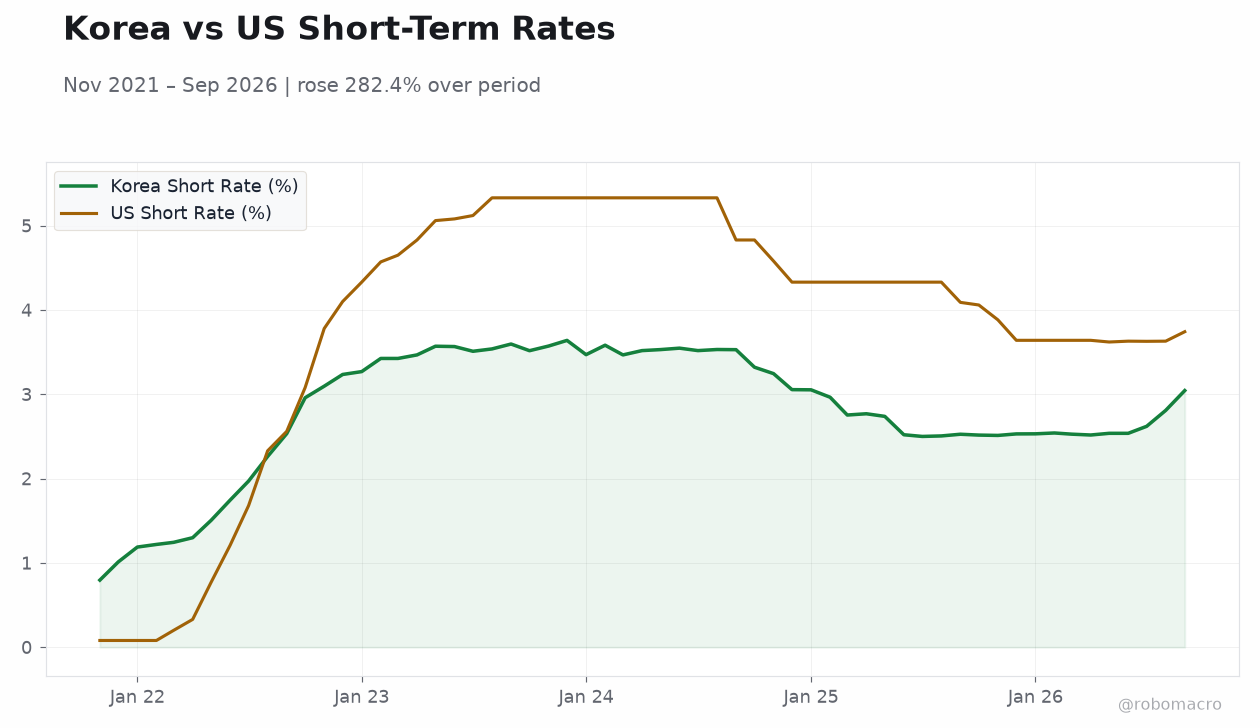
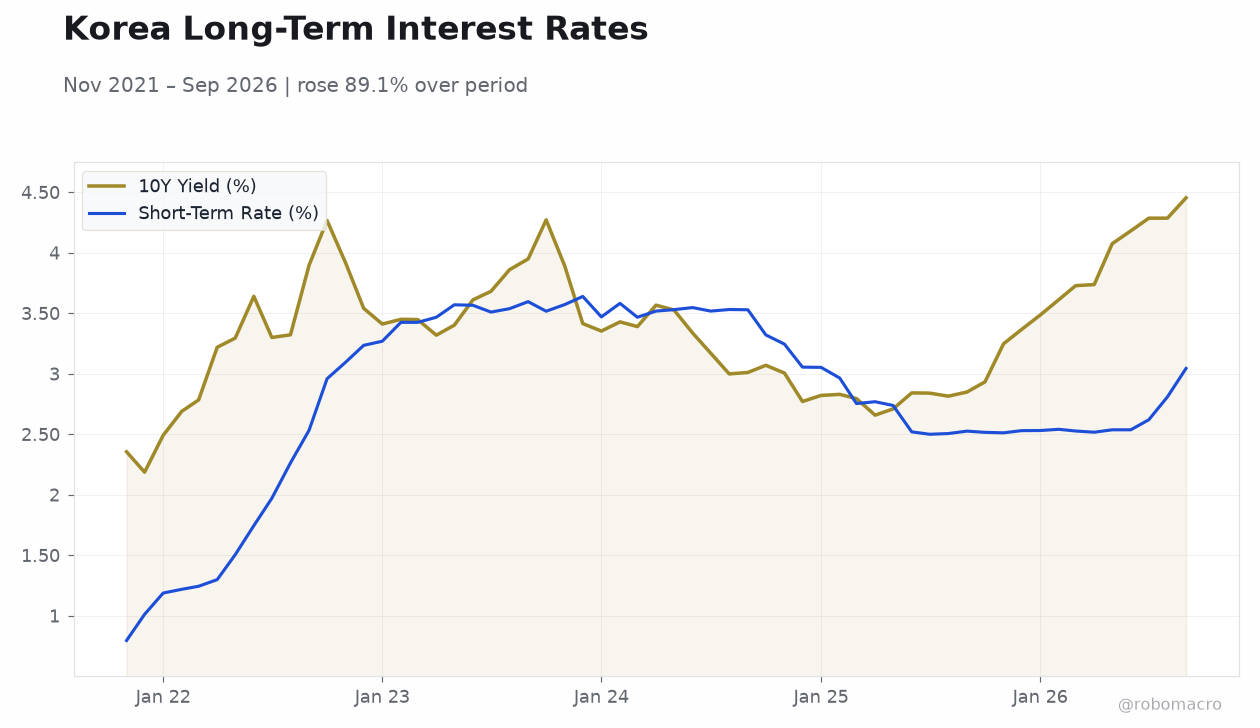 Korea Long-Term Interest Rates | Type: macro_line | 10Y Yield (%): 4.454 (2026-09-01) | Range: 2.187–4.454 | Trend(6pt): 2.355,3.411,3.39,2.71,4.286,4.454 | Short-Term Rate (%): 3.044 (2026-09-01) | Range: 0.796–3.639 | Trend(6pt): 0.796,3.269,3.467,2.738,2.62,3.044
Today's Economic Events
| Data | Prior | Cons | Time |
|---|---|---|---|
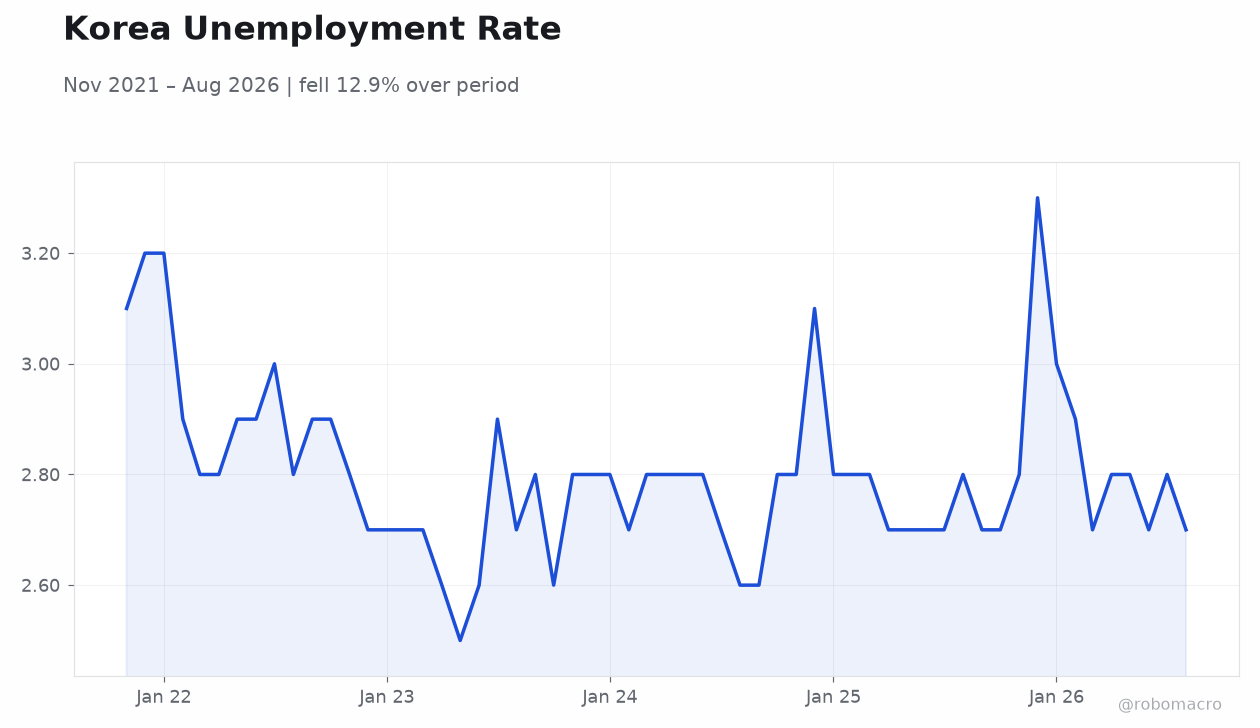
| Headline Unemployment Rate | 2.70 | - | 19:00 |
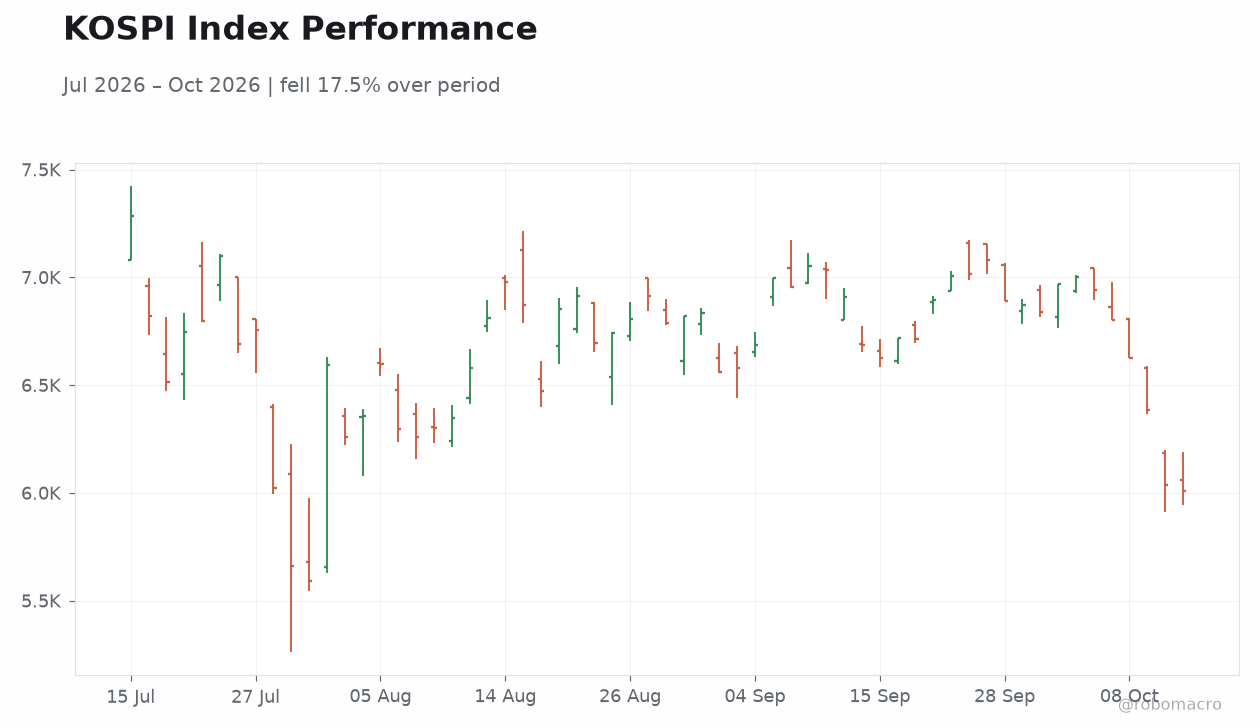
- KOSPI fell 0.44% to 6,008.81 and KOSDAQ dropped 1.57% as Samsung (-8.84%) and SK Hynix (-10.22%) extended an AI-spending rout that triggered a KRX sell-side sidecar.
- Rates rallied: the 10-year yield eased 7 bp to 4.19% and the 3-year slipped 1 bp to 3.87%, while USD/KRW firmed 0.10% to 1,341.65 on chip-selloff sentiment.
- September unemployment prints today at 19:00 ET (prior 2.7%); household credit fell 2.2 trillion won, the first drop this year, backing a patient BoK.
Yesterday's Recap
Korean equities extended losses as AI-capex anxiety swept global chip names. The KOSPI closed at 6,008.81, down 0.44%, while the KOSDAQ underperformed sharply at 823.88, off 1.57%. Samsung Electronics tumbled 8.84% to 211,500 won and SK Hynix plunged 10.22% to 1,274,000 won, with the Korea Exchange activating a sell-side sidecar on the KOSPI during a plunge the press dubbed "Black Thursday." Retail investors bore the brunt, and dealers flagged rising forced-selling risk in margin accounts.
Fixed income caught a safe-haven bid: the 10-year government yield fell 7 bp to 4.19% and the 3-year eased 1 bp to 3.87%. The won weakened modestly, with USD/KRW up 0.10% to 1,341.65, mirroring pressure on the Taiwan dollar and other regional currency proxies. In credit, household loans fell 2.2 trillion won, the first monthly contraction of the year, while August money supply data showed a 39 trillion won jump on semiconductor firms' deposit inflows.
The Day Ahead
Today's sole scheduled release is September's headline unemployment rate at 19:00 ET, with the prior reading at 2.7% and no consensus published. Labor-market resilience has been a pillar of the soft-landing narrative, so any deterioration would sharpen growth concerns already weighing on equities. A print at or below 2.7% would reinforce the view that domestic demand is holding despite the equity drawdown, giving the Bank of Korea room to stay on hold.
A softer outcome, by contrast, could accelerate the rally in bonds and deepen won weakness. No other tier-one Korean data is scheduled, leaving the labor print and global chip sentiment to drive the tape.
Other Economic Notes
The IMF now expects South Korea's GDP per capita to exceed $40,000 this year, a milestone underscoring the economy's advanced status even as growth momentum softens. Household credit contraction marks a turning point in the deleveraging cycle, reflecting tighter mortgage rules and cautious borrowers. Money supply growth of 39 trillion won in August, driven by chipmakers' deposits, highlights the sector's outsized role in liquidity creation.
↓ p.2