Korea Macro Daily(Beta Mode)
GDP Beat, Chip Surge Lift KOSPI
Market Snapshot
| Asset | Level | Change |
|---|---|---|
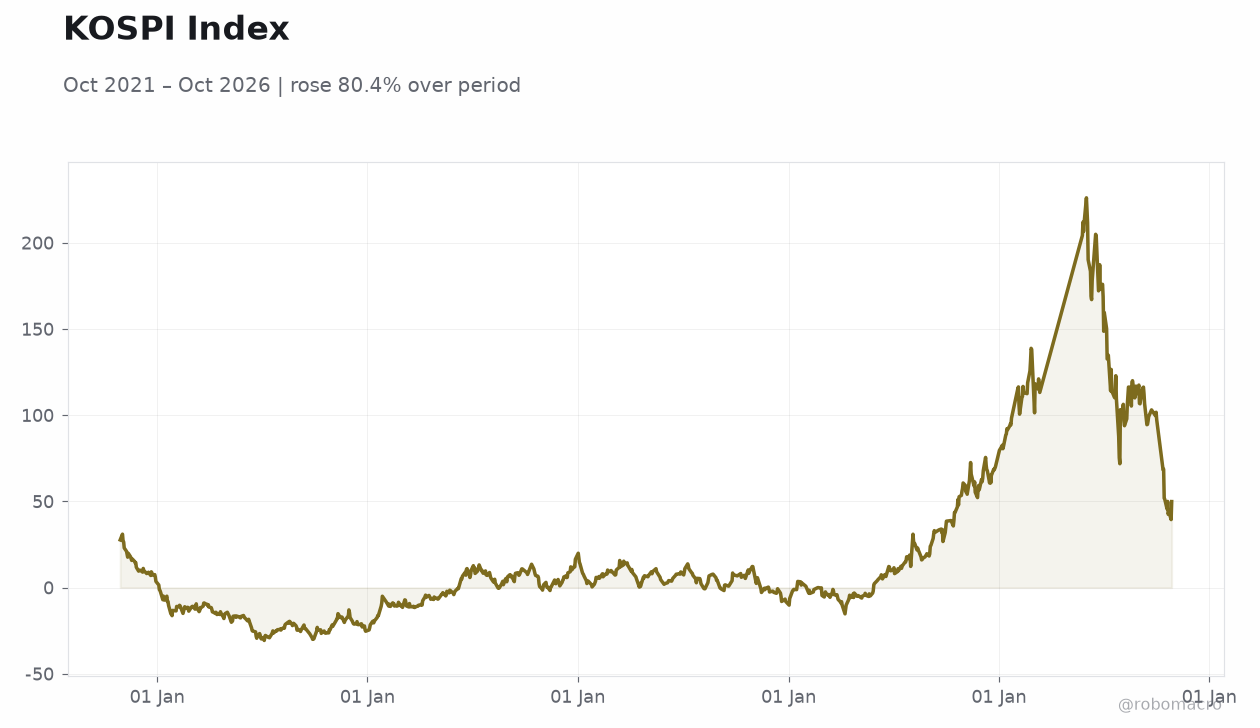
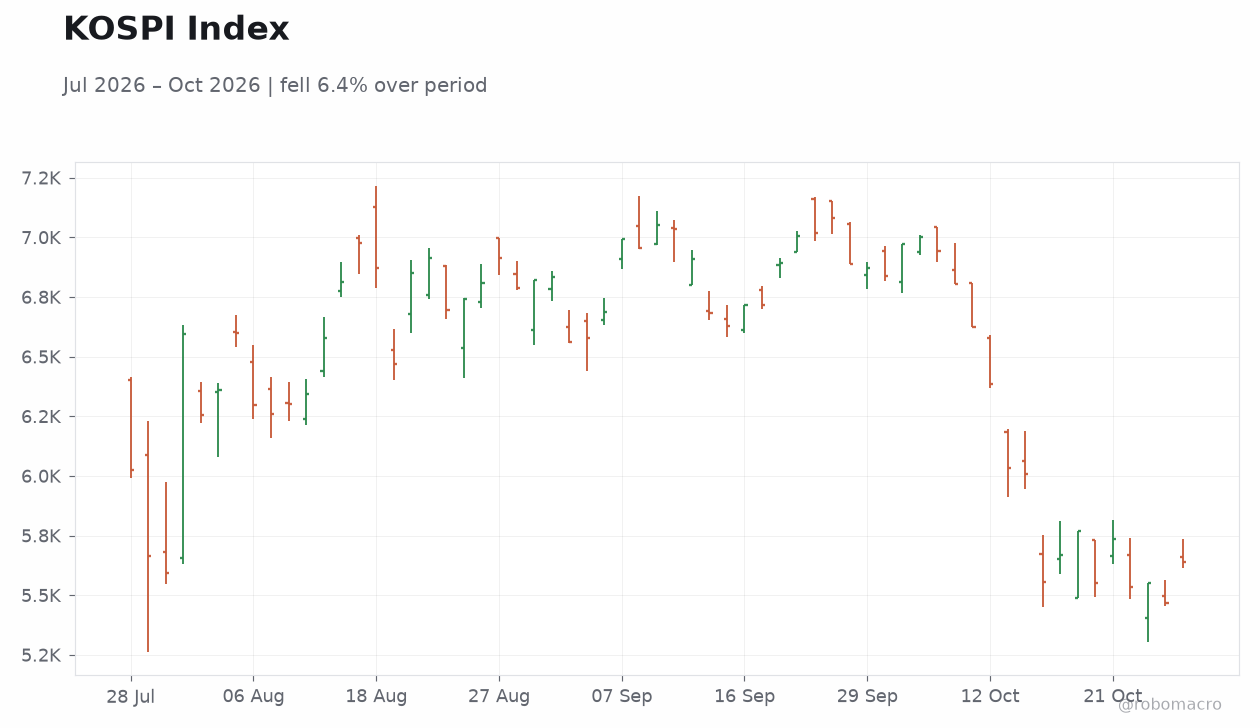
| KOSPI | 5,638.34 | +3.09% |
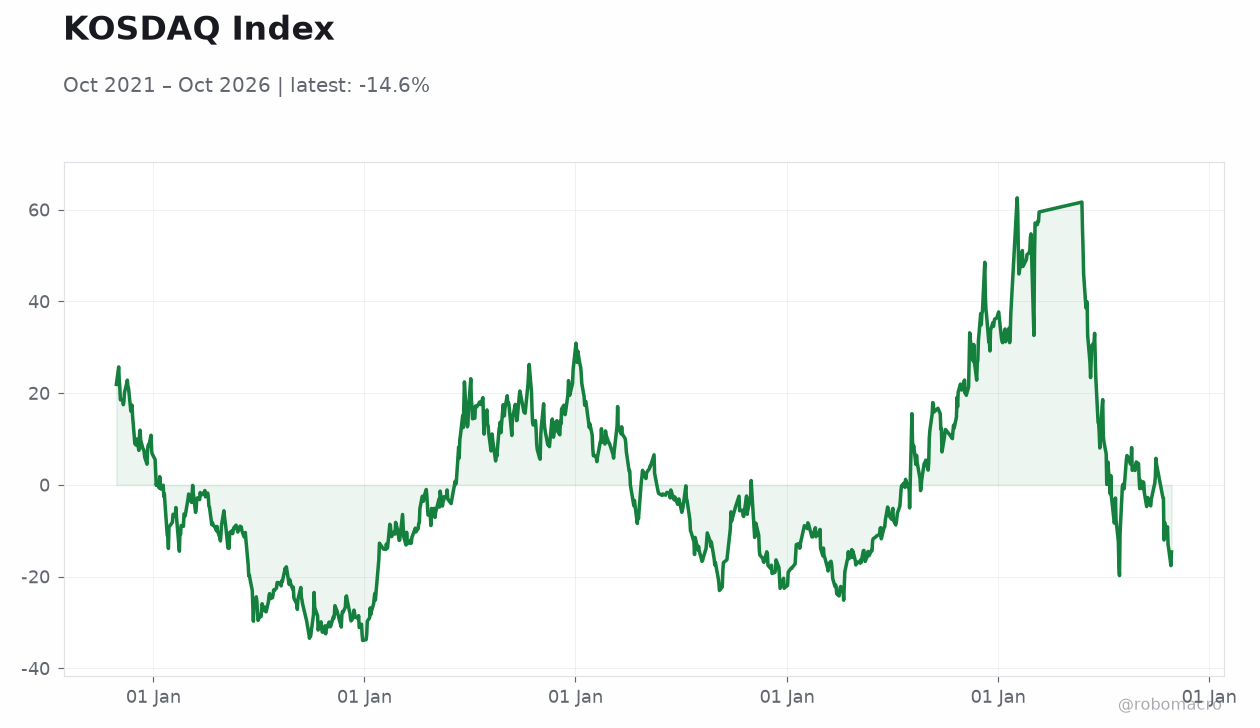
| KOSDAQ | 743.83 | +2.29% |
| USD/KRW | 1,342.53 | +1.34% |
| Samsung | 241,000.00 | +8.56% |
| SK Hynix | 1,470,000.00 | +9.62% |
| Brent Crude | 110.44 | -3.02% |
| Gold | 4,081.20 | +0.16% |
| Bitcoin | 81,315.65 | +0.63% |
| Korea 3Y Govt Yield | 3.76% | -3 bp |
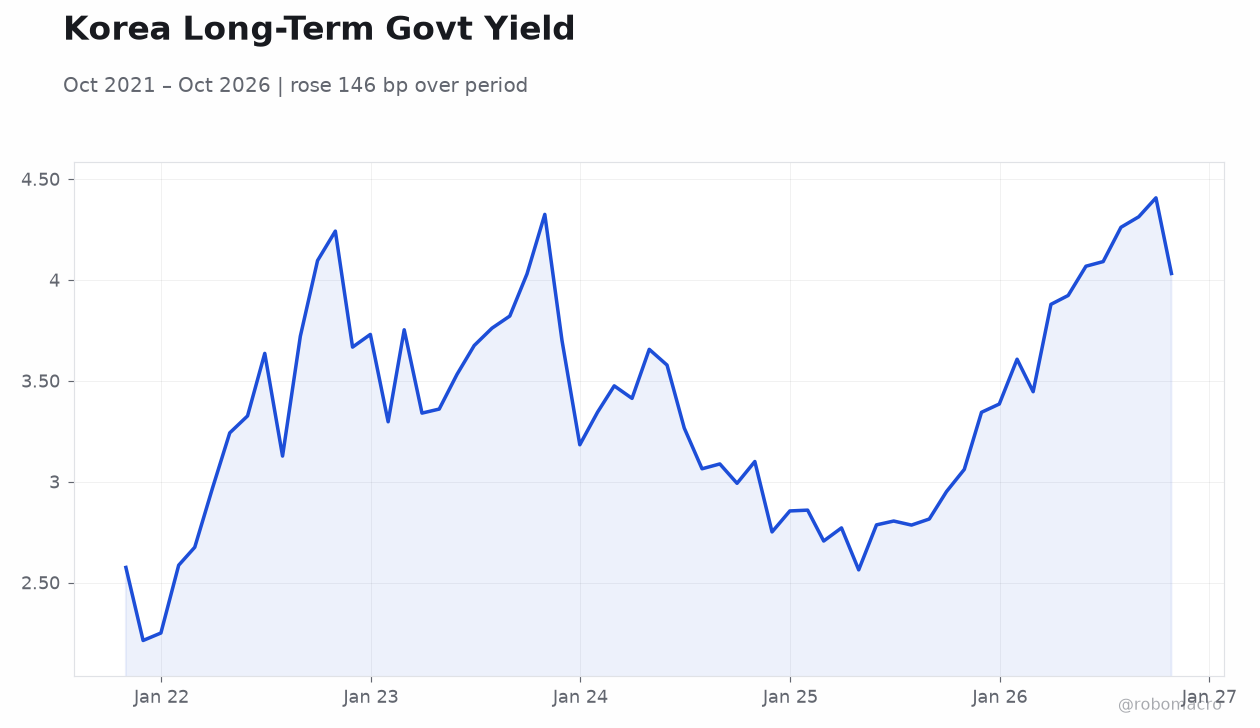
| Korea 10Y Govt Yield | 4.03% | -4 bp |
Prior Economic Events
| Data | Prior | Cons | Actual |
|---|---|---|---|
| Consumer Confidence Index | 106.60 | - | 105.40 |
| GDP Growth Quarter-over-Quarter Advance Estimate | 0.60 | 0.70 | 1 |
| GDP Growth Year-over-Year Advance Estimate | 3.70 | 3 | 3.40 |
| Business Confidence Index | 79 | - | 78 |
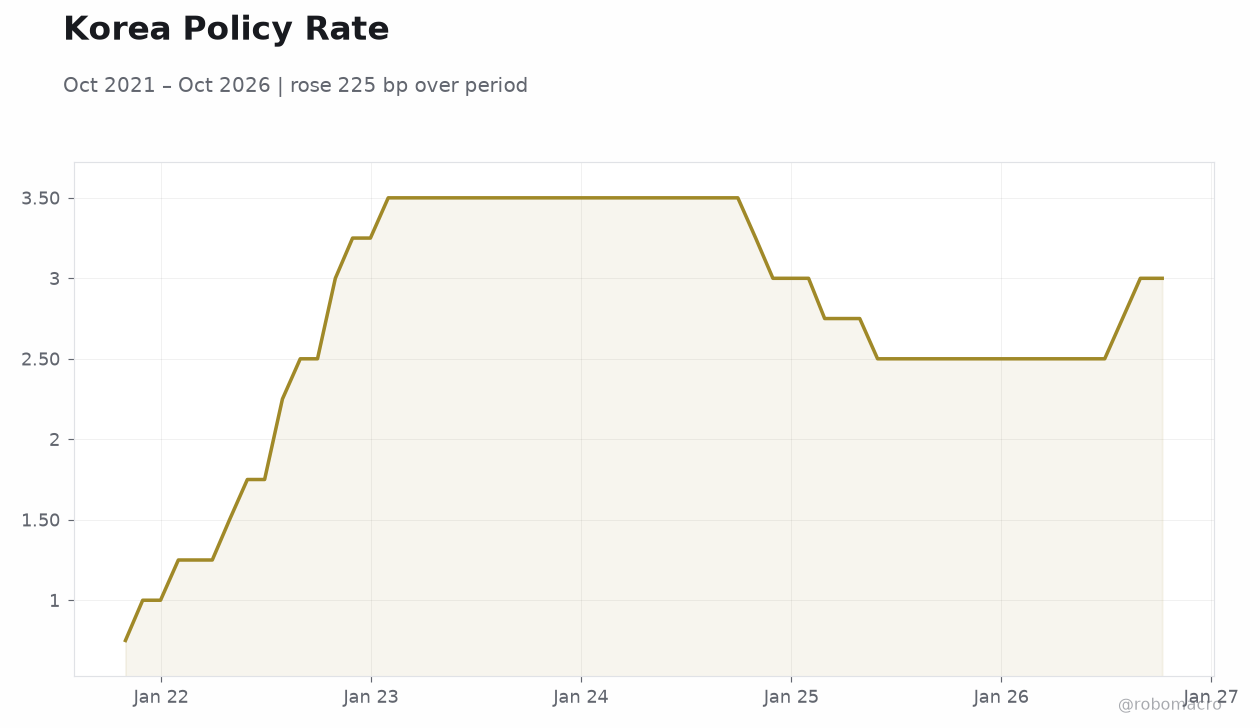 Korea Policy Rate | Type: macro_line | Policy rate %: 3 (2026-10-08) | Range: 0.75–3.5 | Trend(5pt): 0.75,3.5,3.5,2.5,3
Today's Economic Events
| Data | Prior | Cons | Time |
|---|---|---|---|
| Saturday (2026-10-31) | |||
| Exports Year-over-Year | 83.70 | - | 20:00 |
- Q3 GDP advanced 1.0% q/q and 3.4% y/y, well above consensus, driven by semiconductor exports and capex.
- KOSPI jumped 3.09% to 5,638.34 as SK Hynix surged 9.62% on record AI-driven earnings; Samsung gained 8.56%.
- Won weakened 1.34% to 1,342.53/USD ahead of the Fed; BoK flags financial-stability risks from debt-fueled AI capex.
Yesterday's Recap
South Korea's Q3 advance GDP printed at 1.0% q/q versus 0.7% consensus and 0.6% prior, while y/y growth came in at 3.4% against a 3.0% consensus and 3.7% prior — a strong beat powered by semiconductor exports and investment. Consumer confidence slipped to 105.4 from 106.6, and the business confidence index eased to 78 from 79, suggesting sentiment has not kept pace with hard activity data. Equities rallied hard on the AI chip cycle: the KOSPI closed at 5,638.34 (+3.09%) and the KOSDAQ at 743.83 (+2.29%), with SK Hynix up 9.62% and Samsung up 8.56% after SK Hynix reported quarterly operating profit up roughly 630% on-year.
Rates moved lower, with the 3-year yield down 3 bp to 3.76% and the 10-year down 4 bp to 4.03%. The won weakened sharply, USD/KRW rising 1.34% to 1,342.53, as dollar strength ahead of the FOMC weighed on the currency despite the growth beat. Brent crude fell 3.02% to $110.44, a modest terms-of-trade positive for Korea's energy-import-heavy economy.
The Day Ahead
The domestic calendar is light, with no top-tier Korea releases scheduled for today or tomorrow. The next scheduled Korean data point is October exports (y/y), due Saturday 31 October at 20:00 ET, with the prior reading at 83.7% — a print that will be scrutinized for confirmation that the chip-led export boom is carrying into Q4. Markets will instead take direction from the Fed decision and accompanying guidance, given the won's sensitivity to US rate differentials.
With the BoK in a hold stance at 3.00% and the next MPC on 26 November, there are no domestic policy events to trade. Flows will likely stay concentrated in semiconductor names following SK Hynix's results, with positioning risk around whether the AI capex narrative holds.
Other Economic Notes
The Q3 GDP composition reinforces Korea's dependence on the AI capex cycle, with chip exports and related investment doing the heavy lifting while domestic demand indicators — consumer and business confidence — softened. The BoK has warned that exports could fall by up to $100 billion in a downside scenario, underscoring concentration risk in the semiconductor complex. ↓ p.2