Korea Macro Daily(Beta Mode)
Won Surges, Chips Rally as KOSPI Fades
Market Snapshot
| Asset | Level | Change |
|---|---|---|
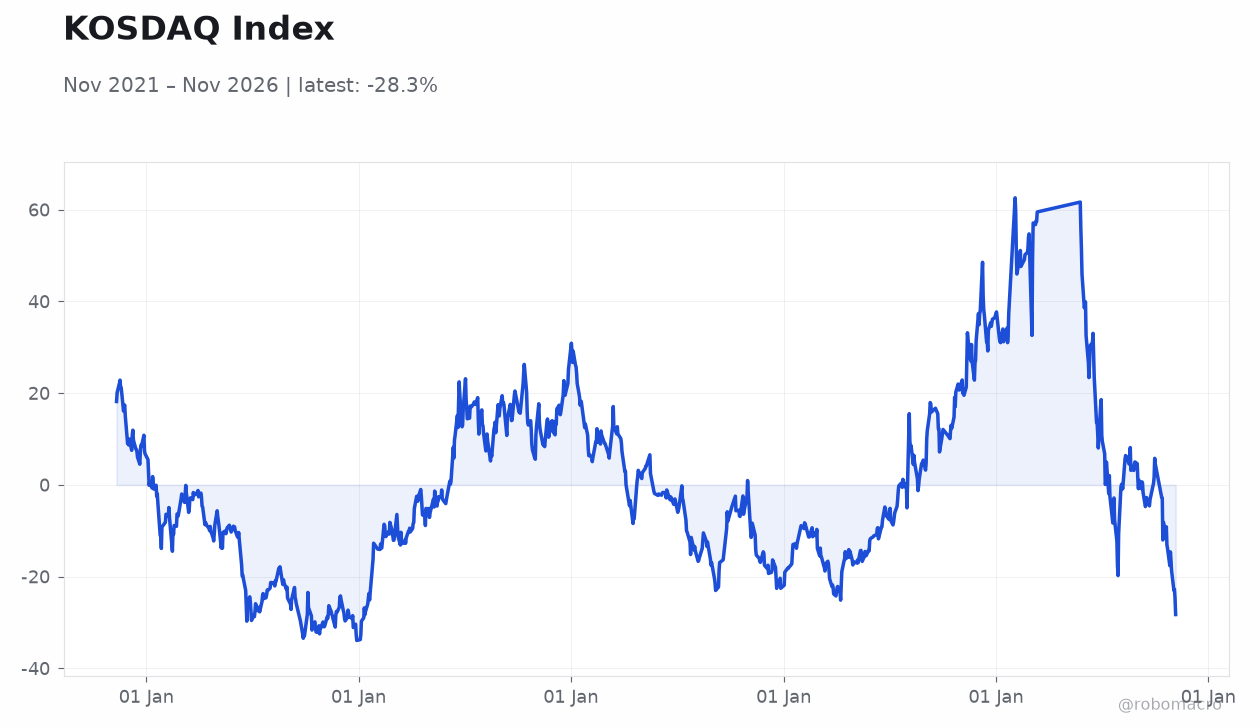
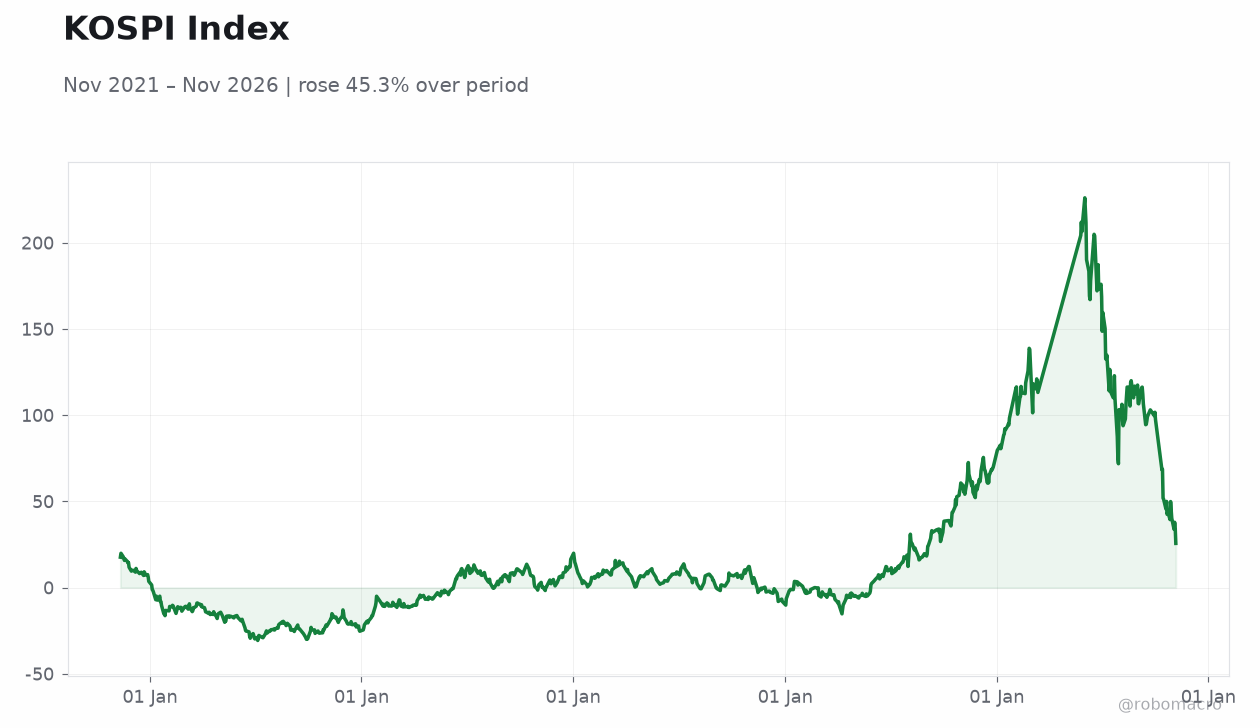
| KOSPI | 5,018.85 | -0.81% |
| KOSDAQ | 638.97 | -0.82% |
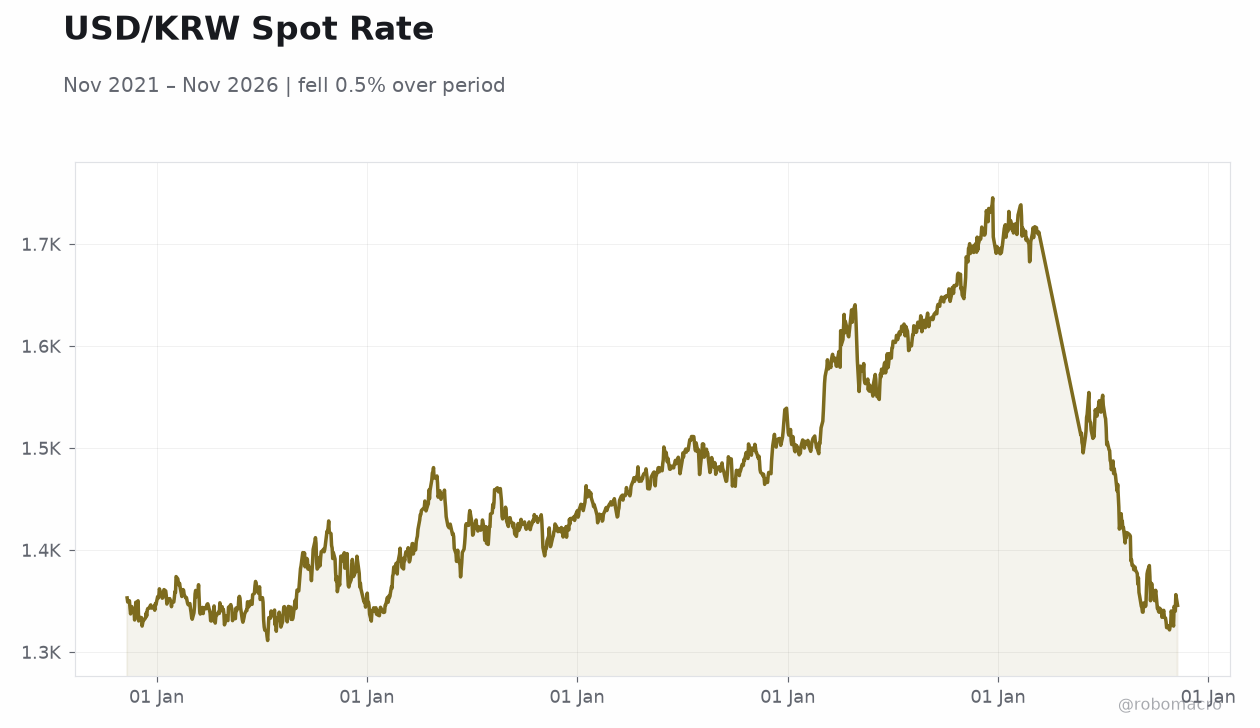
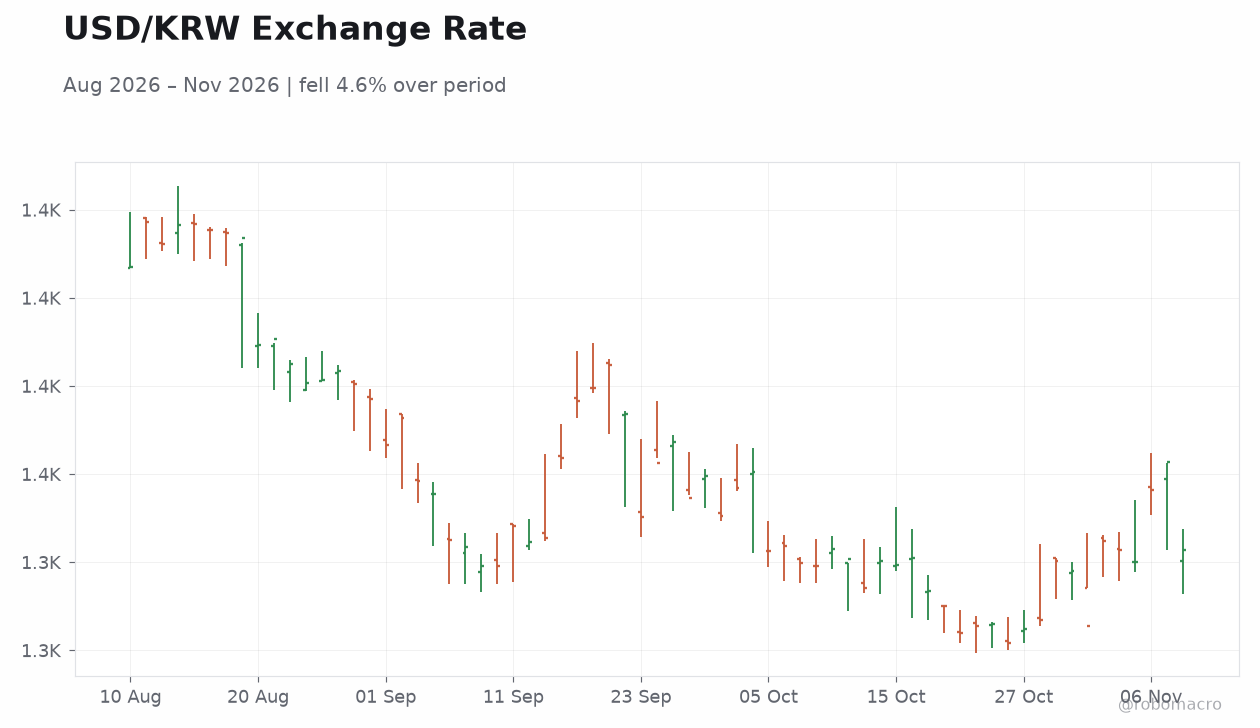
| USD/KRW | 1,342.83 | -1.46% |
| Samsung | 197,700.00 | +4.11% |
| SK Hynix | 1,203,000.00 | +5.90% |
| Brent Crude | 91.94 | -0.68% |
| Gold | 4,038.60 | -1.84% |
| Bitcoin | 73,871.00 | -1.80% |
| Korea 3Y Govt Yield | 3.64% | +3 bp |
| Korea 10Y Govt Yield | 3.86% | +1 bp |
Prior Economic Events
| Data | Prior | Cons | Actual |
|---|---|---|---|
| No events available | |||
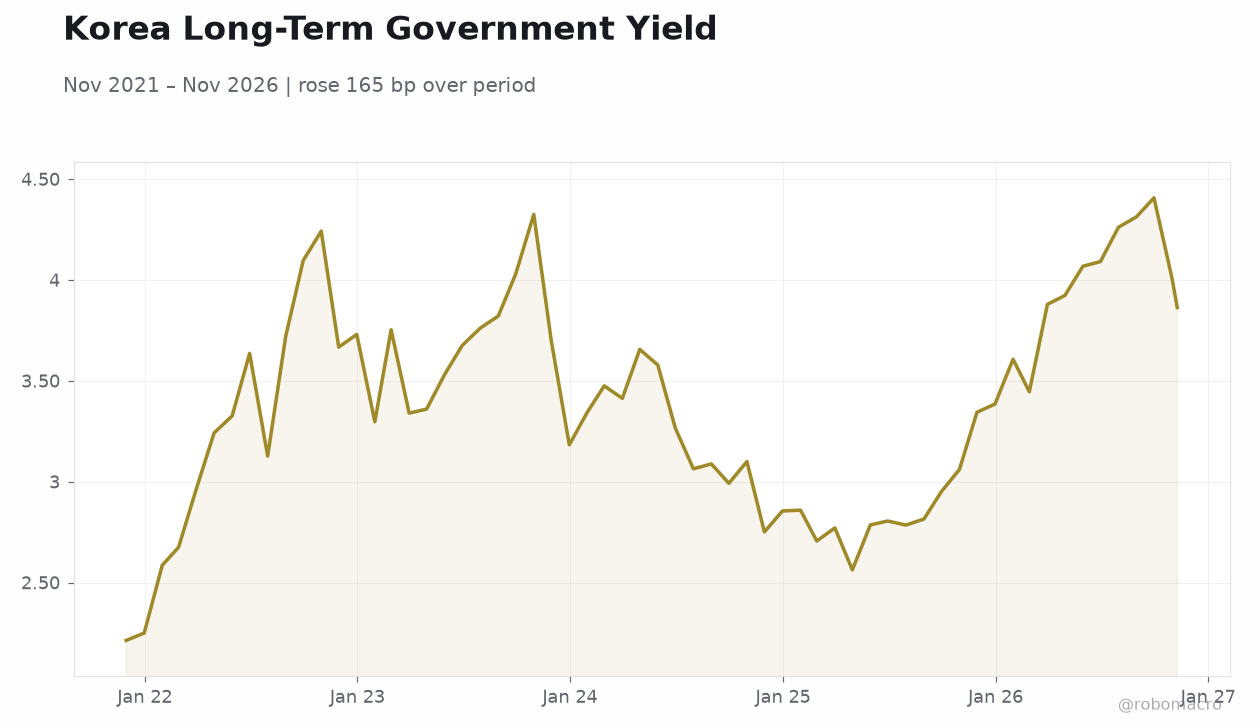 Korea Long-Term Government Yield | Type: macro_line | 10Y Yield (%): 3.863 (2026-11-09) | Range: 2.213–4.407 | Trend(5pt): 2.213,3.753,3.578,2.815,3.863
Today's Economic Events
| Data | Prior | Cons | Time |
|---|---|---|---|
| Headline Unemployment Rate | 2.60 | - | 18:00 |
- Korean won strengthens 1.46% to 1,342.83 on dollar sales and sliding oil prices
- Samsung (+4.11%) and SK Hynix (+5.90%) rally despite KOSPI slipping 0.81% to 5,018.85
- BoK Policy Board flags semiconductor bonus-driven inflation pressure; unemployment print due today
Yesterday's Recap
Korea's equity market diverged sharply from its chip complex on November 9, with the KOSPI shedding 0.81% to close at 5,018.85 while Samsung surged 4.11% to 197,700 won and SK Hynix jumped 5.90% to 1,203,000 won. The KOSDAQ fell 0.82% to 638.97, underperforming the main board. The won was the standout mover, appreciating 1.46% to 1,342.83 per dollar on dollar-selling flows and a risk-taking mood, with the currency also drawing support from a slide in oil prices.
Brent crude eased 0.68% to $91.94, while gold dropped 1.84% to $4,038.60 and Bitcoin fell 1.80% to $73,871. In rates, the 3-year government yield rose 3 bp to 3.64% and the 10-year added 1 bp to 3.86%, a modest bear-flattening move. The KRX activated a buy-side sidecar for the KOSPI on a sharp rise, underscoring the intraday volatility in large-cap chip names.
No Korean data releases were scheduled for the session.
The Day Ahead
The sole Korean release on today's calendar is the headline unemployment rate at 18:00 ET, with the prior reading at 2.6% and no consensus published. Given the absence of a consensus figure, the market will focus on whether the labor print confirms the resilience implied by firm chip-sector hiring. With no other domestic data due and tomorrow's calendar empty, attention shifts to positioning ahead of the Bank of Korea's November 26 policy meeting.
Traders will also monitor won flows after the currency's sharp appreciation, watching whether dollar-selling momentum persists. Chip-sector headlines remain the dominant equity catalyst, particularly any follow-through on Nvidia-related supply concerns.
Other Economic Notes
The BoK Policy Board has flagged that semiconductor bonuses of up to 70 trillion won could add pressure on consumption and inflation, though it estimates the GDP effect at only around 0.1 percentage point. That framing suggests the central bank sees wealth-effect channels as more relevant than direct output gains. Citibank Korea argues that if semiconductors falter, the BoK's November hike would end the cycle, with rate cuts to 2.50% by 2028 — a view that implicitly treats the August move as the terminal point of tightening.
↓ p.2