Mexico Macro Daily(Beta Mode)
Trade Surplus Miss Weighs on Peso
Market Snapshot
| Asset | Level | Change |
|---|---|---|
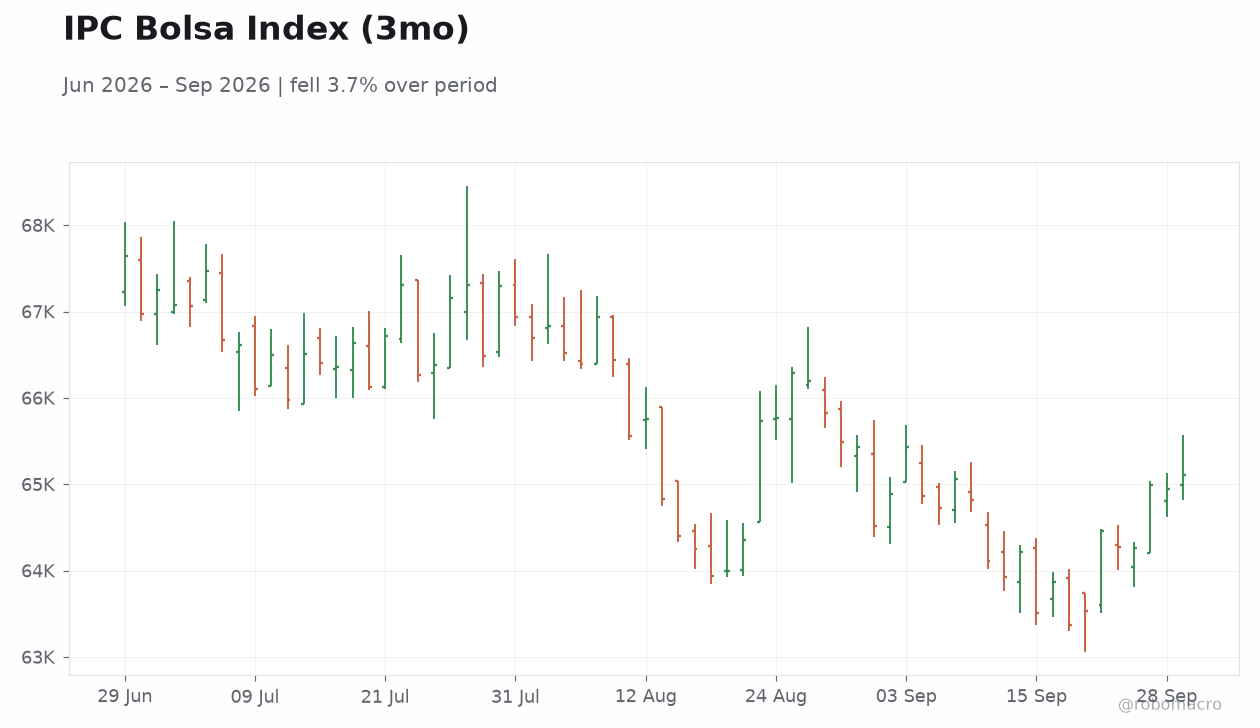
| IPC Bolsa | 65,110.57 | +0.26% |
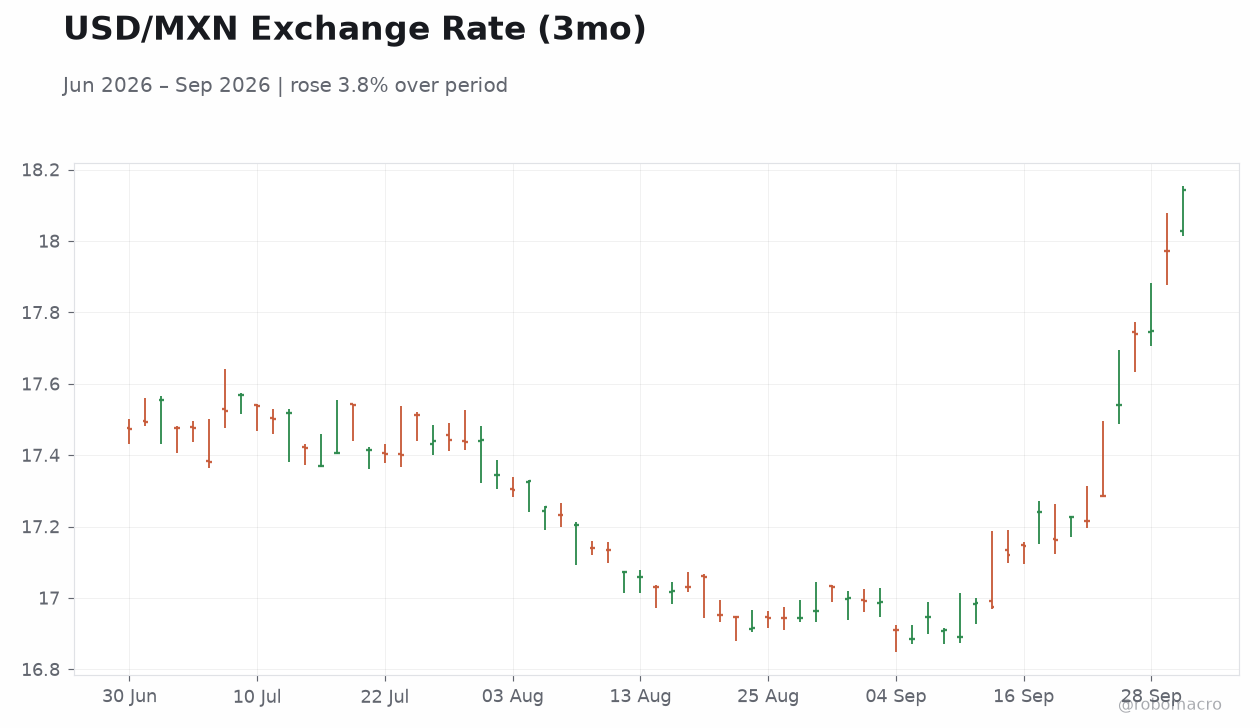
| USD/MXN | 17.97 | +1.26% |
| EUR/MXN | 20.60 | +0.80% |
| WTI Crude | 90.84 | +1.63% |
| Silver | 60.96 | +0.47% |
| Gold | 4,216.10 | +0.87% |
| Brent Crude | 97.87 | -4.60% |
| Bitcoin | 83,908.97 | +0.34% |
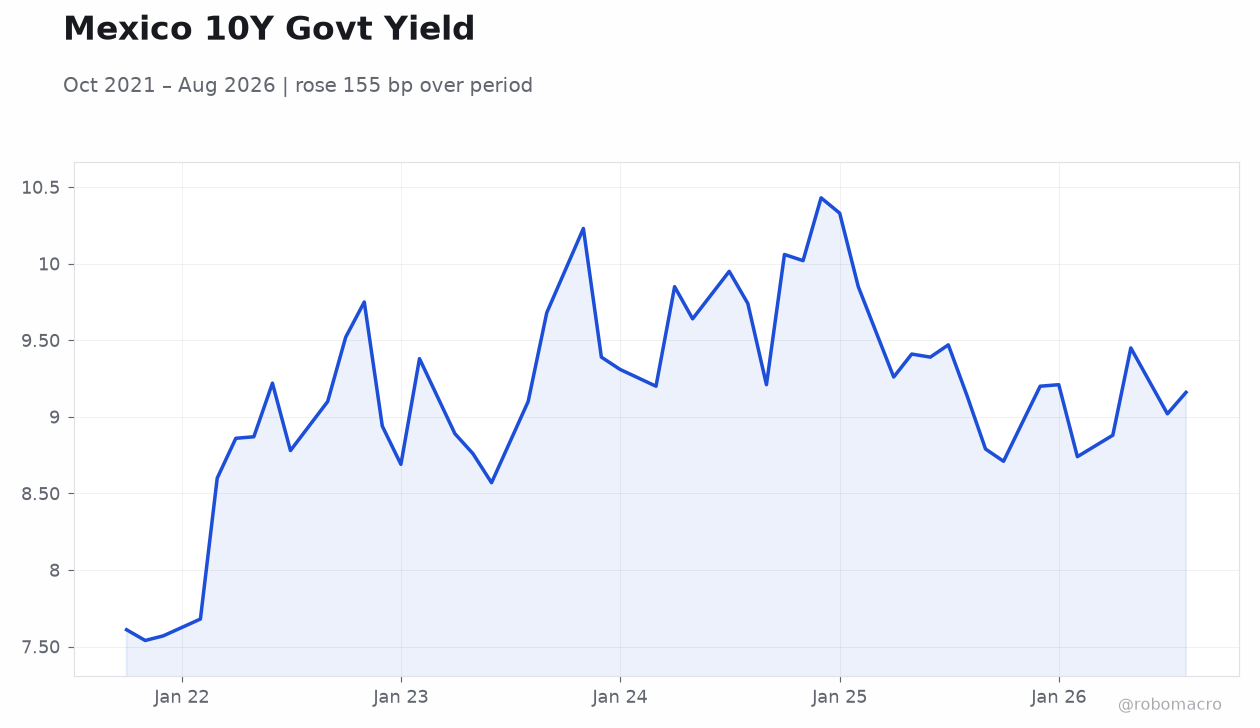
| Mexico 10Y Govt Yield | 9.35% | +19 bp |
Prior Economic Events
| Data | Prior | Cons | Actual |
|---|---|---|---|
| Trade Balance | -848m | 1,400m | 605m |
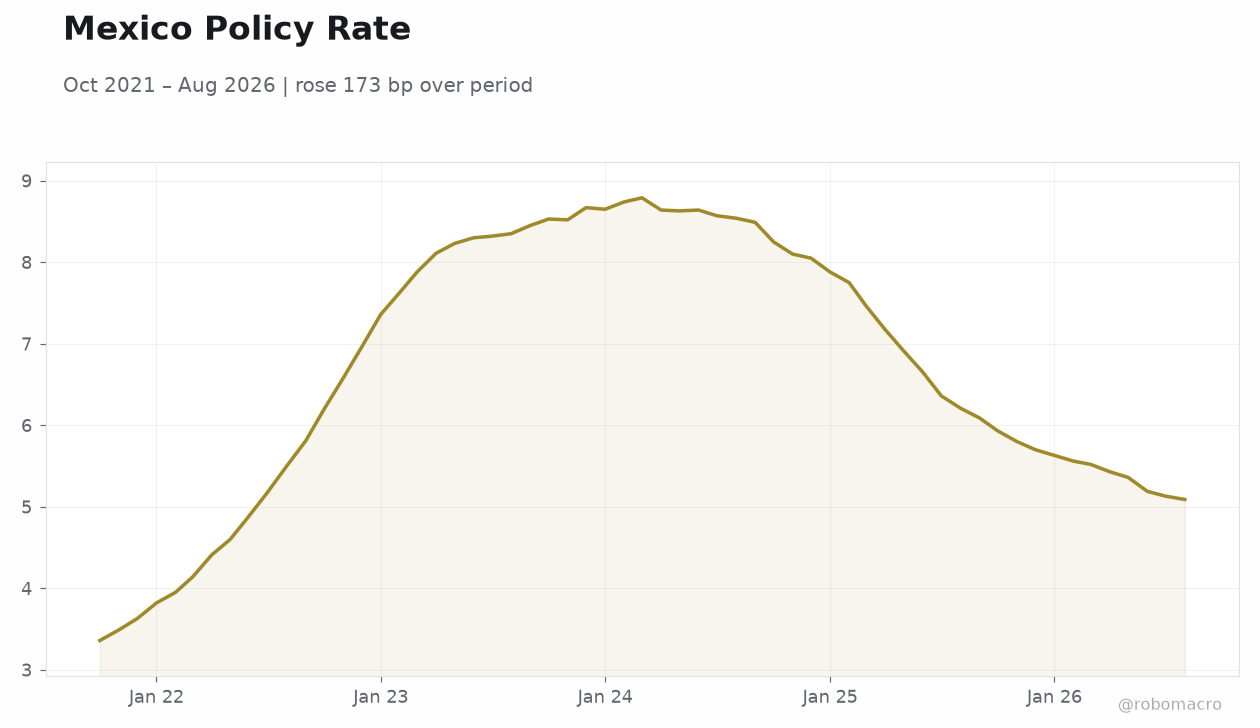 Mexico Policy Rate | Type: macro_line | Short-term Rate (%): 5.09 (2026-08-01) | Range: 3.36–8.79 | Trend(6pt): 3.36,6.96,8.74,7.17,5.19,5.09
Today's Economic Events
| Data | Prior | Cons | Time |
|---|---|---|---|
| Thursday (2026-10-01) | |||
| Business Confidence Index | 48.10 | - | 04:00 |
- August trade balance swung to +605 million USD, missing consensus but narrowing sharply from prior deficit.
- IPC Bolsa edged up 0.26 percent while USD/MXN jumped 1.26 percent to 17.97 on higher yields.
- Mexico 10-year government yield rose 19 basis points to 9.35 percent as global risk sentiment shifted.
Yesterday's Recap
Mexico’s August trade balance printed at a 605 million USD surplus, reversing the prior month’s 848 million USD deficit yet falling short of the 1.4 billion USD consensus. The narrower external gap offered modest support to the current account outlook. Equity markets posted limited gains, with the IPC Bolsa advancing 0.26 percent to close at 65,110.57.
The peso came under pressure as USD/MXN climbed 1.26 percent to 17.97 and EUR/MXN rose 0.80 percent to 20.60. Fixed-income markets sold off, lifting the 10-year government yield 19 basis points to 9.35 percent. WTI crude gained 1.63 percent to 90.84 while Brent crude fell 4.60 percent to 97.87, reflecting divergent energy price drivers.
Precious metals advanced modestly, with gold up 0.87 percent and silver rising 0.47 percent. Bitcoin edged 0.34 percent higher to 83,908.97.
The Day Ahead
The Business Confidence Index for September is scheduled for release at 04:00 ET on 1 October, following the prior reading of 48.1. Markets will watch for any signal of fourth-quarter momentum ahead of key USMCA-related data later in the month. A softer print could reinforce expectations for steady Banxico policy while a stronger outcome may support the peso.
Limited additional Mexican releases are due, leaving focus on global central-bank commentary and US data that often move cross-border flows. Traders will also monitor any updates on nearshoring investment announcements that could influence sentiment toward Mexican assets.
Other Economic Notes
Morningstar highlighted Mexico alongside Brazil as a preferred emerging-market allocation, citing better relative growth prospects than South Africa. Hurricane Polo made landfall on the Baja California peninsula, a major tourism corridor, raising the prospect of short-term disruption to local services and retail activity. US Treasury sanctions targeted 46 individuals and entities linked to the Sinaloa Cartel’s Los Mayos network, including Baja California connections, with potential implications for regional financial flows.
These developments occur against a backdrop of sustained nearshoring interest that continues to support manufacturing investment and export capacity.