Mexico Macro Daily(Beta Mode)
Trade Balance Misses Consensus, Peso Weakens
Market Snapshot
| Asset | Level | Change |
|---|---|---|
| IPC Bolsa | 64,214.36 | -1.38% |
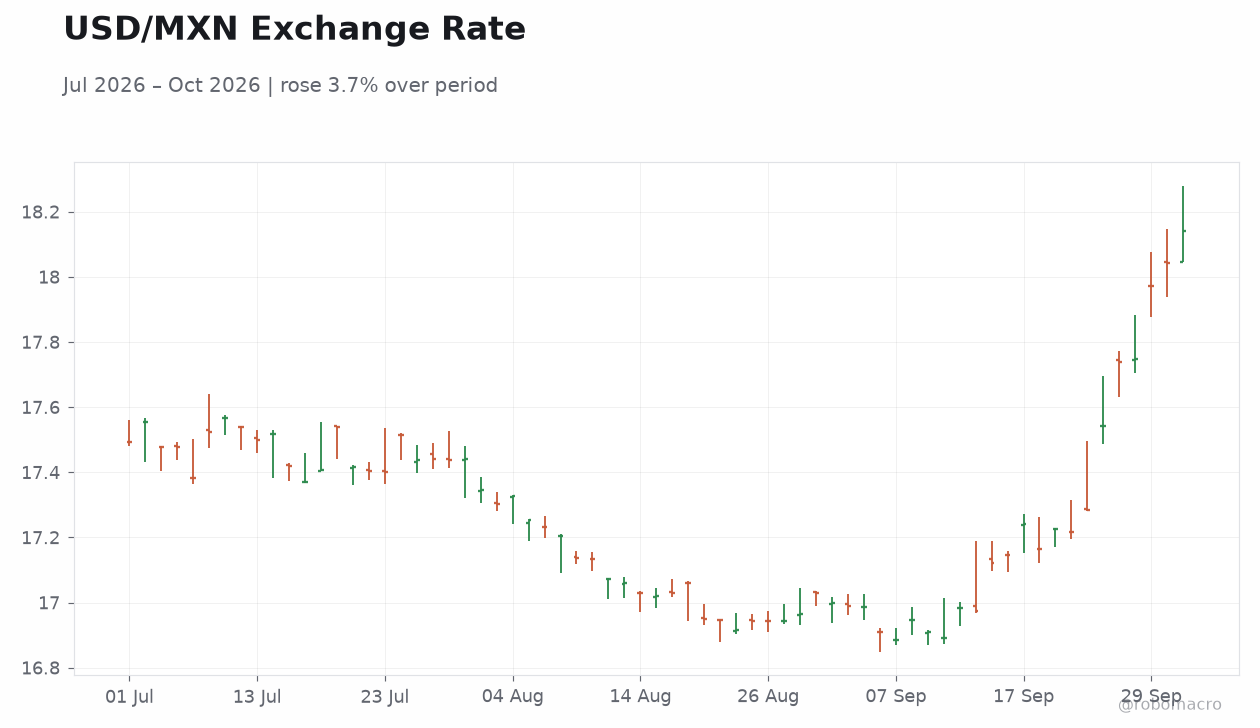
| USD/MXN | 18.16 | +0.63% |
| EUR/MXN | 20.53 | +0.31% |
| WTI Crude | 91.70 | +1.42% |
| Silver | 61.45 | +2.25% |
| Gold | 4,213.20 | +0.63% |
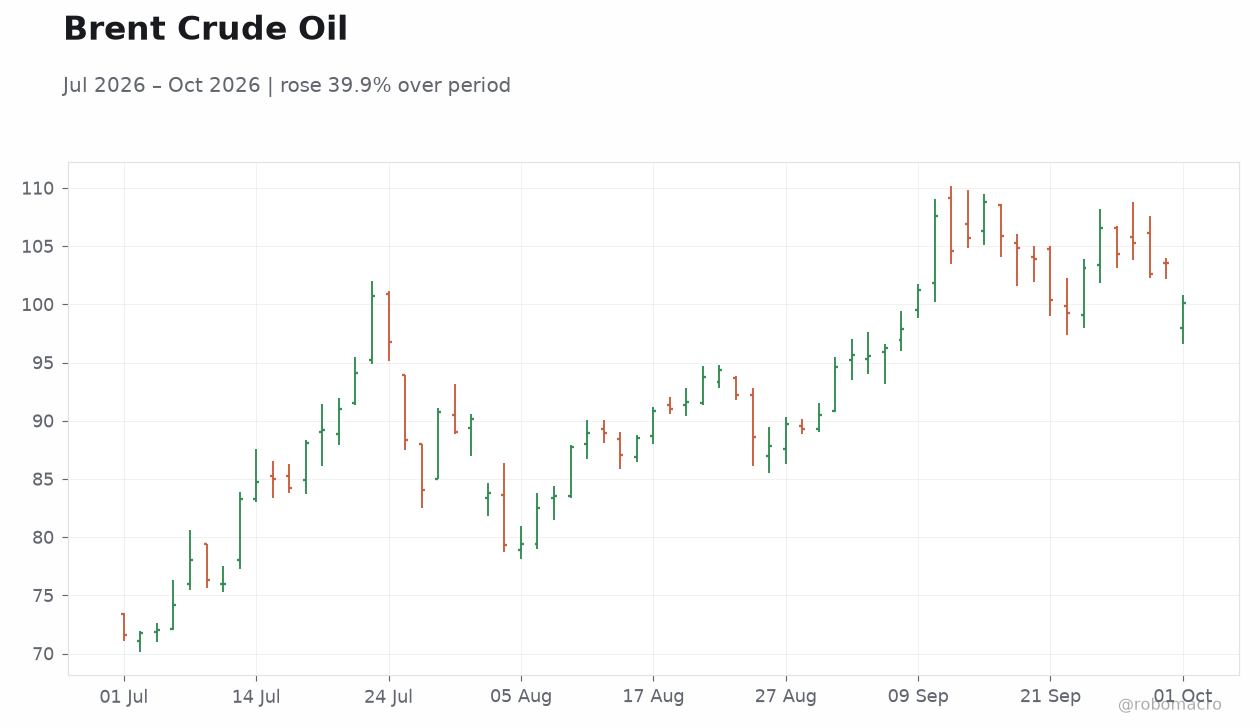
| Brent Crude | 100.07 | -3.34% |
| Bitcoin | 83,933.10 | +0.45% |
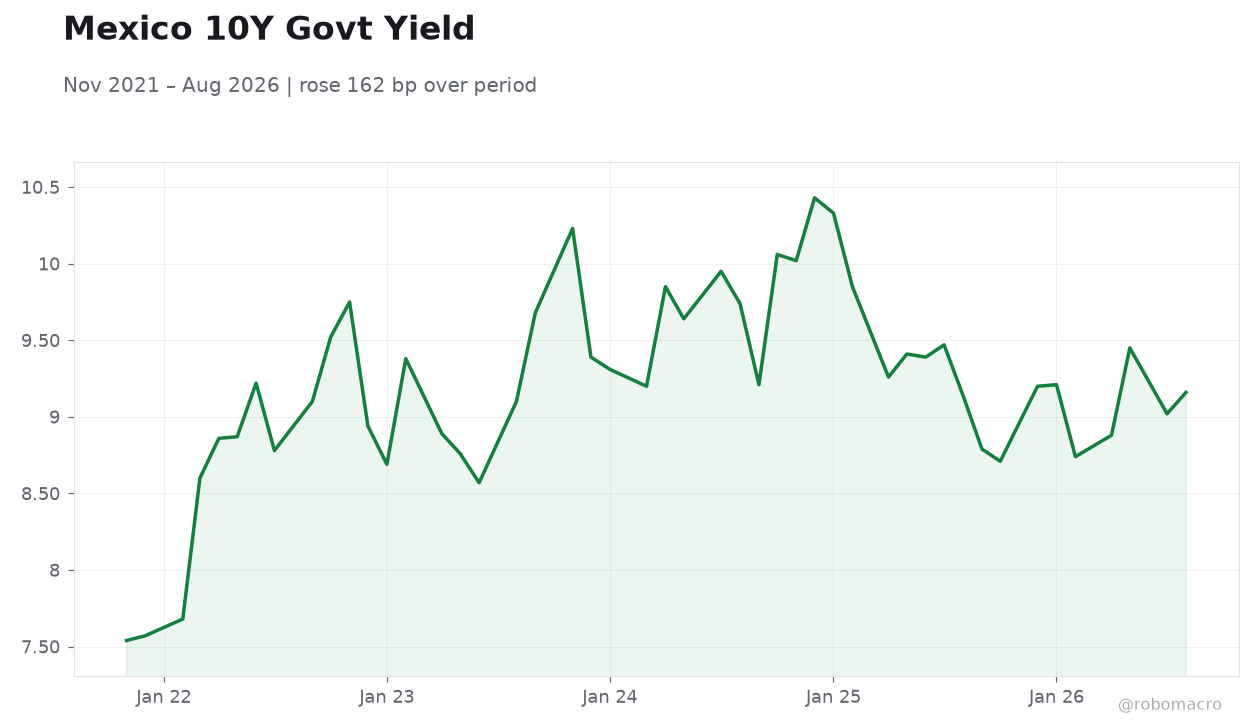
| Mexico 10Y Govt Yield | 9.35% | +19 bp |
Prior Economic Events
| Data | Prior | Cons | Actual |
|---|---|---|---|
| Trade Balance | -848m | 1,400m | 605m |
| Business Confidence Index | 48.10 | - | - |
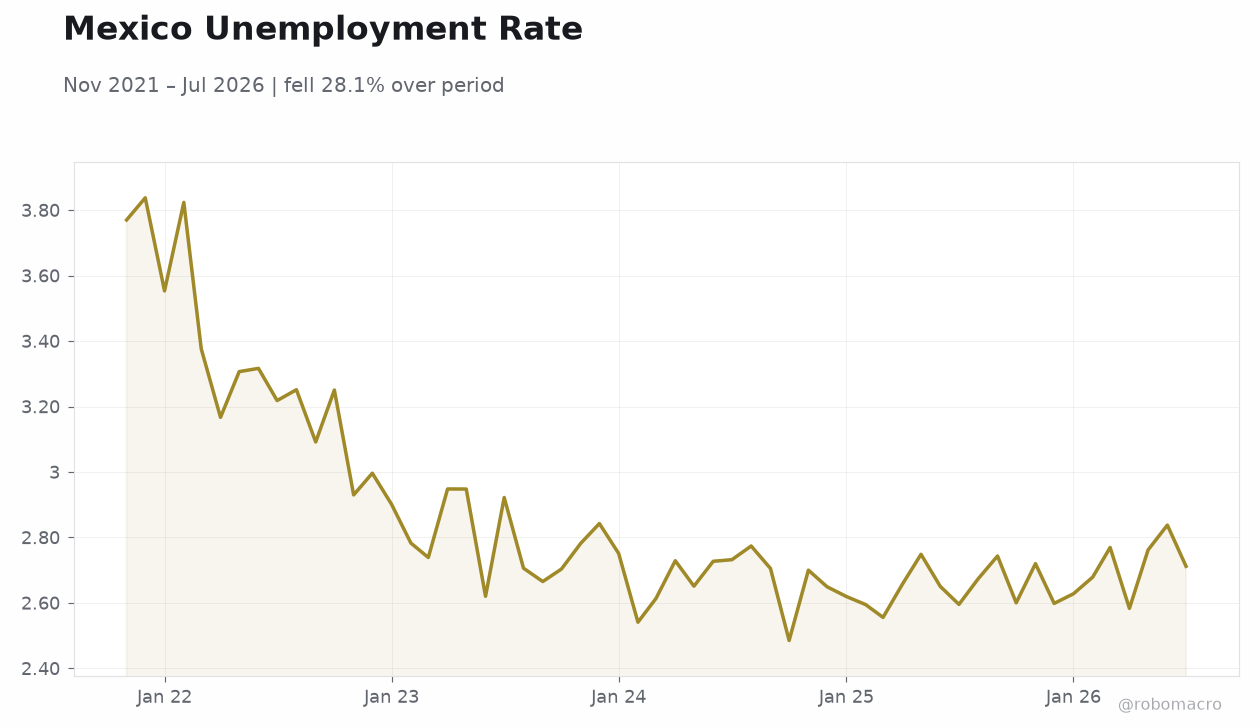 Mexico Unemployment Rate | Type: macro_line | %: 2.712 (2026-07-01) | Range: 2.485–3.838 | Trend(5pt): 3.77,2.901,2.614,2.748,2.712
Today's Economic Events
| Data | Prior | Cons | Time |
|---|---|---|---|
| No events available | |||
- Mexico's trade balance for the period ending Sep 28 printed at +$605 million, missing the +$1.4 billion consensus and reversing from the prior -$848 million.
- IPC Bolsa fell 1.38% to 64,214.36 while USD/MXN rose 0.63% to 18.16 and the 10-year government yield climbed 19 bp to 9.35%.
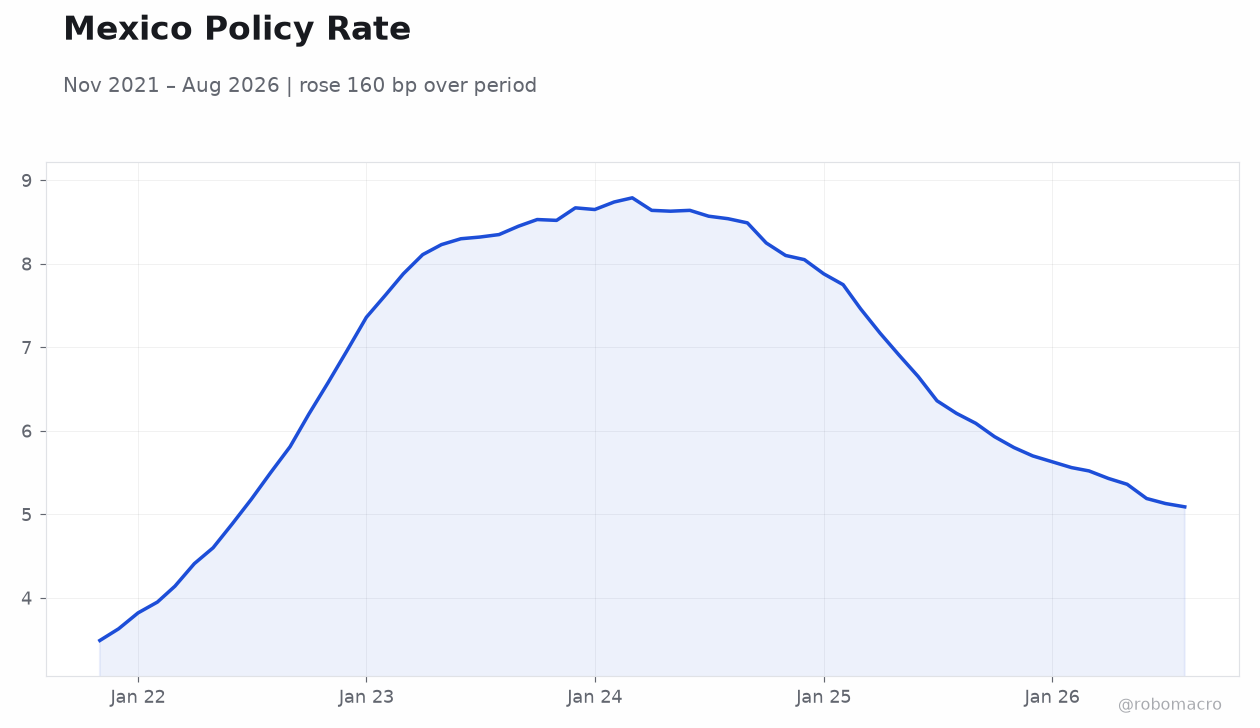
- Banxico policy rate holds at 6.50% with August CPI at 3.26% YoY; no fresh communications emerged to alter the easing path.
Yesterday's Recap
Mexico's trade balance for the period ending September 28 came in at a $605 million surplus, falling short of the $1.4 billion consensus and reversing the prior month's $848 million deficit. IPC Bolsa closed 1.38% lower at 64,214.36. USD/MXN climbed 0.63% to 18.16 while EUR/MXN gained 0.31% to 20.53, signaling broad peso softening.
The 10-year government yield rose 19 bp to 9.35%, lifting borrowing costs across the curve. WTI crude advanced 1.42% to $91.70, providing some support to energy-linked revenues, yet Brent's 3.34% drop to $100.07 capped the offset. Business confidence data due October 1 showed no print, leaving sentiment readings stale at the prior 48.1 level.
Silver rose 2.25% to 61.45 and gold gained 0.63% to 4,213.20, while bitcoin settled 0.45% higher at 83,933.10.
The Day Ahead
No economic releases are scheduled for October 1, leaving markets without fresh domestic data points. Attention will turn to any Banxico member remarks or U.S. labor-market updates that could influence peso flows.
Traders will monitor oil-price volatility given Mexico's fiscal reliance on energy exports. Nearshoring-related investment announcements from U.S. firms remain the key watch item under the USMCA framework.
The absence of events keeps focus on positioning ahead of upcoming inflation and retail-sales prints. Mexico 10-year yields at 9.35% will continue to anchor local fixed-income trading ranges.
Other Economic Notes
The narrower trade surplus underscores softening external demand that could pressure GDP growth in the final quarter. Nearshoring continues to draw manufacturing investment, yet higher local yields may raise financing costs for new plants. Remittance inflows remain supportive of consumption, though peso depreciation risks eroding real purchasing power.
USMCA compliance reviews scheduled for later this year will shape long-term trade certainty. ↓ p.2