Mexico Macro Daily(Beta Mode)
Peso Steady Near 17.97 as IPC Extends Gains
Market Snapshot
| Asset | Level | Change |
|---|---|---|
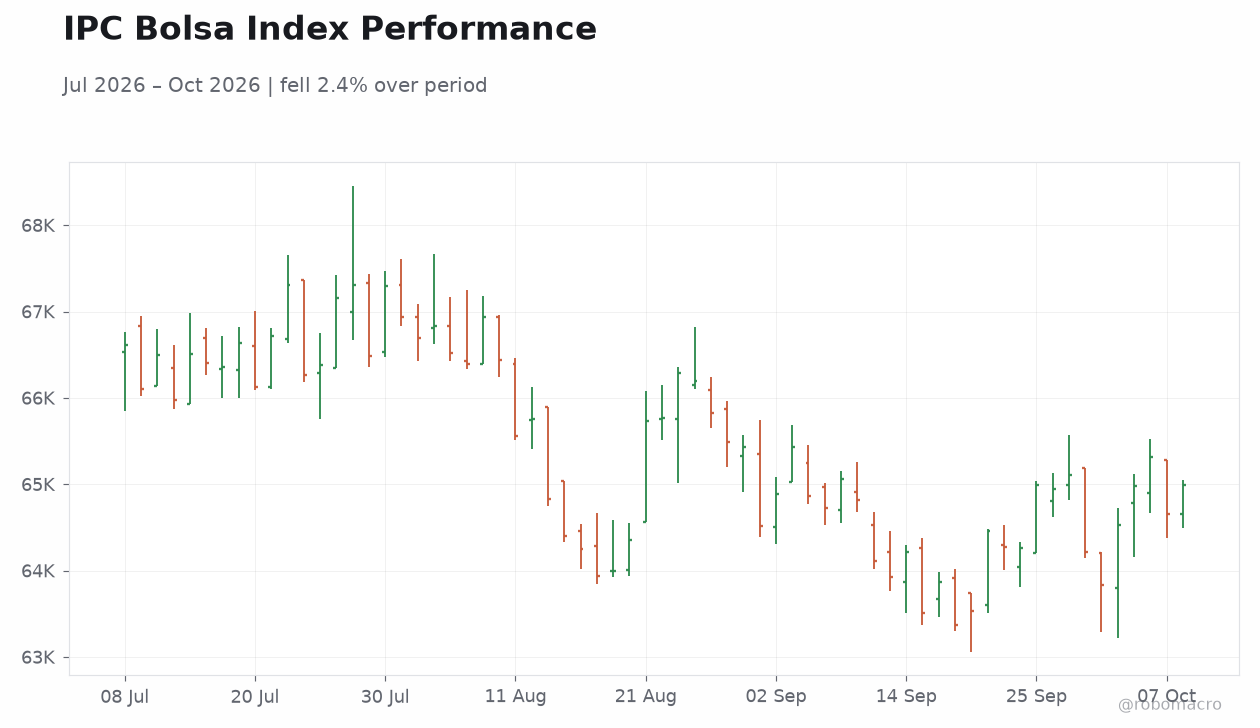
| IPC Bolsa | 64,986.91 | +0.52% |
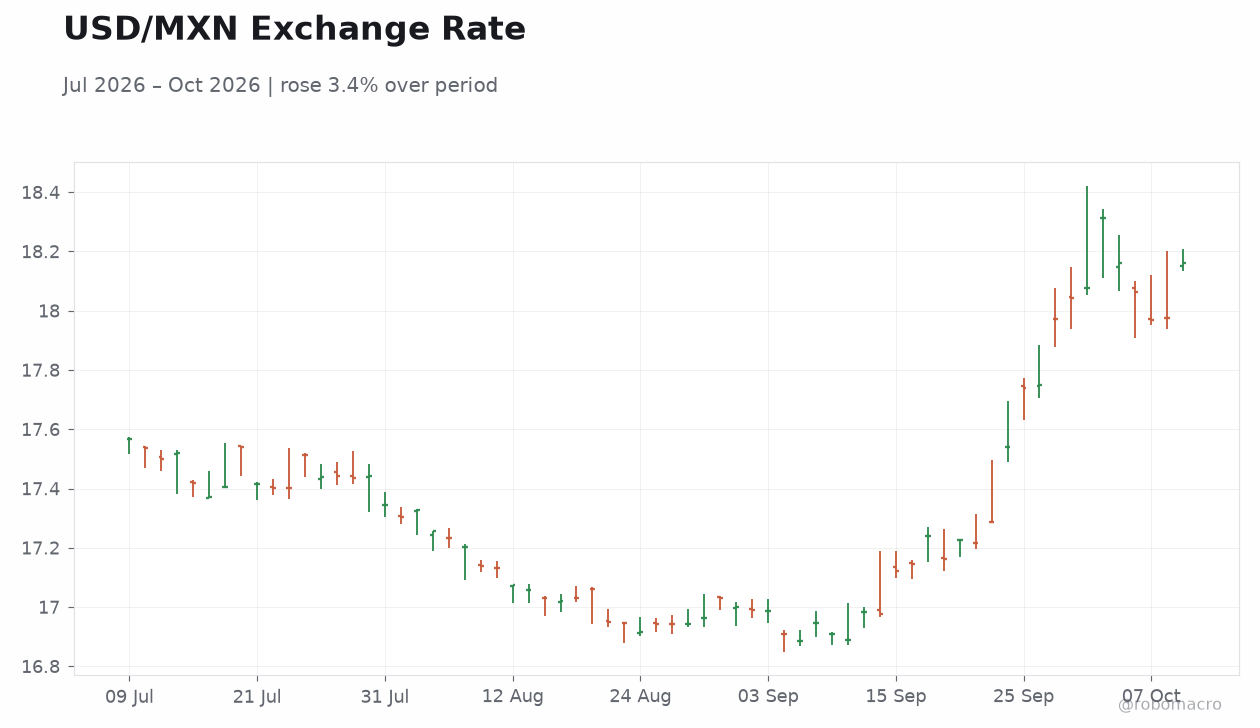
| USD/MXN | 17.97 | +0.03% |
| EUR/MXN | 20.37 | +1.15% |
| WTI Crude | 90.56 | -1.02% |
| Silver | 60.65 | +2.68% |
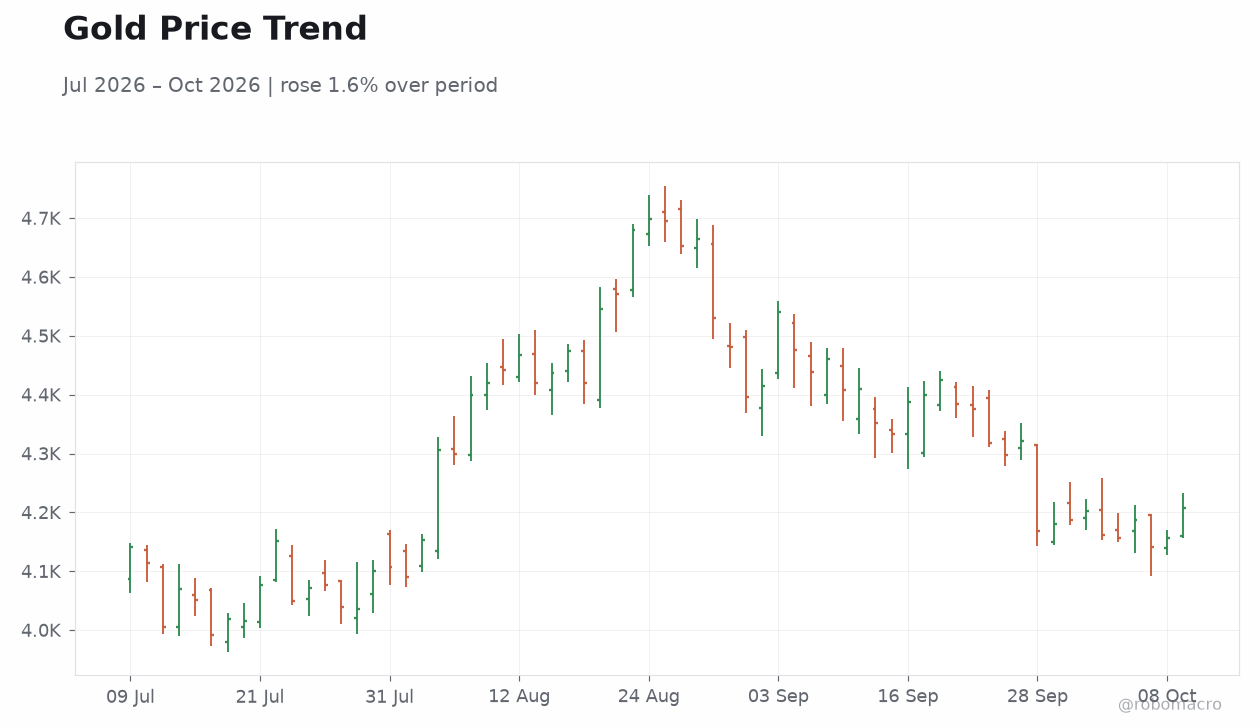
| Gold | 4,206.50 | +1.19% |
| Brent Crude | 102.73 | -1.49% |
| Bitcoin | 83,164.96 | +1.82% |
| Mexico 10Y Govt Yield | - | - |
Prior Economic Events
| Data | Prior | Cons | Actual |
|---|---|---|---|
| No events available | |||
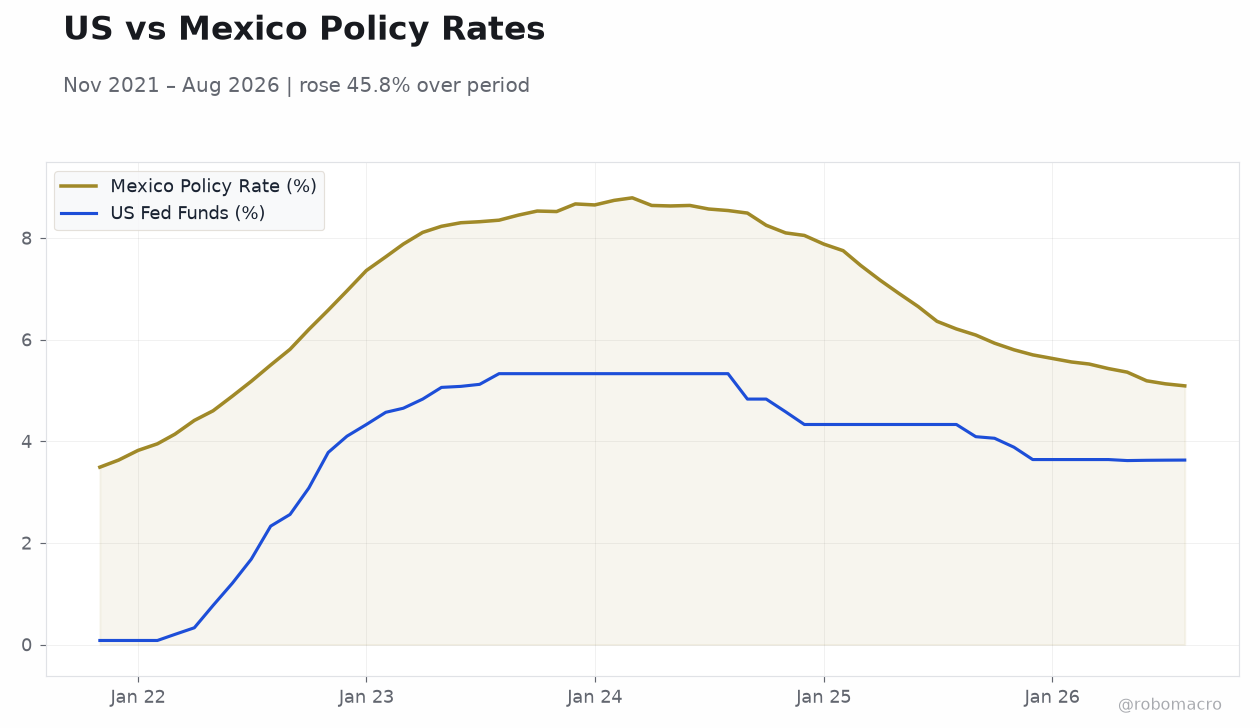 US vs Mexico Policy Rates | Type: macro_line | Mexico Policy Rate (%): 5.09 (2026-08-01) | Range: 3.49–8.79 | Trend(6pt): 3.49,7.36,8.79,6.91,5.13,5.09 | US Fed Funds (%): 3.63 (2026-08-01) | Range: 0.08–5.33 | Trend(6pt): 0.08,4.33,5.33,4.33,3.628,3.63
Today's Economic Events
| Data | Prior | Cons | Time |
|---|---|---|---|
| No events available | |||
- IPC Bolsa rose 0.52% to 64,986.91, extending the equity rally while USD/MXN held near 17.97, up just 0.03% on the session.
- Gold climbed 1.19% to 4,206.50 and silver surged 2.68% to 60.65, supporting Mexico's mining-heavy index and export revenues.
- Brent crude fell 1.49% to 102.73 as Gulf of Mexico producers shut in output ahead of Storm Isaias, a mixed supply signal for Pemex-linked flows.
Yesterday's Recap
Mexican equities advanced on October 8, with the IPC Bolsa gaining 0.52% to close at 64,986.91, buoyed by precious metals strength that lifted Fresnillo and other miners. The peso was broadly stable, with USD/MXN edging 0.03% higher to 17.97, while EUR/MXN jumped 1.15% to 20.37 as the dollar softened against the euro. INEGI data showed Mexican auto exports posted their biggest slump of the year in September, a decline analysts attribute to US tariffs, underscoring mounting pressure on the manufacturing sector.
The tariff drag is complicating the outlook for trade flows under USMCA just as nearshoring investment decisions hang in the balance. Energy markets were volatile: Brent crude spiked about 5% to $105 intraday on Middle East shipping attacks before settling 1.49% lower at 102.73, while WTI lost 1.02% to 90.56. Chevron, Shell and Harbour Energy began curbing Gulf of Mexico production and evacuating personnel ahead of Storm Isaias, tightening near-term supply but clouding the export picture.
Gold's 1.19% rise to 4,206.50 and silver's 2.68% jump to 60.65 kept the metals complex a bright spot for Mexican miners.
The Day Ahead
Today's calendar is light on tier-one Mexican releases, leaving markets to consolidate yesterday's moves and position for the weeks ahead. Attention turns to the tariff trajectory after the September auto-export slump, with exporters seeking clarity on USMCA compliance and potential exemptions. Traders will watch the peso for follow-through, with 17.90 support and the 18.00 handle in focus as the dollar's direction hinges on Fed expectations.
Regional central bank action remains in play after Uruguay's quarter-point hike to 6%, a reminder that LatAm policymakers stay vigilant on inflation. The IPC's ability to hold above 64,500 will test whether the equity rally has legs into next week. Energy markets bear monitoring as Storm Isaias approaches the Gulf, given its implications for oil output and Pemex logistics.
Other Economic Notes
Mexico's auto sector is bearing the brunt of US tariff policy, with September exports suffering their steepest contraction of 2026 according to INEGI. ↓ p.2