| Asset | Level | Change |
|---|---|---|
| IPC Bolsa | 66,048.57 | +1.63% |
| USD/MXN | 18.35 | +0.91% |
| EUR/MXN | 20.51 | +0.59% |
| WTI Crude | 93.17 | +1.44% |
| Silver | 60.94 | +0.44% |
| Gold | 4,195.30 | -0.50% |
| Brent Crude | 106.10 | +1.32% |
| Bitcoin | 83,317.29 | -0.43% |
| Mexico 10Y Govt Yield | - | - |
| Data | Prior | Cons | Actual |
|---|---|---|---|
| No events available | |||
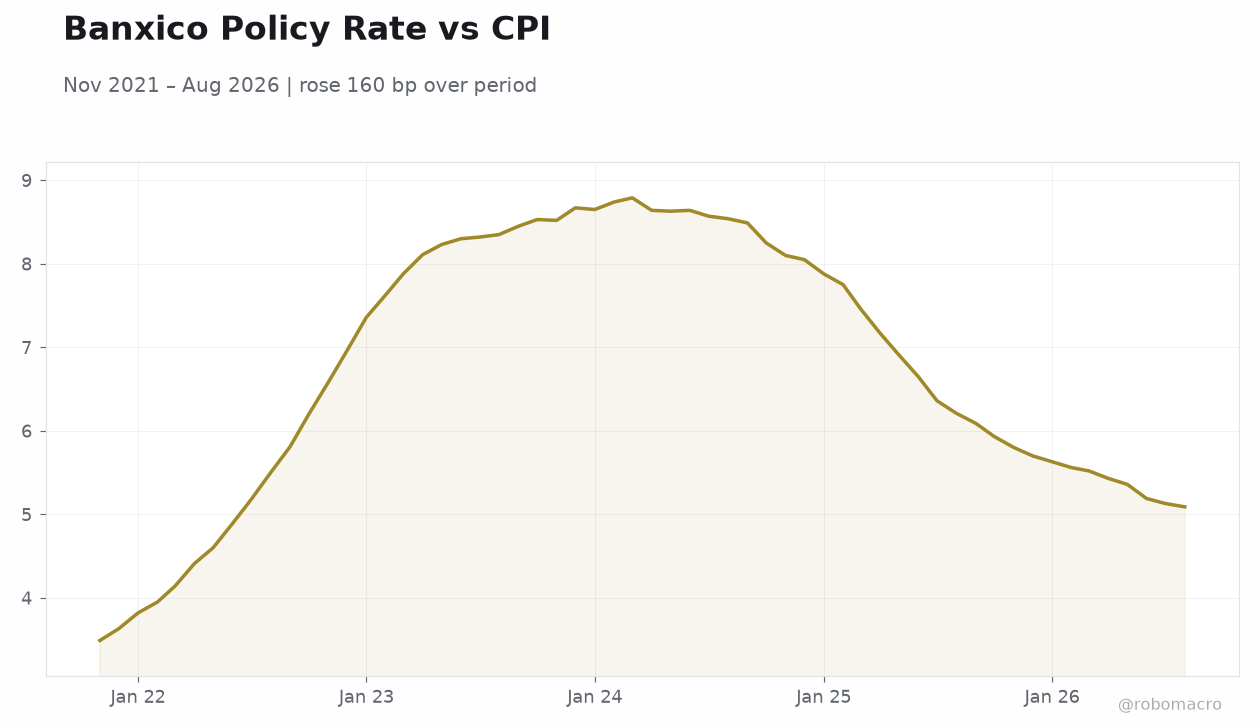
Banxico Policy Rate vs CPI | Type: macro_line | Policy Rate %: 5.09 (2026-08-01) | Range: 3.49–8.79 | Trend(6pt): 3.49,7.36,8.79,6.91,5.13,5.09
| Data | Prior | Cons | Time |
|---|---|---|---|
| No events available | |||
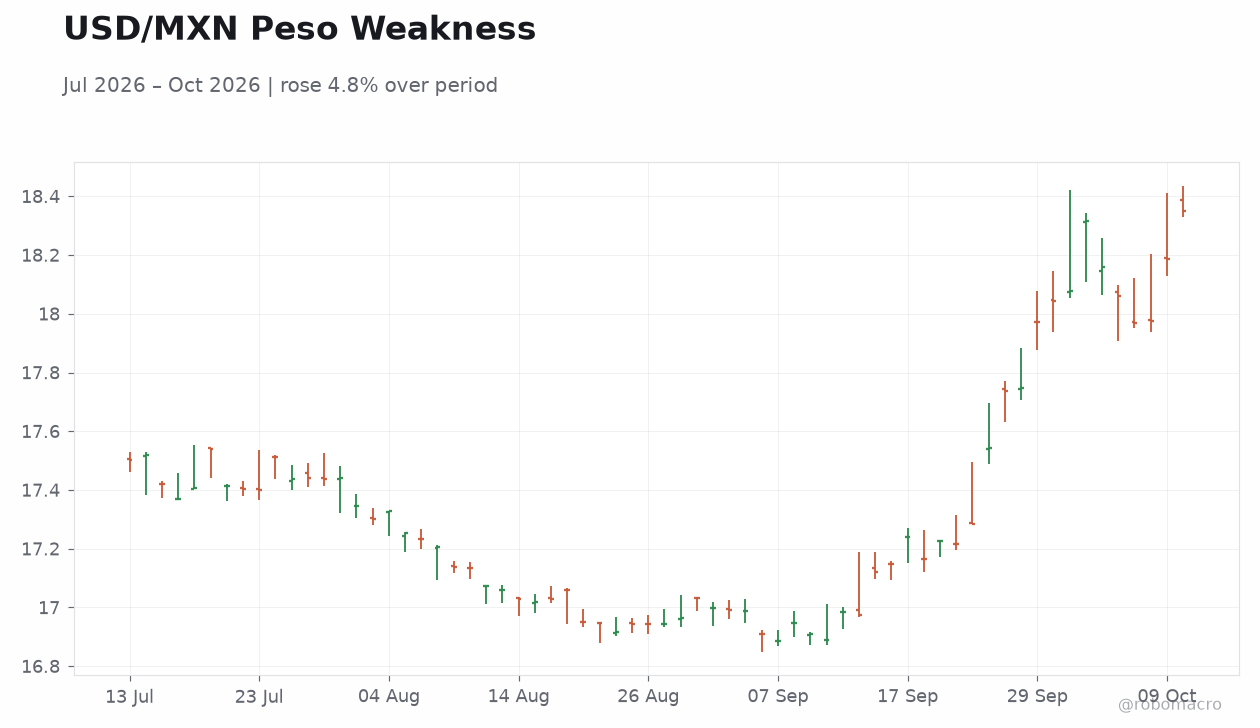
Mexican risk assets rallied strongly to end last week, with the IPC Bolsa climbing 1.63% to 66,048.57 in a broad advance. The peso, however, bucked the risk-on tone, with USD/MXN rising 0.91% to 18.35 as dollar strength persisted into the weekend. EUR/MXN also firmed 0.59% to 20.51, reflecting broad-based peso softness against major counterparts rather than idiosyncratic domestic weakness.
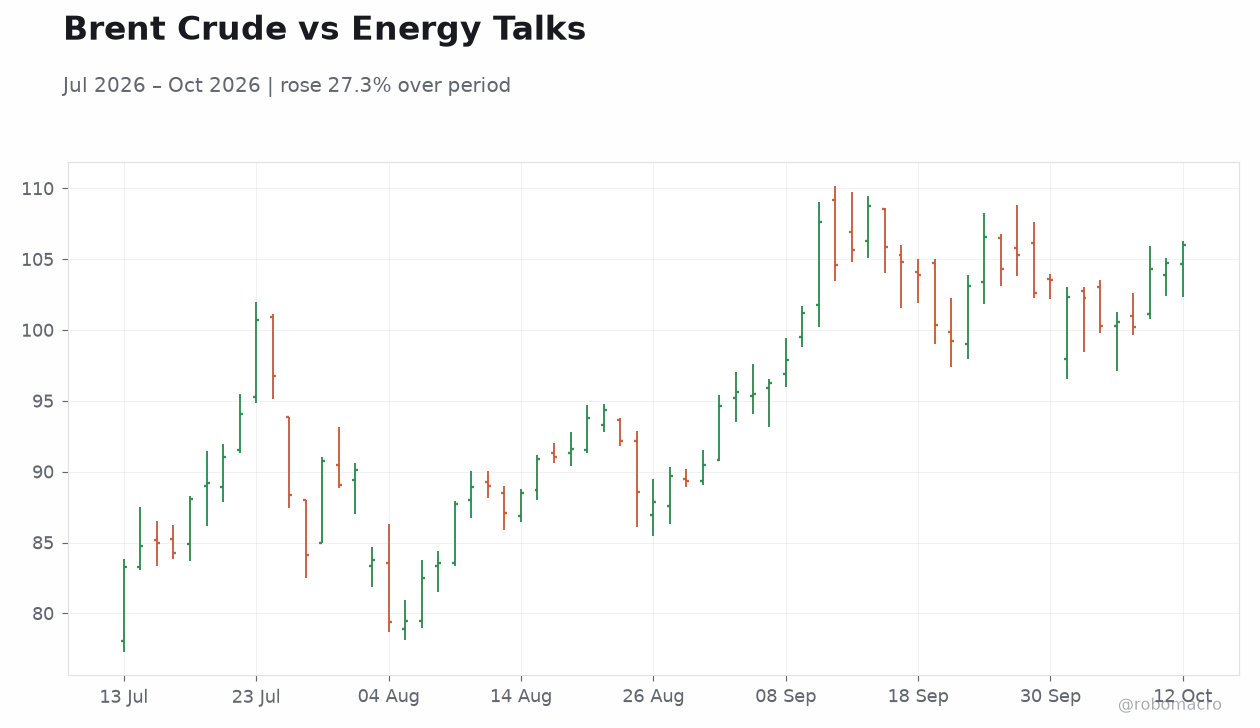
Commodity complex moves supported the inflation outlook calculus: WTI crude jumped 1.44% to $93.17 and Brent gained 1.32% to $106.10, positive for Mexico's oil export revenues but a watch item for imported fuel costs. Precious metals were mixed, with silver up 0.44% to 60.94 while gold slipped 0.50% to 4,195.30. Bitcoin eased 0.43% to 83,317.29, signaling mild caution in risk sentiment even as Mexican equities outperformed.
The calendar was quiet on scheduled data releases, leaving market action to carry the narrative into the new week.
Monday's calendar is light on tier-one Mexican releases, so attention shifts to the policy and trade headlines dominating the tape. The FT reports Trump is pressing Mexico for energy deals in crunch trade talks, a move that has triggered alarm in Mexico City where domestic control of the energy sector is part of the modern political identity — any signals on USMCA review dynamics will be parsed closely by peso traders. With no major prints scheduled, watch for secondary indicators and any Banxico communication that could clarify the easing path after the October 6 decision left the rate at 6.50%.
Officials' commentary on nearshoring investment flows will also be monitored given the World Bank's projection that Colombia is expected to outpace both Brazil and Mexico in growth during 2026, a competitive data point for Mexico's FDI narrative. Positioning adjustments after last week's equity rally could drive intraday volatility in the IPC and peso crosses. Liquidity may be thinner than usual mid-month, amplifying moves in USD/MXN.
Subscribe to Mexico Macro Daily and get each new issue delivered to your inbox.
Already a member? Visit robomacro.com to log in and manage subscriptions, or use Forgot Password to set a password.
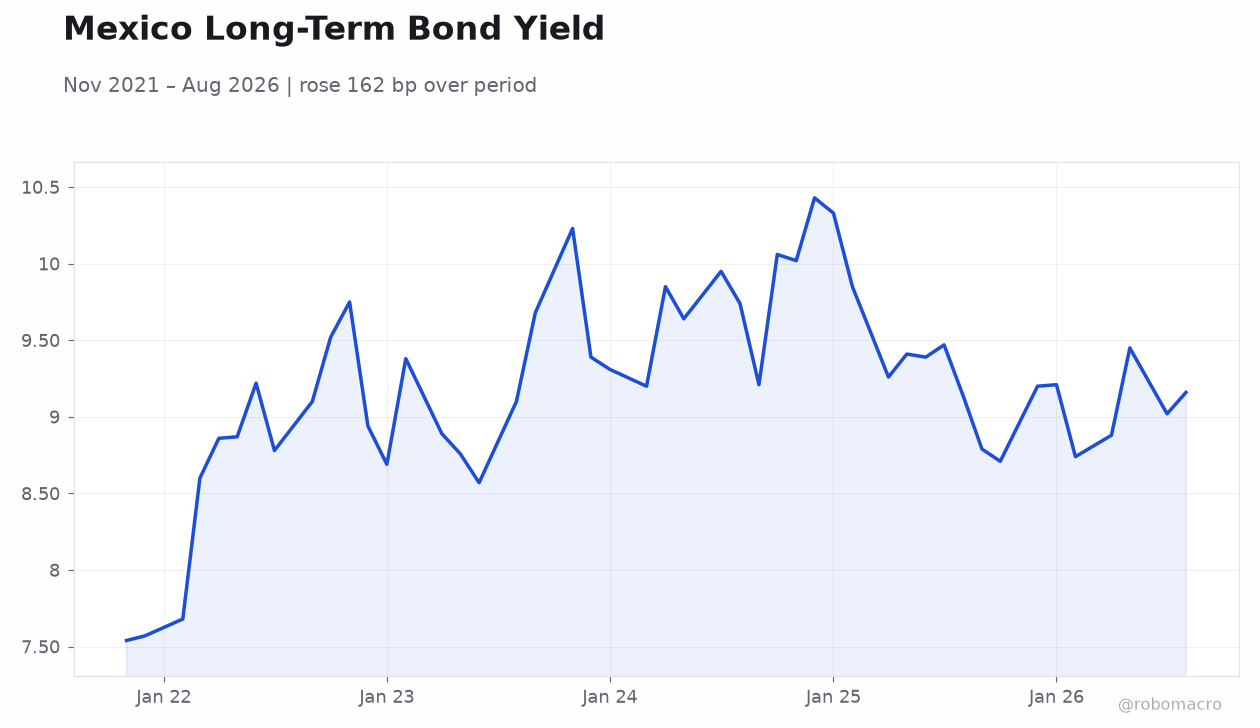
Mexico Long-Term Bond Yield | Type: macro_line | 10Y Yield %: 9.16 (2026-08-01) | Range: 7.54–10.43 | Trend(5pt): 7.54,8.69,9.64,9.47,9.16
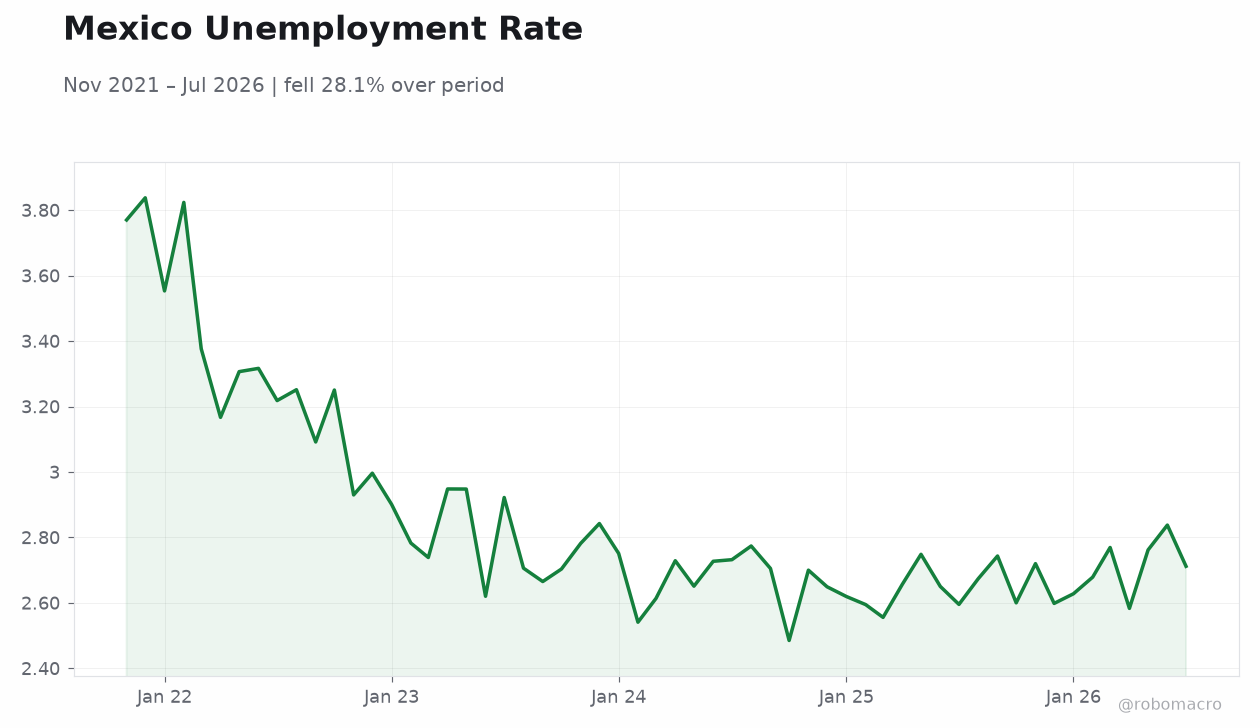
Mexico Unemployment Rate | Type: macro_line | Unemployment %: 2.712 (2026-07-01) | Range: 2.485–3.838 | Trend(5pt): 3.77,2.901,2.614,2.748,2.712
Brent Crude vs Energy Talks | Type: market_hloc | Brent USD/bbl: 106 (2026-10-12) | Range: 79.36–108.8 | Trend(5pt): 83.3,79.36,87.84,103.9,106
USD/MXN Peso Weakness | Type: market_hloc | USD/MXN: 18.35 (2026-10-12) | Range: 16.89–18.35 | Trend(6pt): 17.5,17.33,16.94,17.24,18.19,18.35
The World Bank's forecast that Colombia will outpace Brazil and Mexico in 2026 growth is a pointed reminder that Mexico's nearshoring premium faces regional competition for capital. Energy policy is back at the center of the US-Mexico relationship, with the Trump administration leveraging trade talks to extract energy concessions — a sensitive ask given the constitutional weight of PEMEX sovereignty in Mexican politics. Oil's strength, with WTI above $93 and Brent above $106, is a double-edged sword for Mexico: it boosts export receipts and the fiscal position but raises imported inflation risks that Banxico must weigh against its 3% target.
Gold's pullback from record territory suggests some rotation out of safe havens, consistent with the equity strength seen in Mexico City.
Global rate narratives are diverging in ways that matter for EM allocators. Fed's Musalem signaled US interest rates could rise over the next six to nine months, a hawkish datapoint that supports the dollar and explains part of the peso's 0.91% slide against the greenback. Energy-driven inflation is prompting speculation about Fed hikes, with commentary asking whether rising energy prices will force the Fed's hand — directly relevant to Mexico given the oil complex's 1.3-1.4% daily gains.
Indonesia's new central bank chief reaffirmed full autonomy over interest rates, part of a broader EM theme of central bank independence under scrutiny. The Philippines' peso hit a record low as elevated US rates and oil above $100 squeeze import bills, a template for how EM currencies may trade if the dollar rally extends. ↓ p.3
A powerful 7.6-magnitude earthquake struck near Panama, triggering tsunami warnings as far north as Mexico, with 13 aftershocks reported — infrastructure risk worth monitoring for Pacific coast logistics. Australia's RBA faces criticism over rising rates, underscoring the global tightening bias that contrasts with Banxico's easing cycle.
Banxico's October 6 decision left the policy rate at 6.50%, and with CPI at 3.26% YoY, inflation sits comfortably within the tolerance band around the 3% target — a configuration that supports continued gradual easing rather than a pause. The board's communications have emphasized data dependence, and the recent surge in energy prices cuts both ways: it supports growth and fiscal revenues but complicates the inflation trajectory if pass-through to fuels and transport accelerates. With the Fed's Musalem floating the possibility of US hikes within six to nine months, the interest rate differential story that has anchored carry trades in the peso faces a potential reversal, arguing for Banxico to preserve optionality.
The 10-year government yield data was unavailable in today's tape, limiting the read on the long end, but the currency's 0.91% weakening suggests markets are already pricing a less favorable differential. Watch for minutes and board member speeches this week for clues on the pace and terminal rate of the easing cycle. Any explicit guidance tying future cuts to energy-price stability would be a hawkish signal worth trading.