Mexico Macro Daily(Beta Mode)
Peso Slips as Metals Shine, IPC Edges Lower
Market Snapshot
| Asset | Level | Change |
|---|---|---|
| IPC Bolsa | 66,790.35 | -0.26% |
| USD/MXN | 18.53 | +0.85% |
| EUR/MXN | 20.76 | +0.90% |
| WTI Crude | 94.12 | -1.02% |
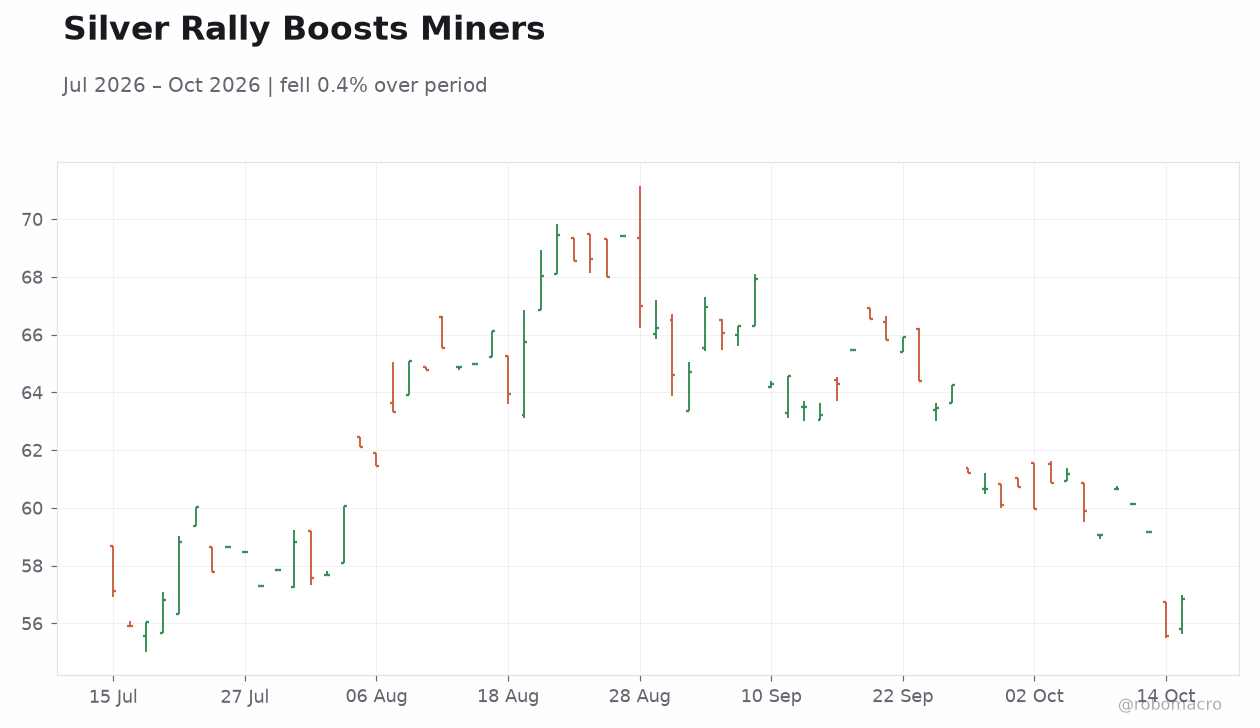
| Silver | 56.85 | +2.33% |
| Gold | 4,172.10 | +1.56% |
| Brent Crude | 104.84 | -1.15% |
| Bitcoin | 80,870.73 | -0.85% |
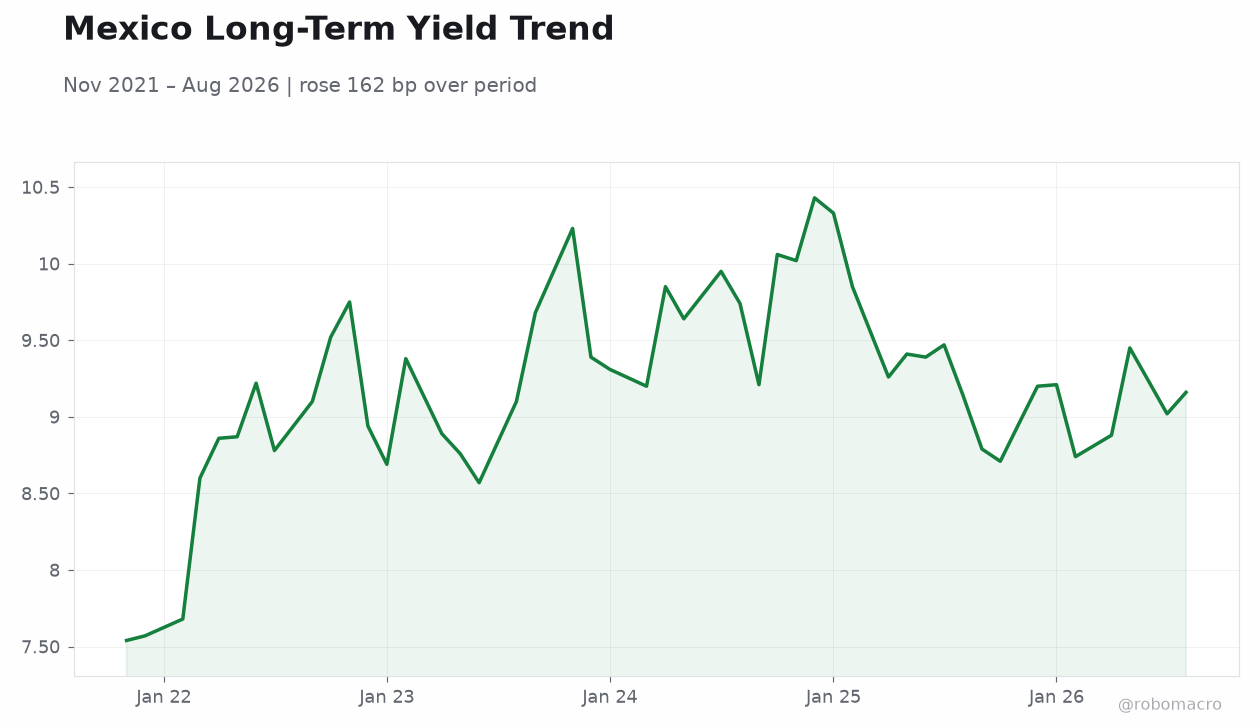
| Mexico 10Y Govt Yield | - | - |
Prior Economic Events
| Data | Prior | Cons | Actual |
|---|---|---|---|
| No events available | |||
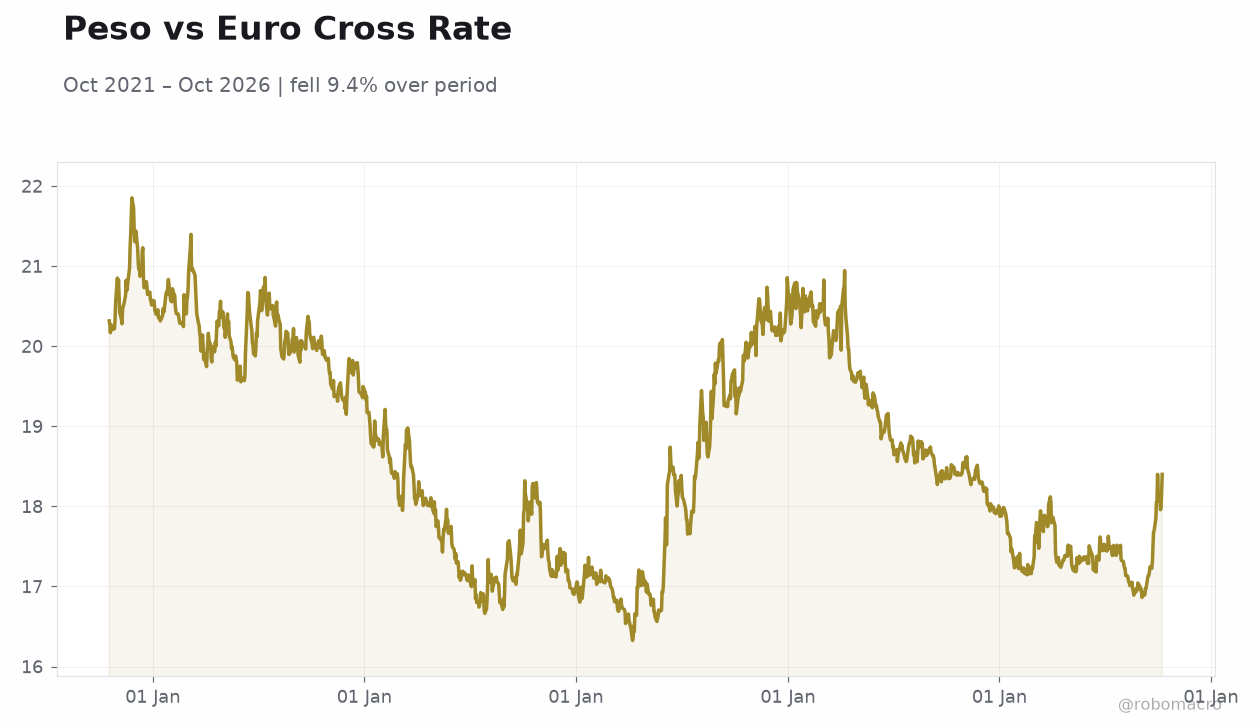 Peso vs Euro Cross Rate | Type: macro_line | MXN per USD: 18.4 (2026-10-09) | Range: 16.32–21.85 | Trend(6pt): 20.32,18.75,16.64,18.76,18.17,18.4
Today's Economic Events
| Data | Prior | Cons | Time |
|---|---|---|---|
| No events available | |||
- Peso weakened 0.85% to 18.53 against the dollar, tracking a broader softening in emerging-market currencies as commodity strength failed to offset risk-off sentiment.
- IPC Bolsa slipped 0.26% to 66,790.35, pausing after recent gains as investors weighed US tariff developments and global rate expectations.
- Gold surged 1.56% to $4,172 and silver jumped 2.33% to $56.85, boosting Mexico's mining-heavy index constituents while oil declined.
Yesterday's Recap
Mexican markets closed mixed on Wednesday, October 14, with the peso retreating 0.85% to 18.53 per dollar, reversing some of the strength seen in prior sessions. The depreciation came despite supportive commodity tailwinds, as precious metals rallied sharply with gold up 1.56% and silver climbing 2.33%. The IPC Bolsa index shed 0.26% to close at 66,790.35, with investors rotating defensively amid uncertainty over US trade policy toward Mexican goods.
The euro also strengthened against the peso, with EUR/MXN rising 0.90% to 20.76, reflecting broad dollar softness against major crosses. Crude prices declined, with WTI falling 1.02% to $94.12 and Brent easing 1.15% to $104.84, a modest headwind for Mexico's oil-linked revenues. Bitcoin slipped 0.85% to $80,871, signaling cautious appetite for risk assets globally.
The session underscored the peso's sensitivity to shifting expectations for Federal Reserve policy and the evolving tariff landscape under USMCA.
The Day Ahead
Today's calendar is light on scheduled Mexican economic releases, leaving market direction to external drivers and technical positioning. Traders will monitor peso liquidity and any intervention signals from Banxico as the currency tests the 18.50 level. Attention stays on US data and Federal Reserve commentary, which heavily influence the peso given the deep integration of the two economies.
Equity desks will watch whether the IPC can hold above 66,500 after Wednesday's pullback, with mining stocks supported by the metals rally. Any headlines on US-Mexico trade, particularly around avocado tariffs and agricultural access, could move the currency intraday. The absence of domestic prints keeps focus on positioning ahead of future inflation and GDP data.
Other Economic Notes
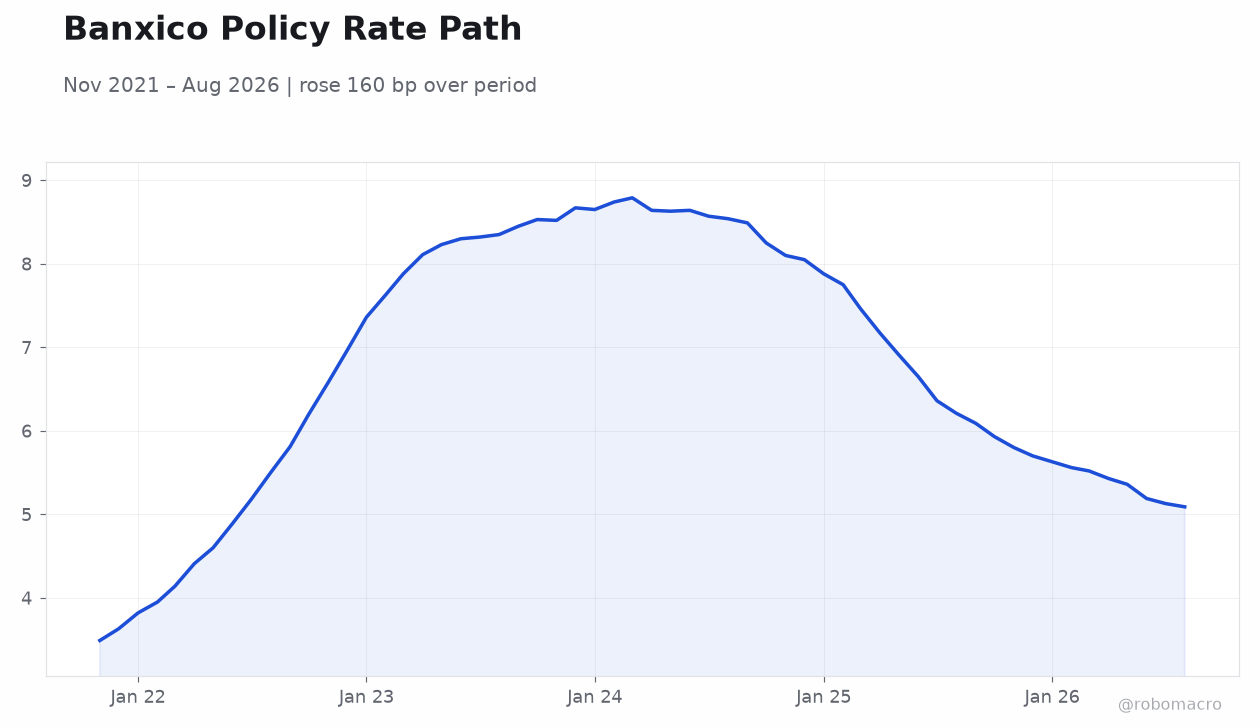
Mexico's inflation picture remains anchored near target, with CPI at 3.26% year-over-year as of end-August, comfortably within Banxico's tolerance band. This gives the central bank latitude to maintain its accommodative stance after bringing the policy rate to 6.50%. ↓ p.2