| Asset | Level | Change |
|---|---|---|
| IPC Bolsa | 67,663.29 | +1.31% |
| USD/MXN | 18.40 | -0.37% |
| EUR/MXN | 20.67 | +0.44% |
| WTI Crude | 96.50 | -1.50% |
| Silver | 57.92 | +1.91% |
| Gold | 4,196.60 | +0.64% |
| Brent Crude | 106.54 | +0.59% |
| Bitcoin | 82,536.65 | +0.48% |
| Mexico 10Y Govt Yield | - | - |
| Data | Prior | Cons | Actual |
|---|---|---|---|
| No events available | |||
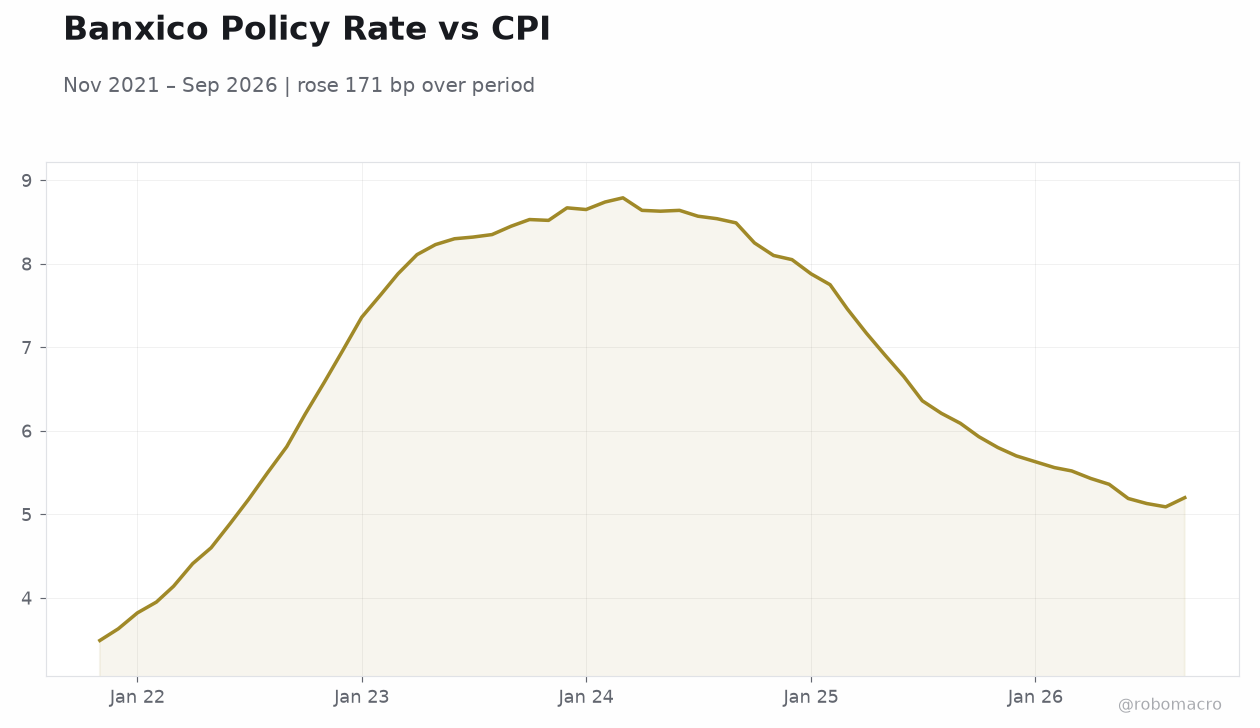
Banxico Policy Rate vs CPI | Type: macro_line | Policy Rate %: 5.2 (2026-09-01) | Range: 3.49–8.79 | Trend(6pt): 3.49,7.36,8.79,6.91,5.13,5.2
| Data | Prior | Cons | Time |
|---|---|---|---|
| No events available | |||
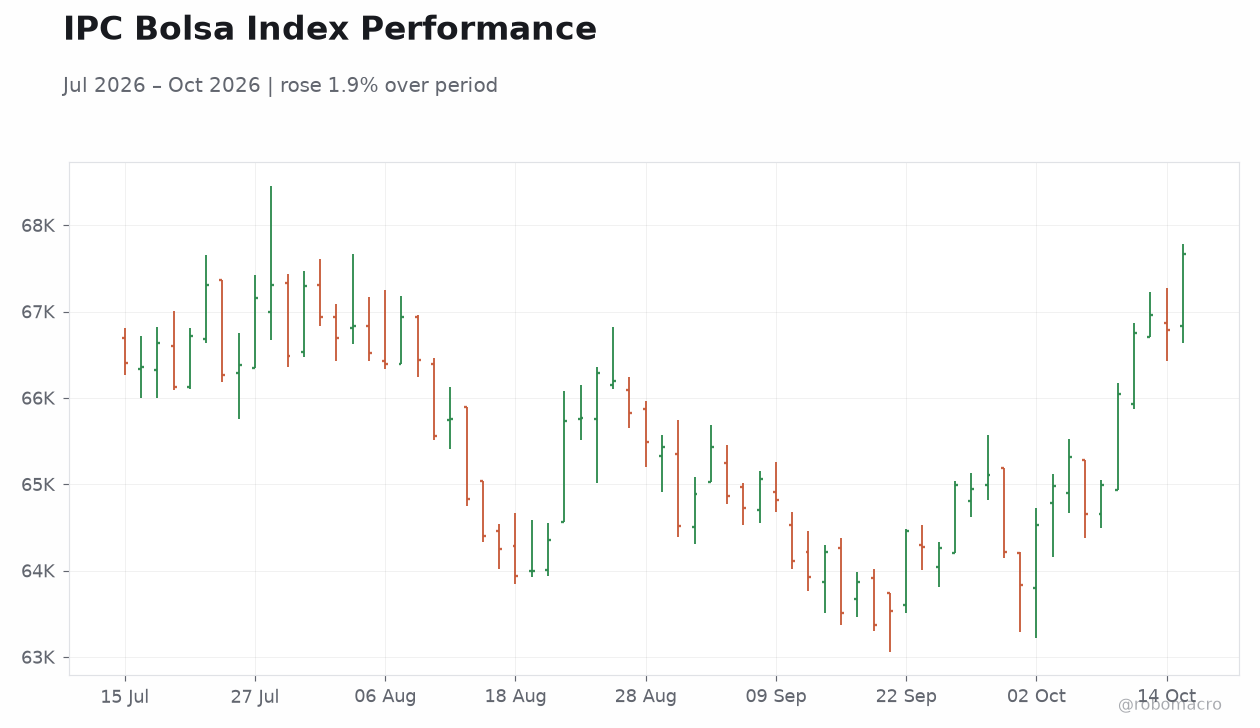
Mexican markets closed Wednesday's session with a constructive tone. The IPC Bolsa advanced 1.31% to 67,663.29, extending its recent recovery as investors rotated back into domestic equities. The currency market told a similar story, with USD/MXN slipping 0.37% to 18.40, a level that keeps the peso competitive without signaling stress.
Crosses moved in line with dollar dynamics: EUR/MXN rose 0.44% to 20.67, reflecting euro strength rather than peso weakness. Commodity prices offered mixed signals for Mexico's terms of trade. WTI crude fell 1.50% to 96.50 dollars per barrel, a headwind for energy-linked fiscal revenues, while Brent bucked the trend, adding 0.59% to 106.54 dollars.
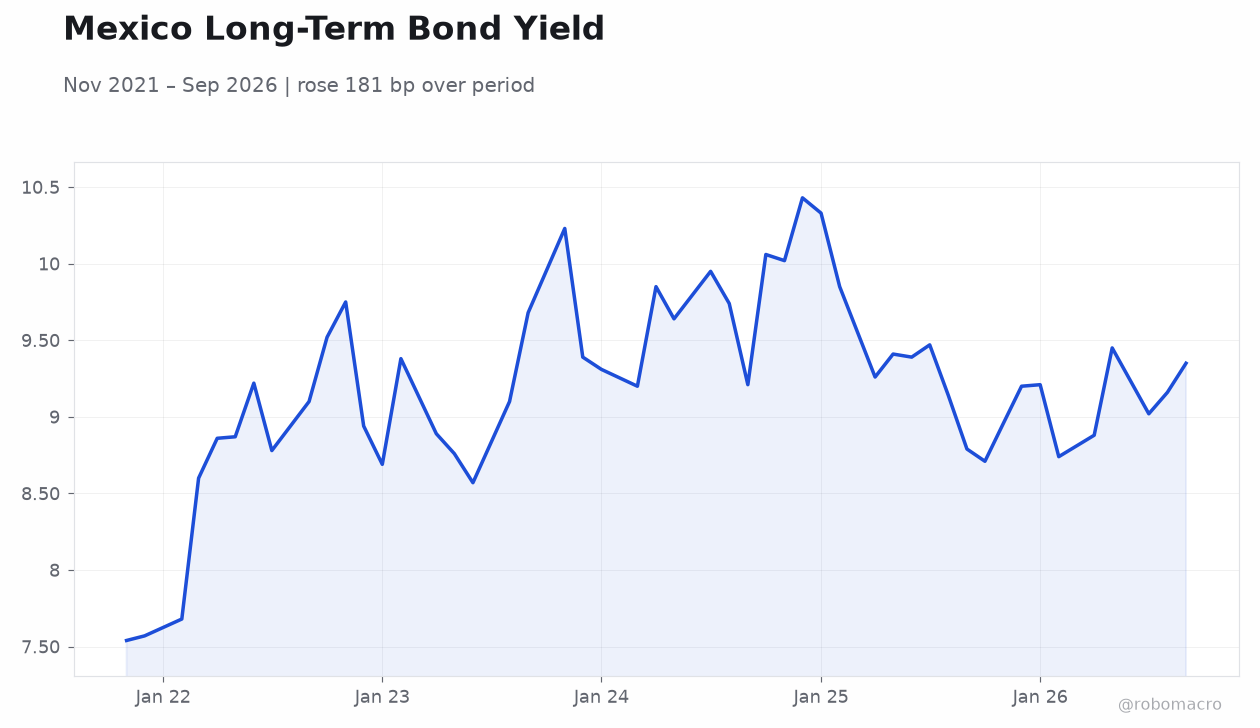
Precious metals were the standout: silver surged 1.91% to 57.92 dollars and gold gained 0.64% to 4,196.60 dollars, a tailwind for Mexico's large silver and gold mining sector and a positive contributor to IPC earnings. Bitcoin added 0.48% to 82,536.65 dollars, keeping risk appetite broadly intact. The 10-year government yield quote was unavailable in the session data, limiting visibility on the local rates complex, though the equity and FX moves suggest positioning remained constructive into Thursday.
Today's calendar is light on scheduled Mexican data releases, leaving markets to trade on second-order drivers and global cues. With no domestic prints due, attention shifts to how the IPC and peso digest Wednesday's gains and whether the equity rally has follow-through. Hurricane Trudy's landfall along the Pacific coast will be monitored for early indications of disruption to ports, agriculture, and tourism activity in affected states, with insurance and reconstruction spending implications to follow in coming weeks.
Traders will also watch regional EM peers for direction, particularly Brazil, where the Ibovespa has fallen for a third consecutive session after a post-election rally, a dynamic that could temper sentiment toward LatAm assets more broadly. US data and Federal Reserve expectations remain the dominant external variable for the peso, and any surprises there will flow directly into USD/MXN. ↓ p.2
Subscribe to Mexico Macro Daily and get each new issue delivered to your inbox.
Already a member? Visit robomacro.com to log in and manage subscriptions, or use Forgot Password to set a password.
Mexico Long-Term Bond Yield | Type: macro_line | 10Y Yield %: 9.35 (2026-09-01) | Range: 7.54–10.43 | Trend(5pt): 7.54,8.69,9.64,9.47,9.35
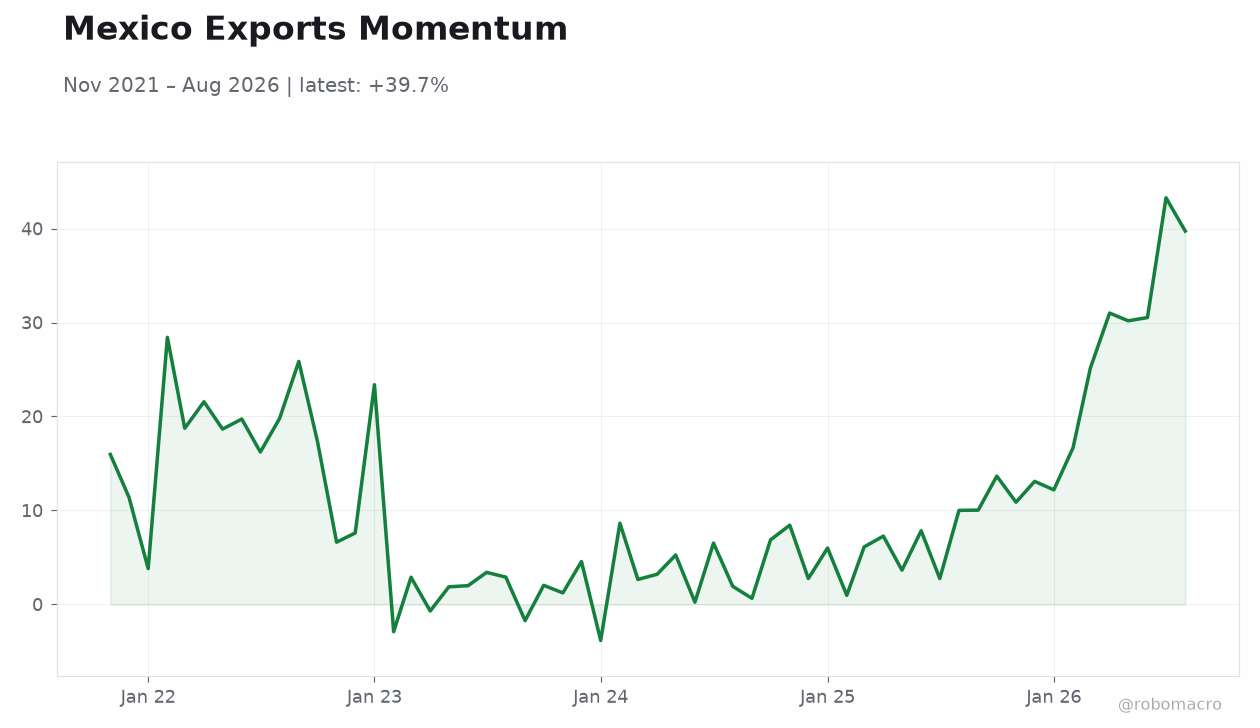
Mexico Exports Momentum | Type: macro_line | Exports USD: 39.73 (2026-08-01) | Range: -3.843–43.27 | Trend(6pt): 15.96,23.38,2.654,3.644,43.27,39.73
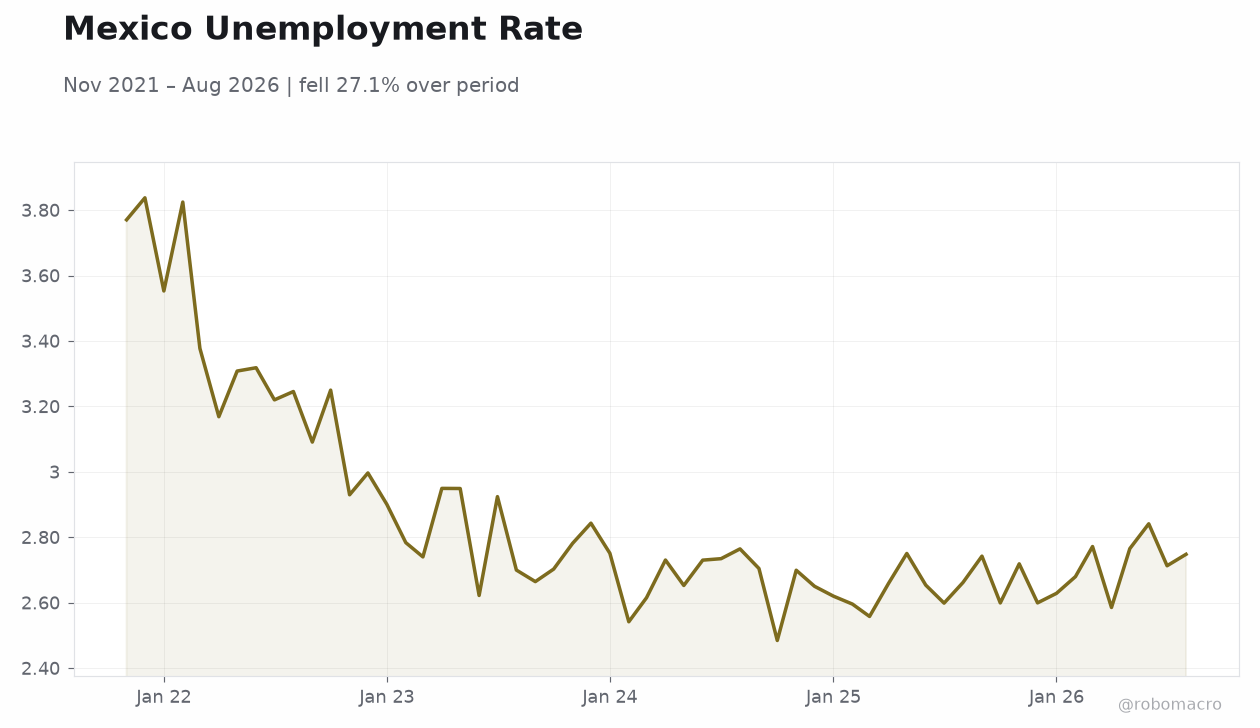
Mexico Unemployment Rate | Type: macro_line | Unemployment %: 2.748 (2026-08-01) | Range: 2.485–3.837 | Trend(6pt): 3.77,2.901,2.615,2.75,2.713,2.748
IPC Bolsa Index Performance | Type: market_hloc | IPC Index: 6.766e+04 (2026-10-15) | Range: 6.338e+04–6.766e+04 | Trend(6pt): 6.64e+04,6.64e+04,6.548e+04,6.446e+04,6.679e+04,6.766e+04
Positioning surveys and local desk flows will be key gauges of whether foreign investors are adding to Mexican duration and equity exposure into year-end.
Mexico's macro backdrop remains anchored by a policy rate of 6.50% against inflation of 3.45% year-on-year, a configuration that gives Banxico room to continue normalizing rates without jeopardizing the 3% target. The real rate remains comfortably positive, supporting carry-driven demand for peso assets even as global rate environments shift. The nearshoring narrative continues to underpin medium-term investment flows into Mexican manufacturing capacity, though the pace of announced projects converting into actual capex remains the key question for 2027 growth.
USMCA review dynamics continue to simmer in the background, with both governments signaling continuity but leaving room for sector-specific frictions. Hurricane season adds a recurring seasonal risk to Q4 activity data, and Trudy's trajectory will matter for the October and November prints.
Global central bank dynamics are shifting in ways that matter for Mexico. The Bank of England is widely tipped to raise rates in November, while the Bank of Japan's governor has opened the door to further tightening, moves that could redraw the global carry landscape and affect EM flows. The ECB faces a difficult October decision as equities wilt under high rates in Europe, a sign that tighter-for-longer policy is starting to bite real activity.
↓ p.3
In Asia, the Philippine peso breached 63 to the dollar for a record low, a reminder of the dollar's persistent strength against EM currencies even as the Mexican peso holds firmer ground at 18.40. The US political calendar is also in motion, with President Trump campaigning for Republican candidates and defending the acceptance of a gifted aircraft for Air Force One from Qatar, themes with potential trade and procurement implications for USMCA partners. Indonesia is pursuing 17.5 billion dollars in trade deals at its expo, underscoring intensifying competition for supply-chain investment that also vies with Mexico's nearshoring pitch.
Social Security benefits in the US are set for a cost-of-living boost, supporting the consumption base that anchors demand for Mexican exports.
Banxico's communications since holding the rate at 6.50% on October 13 have maintained a measured, data-dependent tone, consistent with a board that sees the disinflation process intact but wants flexibility on timing. With headline CPI at 3.45% year-on-year, inflation sits close enough to the 3% target that the board can afford patience rather than urgency, and recent statements have emphasized that future adjustments will depend on the trajectory of core services inflation and the passthrough from exchange rate moves. The peso's stability near 18.40 helps on this front, limiting imported inflation pressure and reducing the need for a defensive stance.
The board's forward guidance has avoided pre-committing to a specific terminal rate, a stance that preserves optionality as the Fed's path and domestic growth data evolve. For markets, the key signal is that Banxico views the current real rate as appropriately restrictive, meaning cuts will remain gradual and contingent on continued disinflation rather than delivered on a preset schedule. Watch the minutes of the October decision for dissenting views and any hints on the sequencing of future moves, as well as the next inflation print for confirmation that services disinflation is progressing.
A constructive reading would reinforce the case for continued normalization and support the rally in rate-sensitive sectors of the IPC.