Mexico Macro Daily(Beta Mode)
Peso Falls as Oil Drop Tests Carry
Market Snapshot
| Asset | Level | Change |
|---|---|---|
| IPC Bolsa | 69,258.58 | +0.36% |
| USD/MXN | 18.50 | +0.47% |
| EUR/MXN | 20.66 | -0.20% |
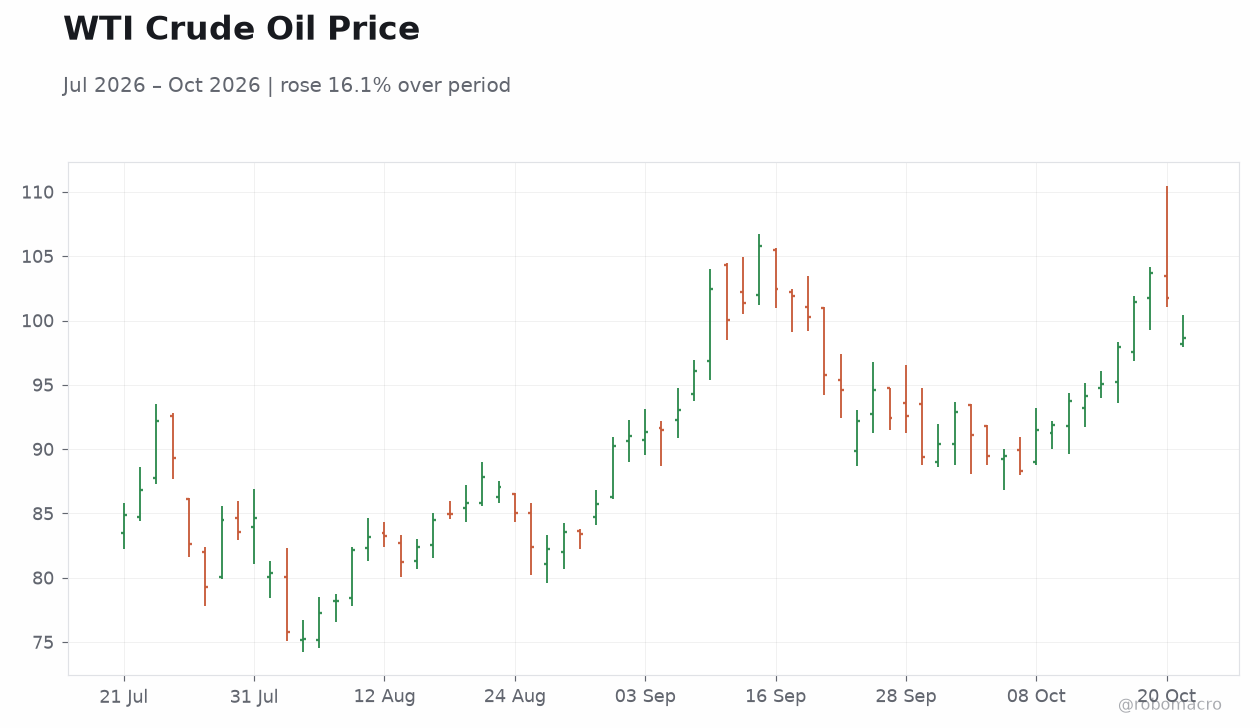
| WTI Crude | 98.62 | -3.11% |
| Silver | 57.81 | +0.19% |
| Gold | 4,158.50 | +0.38% |
| Brent Crude | 109.37 | +0.53% |
| Bitcoin | 83,371.24 | +0.52% |
| Mexico 10Y Govt Yield | - | - |
Prior Economic Events
| Data | Prior | Cons | Actual |
|---|---|---|---|
| No events available | |||
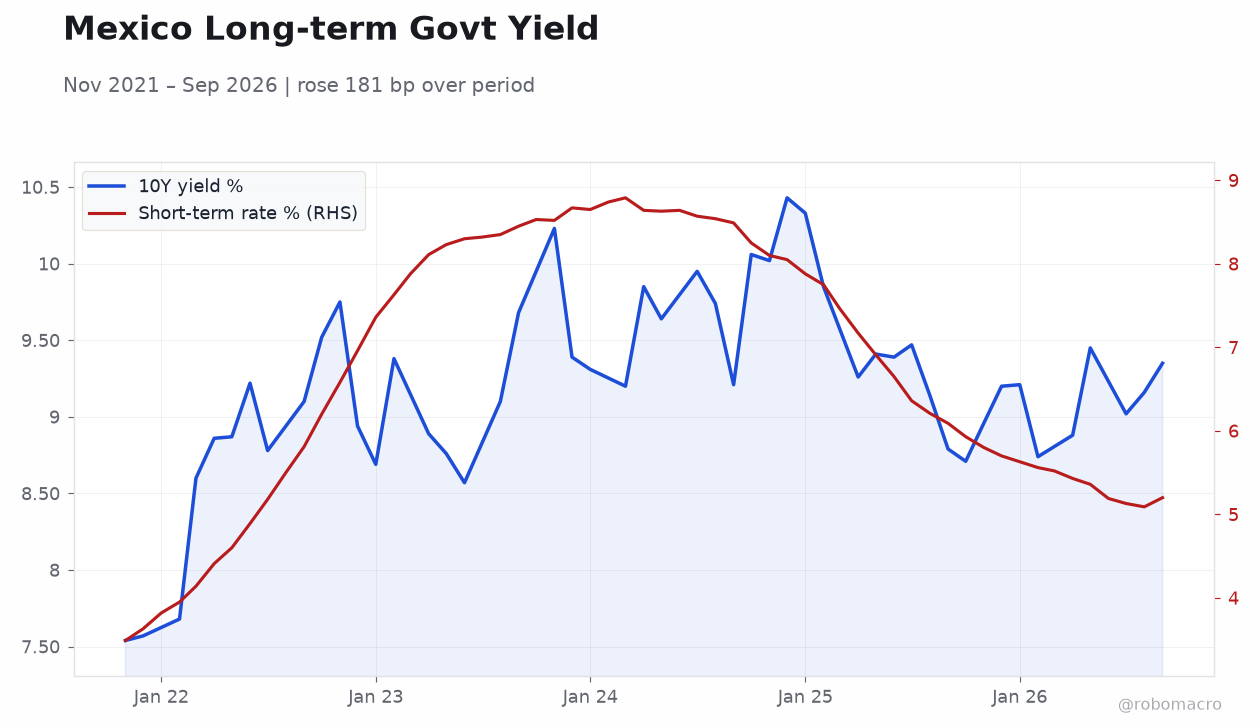
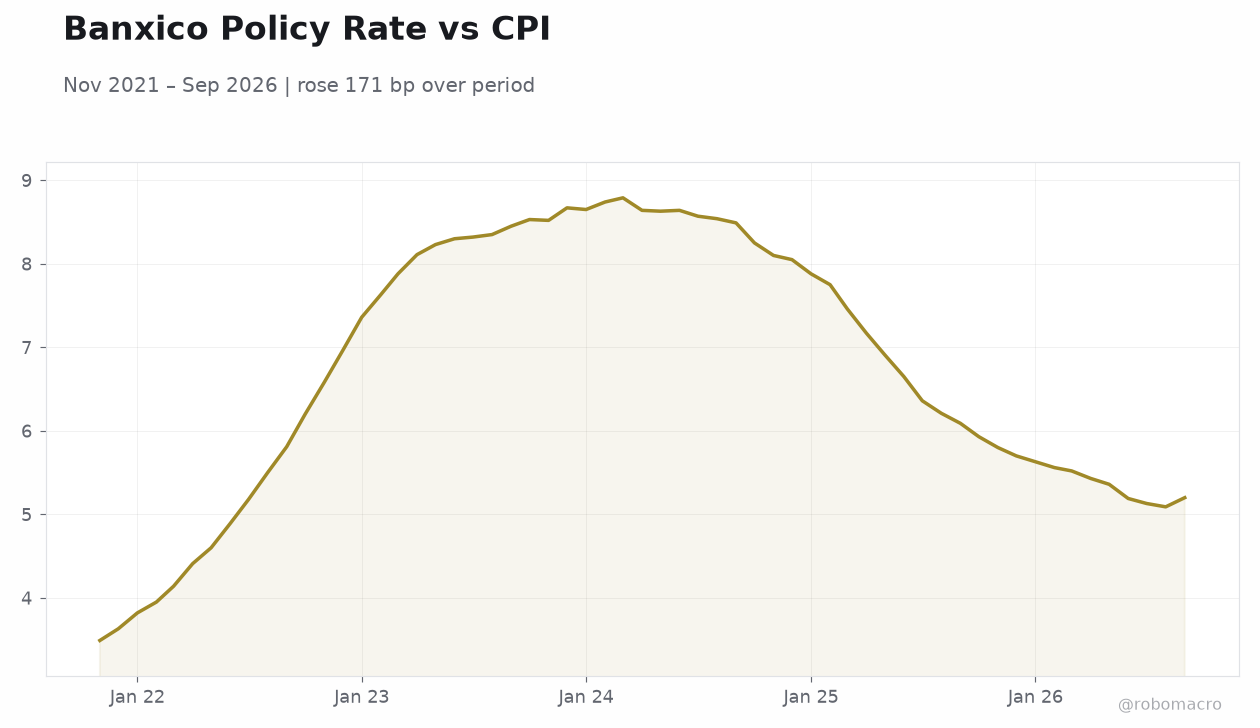 Banxico Policy Rate vs CPI | Type: macro_line | Short-term rate %: 5.2 (2026-09-01) | Range: 3.49–8.79 | Trend(6pt): 3.49,7.36,8.79,6.91,5.13,5.2
Today's Economic Events
| Data | Prior | Cons | Time |
|---|---|---|---|
| No events available | |||
- USD/MXN pushed to 18.50 (+0.47%) as WTI's 3.11% drop to $98.62 undercut the peso's carry appeal, even as the IPC Bolsa edged up 0.36% to 69,258.58.
- Banxico's 6.50% policy rate against 3.45% CPI leaves a wide real-rate buffer, but the committee's cautious forward guidance keeps markets pricing limited additional easing.
- Prudential's $4bn sale of its Brazil and Mexico units to CNP signals continued insurance-sector consolidation and foreign capital rotation in Mexican financial assets.
Yesterday's Recap
Mexican markets delivered a mixed session on October 20, with the IPC Bolsa posting a modest 0.36% gain to 69,258.58 while the peso weakened 0.47% to 18.50 per dollar. The currency move tracked crude's sharp reversal, with WTI falling 3.11% to $98.62 a barrel — a headwind for Mexico's fiscal revenues given Pemex's outsized contribution to the budget. EUR/MXN eased 0.20% to 20.66, suggesting the peso's weakness was dollar-specific rather than broad-based.
Precious metals held firm, with gold up 0.38% to $4,158.50 and silver 0.19% higher at $57.81, while Brent bucked WTI's slide with a 0.53% gain to $109.37 — a divergence worth monitoring for refined-product spreads. Bitcoin rose 0.52% to $83,371.24, reflecting resilient risk appetite globally. No scheduled Mexican data releases printed during the session, leaving price action driven by external flows and commodity dynamics.
The Day Ahead
The October 21 calendar is empty of scheduled Mexican statistical releases, so attention shifts to Banxico communication and external drivers. Traders will watch the peso's reaction to crude's overnight trajectory, given the 18.50 handle's proximity to psychological resistance. With no domestic prints, market direction will hinge on US session risk sentiment and any shifts in Treasury yields that affect carry-trade economics.
The IPC Bolsa's resilience despite peso weakness bears watching — a sustained divergence would suggest equity inflows are offsetting currency outflows. Absent fresh catalysts, expect range-bound trading in USD/MXN with liquidity thinning into the North American afternoon.
Other Economic Notes
Mexico's real-rate differential remains the anchor for peso positioning — with Banxico at 6.50% and inflation at 3.45%, the ex-post real rate near 3% continues to attract carry seekers despite volatility. The Prudential-CNP transaction underscores deepening foreign participation in Mexican insurance and financial services, a byproduct of nearshoring-driven demand for credit and risk products. ↓ p.2