Mexico Macro Daily(Beta Mode)
Peso Slides as Trade Gap Widens
Market Snapshot
| Asset | Level | Change |
|---|---|---|
| IPC Bolsa | 69,787.41 | +0.87% |
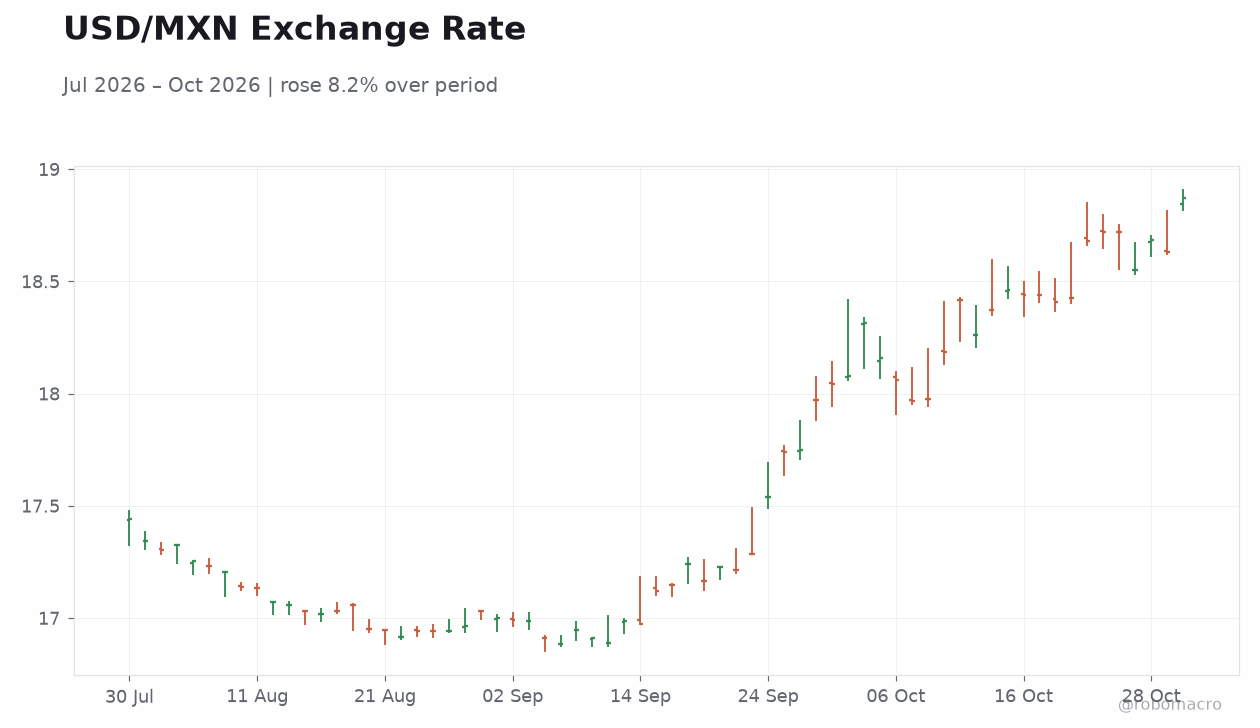
| USD/MXN | 18.88 | +1.34% |
| EUR/MXN | 21.14 | +1.70% |
| WTI Crude | 103.94 | +1.90% |
| Silver | 50.21 | -3.80% |
| Gold | 3,975.60 | -1.38% |
| Brent Crude | 113.32 | -1.36% |
| Bitcoin | 77,315.95 | -0.59% |
| Mexico 10Y Govt Yield | 9.25% | -10 bp |
Prior Economic Events
| Data | Prior | Cons | Actual |
|---|---|---|---|
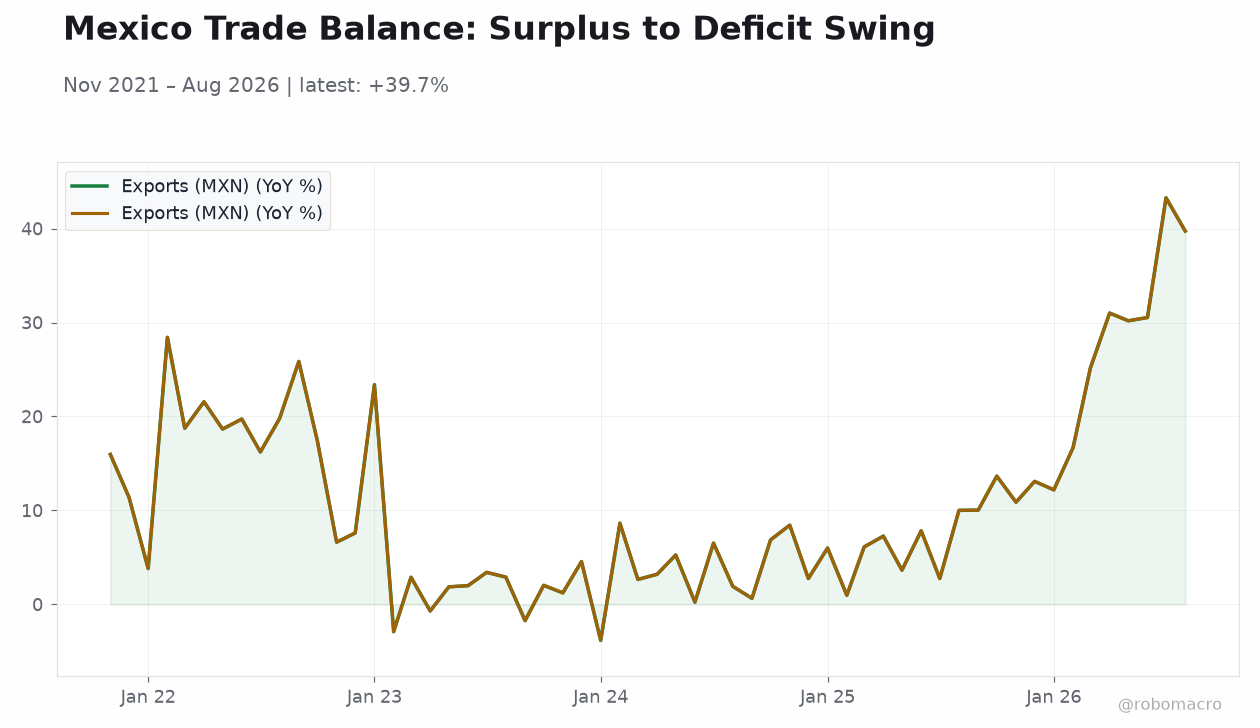
| Trade Balance | 605m | -400m | -606m |
| GDP Growth Quarter-over-Quarter Preliminary | 1.40 | 0.70 | - |
| GDP Growth Year-over-Year Preliminary | 2.10 | 2.50 | - |
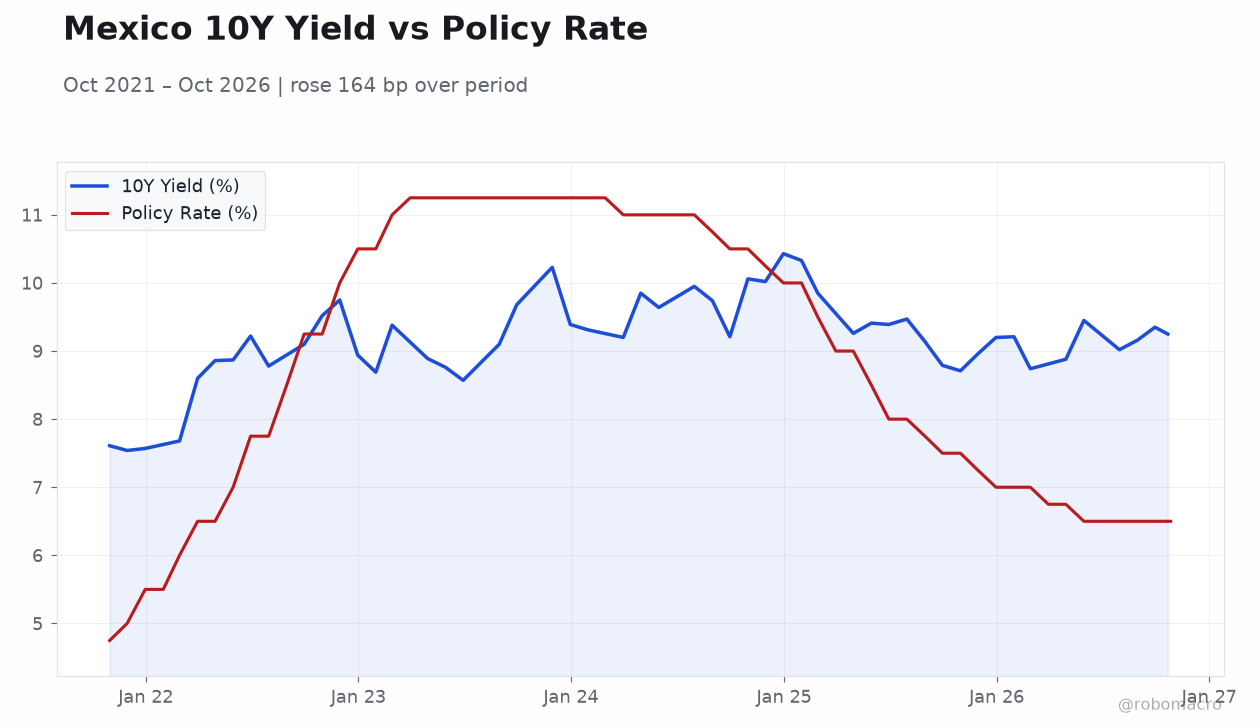
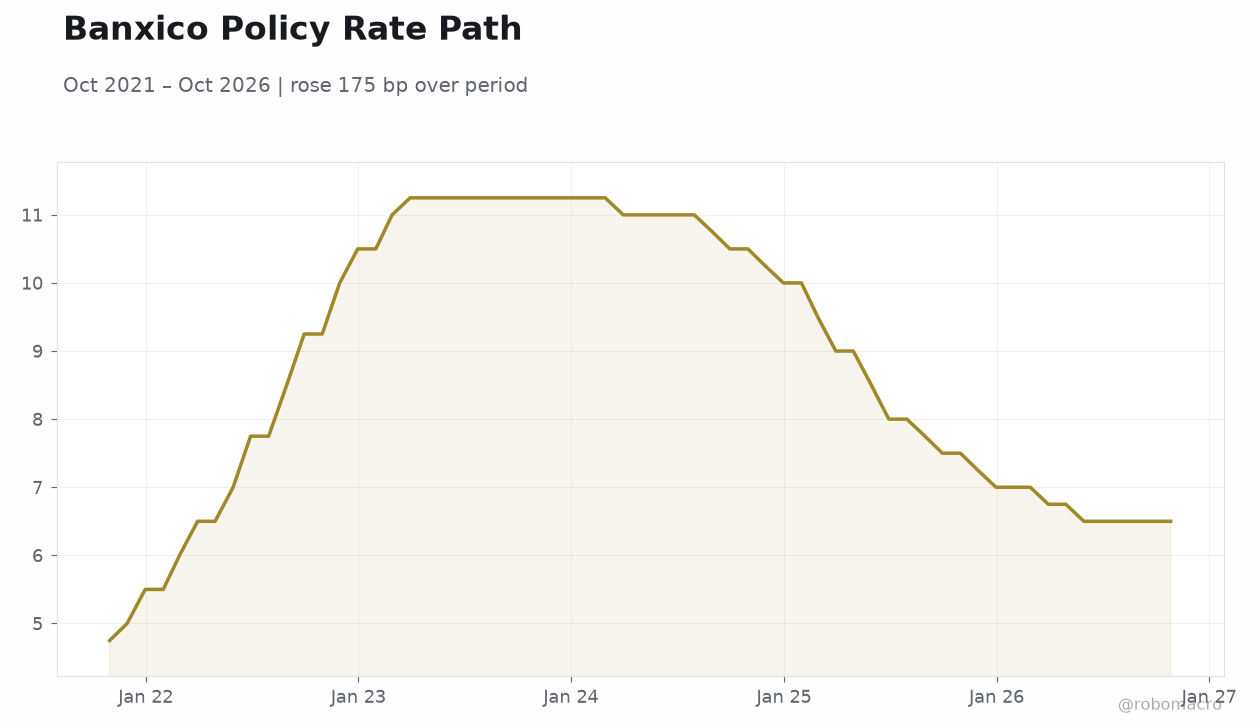 Banxico Policy Rate Path | Type: macro_line | Policy Rate (%): 6.5 (2026-10-27) | Range: 4.75–11.25 | Trend(5pt): 4.75,10.5,11,8,6.5
Today's Economic Events
| Data | Prior | Cons | Time |
|---|---|---|---|
| No events available | |||
- Mexico's trade balance swung to a deficit of MXN 606 million, missing consensus of a MXN 400 million shortfall and reversing the prior MXN 605 million surplus.
- USD/MXN jumped 1.34% to 18.88, with EUR/MXN up 1.70% to 21.14, as the peso bore the brunt of broad risk-off sentiment.
- Mexico 10-year government yield eased 10 bp to 9.25%, a rare bond rally against a sharply weaker currency.
Yesterday's Recap
Mexico's trade balance printed a deficit of MXN 606 million for the period, well below the consensus estimate of a MXN 400 million shortfall and a sharp reversal from the previous MXN 605 million surplus, signaling softer export momentum. The peso weakened materially, with USD/MXN climbing 1.34% to 18.88 and EUR/MXN rising 1.70% to 21.14, reflecting both the disappointing trade print and a firmer dollar backdrop. Despite the currency selloff, the Mexico 10-year government yield eased 10 bp to 9.25%, suggesting domestic duration demand remains intact even as FX volatility picks up.
The IPC Bolsa rose 0.87% to 69,787.41, with equities shrugging off the trade miss and tracking broader risk appetite. Commodities were mixed: WTI crude gained 1.90% to $103.94, while Brent slipped 1.36% to $113.32. Precious metals sold off sharply, with silver down 3.80% to $50.21 and gold off 1.38% to $3,975.60.
Bitcoin edged 0.59% lower to $77,315.95.
The Day Ahead
The calendar is empty for Mexico today, with no scheduled data releases, leaving markets to digest yesterday's trade print and position ahead of next week's Banxico decision. Attention shifts to the GDP Growth Quarter-over-Quarter Preliminary and GDP Growth Year-over-Year Preliminary releases, which carry consensus estimates of 0.7% and 2.5% respectively against prior prints of 1.4% and 2.1%. Traders will watch whether the trade deficit foreshadows a softer growth trajectory into year-end.
With no domestic catalysts, peso direction will likely be driven by external risk sentiment and US dollar dynamics. Liquidity may thin ahead of the weekend, amplifying moves in thinner crosses.
Other Economic Notes
The swing from surplus to deficit in the trade account warrants monitoring, as it could reflect either weaker export demand or stronger import penetration tied to nearshoring-related capital goods. Mexico's CPI at 3.45% year-over-year remains within Banxico's tolerance band, giving policymakers room to maneuver. The proposed India-Mexico preferential trade agreement could broaden export diversification beyond USMCA channels, though negotiations remain at an early stage.
↓ p.2