Mexico Macro Daily(Beta Mode)
Banxico Surprise Cut Pressures Peso
Market Snapshot
| Asset | Level | Change |
|---|---|---|
| IPC Bolsa | 71,393.57 | +0.43% |
| USD/MXN | 18.78 | +0.93% |
| EUR/MXN | 20.76 | -1.53% |
| WTI Crude | 88.31 | -2.77% |
| Silver | 52.72 | +1.77% |
| Gold | 4,118.00 | +1.06% |
| Brent Crude | 94.93 | -3.45% |
| Bitcoin | 74,355.29 | -0.31% |
| Mexico 10Y Govt Yield | - | - |
Prior Economic Events
| Data | Prior | Cons | Actual |
|---|---|---|---|
| Inflation Rate Month-over-Month | 0.42 | 0.55 | - |
| Inflation Rate Year-over-Year | 3.45 | 3.65 | - |
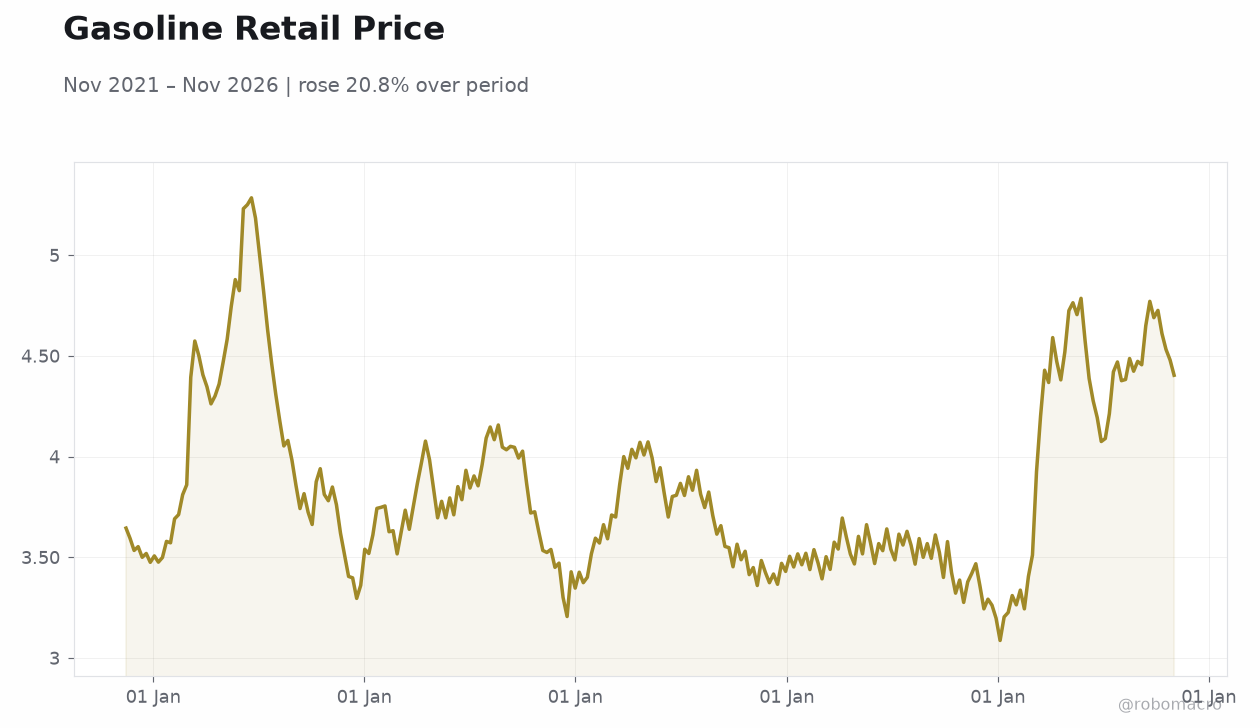 Gasoline Retail Price | Type: macro_line | Gasoline Retail Price: 4.404 (2026-11-02) | Range: 3.087–5.285 | Trend(5pt): 3.645,3.627,3.994,3.466,4.404
Today's Economic Events
| Data | Prior | Cons | Time |
|---|---|---|---|
| No events available | |||
- Banxico unexpectedly reopened its easing cycle, cutting the policy rate to 6.25% at the November 5 decision, effective November 6
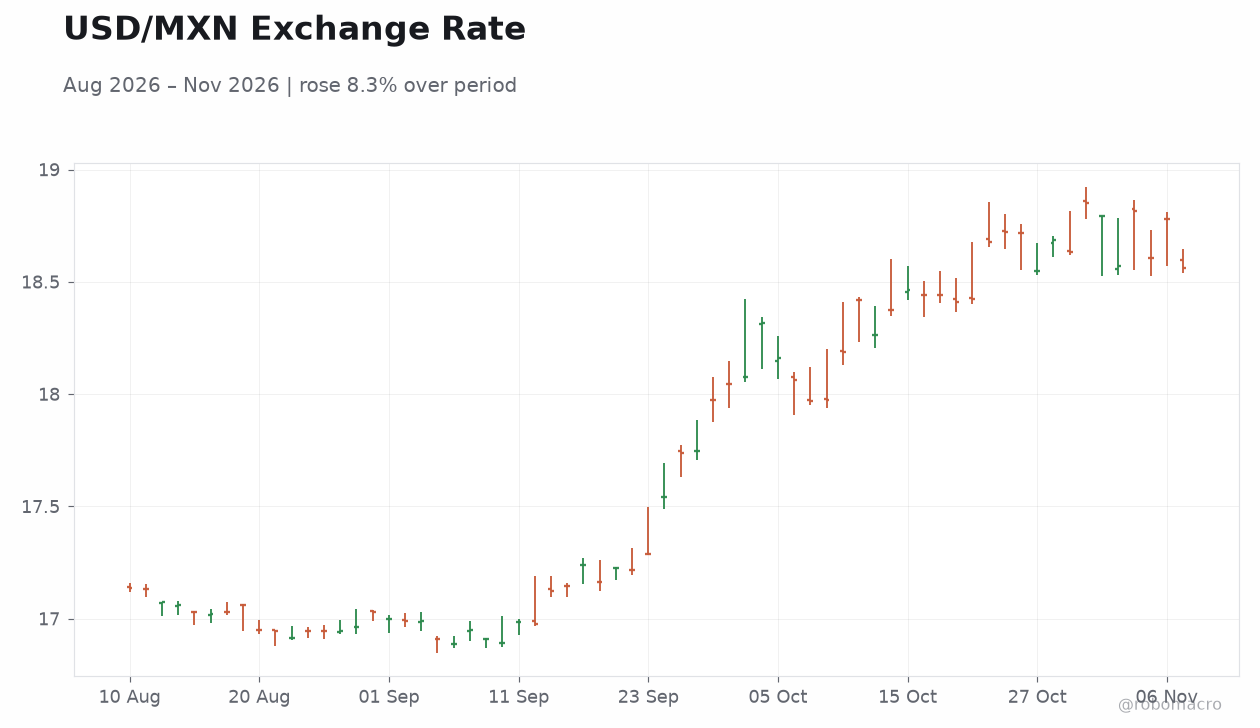
- USD/MXN jumped 0.93% to 18.78 as the peso absorbed the dovish surprise; IPC Bolsa gained 0.43% to 71,393.57
- October inflation data due today carries consensus at 3.65% YoY and 0.55% MoM, both above prior readings
Yesterday's Recap
Mexico's statistical agency releases the October inflation report today, with consensus expecting headline CPI at 3.65% year-over-year and 0.55% month-over-month, both accelerating from the prior 3.45% and 0.42% readings respectively. The peso bore the brunt of Banxico's unexpected dovish pivot, with USD/MXN climbing 0.93% to 18.78, while EUR/MXN slipped 1.53% to 20.76 on cross-currency dynamics. Mexican equities proved resilient despite the currency selloff, with the IPC Bolsa advancing 0.43% to 71,393.57, suggesting investors are positioning for a more accommodative rate environment.
Precious metals rallied, with silver up 1.77% to $52.72 and gold gaining 1.06% to $4,118.00, reflecting safe-haven demand amid global uncertainty. Energy markets sold off sharply, with WTI crude falling 2.77% to $88.31 and Brent dropping 3.45% to $94.93, a move that should ease imported inflation pressures for Mexico. Bitcoin edged lower by 0.31% to $74,355.29, showing muted risk appetite in digital assets.
The Mexico 10-year government yield was not reported in the latest data feed.
The Day Ahead
The calendar is empty for Mexico today, leaving market participants to digest the implications of the October inflation print and Banxico's surprise rate cut. With no scheduled data releases, peso traders will focus on technical levels around 18.78 and monitor cross-asset signals from global markets. The absence of domestic catalysts shifts attention to US data and Federal Reserve communications, which will influence the dollar's trajectory against emerging market currencies.
Investors will also watch for any Banxico officials' public comments following the unexpected easing decision, seeking clarity on the central bank's reaction function. Liquidity conditions in Mexican fixed income may remain thin given the lack of fresh supply or data.
Other Economic Notes
Mexico's inflation trajectory remains the critical variable for Banxico's policy path, with today's print likely to determine whether the central bank's surprise cut proves prescient or premature. The acceleration in both headline and core inflation expectations suggests price pressures are broadening beyond volatile components, complicating the easing narrative. ↓ p.2