Nordics Macro Daily(Beta Mode)
Riksbank Eyes Hike Despite Lagging Inflation
Market Snapshot
| Asset | Level | Change |
|---|---|---|
| OMX Stockholm 30 | 3,295.03 | +0.73% |
| Oslo Bors | 2,082.80 | -0.66% |
| OMX Copenhagen 25 | 1,836.48 | -0.11% |
| OMX Helsinki 25 | 6,521.77 | +0.06% |
| USD/SEK | 9.93 | +0.07% |
| USD/NOK | 9.52 | +0.34% |
| EUR/SEK | 11.29 | +0.04% |
| EUR/NOK | 10.83 | +0.07% |
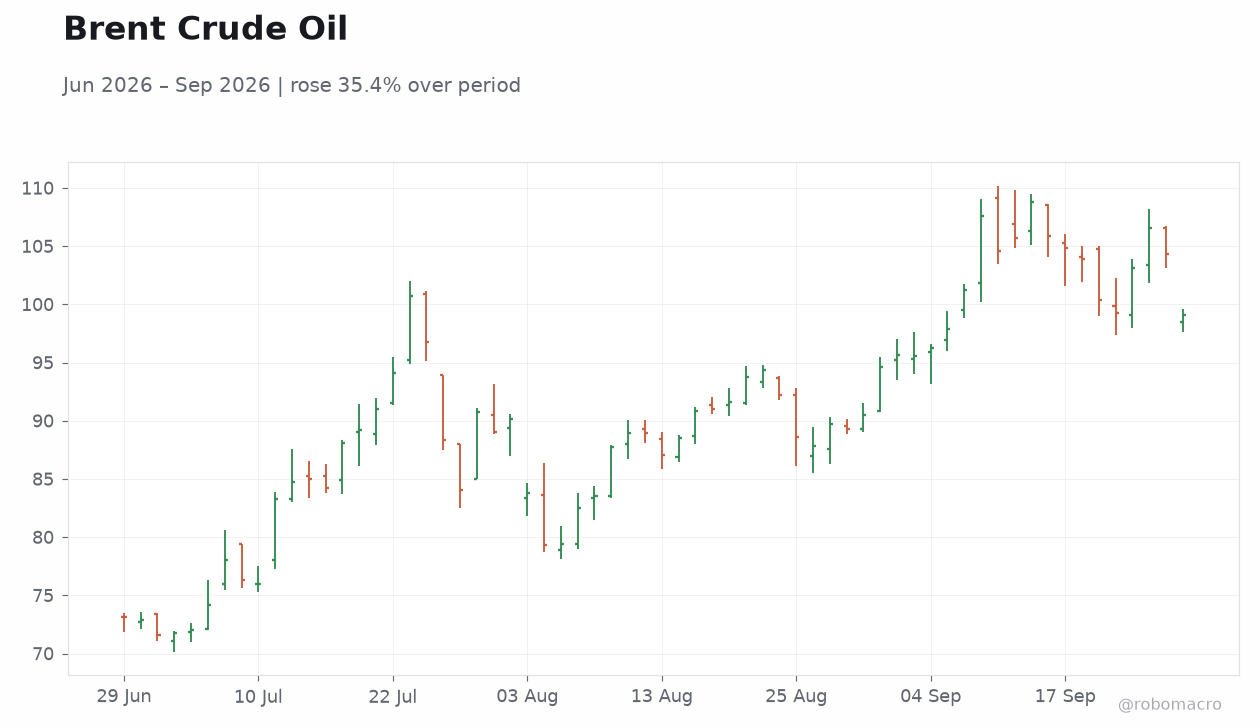
| Brent Crude | 99.06 | -5.04% |
| Gold | 4,213.60 | -2.49% |
| Bitcoin | 83,160.06 | -1.48% |
| Sweden 10Y Govt Yield | 3.28% | +3 bp |
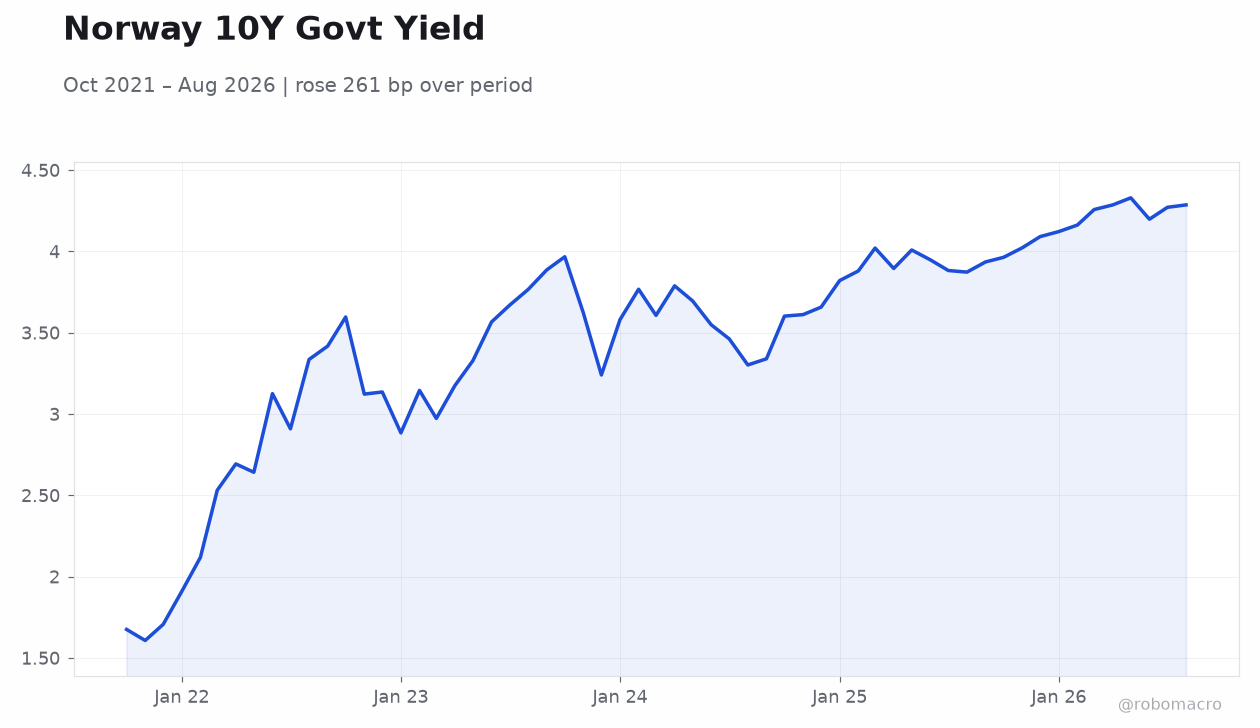
| Norway 10Y Govt Yield | 4.58% | +3 bp |
Prior Economic Events
| Data | Prior | Cons | Actual |
|---|---|---|---|
| No events available | |||
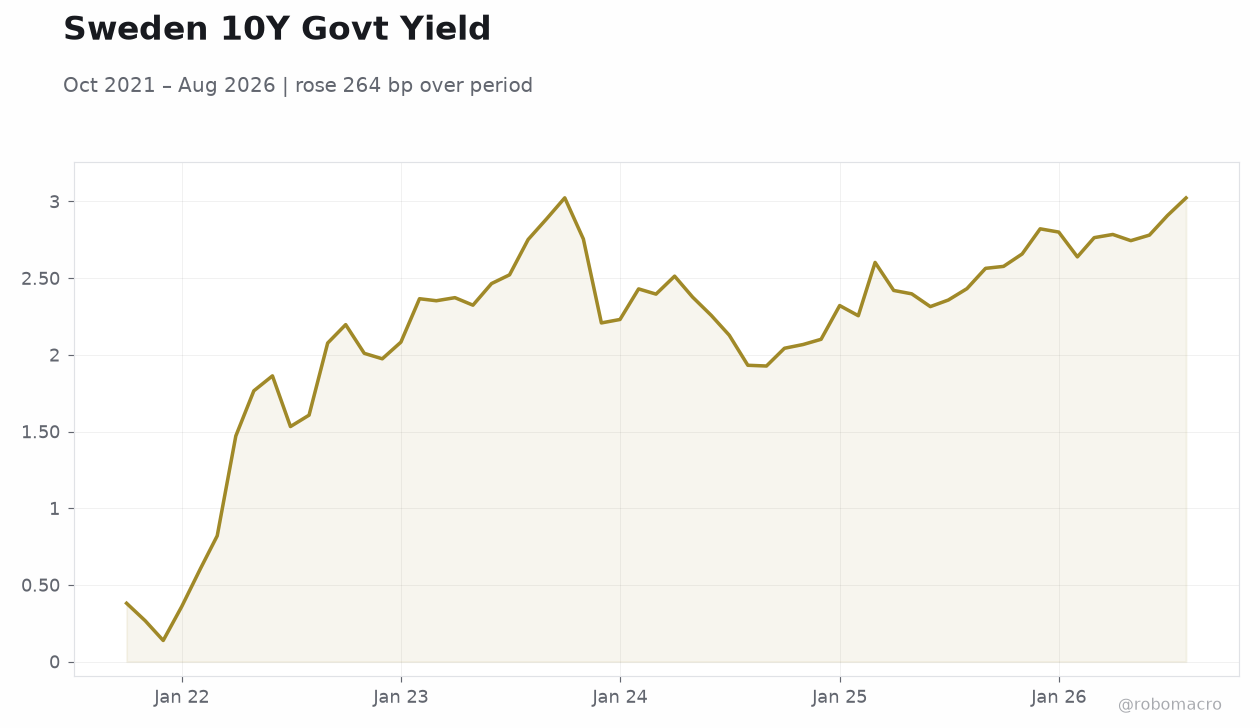 Sweden 10Y Govt Yield | Type: macro_line | Percent: 3.023 (2026-08-01) | Range: 0.138–3.024 | Trend(6pt): 0.3806,1.974,2.43,2.42,2.781,3.023
Today's Economic Events
| Data | Prior | Cons | Time |
|---|---|---|---|
| No events available | |||
- OMX Stockholm 30 rose 0.73% while Oslo Bors fell 0.66% as Brent crude dropped 5.04%.
- Riksbank reiterated expectations for a rate hike this year even as inflation rebound lags.
- Norway 10-year yield rose 3 bp to 4.58% and Sweden 10-year yield rose 3 bp to 3.28%.
Yesterday's Recap
Equity markets closed mixed across the Nordic region on 27 September. OMX Stockholm 30 advanced 0.73% to 3,295.03 while Oslo Bors declined 0.66% to 2,082.80. OMX Copenhagen 25 eased 0.11% and OMX Helsinki 25 gained 0.06%.
The Swedish krona and Norwegian krone both edged higher against the dollar. USD/SEK rose 0.07% to 9.93 and USD/NOK increased 0.34% to 9.52. Brent crude fell sharply to 99.06, trimming near-term support for the Norwegian krone and petroleum revenue forecasts.
Riksbank completed multiple government-bond auctions with no immediate market reaction beyond the 3 bp rise in the 10-year yield. Commerzbank noted that Sweden’s inflation rebound remains delayed, keeping the Riksbank’s hike path under scrutiny. Sweden CPI YoY stood at 0.70% as of end-August while Norway CPI YoY was 3.30%.
The Day Ahead
The calendar shows no scheduled economic releases for Sweden, Norway, Denmark or Finland on 28 September. Markets will therefore focus on follow-through from Riksbank communications and any fresh commentary from Norges Bank officials. UBS highlighted that higher global rates continue to weigh on the Swedish krona while the Norwegian krone carry trade remains attractive.
Mortgage-rate increases by major Norwegian banks after the latest Norges Bank move may surface in lending data later this week. Denmark’s booming economy faces capacity constraints that could influence Danmarks Nationalbank’s peg-maintenance operations. Finland’s euro-area data flow remains tied to upcoming ECB signals.
Norway 10-year yield sits at 4.58% after the 3 bp rise recorded on 24 September.
Other Economic Notes
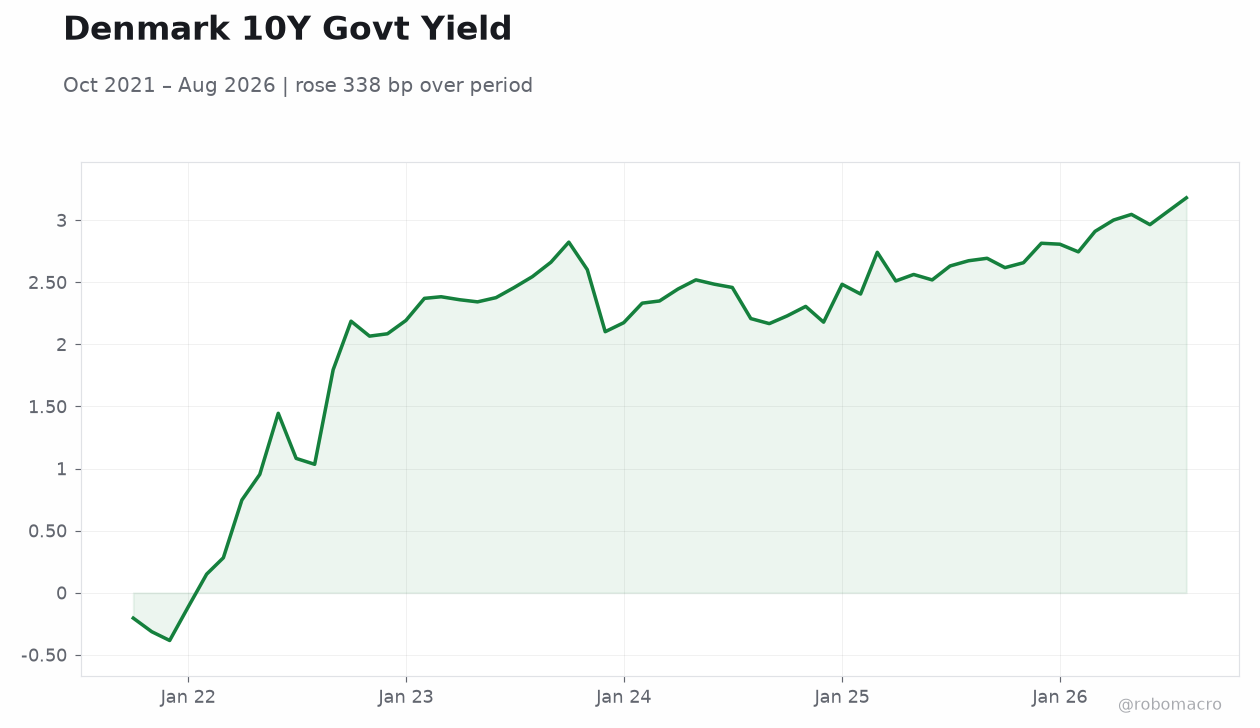
Sweden’s export-oriented manufacturing sector faces headwinds from a stronger krona and muted domestic inflation at 0.70% year-over-year. Norway’s fiscal outlook benefits from oil revenue yet remains sensitive to Brent’s recent 5% decline. Denmark’s strong growth continues but risks overheating pressures that could test the EUR/DKK peg.
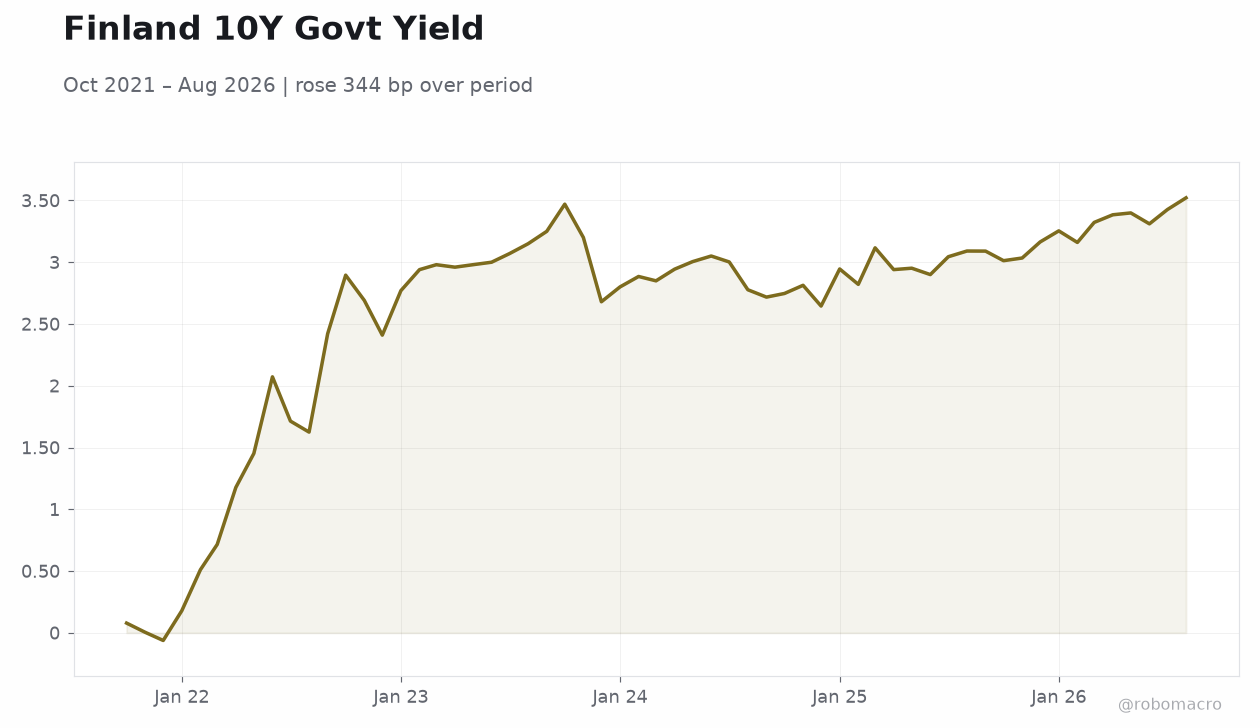
Finland’s euro-area membership means its policy transmission runs through ECB decisions rather than independent rate setting. ↓ p.2