Nordics Macro Daily(Beta Mode)
Kroner Steady as Norges Bank's Tight Bias Supports FX
Market Snapshot
| Asset | Level | Change |
|---|---|---|
| OMX Stockholm 30 | 3,256.08 | -0.62% |
| Oslo Bors | 2,081.53 | -0.60% |
| OMX Copenhagen 25 | 1,850.74 | +1.00% |
| OMX Helsinki 25 | 6,305.57 | -1.65% |
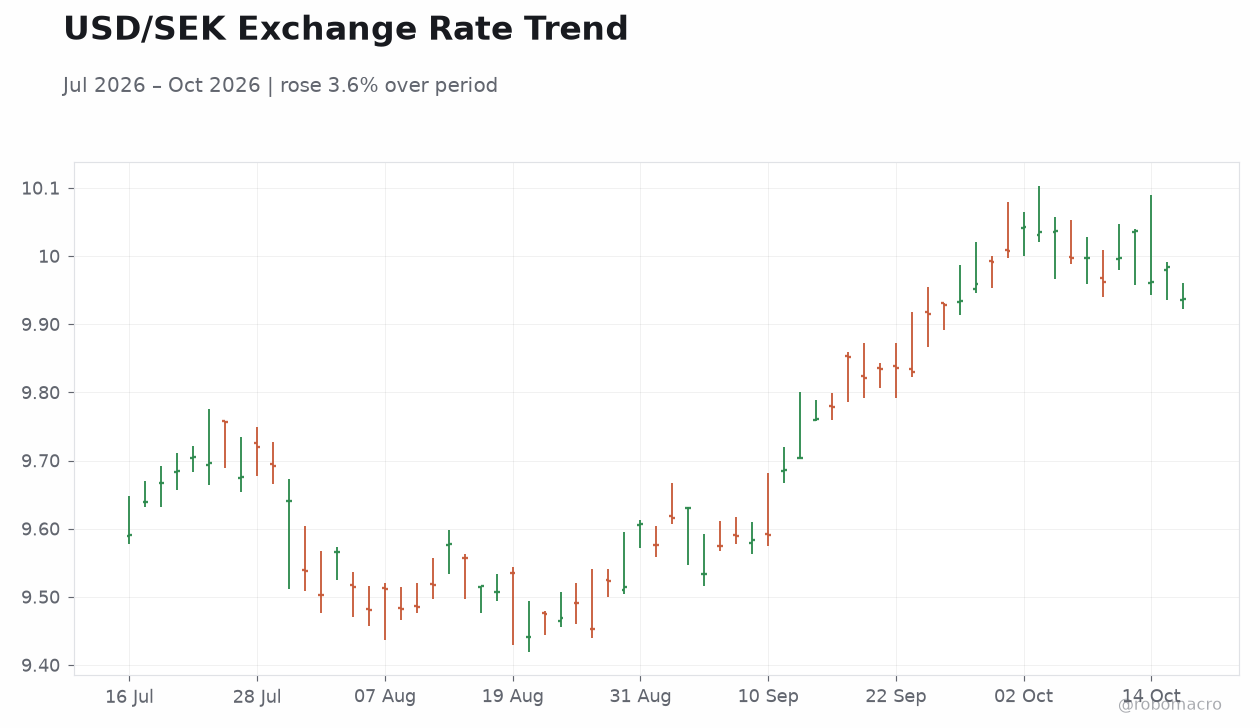
| USD/SEK | 9.94 | -0.48% |
| USD/NOK | 9.45 | -0.43% |
| EUR/SEK | 11.15 | -0.20% |
| EUR/NOK | 10.61 | -0.16% |
| Brent Crude | 105.39 | -0.50% |
| Gold | 4,194.20 | +0.58% |
| Bitcoin | 82,286.26 | +0.89% |
| Sweden 10Y Govt Yield | 3.20% | +3 bp |
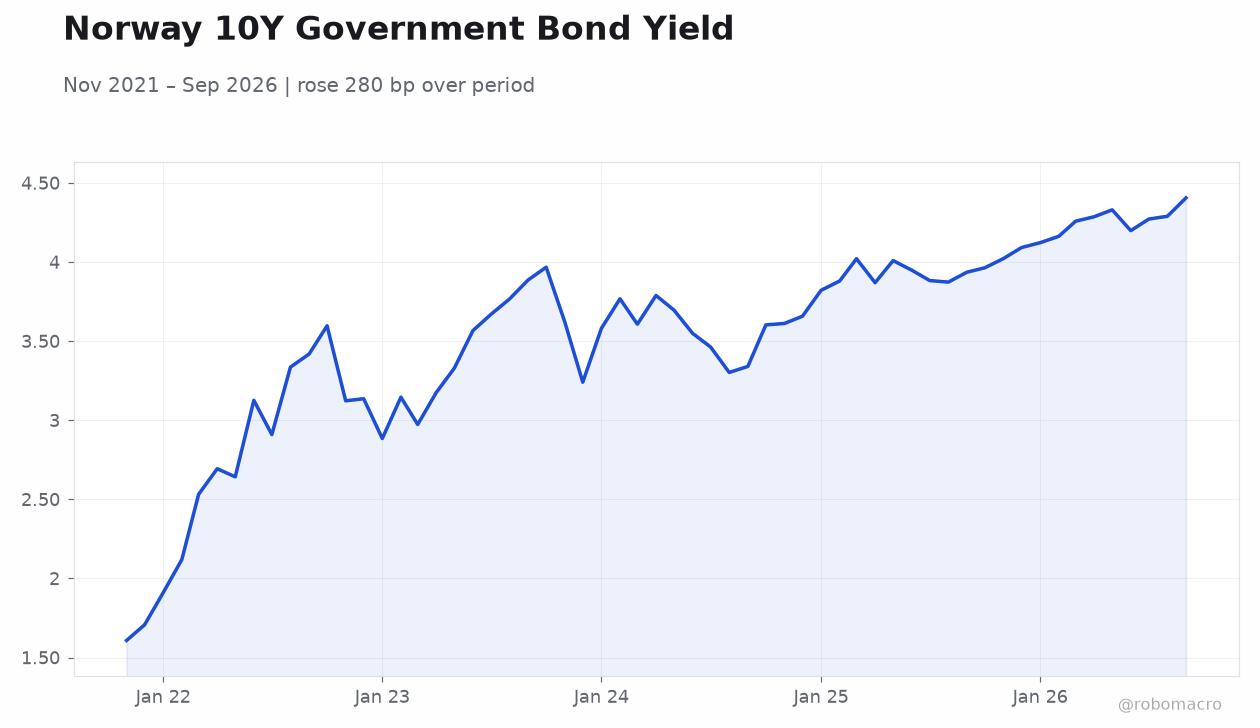
| Norway 10Y Govt Yield | - | - |
Prior Economic Events
| Data | Prior | Cons | Actual |
|---|---|---|---|
| No events available | |||
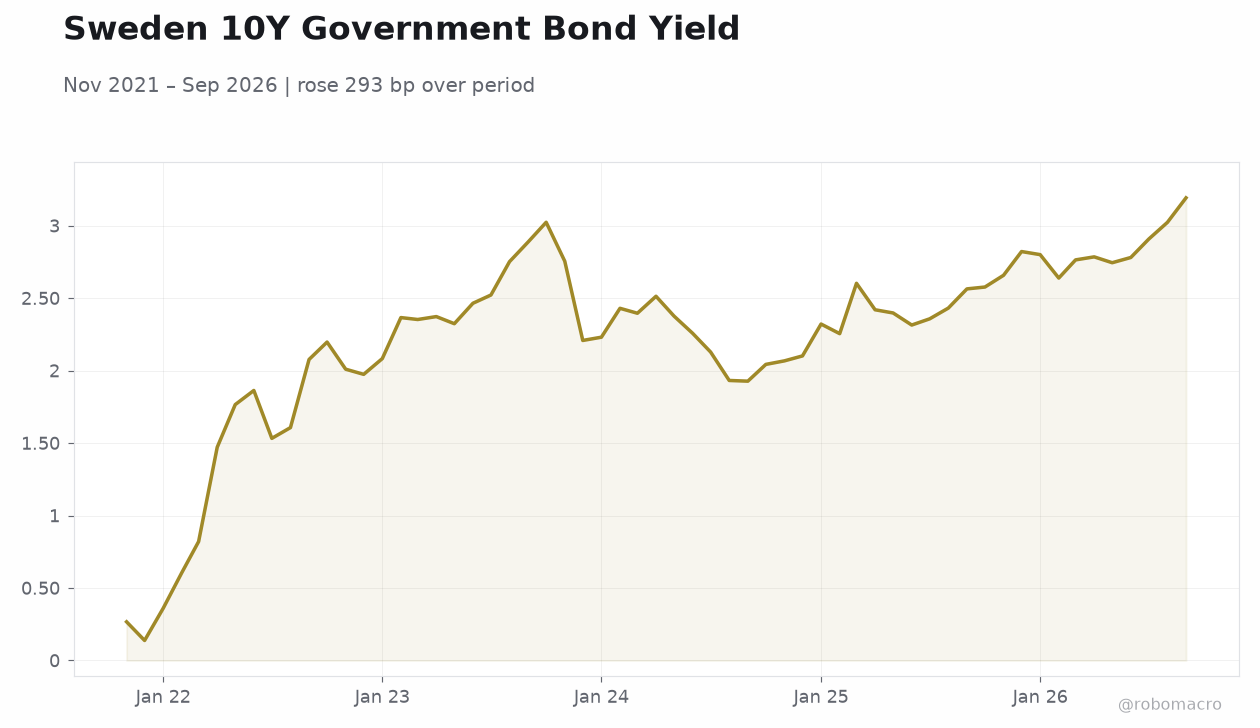 Sweden 10Y Government Bond Yield | Type: macro_line | Sweden 10Y Yield (%): 3.192 (2026-09-01) | Range: 0.138–3.192 | Trend(6pt): 0.2667,2.083,2.396,2.398,2.908,3.192
Today's Economic Events
| Data | Prior | Cons | Time |
|---|---|---|---|
| No events available | |||
- Scandinavian FX firmed against the dollar, with USD/SEK down 0.48% to 9.94 and USD/NOK lower by 0.43% at 9.45, as Commerzbank flagged Norges Bank's high-for-longer stance as a krone support.
- Swedish equities lagged with the OMX Stockholm 30 off 0.62%, while Copenhagen bucked the trend, OMX Copenhagen 25 up 1.00%; Helsinki fell 1.65%.
- Sweden's 10-year government yield rose 3 bp to 3.20%, and the Riksbank intensified work on a digital krona as dollar-pegged stablecoins spread.
Yesterday's Recap
Scandinavian currency markets were the main story, with both kronor strengthening against a softer dollar. USD/SEK fell 0.48% to 9.94 and USD/NOK declined 0.43% to 9.45, while EUR crosses also eased, with EUR/SEK at 11.15 (-0.20%) and EUR/NOK at 10.61 (-0.16%). The krone's resilience reflects the market's continued pricing of a restrictive Norges Bank, a theme Commerzbank analysts highlighted in a note arguing the high-for-longer stance underpins the currency.
Equities diverged sharply across the region: Copenhagen's OMX 25 gained 1.00% to 1,850.74, but Stockholm's OMX 30 slipped 0.62% to 3,256.08, Oslo Børs fell 0.60% to 2,081.53, and Helsinki dropped 1.65% to 6,305.57. In the Swedish bond market, the 10-year government yield climbed 3 bp to 3.20%, extending the rise from 3.17% on October 13. Brent crude slipped 0.50% to $105.39, a modest drag for Norway's oil-linked fiscal revenues and export earnings.
Gold rallied 0.58% to $4,194, and Bitcoin added 0.89% to $82,286, reflecting continued appetite for alternative assets.
The Day Ahead
Today's calendar is light on tier-one Nordic data, leaving market attention on the political transition in Stockholm, where Magdalena Andersson's failed confidence-style PM vote on Wednesday has left the Social Democrats regrouping and a new government formation process underway. Traders will watch for any follow-through commentary from Norges Bank officials after the run of supportive krone commentary, as well as regional sentiment indicators due over coming sessions. Swedish housing market data remains a key watchpoint given the Riksbank's ongoing balance-sheet normalization and its implications for mortgage rates.
Danish markets will track the euro complex closely given the krone's ERM II peg, with Danmarks Nationalbank expected to shadow ECB policy. Next week brings a heavier Nordic data calendar, including Swedish and Norwegian inflation prints that will shape expectations for the respective central banks' November meetings.
Other Economic Notes
Sweden's renewed push on a digital krona dominated domestic policy headlines, with the Riksbank urging legal preparation as dollar-pegged stablecoins gain traction and the ECB advances its digital euro project. ↓ p.2