Nordics Macro Daily(Beta Mode)
Riksbank Tightening Path Eyed as Nordic Stocks Rally
Market Snapshot
| Asset | Level | Change |
|---|---|---|
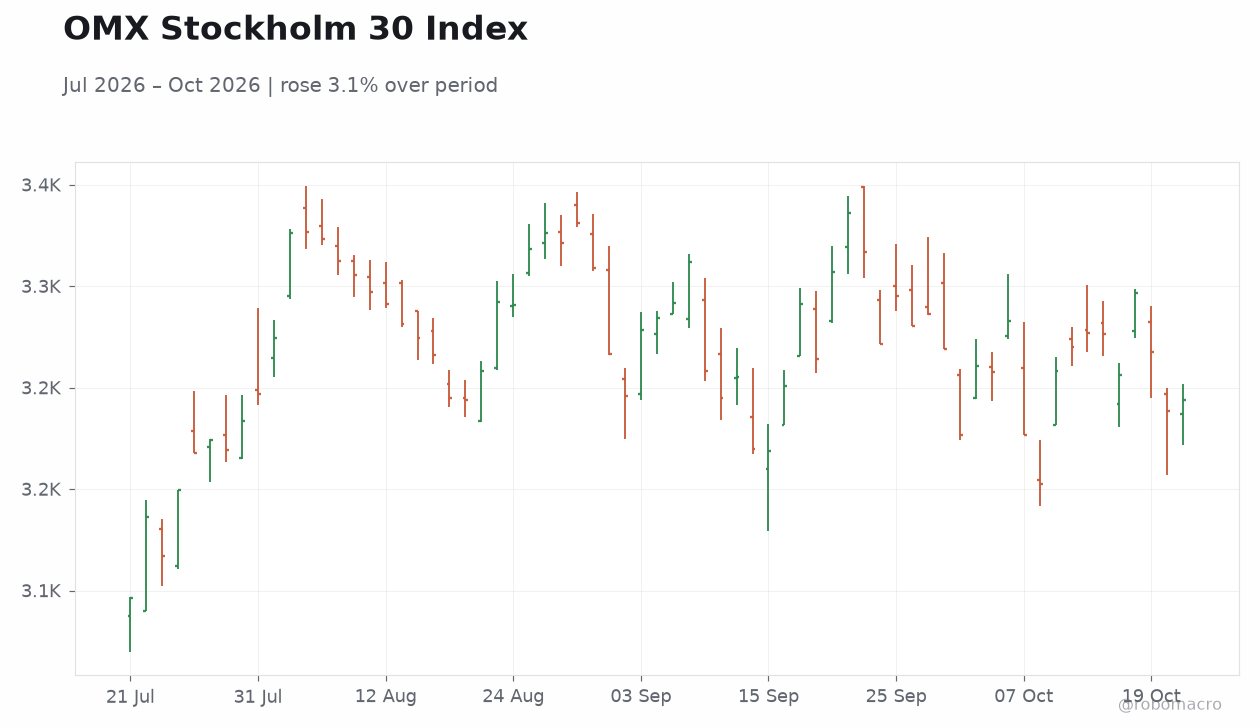
| OMX Stockholm 30 | 3,244.07 | +0.17% |
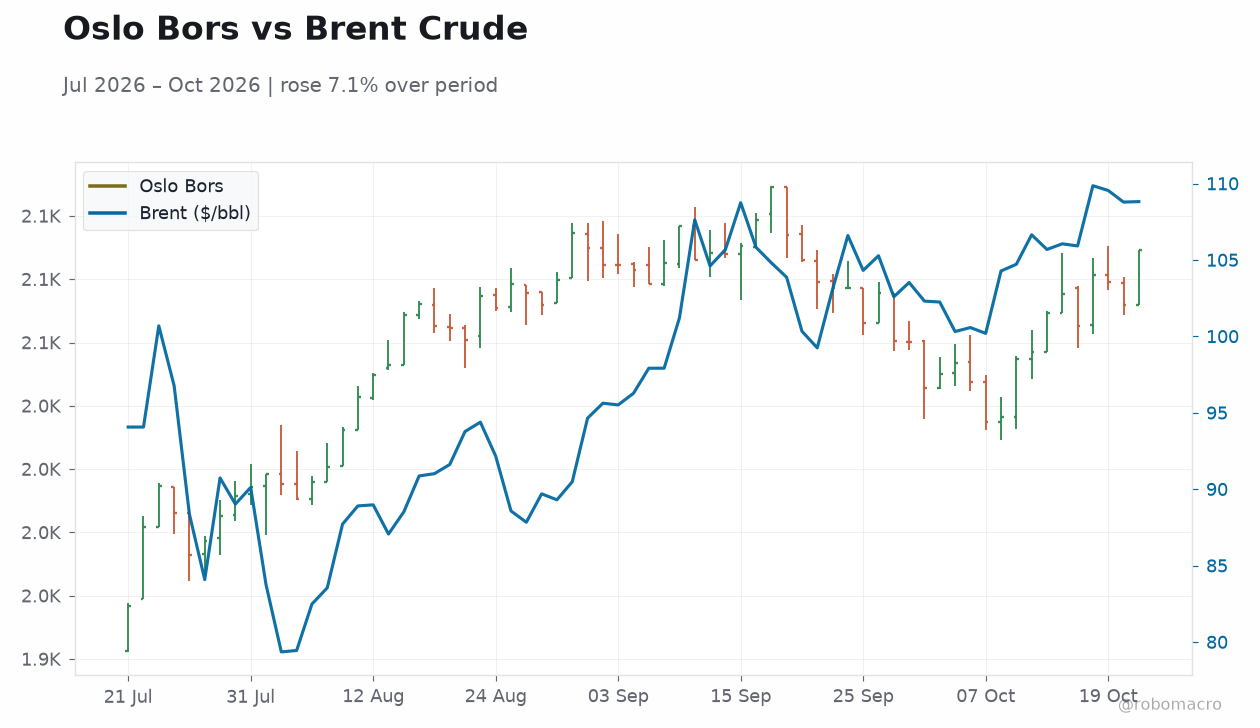
| Oslo Bors | 2,111.56 | +1.04% |
| OMX Copenhagen 25 | 1,892.30 | +1.87% |
| OMX Helsinki 25 | 6,289.36 | +0.61% |
| USD/SEK | 9.89 | -0.21% |
| USD/NOK | 9.36 | -0.44% |
| EUR/SEK | 11.12 | -0.07% |
| EUR/NOK | 10.56 | -0.09% |
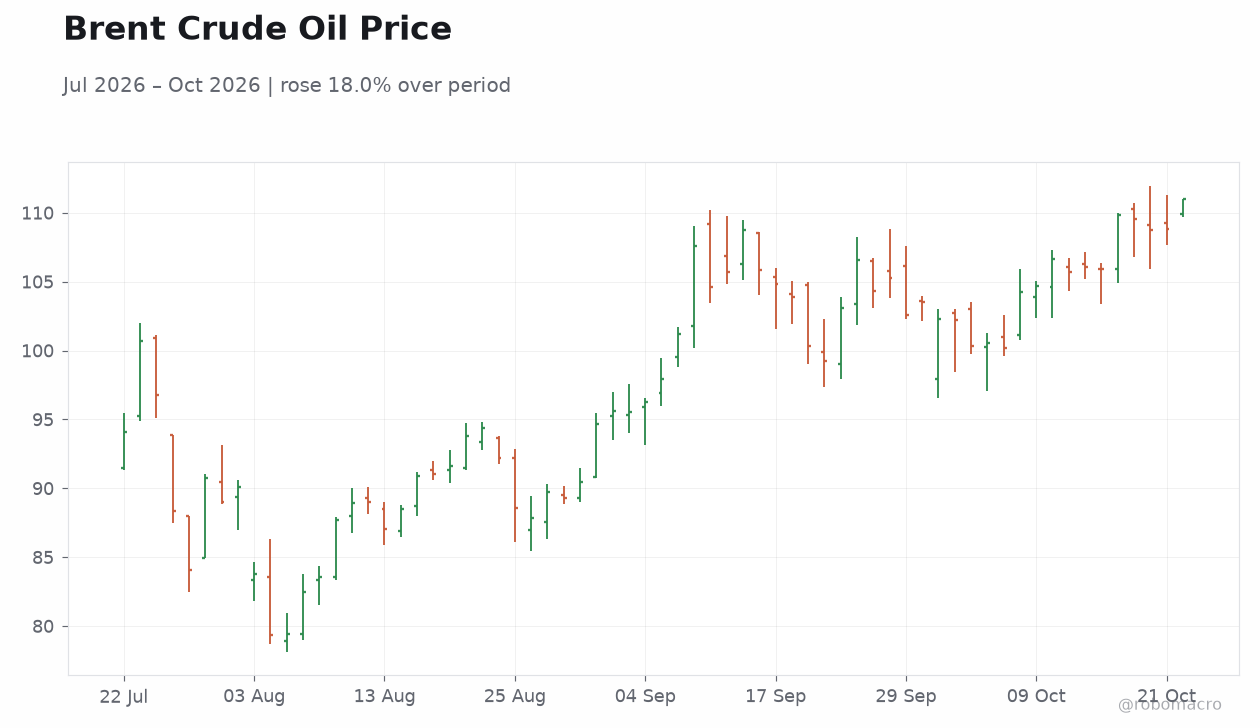
| Brent Crude | 111.00 | +2.00% |
| Gold | 4,107.20 | -1.03% |
| Bitcoin | 82,703.10 | -0.29% |
| Sweden 10Y Govt Yield | 3.22% | +6 bp |
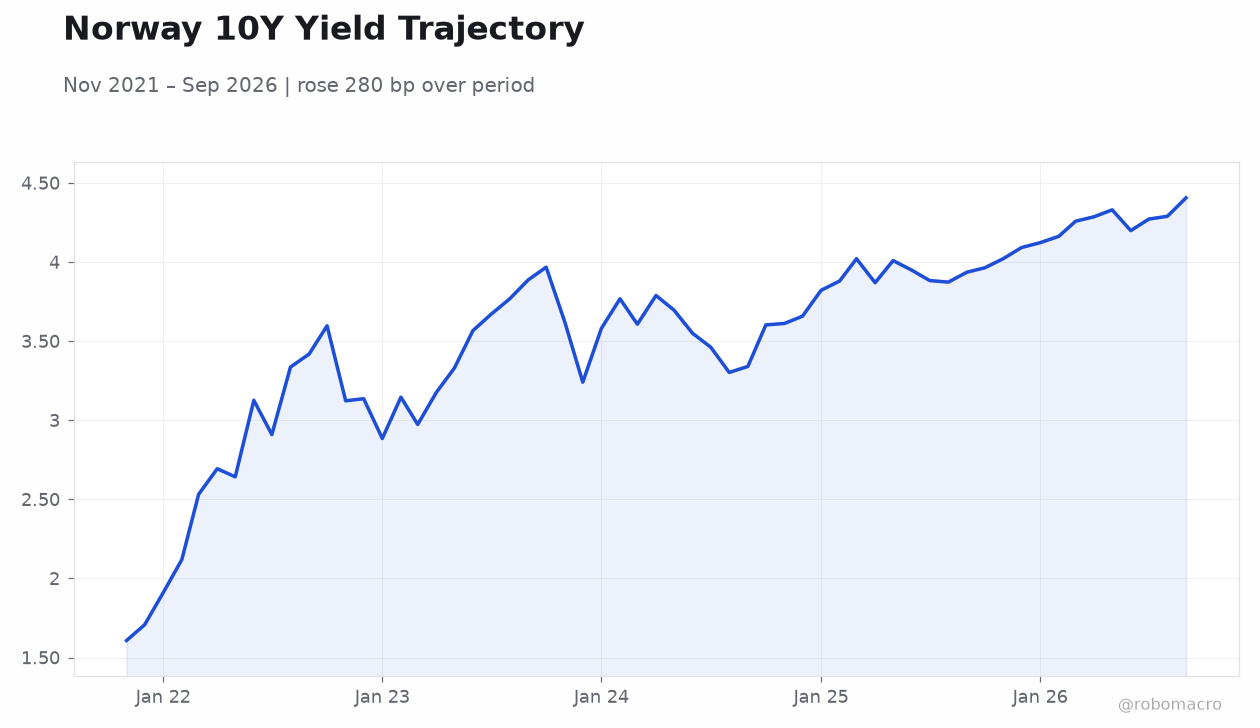
| Norway 10Y Govt Yield | - | - |
Prior Economic Events
| Data | Prior | Cons | Actual |
|---|---|---|---|
| No events available | |||
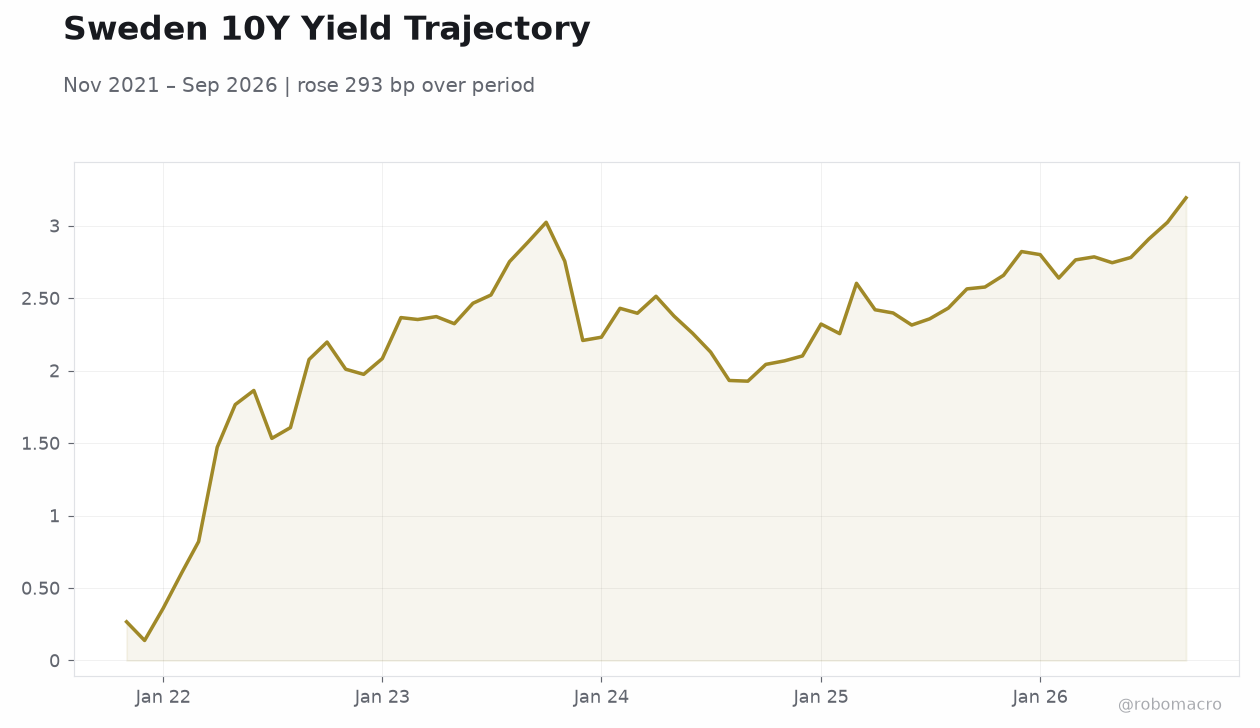 Sweden 10Y Yield Trajectory | Type: macro_line | Sweden 10Y (%): 3.192 (2026-09-01) | Range: 0.138–3.192 | Trend(6pt): 0.2667,2.083,2.396,2.398,2.908,3.192
Today's Economic Events
| Data | Prior | Cons | Time |
|---|---|---|---|
| No events available | |||
- Nordic equities posted broad gains Wednesday, led by OMX Copenhagen 25 (+1.87%) and Oslo Bors (+1.04%), with OMX Stockholm 30 up a modest 0.17%.
- Brent crude jumped 2.00% to $111.00/bbl, a direct tailwind for Norway's fiscal outlook and krone, while USD/NOK fell 0.44% to 9.36.
- Swedish 10-year yields rose 6 bp to 3.22% as markets position for further Riksbank hikes, with commentary flagging krona downside if tightening undershoots expectations.
Yesterday's Recap
Nordic markets closed Wednesday on a firm footing, with regional bourses advancing across the board. Copenhagen led the bloc, with the OMX Copenhagen 25 surging 1.87%, while Oslo Bors gained 1.04% and Helsinki's OMX 25 added 0.61%. Stockholm lagged the regional rally, with the OMX Stockholm 30 up just 0.17%.
Currency markets saw both the Swedish krona and Norwegian krone firm against the dollar, with USD/SEK down 0.21% to 9.89 and USD/NOK down 0.44% to 9.36, though EUR crosses were nearly flat. The standout macro driver was crude: Brent rose 2.00% to $111.00/bbl, a meaningful positive for Norway's petroleum-linked fiscal revenues and a supportive backdrop for the krone. Swedish fixed income diverged from equities, with the 10-year government yield climbing 6 bp to 3.22%, reflecting market pricing for additional Riksbank tightening.
On the data front, Sweden's September CPI stood at 1.50% year-on-year, while Norway's August CPI ran at 3.30% — a persistent gap that underscores the divergence between Riksbank and Norges Bank policy trajectories.
The Day Ahead
The Nordic calendar is light for Thursday, with no major scheduled releases across Sweden, Norway, Denmark, or Finland. With an empty data docket, market attention will center on positioning ahead of upcoming inflation and activity prints, and on Riksbank communications after this week's certificate buyback operations. Swedish rates will be the key tell — the 6 bp move in the 10-year suggests investors are recalibrating the tightening path, and any further drift higher would pressure rate-sensitive segments of the Stockholm bourse.
Norwegian markets will continue to trade the oil complex, with Brent above $110 keeping the krone and Oslo energy names supported. Danish and Finnish markets will likely take their cue from euro-area sentiment, particularly after the Bundesbank's downbeat Q3 assessment for Germany.
Other Economic Notes
The Nordic bloc's policy divergence remains the dominant structural theme. Sweden's 1.50% CPI is well below Norway's 3.30%, yet markets are pricing additional Riksbank hikes — a tension that speaks to concerns about krona weakness and imported inflation rather than domestic price pressure. ↓ p.2