Nordics Macro Daily(Beta Mode)
Copenhagen Surges, Brent Plunges, SEK/NOK Firm
Market Snapshot
| Asset | Level | Change |
|---|---|---|
| OMX Stockholm 30 | 3,267.33 | +0.33% |
| Oslo Bors | 2,129.22 | +0.13% |
| OMX Copenhagen 25 | 1,971.23 | +2.80% |
| OMX Helsinki 25 | 6,247.44 | -0.54% |
| USD/SEK | 9.91 | -0.45% |
| USD/NOK | 9.25 | -0.88% |
| EUR/SEK | 11.04 | -0.27% |
| EUR/NOK | 10.31 | -0.69% |
| Brent Crude | 110.31 | -4.34% |
| Gold | 4,049.60 | -0.05% |
| Bitcoin | 79,750.65 | -1.30% |
| Sweden 10Y Govt Yield | 3.11% | -1 bp |
| Norway 10Y Govt Yield | - | - |
Prior Economic Events
| Data | Prior | Cons | Actual |
|---|---|---|---|
| No events available | |||
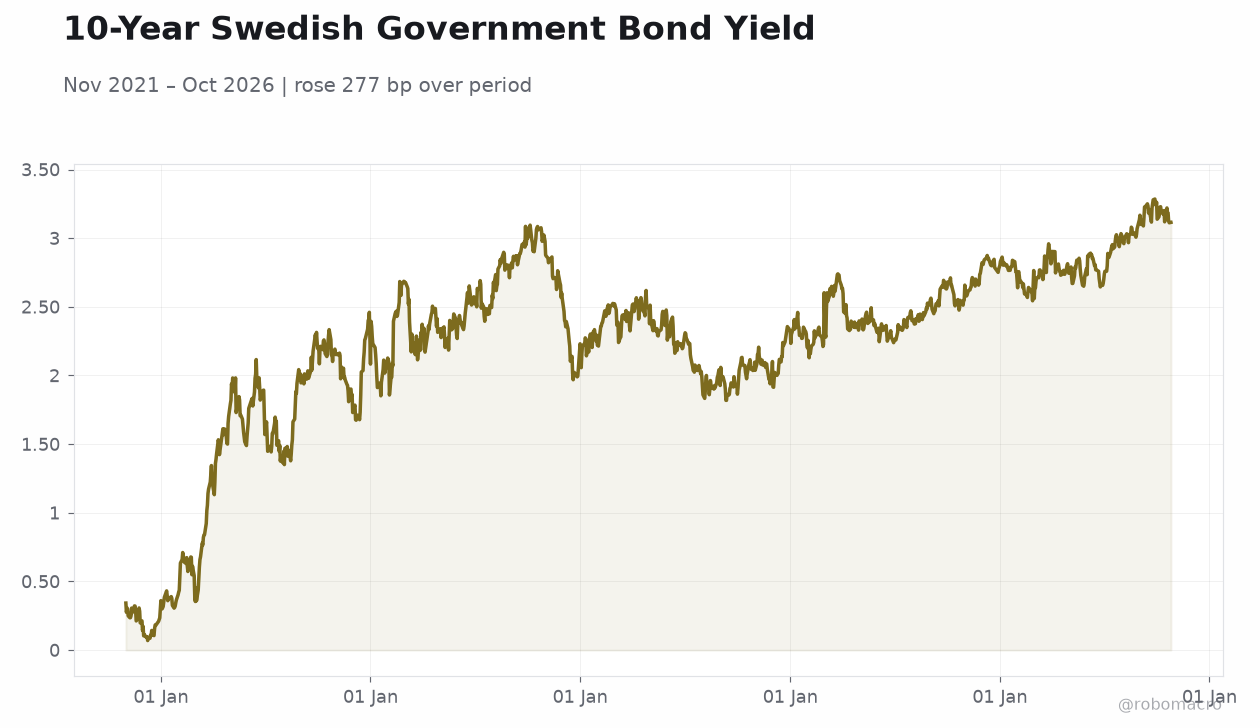
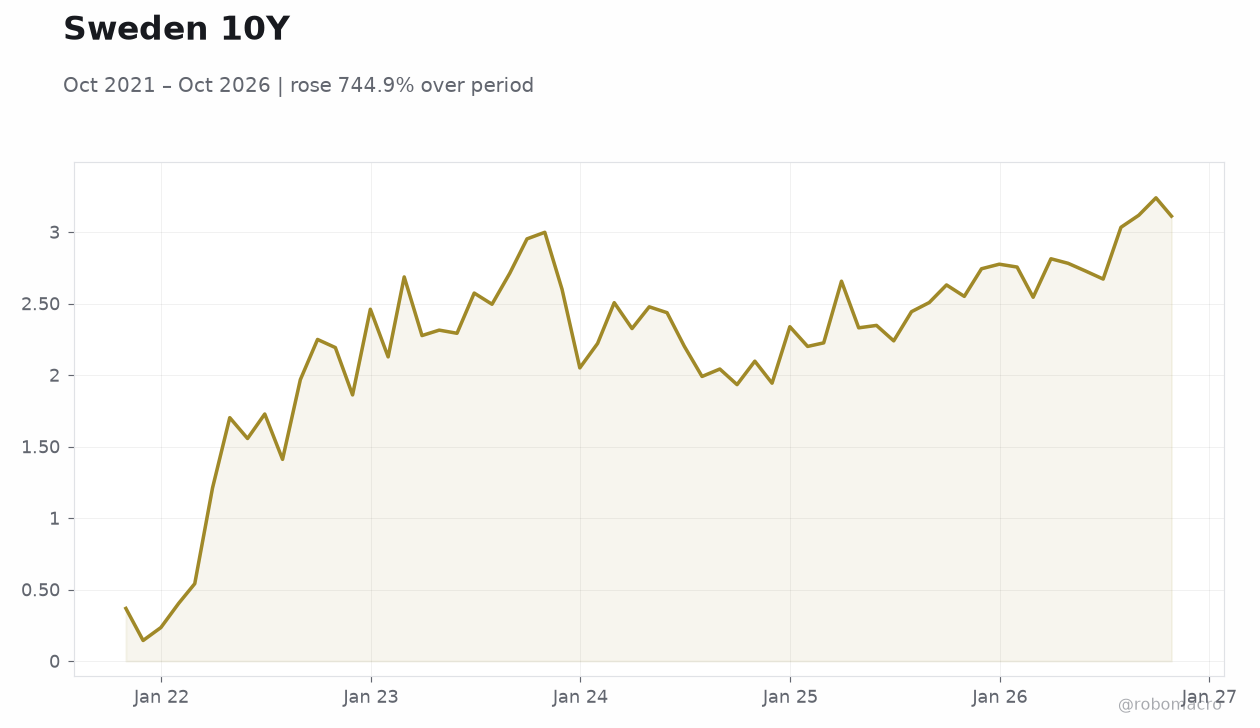 Sweden 10Y | Type: macro_line | Sweden 10Y yield (%): 3.111 (2026-10-27) | Range: 0.1441–3.239 | Trend(5pt): 0.3682,2.127,2.477,2.443,3.111
Today's Economic Events
| Data | Prior | Cons | Time |
|---|---|---|---|
| No events available | |||
- OMX Copenhagen 25 jumps 2.80% while OMX Helsinki 25 slips 0.54%, a sharp intra-Nordic equity divergence
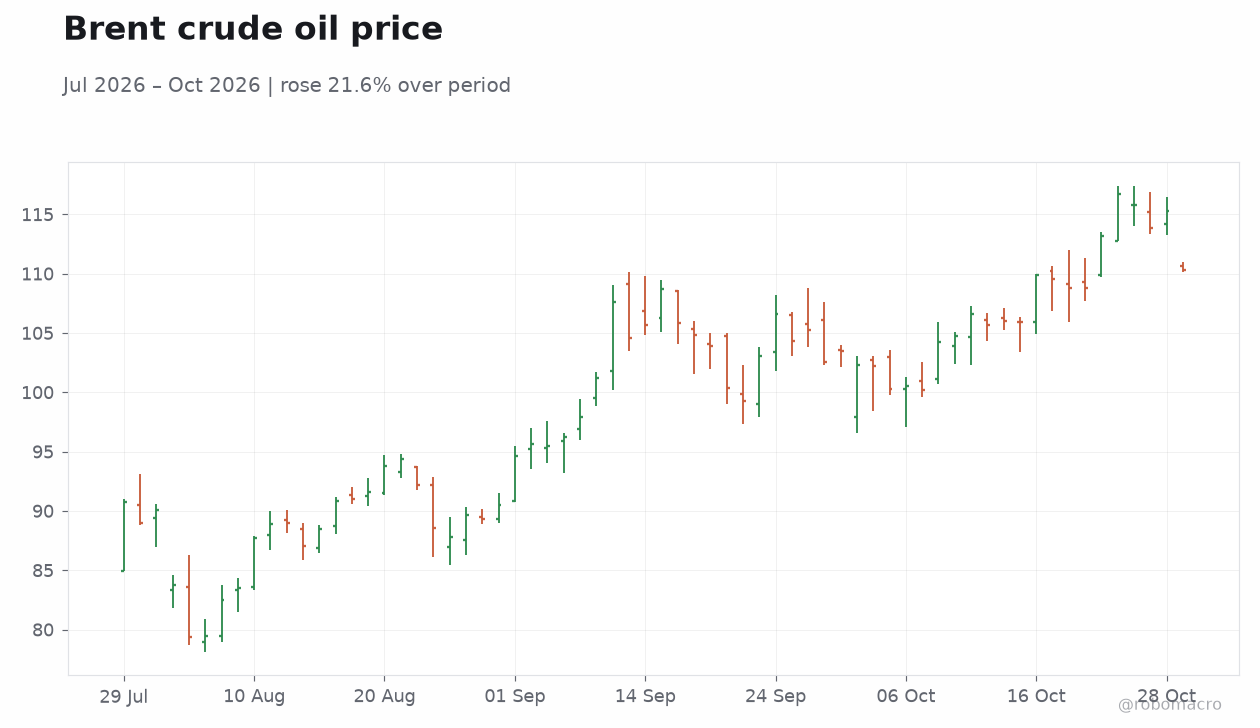
- Brent crude collapses 4.34% to $110.31/bbl, a direct hit to Norway's fiscal and krone outlook
- USD/SEK falls 0.45% to 9.91 and USD/NOK drops 0.88% to 9.25 as both currencies firm against the dollar
Yesterday's Recap
Nordic markets delivered a split session on Wednesday, with Denmark standing out as OMX Copenhagen 25 surged 2.80% to 1,971.23, far outpacing regional peers. Sweden's OMX Stockholm 30 added a modest 0.33% to 3,267.33, while Oslo Bors edged up 0.13% to 2,129.22 despite the crude selloff. Finland lagged, with OMX Helsinki 25 down 0.54% to 6,247.44.
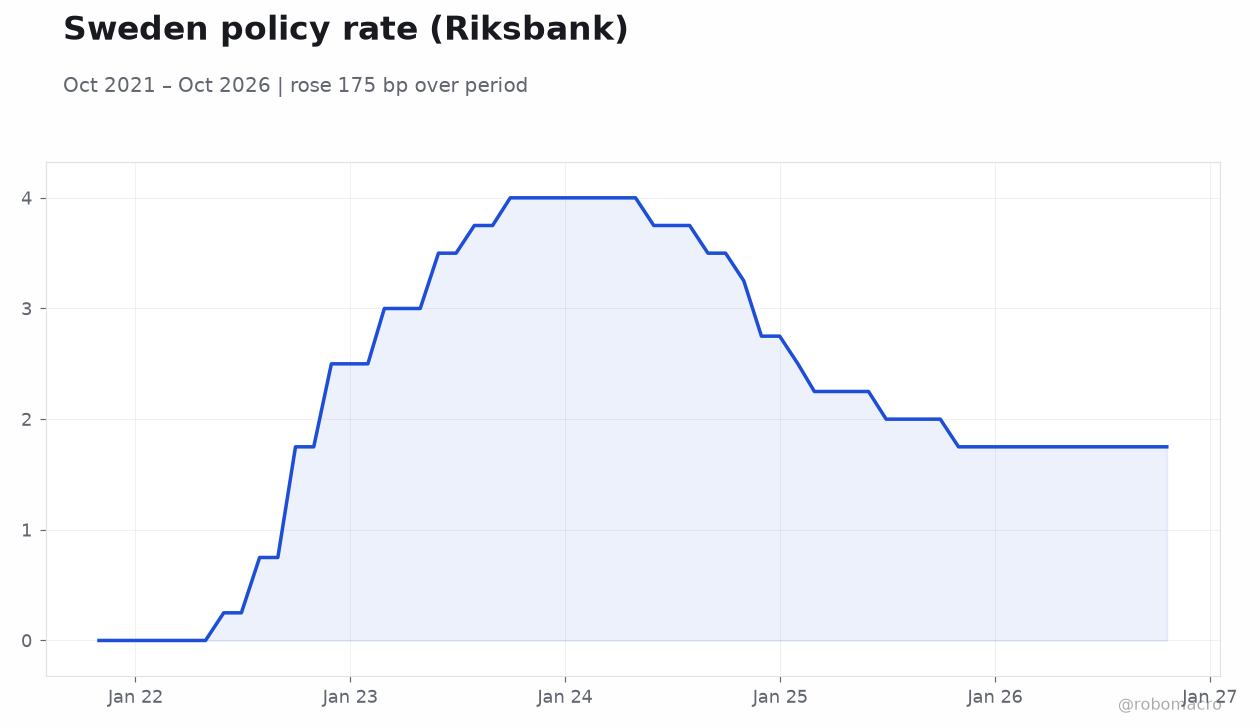
In FX, the Swedish krona and Norwegian krone both strengthened against the dollar, with USD/SEK at 9.91 (-0.45%) and USD/NOK at 9.25 (-0.88%); EUR/SEK stood at 11.04 and EUR/NOK at 10.31. Swedish rates were steady-to-softer, with the 10-year government yield at 3.11%, down 1 bp. The dominant macro theme was the 4.34% collapse in Brent to $110.31, a meaningful negative for Norway's petroleum revenue outlook even as the krone firmed.
Gold was flat at $4,049.60 and Bitcoin slipped 1.30% to $79,750.65, suggesting risk appetite was selective rather than broad.
The Day Ahead
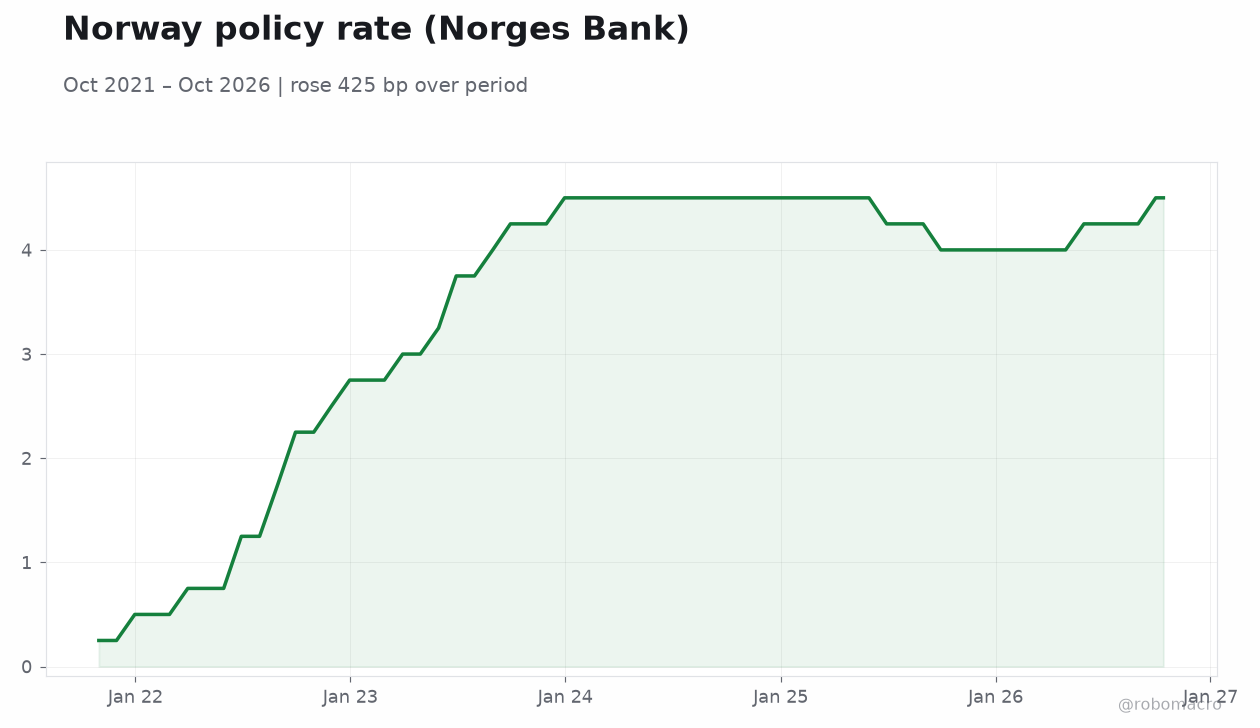
The Nordic calendar is empty for Thursday, with no scheduled releases across Sweden, Norway, Denmark, or Finland, leaving markets to trade off global catalysts and positioning. With no domestic prints, attention shifts to the oil complex after Wednesday's sharp Brent decline, which will shape Norges Bank's revenue assumptions and krone sentiment. Swedish rates traders will watch whether the 10-year yield holds near 3.11% amid quiet domestic flow.
Danish equities face a test of whether Wednesday's 2.80% rally has follow-through or was a one-off re-rating. Finnish markets remain the regional laggard and will take their cue from euro-area sentiment. Expect thin, headline-driven liquidity across Nordic bourses absent fresh local data.
Other Economic Notes
Statistics Sweden's latest report on labour migrants highlights that some immigrant groups are more likely to leave Sweden after extended residence, a demographic angle relevant to long-run labour supply and wage dynamics. Danmarks Nationalbank published analysis on the costs of cross-border payments in the Nordics, underscoring integration frictions within the region. The same institution reported Danish households hold securities worth DKK 1,517 billion, a reminder of substantial private balance-sheet capacity.
↓ p.2