South Africa Macro Daily(Beta Mode)
Rand Hits Near Two-Month Low Amid Rising Yields
Market Snapshot
| Asset | Level | Change |
|---|---|---|
| JSE Top 40 | 101,333.70 | -1.76% |
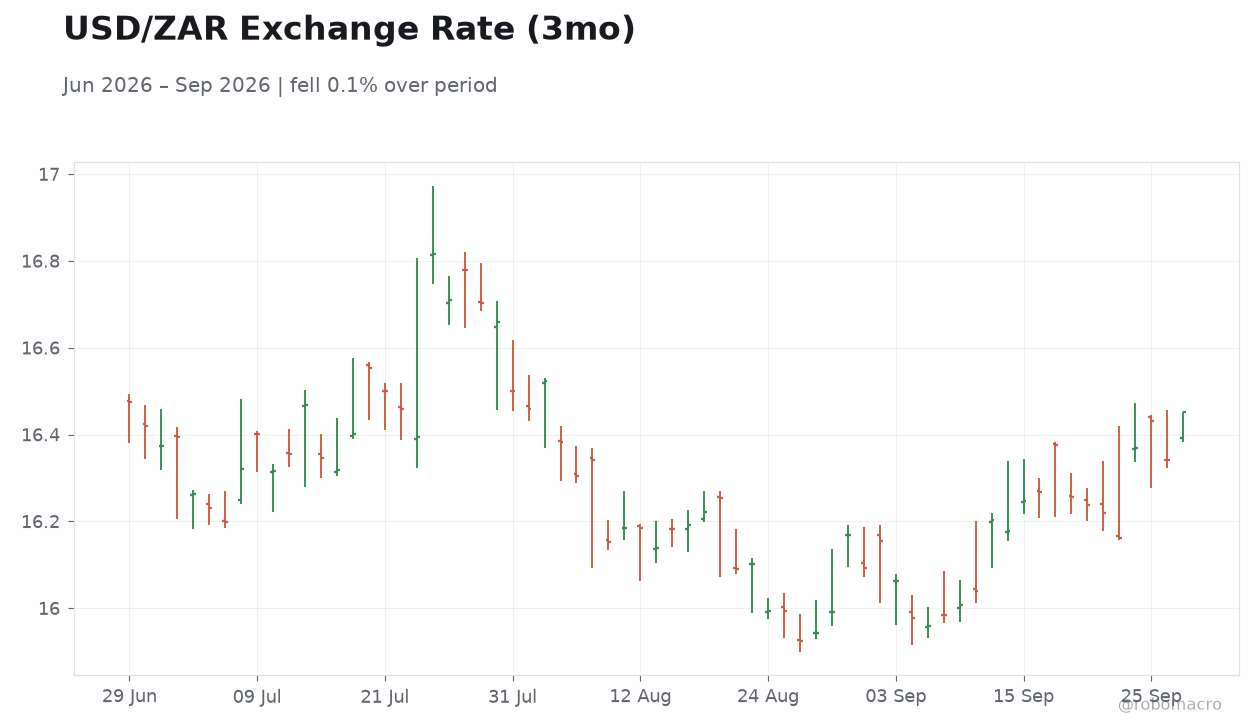
| USD/ZAR | 16.45 | +0.66% |
| EUR/ZAR | 18.69 | +0.52% |
| Platinum | 1,714.50 | -0.39% |
| Gold | 4,163.50 | -0.12% |
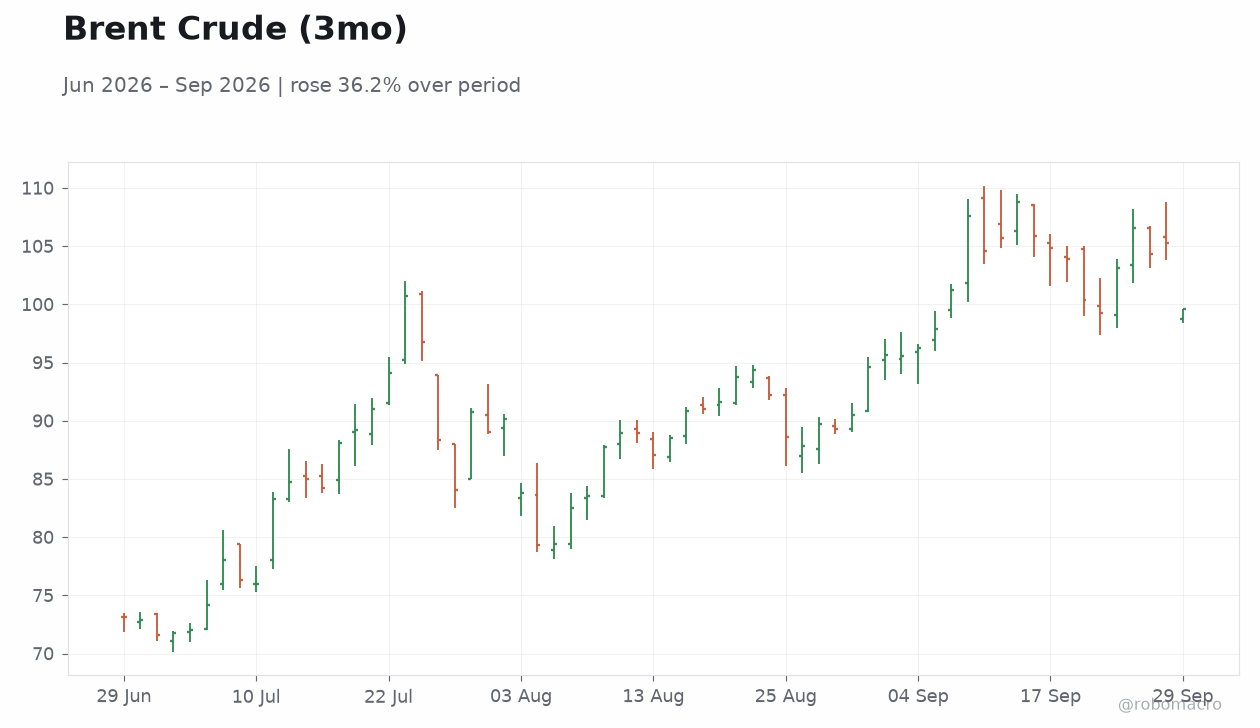
| Brent Crude | 99.64 | -5.36% |
| Naspers | 70,938.00 | -0.34% |
| Bitcoin | 83,095.51 | -1.61% |
| South Africa 5Y Govt Yield | 8.76% | +17 bp |
| South Africa 10Y Govt Yield | 8.96% | +13 bp |
Prior Economic Events
| Data | Prior | Cons | Actual |
|---|---|---|---|
| No events available | |||
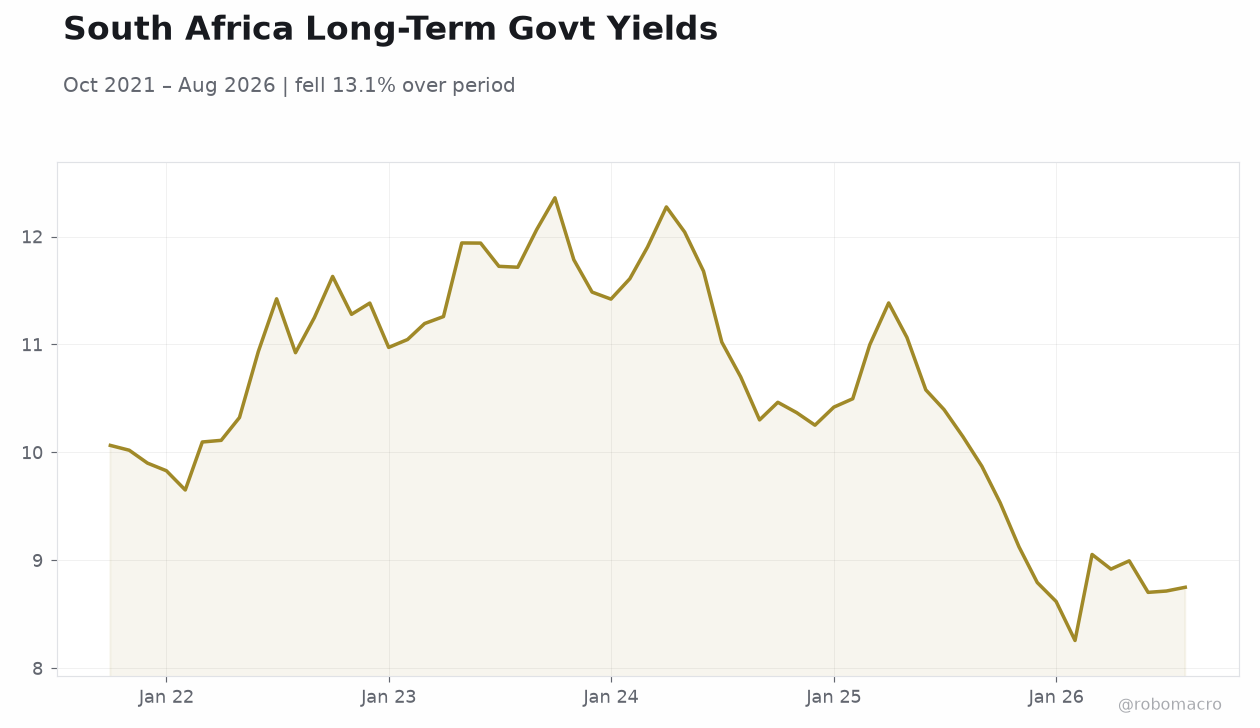 South Africa Long-Term Govt Yields | Type: macro_line | Yield (%): 8.75 (2026-08-01) | Range: 8.257–12.36 | Trend(6pt): 10.06,11.38,11.61,11.38,8.703,8.75
Today's Economic Events
| Data | Prior | Cons | Time |
|---|---|---|---|
| Wednesday (2026-09-30) | |||
| Trade Balance | 20,140m | - | 04:00 |
- JSE Top 40 falls 1.76% to 101,333.70 while USD/ZAR climbs 0.66% to 16.45
- South Africa 5Y and 10Y yields rise 17 bp and 13 bp to 8.76% and 8.96%
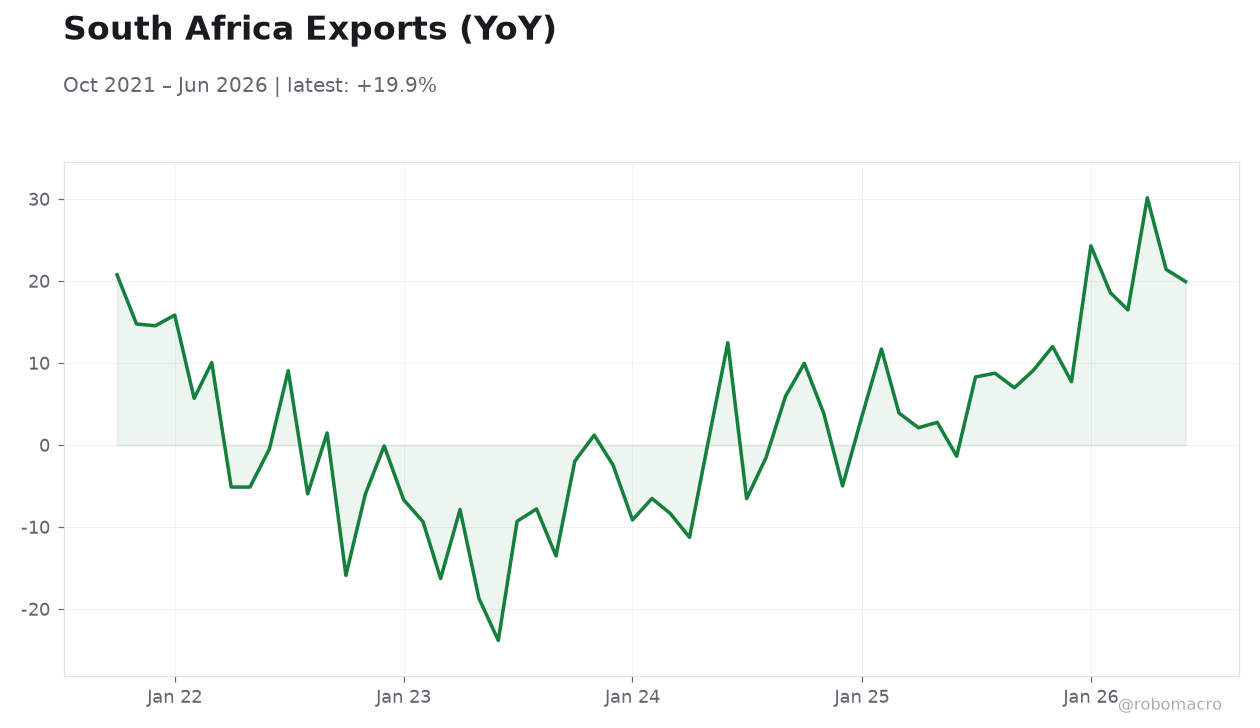
- Trade Balance release due 30 September with prior print at R20.14 billion
Yesterday's Recap
No South African economic data were released on 28 September. The JSE Top 40 declined 1.76 percent to 101,333.70 as investors reduced exposure to local equities. USD/ZAR advanced 0.66 percent to 16.45, pushing the rand to levels last seen near a two-month low.
EUR/ZAR gained 0.52 percent to 18.69. The 5-year government yield increased 17 basis points to 8.76 percent and the 10-year yield rose 13 basis points to 8.96 percent. Platinum fell 0.39 percent to 1,714.50 and gold slipped 0.12 percent to 4,163.50.
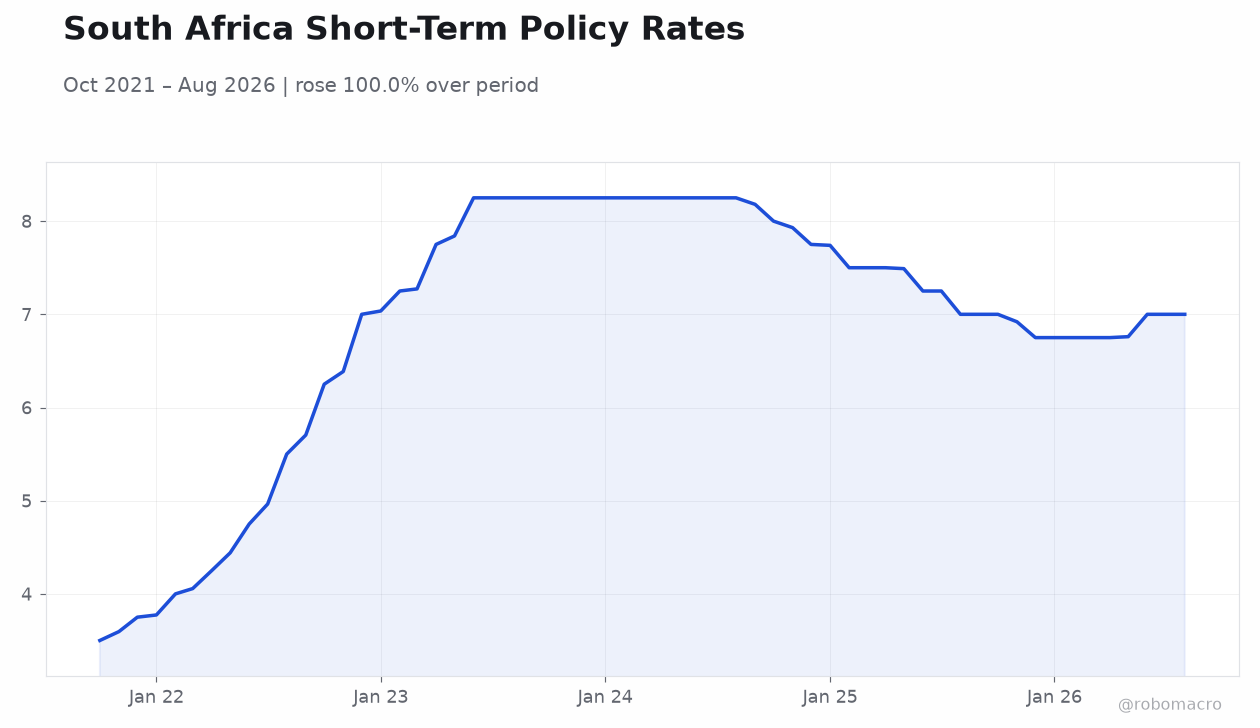
Headlines noted Reserve Bank governor Lesetja Kganyago delivering positive remarks on interest-rate prospects while the rand resumed its downtrend following the most recent SARB tightening move. Brent crude dropped sharply, adding pressure on terms of trade.
The Day Ahead
South Africa’s Trade Balance for August prints at 04:00 ET on 30 September. The prior reading stood at R20.14 billion and no consensus estimate is available. A material deviation could shift near-term rand and front-end yield pricing.
No other domestic indicators or SARB speeches are scheduled. Markets will also monitor global commodity flows given South Africa’s exposure to platinum-group metals and gold. Lower oil prices may ease imported inflation pressures but could also signal weaker external demand for local exports.
Other Economic Notes
Reports highlighted a triple blow to household finances from higher living costs and stagnant wages. Retailer Makro faces regulatory scrutiny while R21 billion in public funds remains unaccounted for. The rand traded range-bound against the dollar, euro and pound despite the daily weakening.
Broader social incidents, including mass shootings, continue to weigh on sentiment but carry limited direct market impact. Mining output and load-shedding risks remain key structural concerns for the outlook. CPI inflation printed 4.26 percent year-on-year in July, inside the target band.