South Africa Macro Daily(Beta Mode)
Rand Holds at 16.64 as Sasol Tops EM Peers
Market Snapshot
| Asset | Level | Change |
|---|---|---|
| JSE Top 40 | 100,681.10 | -0.10% |
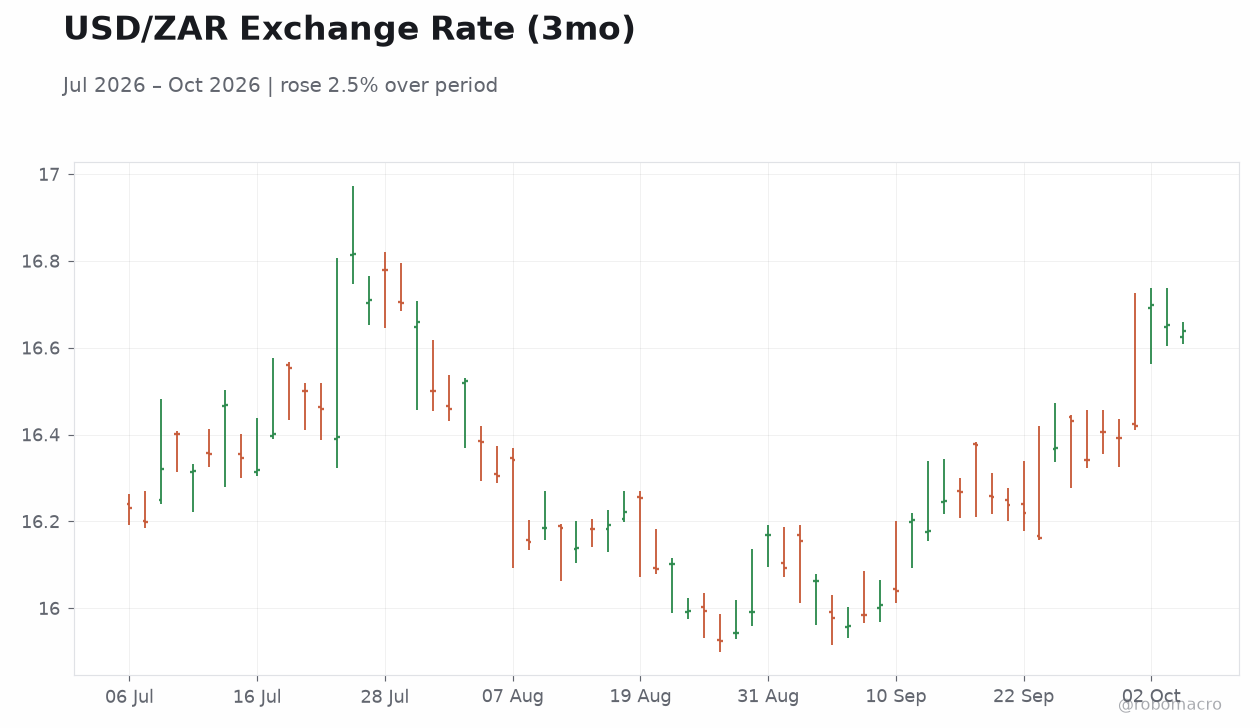
| USD/ZAR | 16.64 | -0.08% |
| EUR/ZAR | 18.65 | -0.49% |
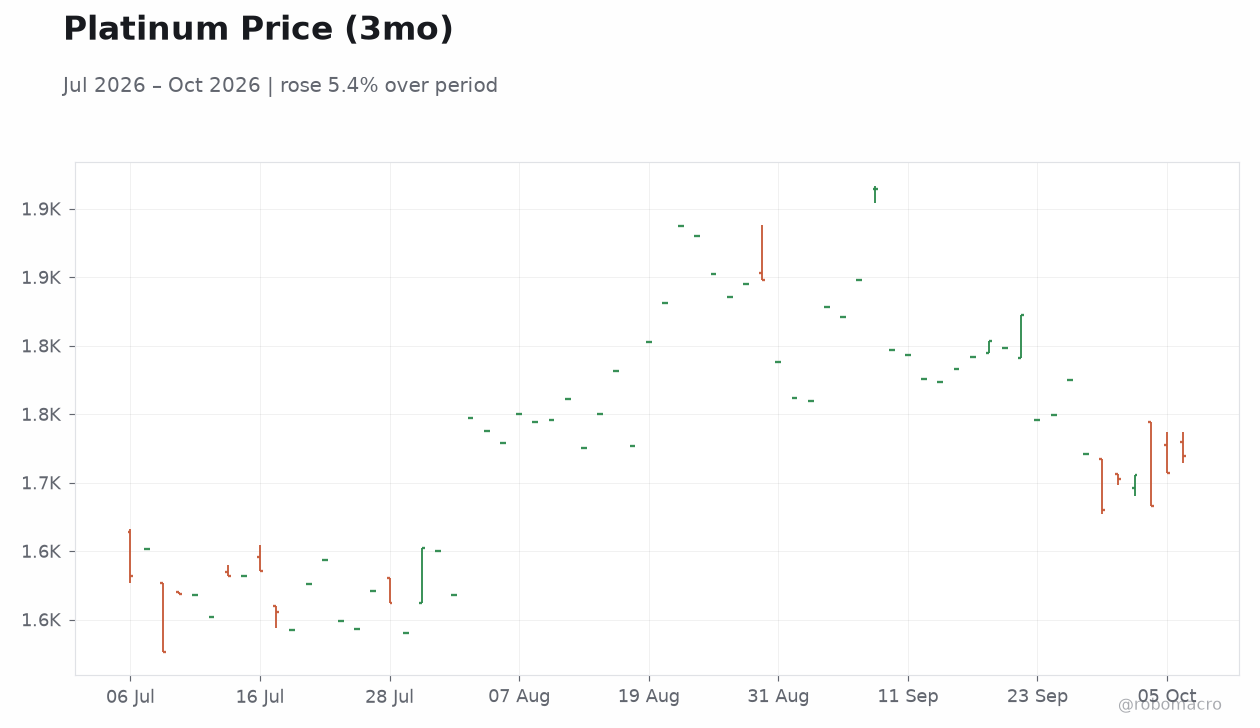
| Platinum | 1,719.70 | +0.75% |
| Gold | 4,156.20 | -0.01% |
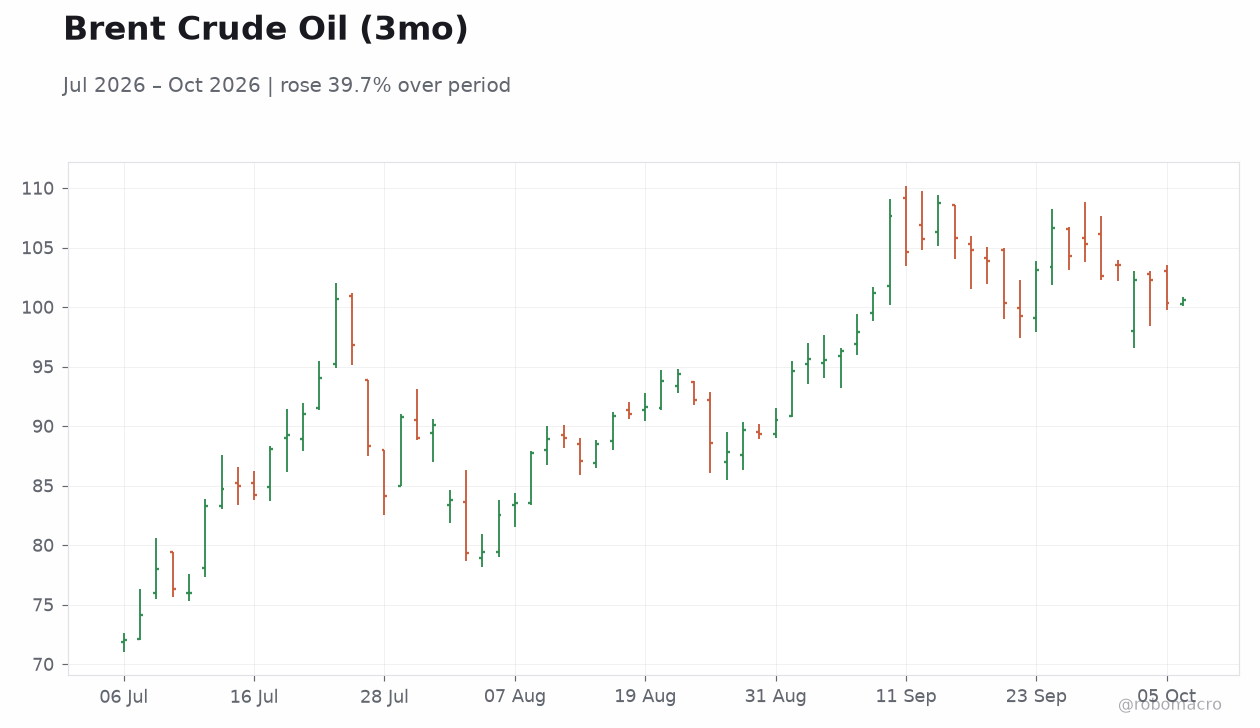
| Brent Crude | 100.63 | +0.31% |
| Naspers | 69,551.00 | -0.68% |
| Bitcoin | 85,585.71 | -1.03% |
| South Africa 5Y Govt Yield | - | - |
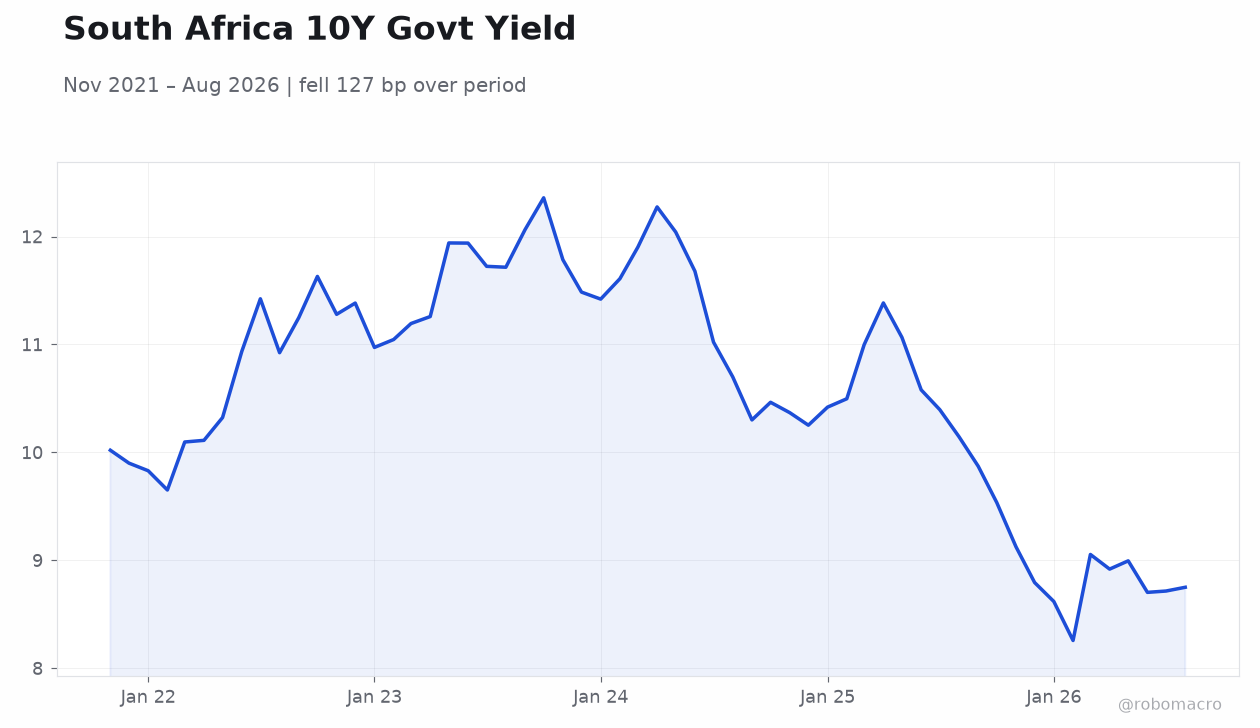
| South Africa 10Y Govt Yield | - | - |
Prior Economic Events
| Data | Prior | Cons | Actual |
|---|---|---|---|
| No events available | |||
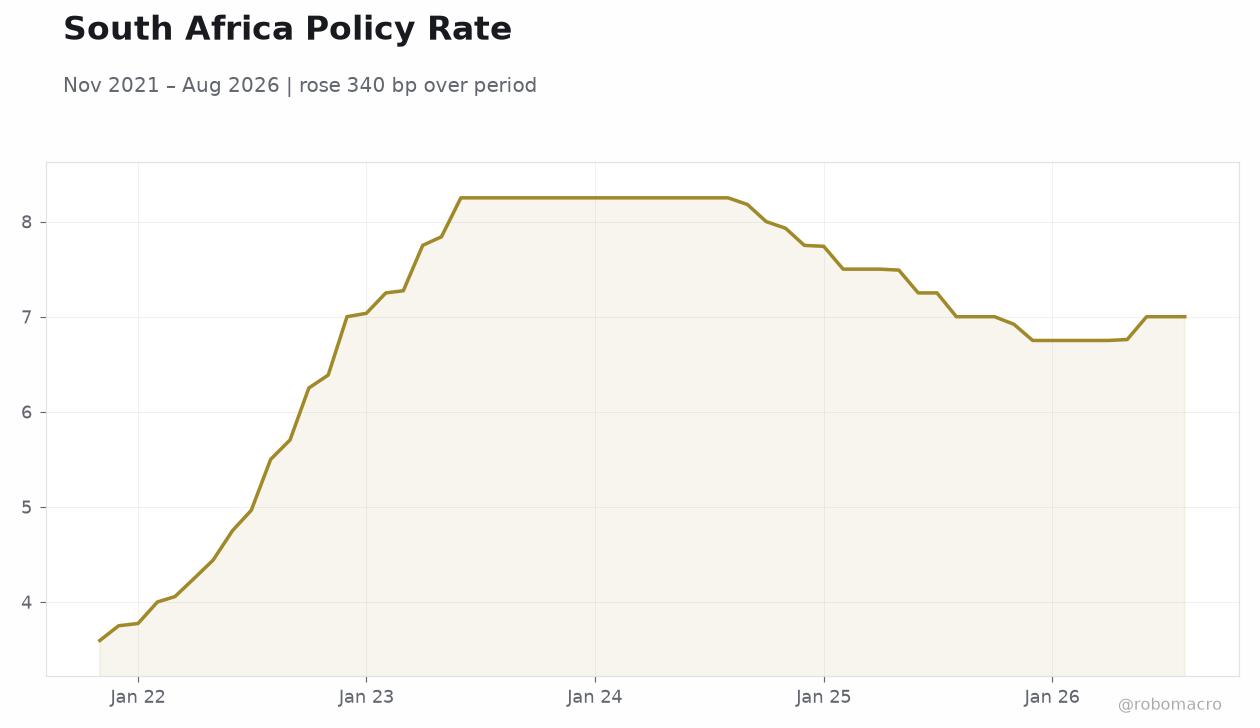 South Africa Policy Rate | Type: macro_line | Short-term rate %: 7 (2026-08-01) | Range: 3.595–8.25 | Trend(5pt): 3.595,7.036,8.25,7.49,7
Today's Economic Events
| Data | Prior | Cons | Time |
|---|---|---|---|
| No events available | |||
- JSE Top 40 slipped 0.10% to 100,681.10 while USD/ZAR held at 16.64 amid limited data flow.
- Platinum rose 0.75% to 1,719.70 as Brent crude gained 0.31% to 100.63, supporting Sasol outperformance.
- Markets await PMI and October fuel adjustment with SARB repo rate steady at 7.25% and CPI at 4.26% YoY.
Yesterday's Recap
South African markets recorded modest moves on 5 October with no scheduled data releases. The JSE Top 40 closed 0.10% lower at 100,681.10 while Naspers fell 0.68% to 69,551.00. USD/ZAR eased 0.08% to 16.64 and EUR/ZAR declined 0.49% to 18.65, reclaiming ground below 16.50 yet meeting resistance near 17.00.
Platinum advanced 0.75% to 1,719.70 on firmer industrial demand while gold stayed essentially flat at 4,156.20. Brent crude added 0.31% to 100.63, lifting Sasol as the top emerging-market performer outside Asia on its oil-from-coal exposure. Bitcoin dropped 1.03% to 85,585.71.
Broader commentary highlighted the rand’s limited recovery against a backdrop of stable Fed and SARB rate expectations.
The Day Ahead
Traders will monitor October PMI releases and the monthly fuel price adjustment for fresh inflation signals. Egypt and South Africa continue talks on deeper automotive, metals and agro-processing integration that could support longer-term export growth. Cricket South Africa expects a R500 million revenue boost from co-hosting the 2027 World Cup with Namibia and Zimbabwe.
Regional equity divergence remains in focus after Tanzania, Zimbabwe and Nigeria posted the strongest 2026 returns. No SARB speeches or MPC events are scheduled, leaving rate expectations anchored around the current 7.25% repo level.
Other Economic Notes
South Africa’s mining sector benefited from the oil-price rally, with Sasol outperforming peers on sustained Brent strength above 100. Industrial integration talks with Egypt target joint investments in pharmaceuticals and logistics that could diversify export markets. Load-shedding risks persist but recent coal and diesel procurement improvements have reduced outage frequency.
African equity markets show wide performance gaps, with Nigeria climbing four places in Bloomberg’s investment-risk ranking on policy reforms. These developments underscore South Africa’s exposure to commodity cycles and regional trade linkages.