South Africa Macro Daily(Beta Mode)
Rand Firms as JSE Rallies, Platinum Shines
Market Snapshot
| Asset | Level | Change |
|---|---|---|
| JSE Top 40 | 102,392.50 | +1.68% |
| USD/ZAR | 16.58 | +0.59% |
| EUR/ZAR | 18.47 | -0.50% |
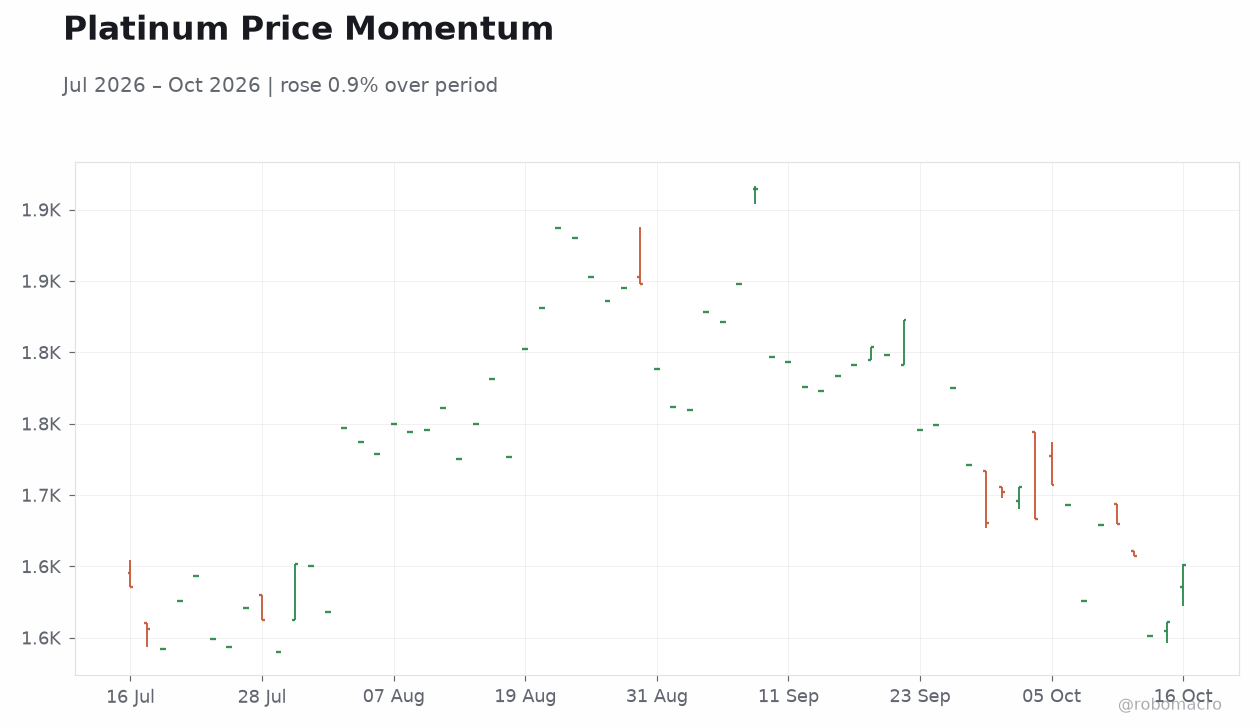
| Platinum | 1,650.80 | +2.49% |
| Gold | 4,202.90 | +0.79% |
| Brent Crude | 105.22 | -0.66% |
| Naspers | 71,883.00 | +1.43% |
| Bitcoin | 81,860.15 | +0.36% |
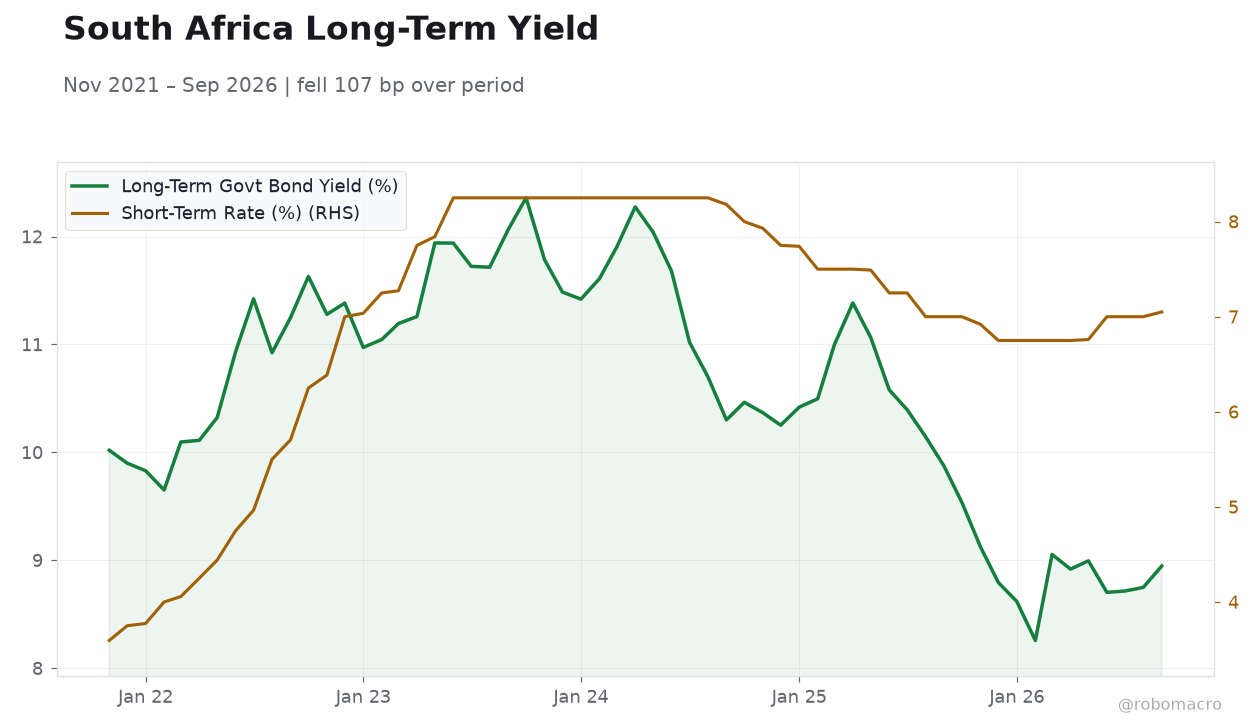
| South Africa 5Y Govt Yield | - | - |
| South Africa 10Y Govt Yield | - | - |
Prior Economic Events
| Data | Prior | Cons | Actual |
|---|---|---|---|
| No events available | |||
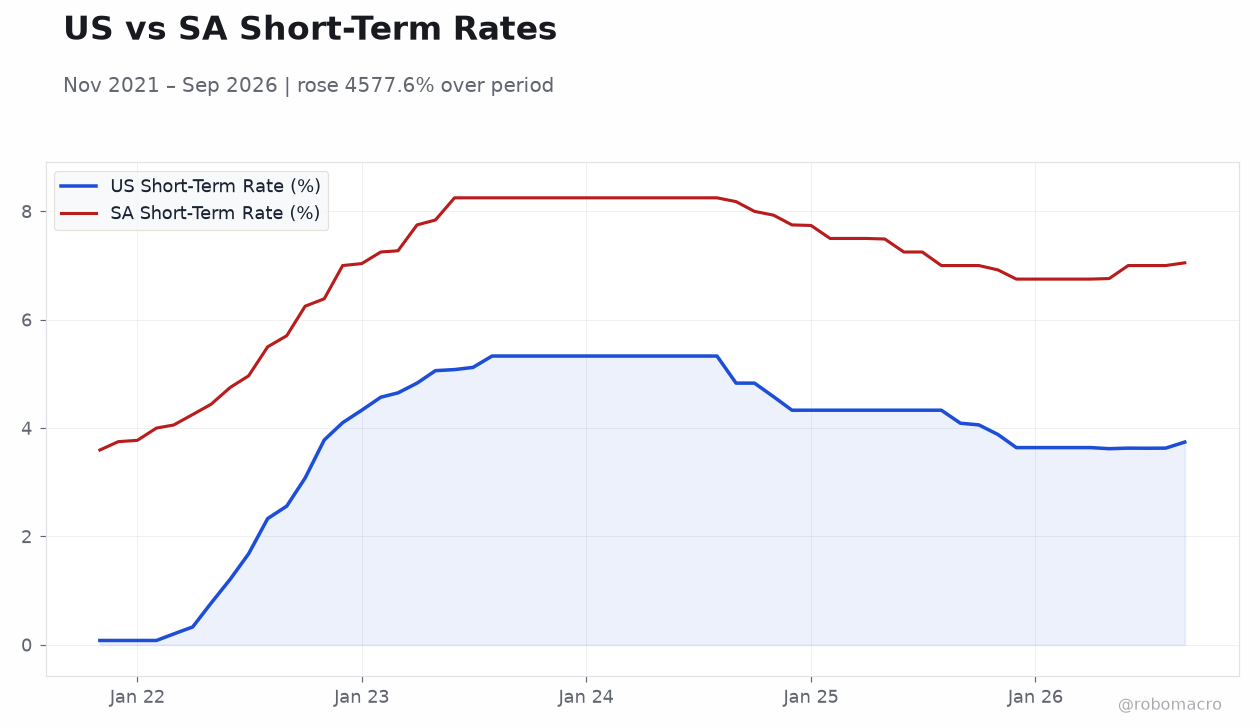
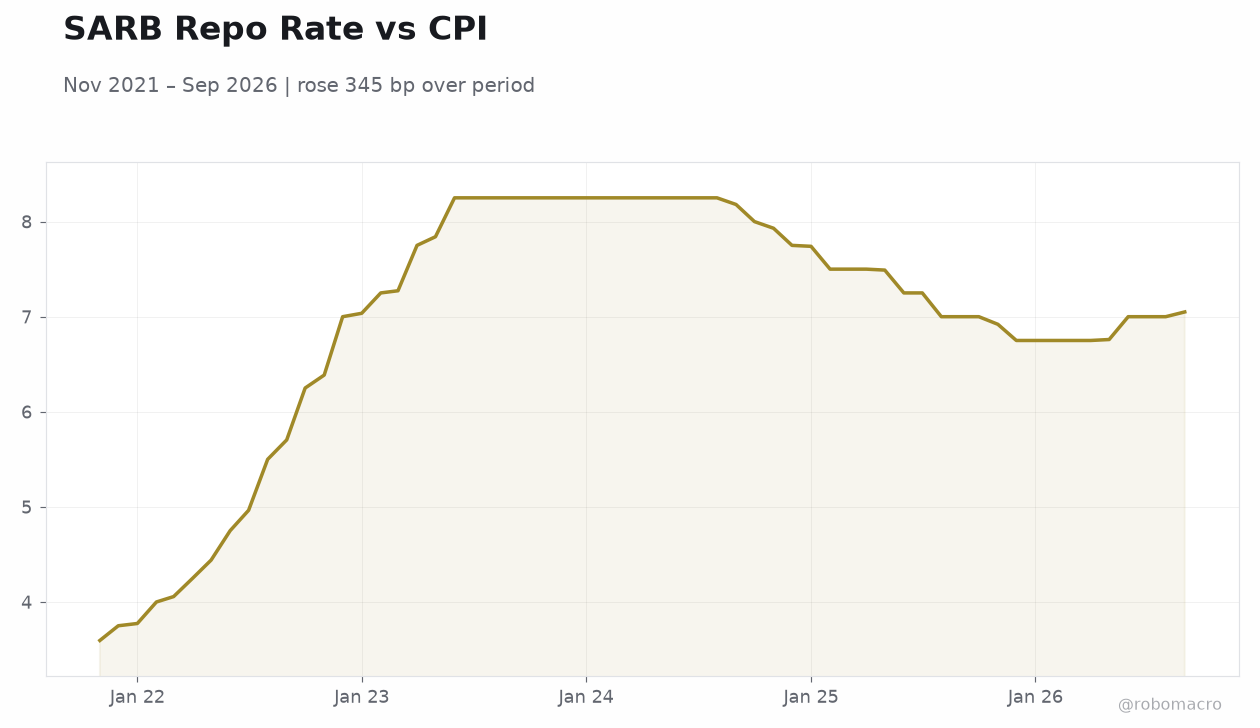 SARB Repo Rate vs CPI | Type: macro_line | Short-Term Interest Rate (%): 7.05 (2026-09-01) | Range: 3.595–8.25 | Trend(6pt): 3.595,7.036,8.25,7.49,7,7.05
Today's Economic Events
| Data | Prior | Cons | Time |
|---|---|---|---|
| No events available | |||
- JSE Top 40 gained 1.68% to 102,392.50, led by Naspers (+1.43%) and a 2.49% surge in platinum to $1,650.80/oz.
- USD/ZAR strengthened 0.59% to 16.58, while EUR/ZAR eased 0.50% to 18.47, reflecting mixed currency dynamics.
- Brent crude slipped 0.66% to $105.22; SARB repo holds at 7.25% with CPI at 4.36%.
Yesterday's Recap
South African equities delivered a strong session with the JSE Top 40 advancing 1.68% to close at 102,392.50, buoyed by broad gains in heavyweight counters. Naspers climbed 1.43% to 71,883.00 cents, providing index-level support. The precious metals complex was a standout, with platinum surging 2.49% to $1,650.80/oz and gold adding 0.79% to $4,202.90/oz, lifting sentiment across the mining sector.
On the currency front, the rand firmed marginally against the dollar, with USD/ZAR quoted at 16.58 after a 0.59% move, while cross-rate dynamics saw EUR/ZAR weaken 0.50% to 18.47. Energy markets offered a tailwind, as Brent crude retreated 0.66% to $105.22/barrel, easing pressure on the fuel price trajectory. Bitcoin's modest 0.36% gain to $81,860 reflected risk appetite holding steady across emerging markets.
The Day Ahead
The domestic calendar is quiet on the data front today, leaving market attention on secondary flows and global cues. With no scheduled statistical releases, rand traders will likely take direction from dollar dynamics and commodity price action, particularly precious metals where the rally has been pronounced. Mining equities may extend momentum if platinum's ascent continues, though profit-taking risks loom after the sharp move.
Investors will also monitor any commentary from National Treasury or the Reserve Bank ahead of the MPC's next sitting, with the repo rate at 7.25% and inflation at 4.36% — within the 3-6% target band but above the midpoint. Load-shedding updates from Eskom remain a persistent swing factor for sentiment, given their bearing on mining output and industrial activity. Regional developments, including Uganda's shilling strength after its rate hike, may offer comparative EM context for portfolio flows into African fixed income.
Other Economic Notes
Structural financing gaps remain a pressing theme across the continent, with a new report from British International Investment and Swedfund quantifying a $209bn funding shortfall for Black-owned businesses across five African markets. This underscores the challenge of broadening access to capital where formal credit penetration remains shallow. ↓ p.2