South Africa Macro Daily(Beta Mode)
Rand Firms Ahead of Budget, AGOA Risk Weighs
Market Snapshot
| Asset | Level | Change |
|---|---|---|
| JSE Top 40 | 101,266.10 | -1.90% |
| USD/ZAR | 16.40 | -0.34% |
| EUR/ZAR | 18.42 | -0.27% |
| Platinum | 1,638.80 | +0.95% |
| Gold | 4,160.10 | -0.50% |
| Brent Crude | 109.55 | -0.28% |
| Naspers | 72,065.00 | +0.25% |
| Bitcoin | 82,043.26 | +0.03% |
| South Africa 5Y Govt Yield | - | - |
| South Africa 10Y Govt Yield | - | - |
Prior Economic Events
| Data | Prior | Cons | Actual |
|---|---|---|---|
| No events available | |||
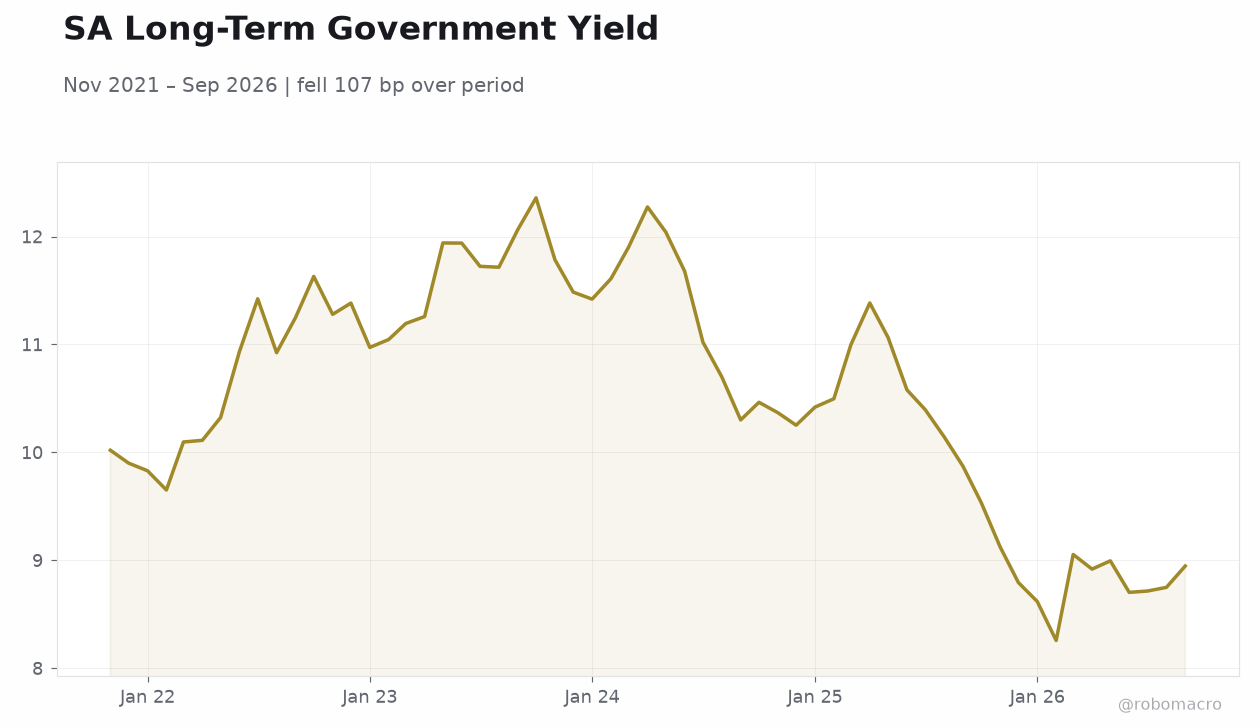 SA Long-Term Government Yield | Type: macro_line | 10Y Yield %: 8.947 (2026-09-01) | Range: 8.257–12.36 | Trend(6pt): 10.02,10.97,11.9,11.07,8.715,8.947
Today's Economic Events
| Data | Prior | Cons | Time |
|---|---|---|---|
| No events available | |||
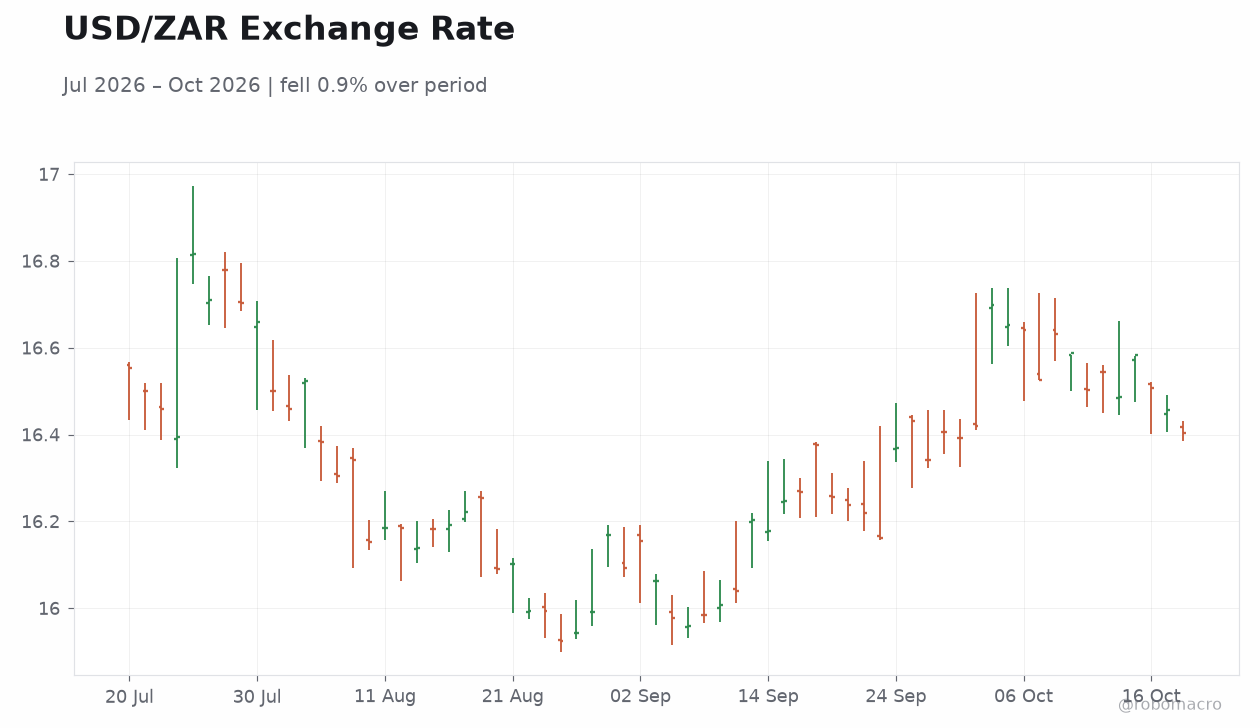
- USD/ZAR eased 0.34% to 16.40 as traders positioned for Godongwana's mid-term budget and awaited inflation data, with press reports pointing to falling yields.
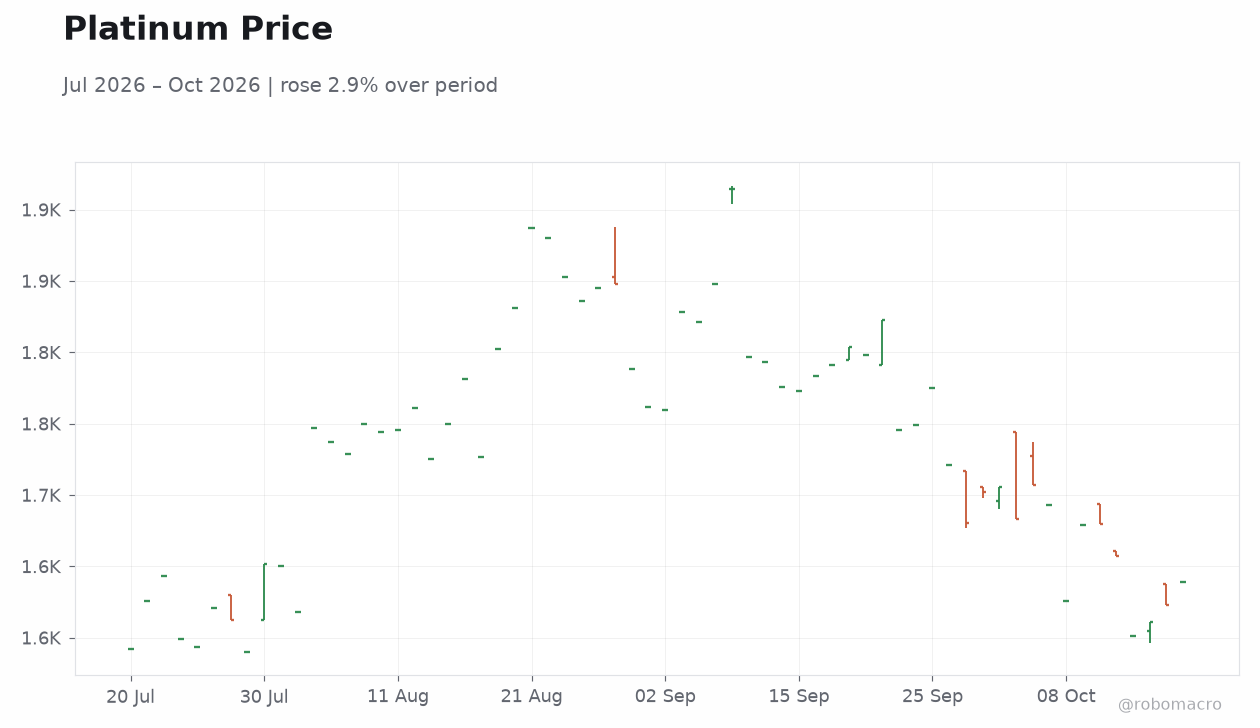
- JSE Top 40 fell 1.90% to 101,266.10 despite steadier business sentiment and elevated precious-metal prices; platinum gained 0.95% to $1,638.80 while gold slipped 0.50% to $4,160.10.
- Ramaphosa urged South Africa to prepare for possible removal from AGOA, injecting trade-policy risk into the outlook alongside Investec's call that investment-grade status is achievable within two years.
Yesterday's Recap
South African markets on October 19 were defined by positioning rather than data, with the calendar empty and no official prints to digest. The rand strengthened modestly, with USD/ZAR down 0.34% to 16.40 and EUR/ZAR 0.27% lower at 18.42, as traders awaited the budget speech and inflation data. Press reports indicated government yields fell, consistent with the rand's downtrend, though the 5Y and 10Y yield feeds were not populated.
Equities moved the other way: the JSE Top 40 dropped 1.90% to 101,266.10, a sharp reversal against supportive commodity prices. Platinum rose 0.95% to $1,638.80, while gold eased 0.50% to $4,160.10 and Brent crude slipped 0.28% to $109.55. Naspers edged up 0.25% to 72,065.00, and Bitcoin was essentially flat at 82,043.26.
Sentiment data underscored the tension: business mood steadied in September on high precious-metal prices and a pickup in tourism and car sales, though inflation pressures persisted.
The Day Ahead
No South African data releases are scheduled for October 20, leaving the market to trade on budget anticipation and global risk appetite. The rand's direction will hinge on positioning ahead of Godongwana's mid-term budget, with FXLeaders noting USD/ZAR has resumed its downtrend as yields fall. Traders will also watch for any pre-positioning around inflation data due later in the week, which will shape expectations for the SARB's next move.
With the local calendar bare, offshore drivers — particularly US rates and commodity prices — will dominate intraday price action. Liquidity may thin as participants hold fire until the fiscal event clarifies the revenue and spending trajectory.
Other Economic Notes
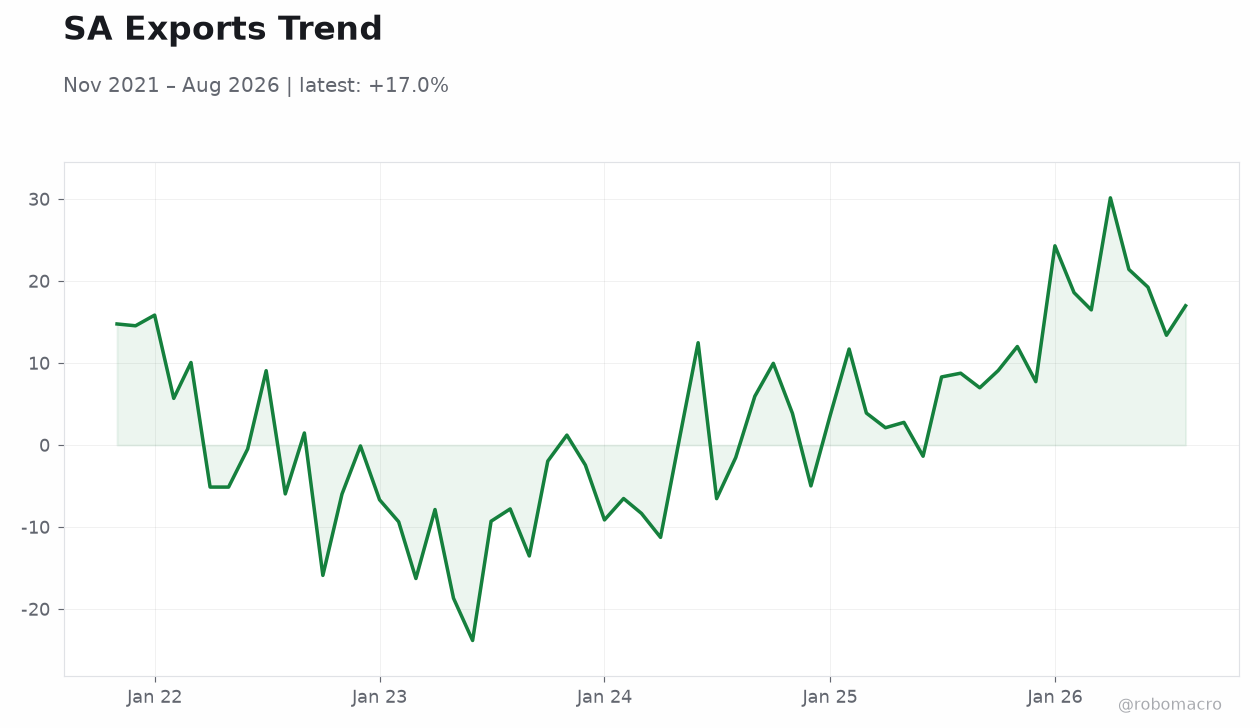
The AGOA question is now a first-order risk for South African exporters, with Ramaphosa explicitly telling the country to prepare for losing duty-free access to the US market. ↓ p.2