South Africa Macro Daily(Beta Mode)
SA CPI Rises to 4.55% as Rand Weakens
Market Snapshot
| Asset | Level | Change |
|---|---|---|
| JSE Top 40 | 100,543.40 | -1.18% |
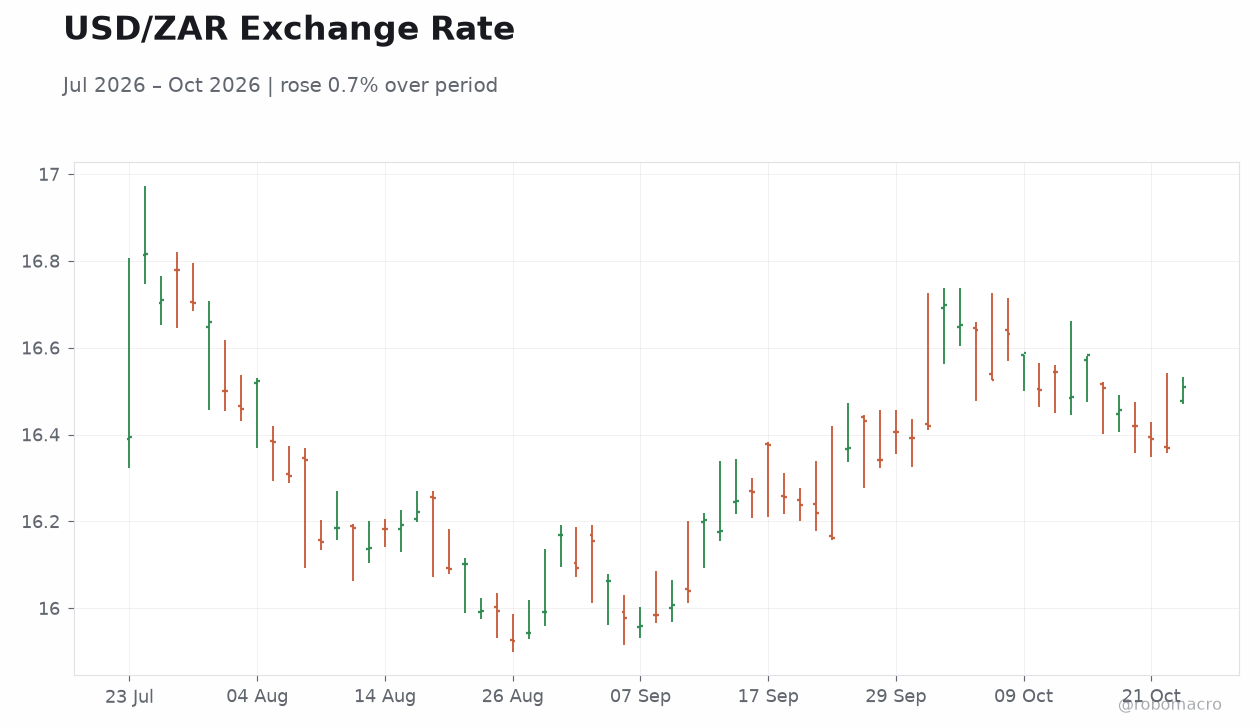
| USD/ZAR | 16.51 | +0.83% |
| EUR/ZAR | 18.39 | -0.03% |
| Platinum | 1,567.50 | -3.57% |
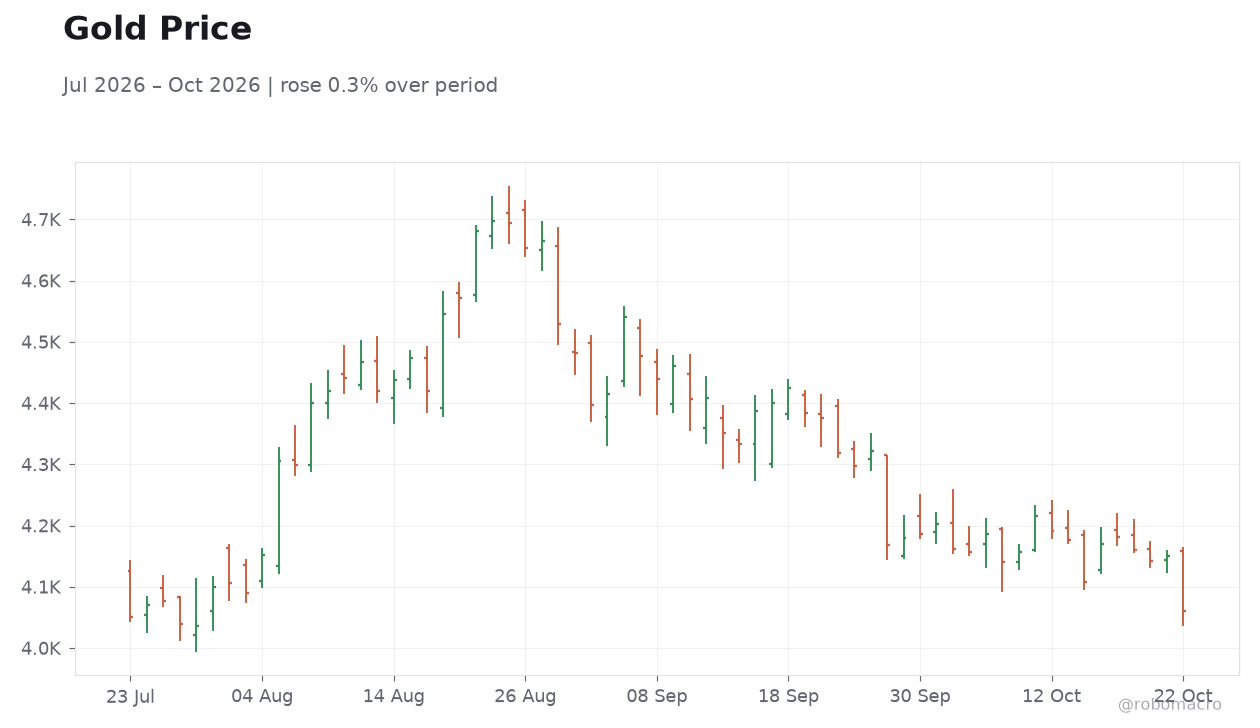
| Gold | 4,060.40 | -2.16% |
| Brent Crude | 113.17 | +4.00% |
| Naspers | 67,899.00 | -0.48% |
| Bitcoin | 81,739.17 | -2.71% |
| South Africa 5Y Govt Yield | 8.73% | +5 bp |
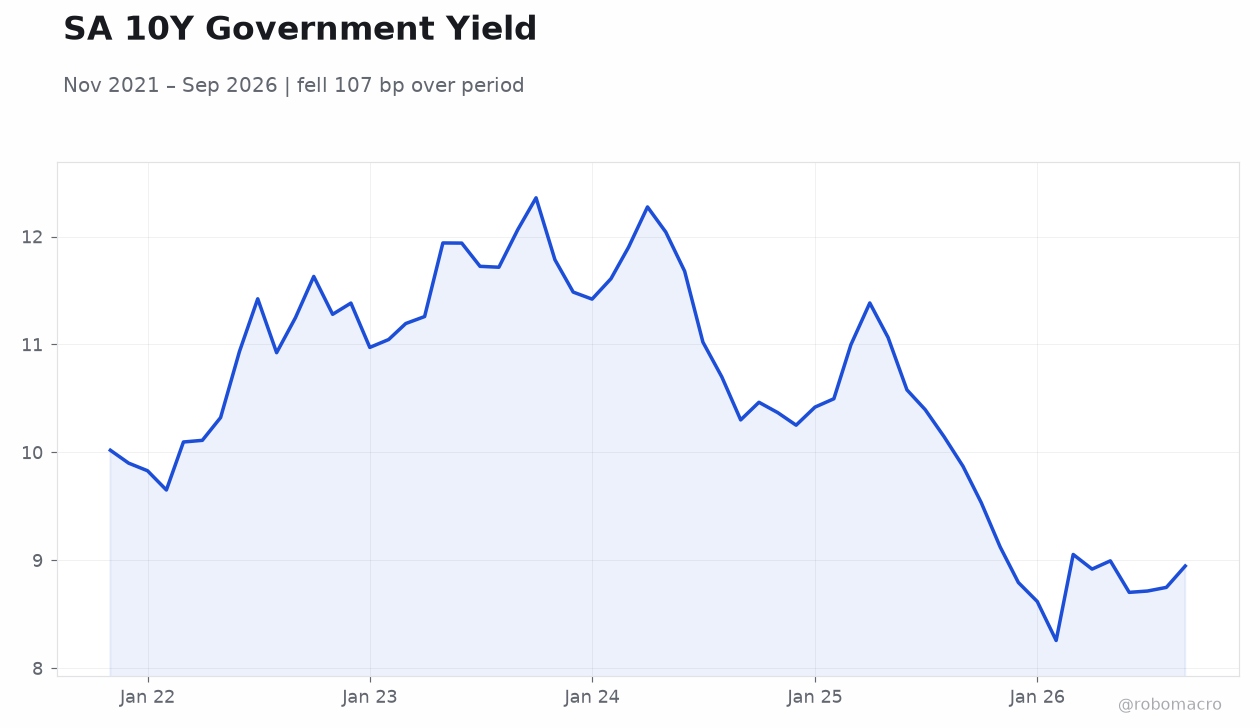
| South Africa 10Y Govt Yield | 8.91% | -1 bp |
Prior Economic Events
| Data | Prior | Cons | Actual |
|---|---|---|---|
| No events available | |||
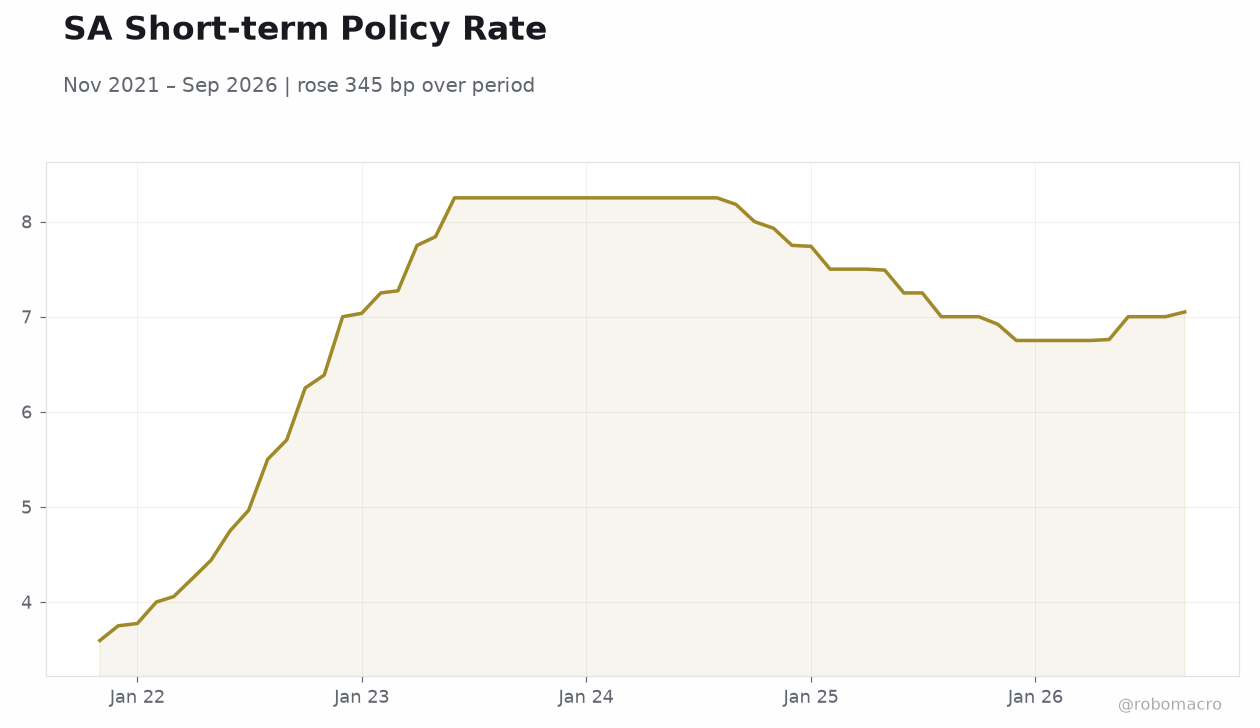 SA Short-term Policy Rate | Type: macro_line | Policy Rate %: 7.05 (2026-09-01) | Range: 3.595–8.25 | Trend(6pt): 3.595,7.036,8.25,7.49,7,7.05
Today's Economic Events
| Data | Prior | Cons | Time |
|---|---|---|---|
| No events available | |||
- CPI climbs to 4.55% in September, staying inside the 3-6% target band
- JSE Top 40 falls 1.18% while USD/ZAR jumps 0.83% to 16.51
- 5-year yield widens 5 bp to 8.73% as 10-year yield eases 1 bp to 8.91%
Yesterday's Recap
South African markets closed lower after the release of September CPI data showing a 4.55% year-on-year increase. The JSE Top 40 index declined 1.18% to 100,543.40, led by losses in mining shares. The rand weakened against the dollar, with USD/ZAR rising 0.83% to 16.51, while EUR/ZAR held nearly steady at 18.39.
Platinum prices dropped 3.57% to 1,567.50 and gold fell 2.16% to 4,060.40, weighing on resource stocks including Naspers, which slipped 0.48%. Brent crude rose 4.00% to 113.17, adding pressure to fuel costs. The 5-year government yield increased 5 bp to 8.73% while the 10-year yield declined 1 bp to 8.91%.
Broader sentiment reflected caution ahead of further fiscal updates.
The Day Ahead
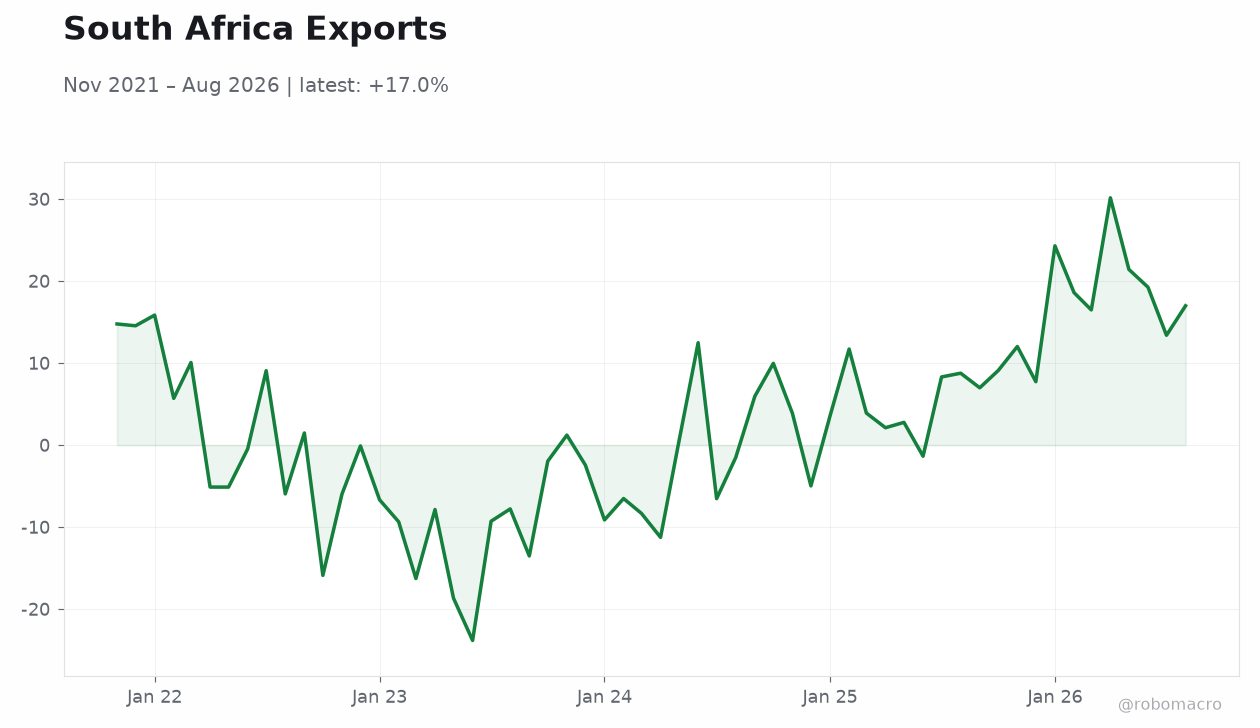
Attention turns to ongoing fuel-tax relief measures announced to offset record pump prices and support household spending. Trade data with China following the recent duty-free agreement may highlight export gains in mining and manufacturing. Market participants will monitor rand volatility linked to global commodity swings and any updates on water infrastructure projects affecting industrial output.
Fiscal commentary around missed mining revenue opportunities could influence bond-market positioning. Load-shedding risks remain a key variable for near-term growth forecasts. Investors await clearer signals on budget execution and revenue collection trends.
Other Economic Notes
Persistent anti-migrant incidents in Durban underscore social pressures that could complicate labor-market stability in key sectors. Water contamination events affecting hundreds of residents highlight infrastructure gaps that raise operating costs for businesses and municipalities. Recent duty-free trade expansion with China supports export diversification but exposes the economy to external demand shifts.
Mining policy shortfalls continue to limit potential fiscal windfalls, constraining room for targeted spending. These domestic constraints interact with global commodity cycles to shape the rand’s medium-term trajectory.
Global Macro News
Stronger Brent crude prices at 113.17 bolster South Africa’s terms of trade yet increase imported inflation risks through fuel and transport channels. ↓ p.2