South Africa Macro Daily(Beta Mode)
Rand Slips as Unemployment Ticks Higher
Market Snapshot
| Asset | Level | Change |
|---|---|---|
| JSE Top 40 | 105,558.40 | -1.11% |
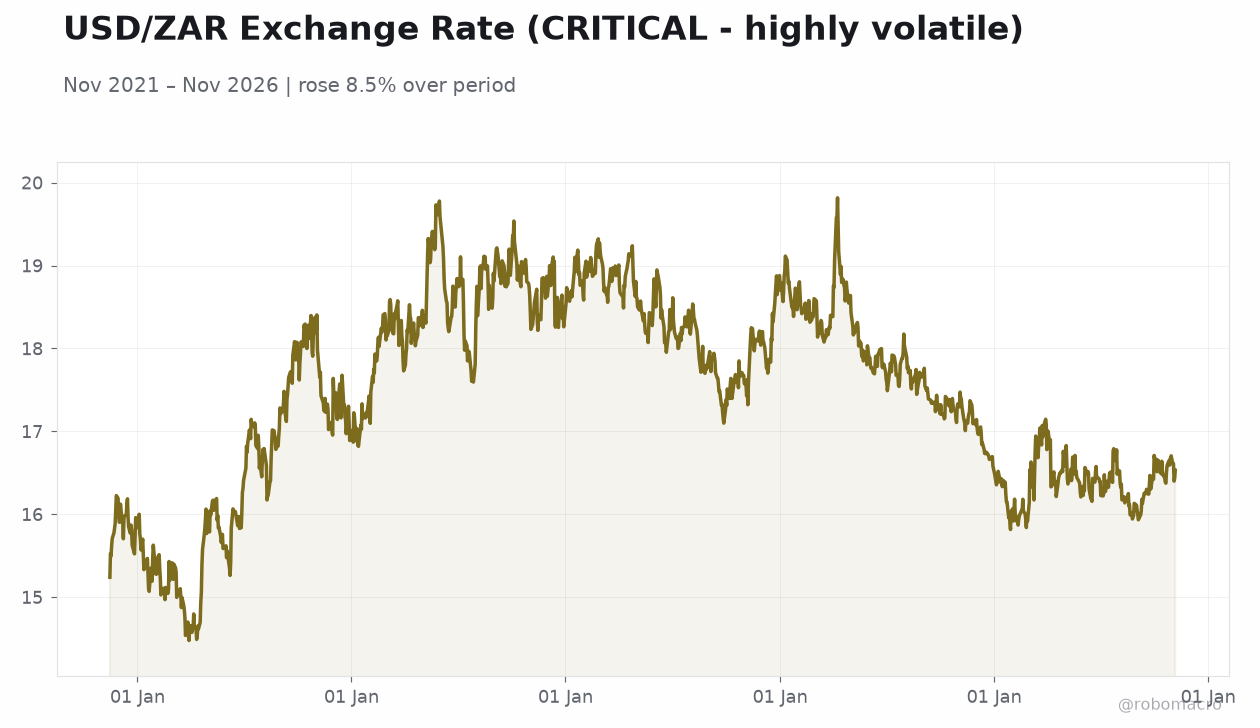
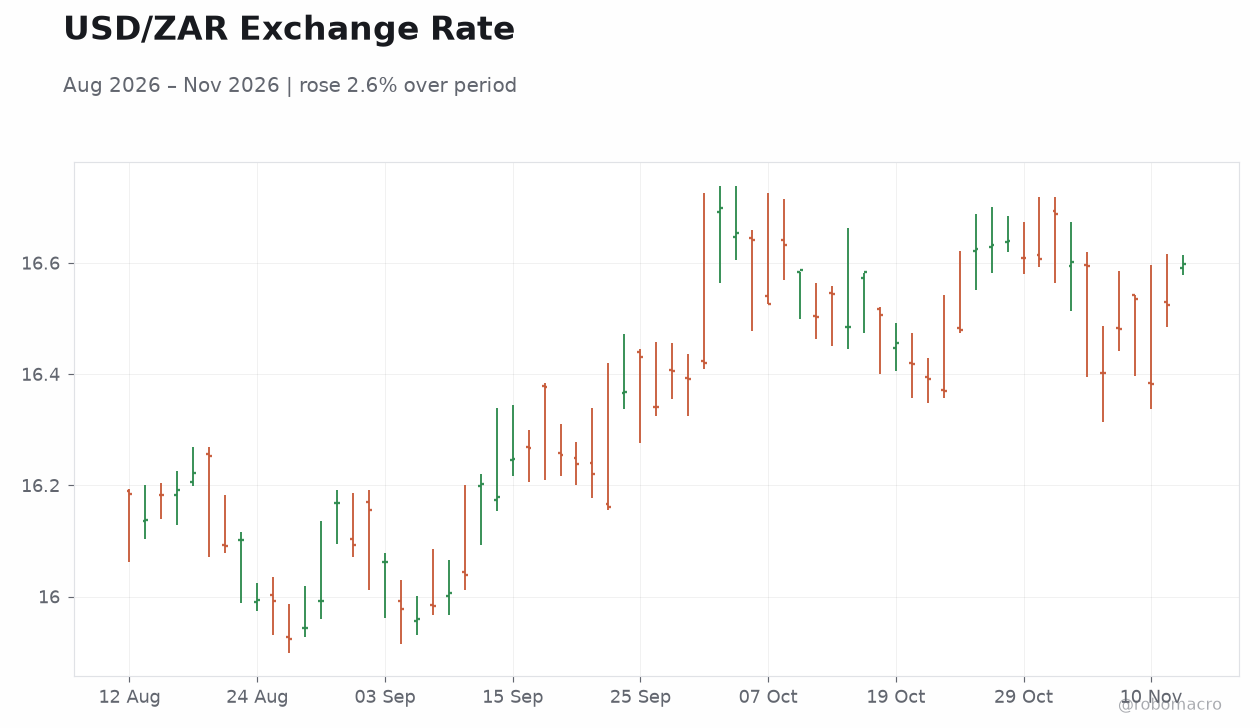
| USD/ZAR | 16.59 | +0.42% |
| EUR/ZAR | 18.38 | -0.41% |
| Platinum | 1,537.20 | -0.11% |
| Gold | 3,985.40 | -1.11% |
| Brent Crude | 91.58 | +0.10% |
| Naspers | 75,452.00 | -3.02% |
| Bitcoin | 73,698.80 | -0.03% |
| South Africa 5Y Govt Yield | 8.26% | -2 bp |
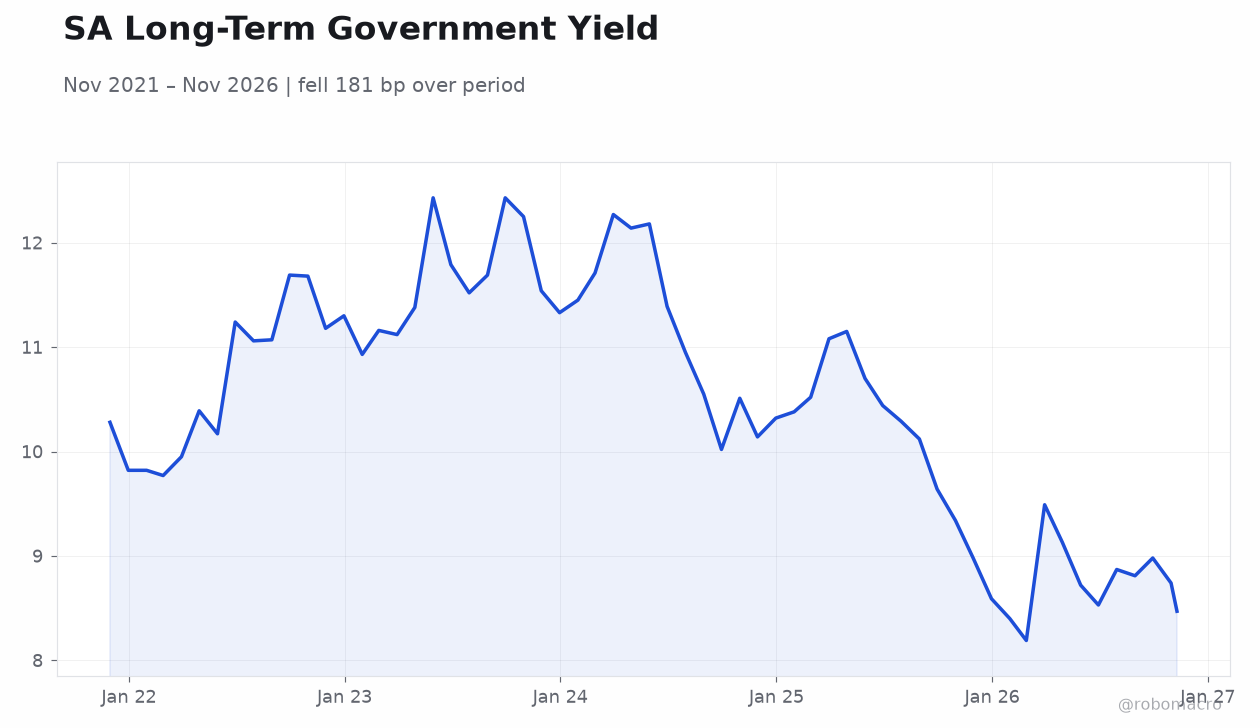
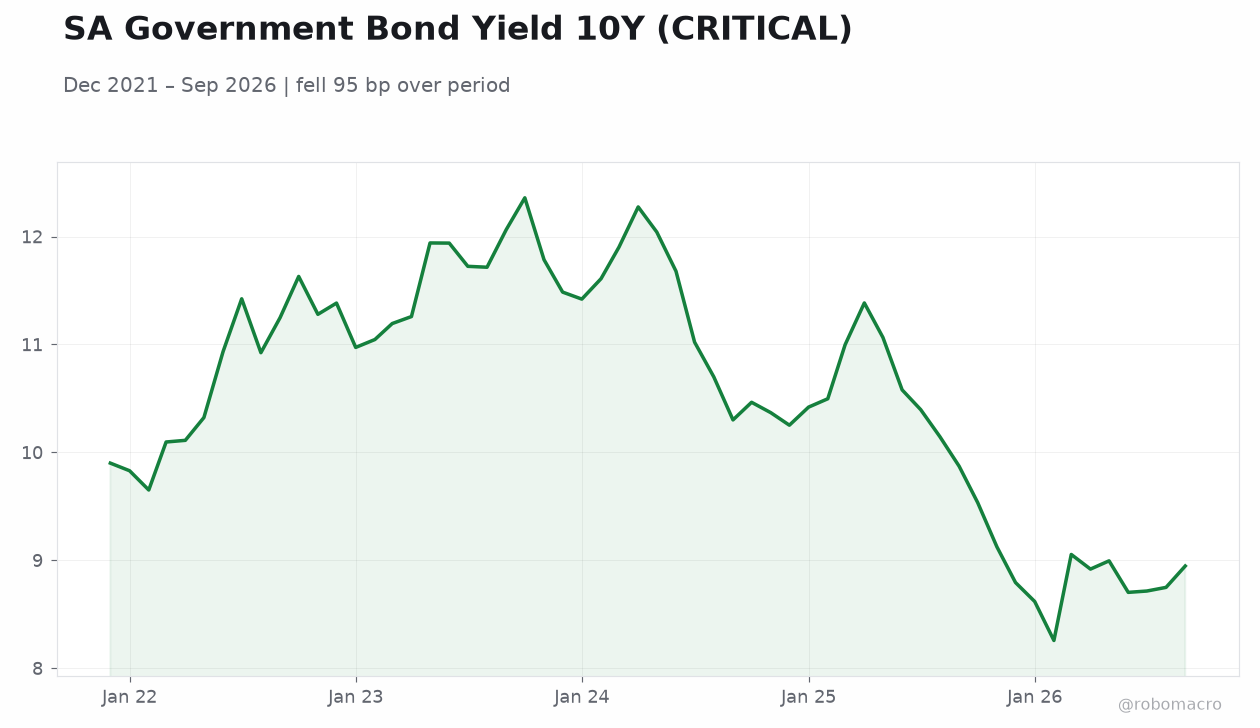
| South Africa 10Y Govt Yield | 8.47% | -2 bp |
Prior Economic Events
| Data | Prior | Cons | Actual |
|---|---|---|---|
| Headline Unemployment Rate | 33.60 | - | 33.70 |
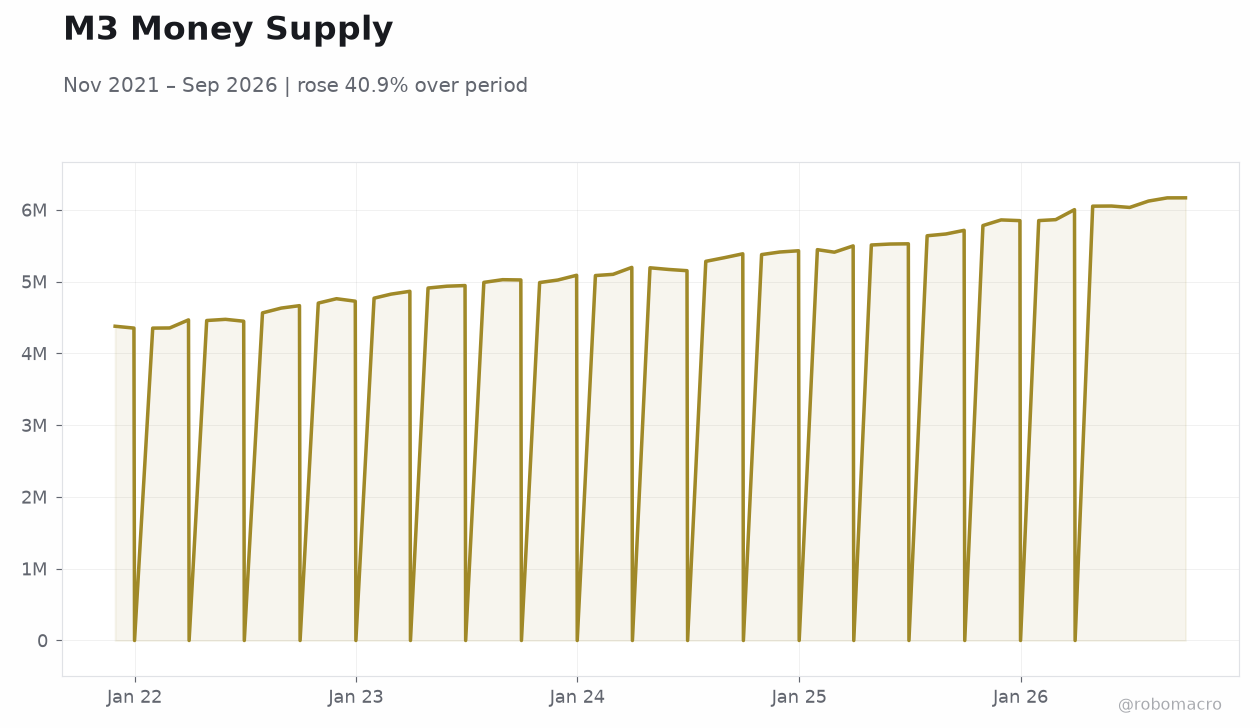 M3 Money Supply | Type: macro_line | M3 Money Supply: 6.168e+06 (2026-09-30) | Range: 0.633–6.168e+06 | Trend(5pt): 4.379e+06,4.77e+06,0.8163,5.527e+06,6.168e+06
Today's Economic Events
| Data | Prior | Cons | Time |
|---|---|---|---|
| No events available | |||
- Unemployment rate edged up to 33.7% from 33.6%, keeping labour-market slack central to the SARB's inflation outlook
- USD/ZAR rose 0.42% to 16.59 as the rand absorbed the weak jobs print and softer gold prices
- JSE Top 40 fell 1.11%, led by Naspers down 3.02%, while 5Y and 10Y government yields eased 2 bp each
Yesterday's Recap
South Africa's headline unemployment rate printed at 33.7% on November 10, marginally above the prior 33.6% reading, confirming that job creation continues to lag population growth despite modest employment gains noted in the release. The rand weakened in response, with USD/ZAR climbing 0.42% to 16.59, while EUR/ZAR slipped 0.41% to 18.38 as euro strength offset dollar dynamics. Domestic equities came under pressure: the JSE Top 40 dropped 1.11% to 105,558.40, with Naspers falling 3.02% to 75,452.00, reflecting weakness in its underlying tech exposure.
Precious metals offered little support, with gold down 1.11% to $3,985.40/oz and platinum easing 0.11% to $1,537.20/oz. Brent crude edged up 0.10% to $91.58/bbl. In fixed income, the 5-year yield eased 2 bp to 8.26% and the 10-year yield fell 2 bp to 8.47%, suggesting bond investors looked through the weak labour data toward the SARB's November 19 decision.
The Day Ahead
The domestic calendar is empty for November 12, leaving markets to trade on global risk sentiment and positioning ahead of next week's SARB MPC meeting. With no local data to digest, rand direction will hinge on dollar moves and commodity prices, particularly gold and platinum, which remain key export earners. Bond traders will likely continue to price the November 19 policy decision, where the committee must weigh sticky inflation near 4.55% against a 33.7% unemployment rate.
Equity flows may stay cautious given the Naspers-driven selloff, with global tech sentiment a swing factor for the JSE. Expect thin liquidity and range-bound trading in USD/ZAR absent a fresh catalyst.
Other Economic Notes
The unemployment print underscores the structural mismatch in South Africa's labour market, where jobless claims remain concentrated among youth and low-skilled workers even as headline employment expands modestly. With CPI at 4.55%, real policy rates remain modestly positive, but the SARB faces a difficult trade-off between anchoring inflation expectations and supporting an economy with one-third of its workforce unemployed. Fiscal pressures persist, with South Africa among the largest African borrowers from China, a reminder that external financing costs and bilateral debt dynamics feed into sovereign risk premia.
↓ p.2