UK Macro Daily(Beta Mode)
Gilts Rally as Sterling Firms
Market Snapshot
| Asset | Level | Change |
|---|---|---|
| FTSE 100 | 10,881.90 | +0.38% |
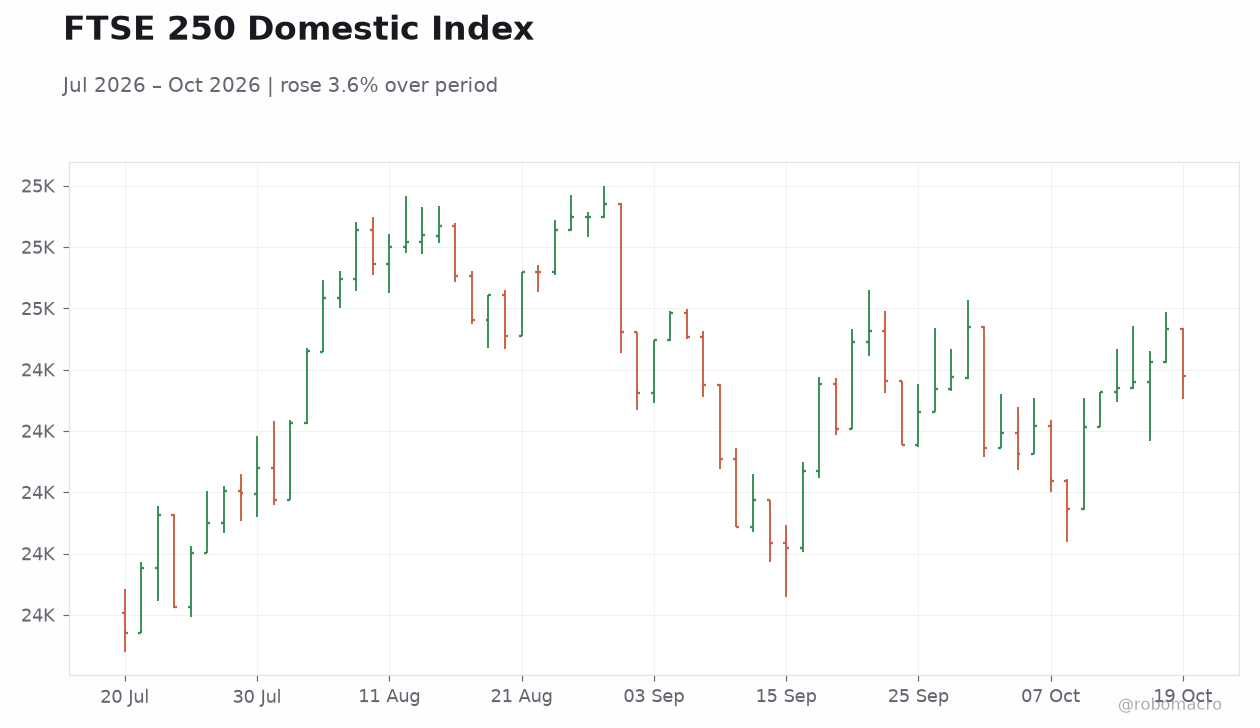
| FTSE 250 | 24,378.50 | -0.63% |
| GBP/USD | 1.33 | +0.06% |
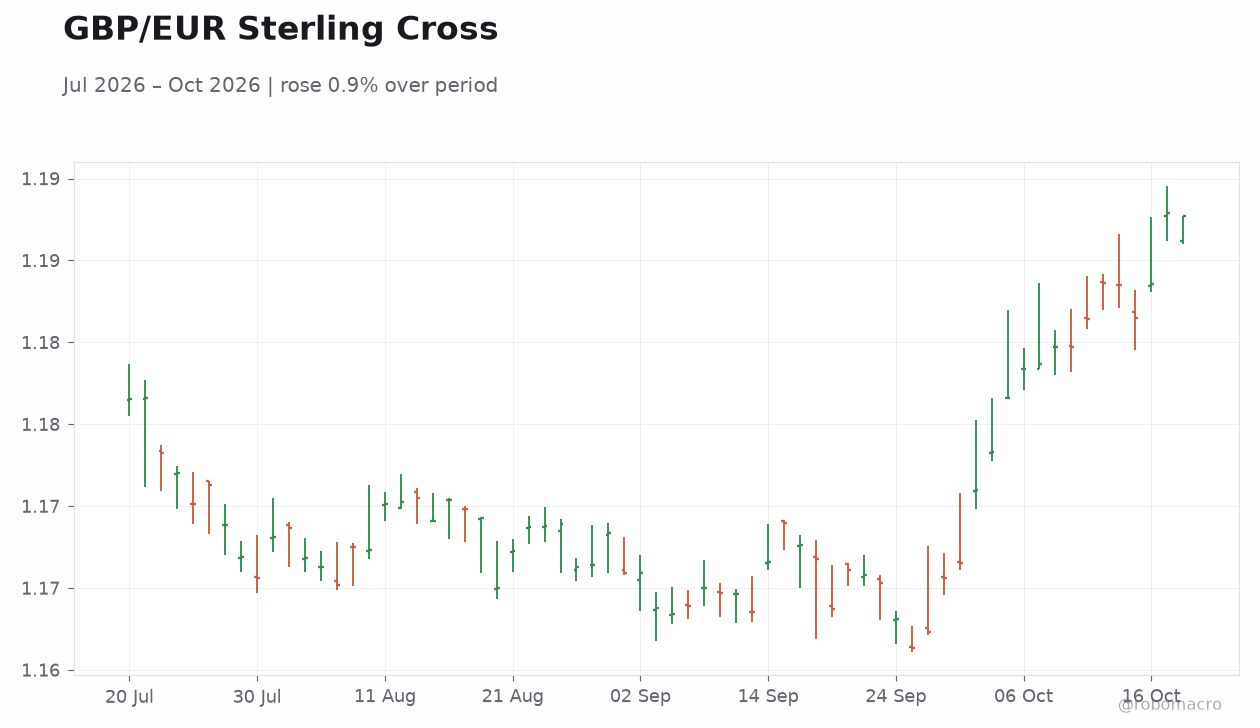
| GBP/EUR | 1.19 | -0.10% |
| GBP/JPY | 210.96 | +0.25% |
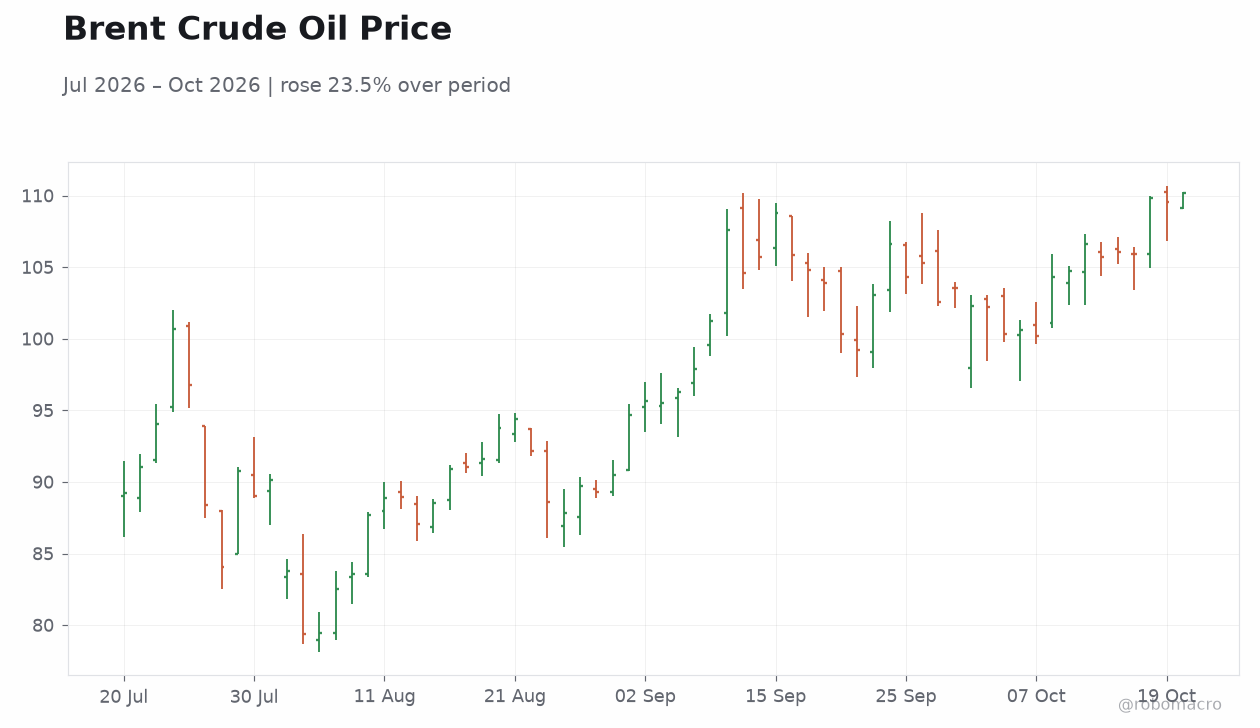
| Brent Crude | 110.22 | +0.61% |
| Gold | 4,143.80 | -0.39% |
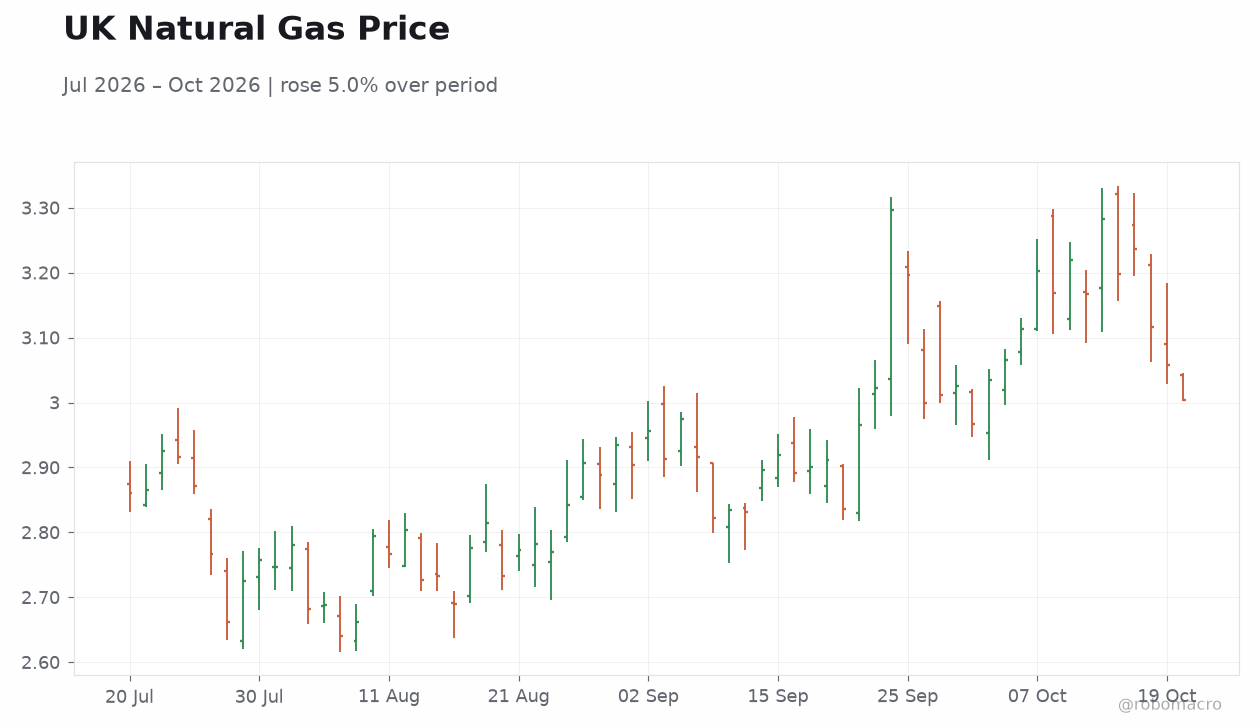
| UK Nat Gas | 3.01 | -1.60% |
| Bitcoin | 81,640.56 | -0.46% |
| UK 2Y Gilt | 4.64% | -3 bp |
| UK 10Y Gilt | 5.34% | -8 bp |
Prior Economic Events
| Data | Prior | Cons | Actual |
|---|---|---|---|
| No events available | |||
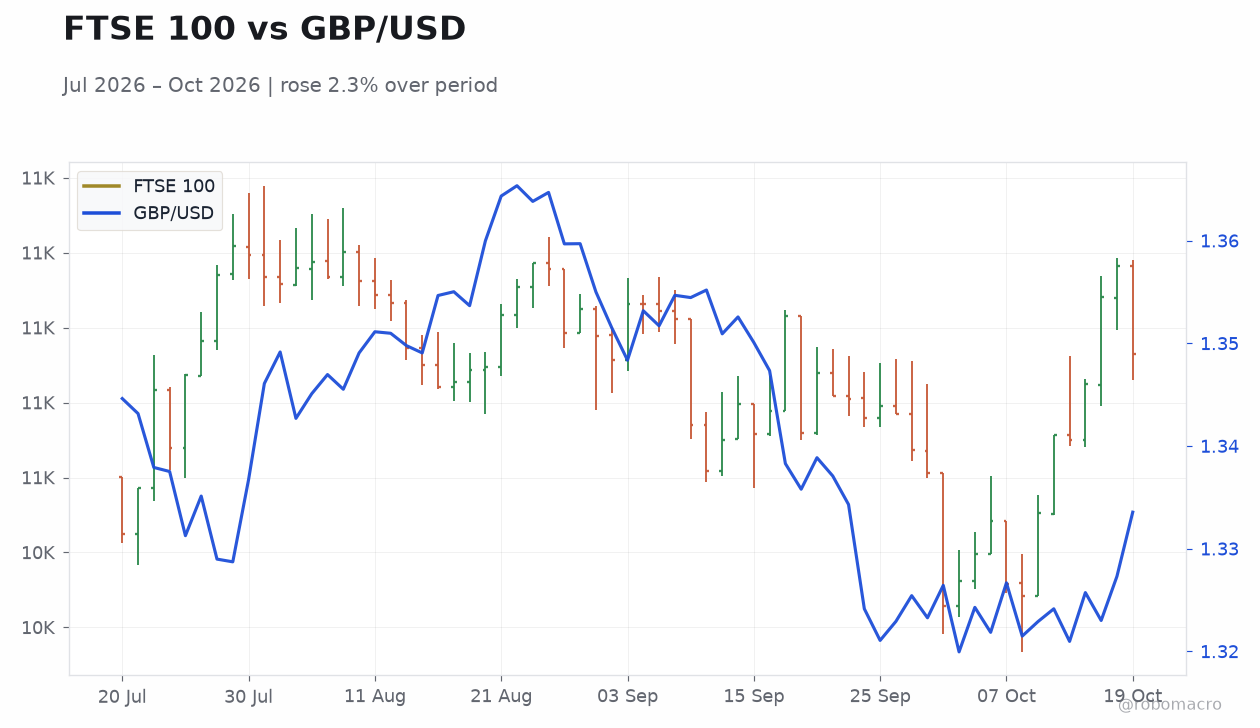 FTSE 100 vs GBP/USD | Type: market_hloc | FTSE 100: 1.076e+04 (2026-10-19) | Range: 1.043e+04–1.091e+04 | Trend(5pt): 1.052e+04,1.084e+04,1.083e+04,1.07e+04,1.076e+04 | GBP/USD: 1.334 (2026-10-20) | Range: 1.32–1.365 | Trend(6pt): 1.345,1.351,1.352,1.324,1.327,1.334
Today's Economic Events
| Data | Prior | Cons | Time |
|---|---|---|---|
| No events available | |||
- UK 10-year gilt yield fell 8 bp to 5.34% while the 2-year eased 3 bp to 4.64%, steepening the curve as duration rallied.
- Sterling firmed modestly against the dollar to 1.33 (+0.06%) but slipped versus the euro to 1.19 (-0.10%).
- FTSE 100 outperformed at +0.38% to 10,881.90 while the more domestically exposed FTSE 250 fell 0.63% to 24,378.50.
Yesterday's Recap
UK assets closed mixed-to-softer on 19 October, with the FTSE 250 down 0.63% to 24,378.50 while the FTSE 100 gained 0.38% to 10,881.90, a divergence suggesting rotation into internationally exposed large caps rather than broad domestic risk appetite. Gilt markets rallied hard, with the 10-year yield easing 8 bp to 5.34% and the 2-year down 3 bp to 4.64%, a bull-steepening move consistent with markets pricing a softer medium-term inflation path rather than any shift in near-term policy expectations. Sterling was essentially flat against the dollar at 1.33 (+0.06%) but softened against the euro to 1.19 (-0.10%), leaving the pound range-bound as traders weighed relative rate differentials.
Energy markets diverged: Brent crude rose 0.61% to $110.22 on Middle East supply risk, while UK natural gas fell 1.60% to 3.01, easing near-term utility cost pressure. Gold slipped 0.39% to $4,143.80 and Bitcoin eased 0.46% to $81,640.56, with no UK data releases on the calendar to drive direction.
The Day Ahead
The UK calendar is empty for 20 October, leaving gilt and sterling direction to be set by global risk sentiment and any BoE commentary. With no domestic prints, market attention will centre on the gilt curve after yesterday's rally and whether the 10-year can hold below 5.35%. Sterling crosses remain the primary expression of UK risk, with GBP/EUR near 1.19 and GBP/JPY at 210.96 (+0.25%) reflecting carry demand.
Traders will also watch energy pricing, given Brent above $110 and the sensitivity of UK inflation to crude. Absent data, positioning ahead of the next UK release will likely dominate flow.
Other Economic Notes
The UK backdrop remains one of elevated inflation and a softening labour market, with CPI at 3.10% and unemployment at 4.90%, a combination that keeps the MPC in a restrictive stance without room for aggressive easing. The Budget remains a live risk for UK assets, with commentary warning that tax hikes could weigh on bank valuations and raise the spectre of foreign takeover interest in UK lenders. Corporate investment is also under scrutiny, with North Sea producers threatening to withhold capital if the Rosebank field is blocked, a signal that energy policy uncertainty carries macro consequences for investment and fiscal receipts.
↓ p.2