RoboMacro AI Economic Research

Global Macro Watch

Also todaySee the US Macro Daily Week of October 26–30, 2026 robomacro.com
Global Macro Watch
Week of October 26–30, 2026
  • Policy divergence metric reaches 19.04 as FOMC holds steady while BoC tightens and ECB signals extended pause
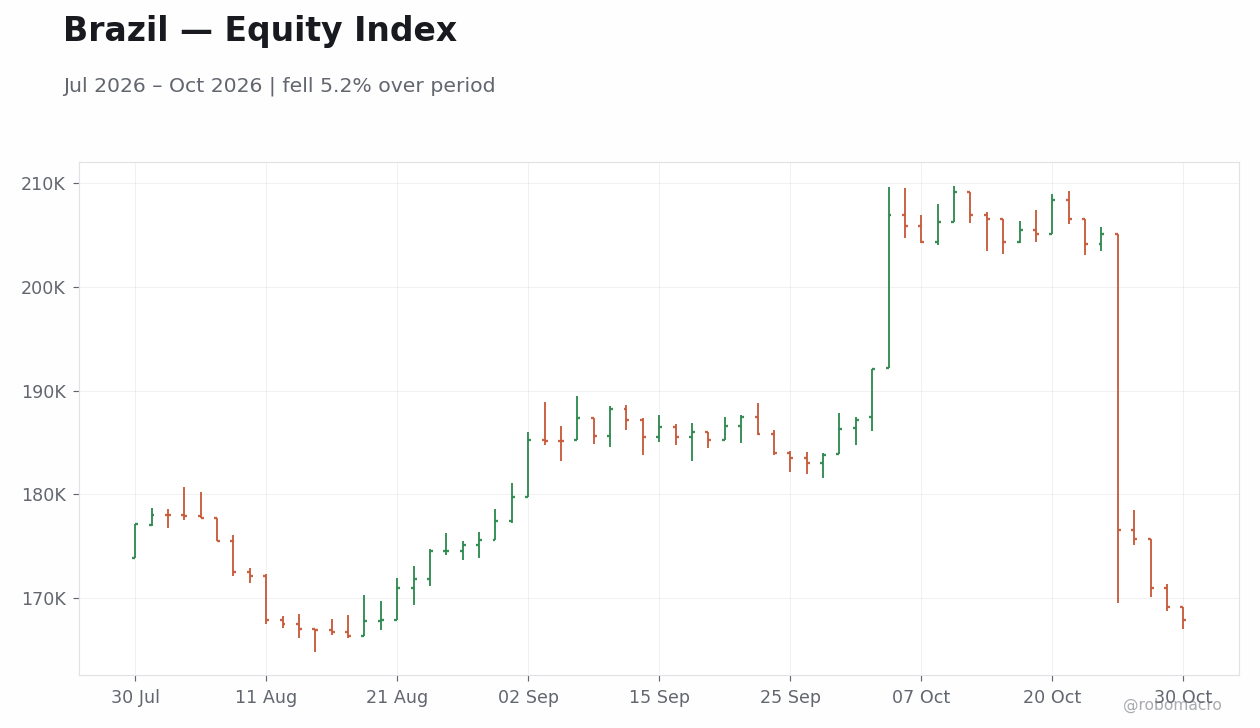
  • Brazil 10-year yields jump 242bp and Bovespa falls 18.1 percent amid domestic political repricing
  • Central banks from BoE to BanRep and Bank Indonesia hold rates unchanged with no fresh guidance shifts
  • Cross-asset tape shows DAX up 1.60 percent to 25,818.21 while Brent slips 2.06 percent to 113.43 and Nasdaq 100 declines 2.0 percent
Policy Divergence Keeps Rate Paths Apart

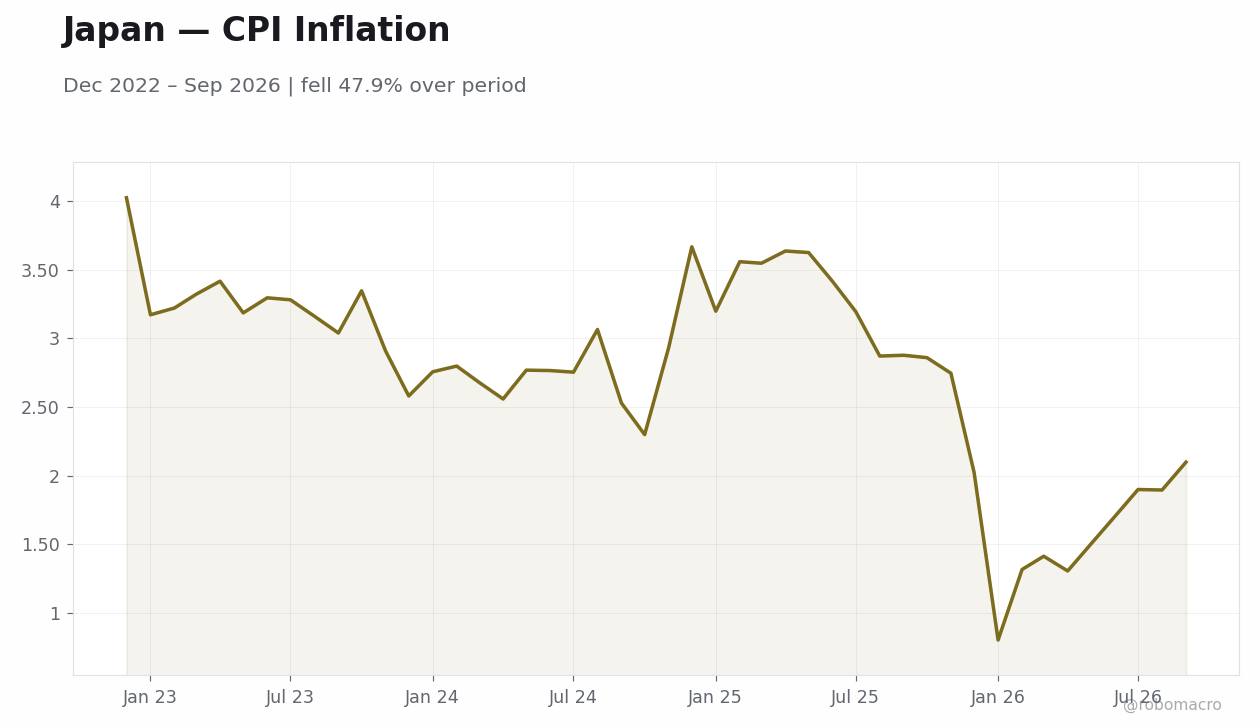
The global policy cycle remains anchored in divergence, with the divergence metric printing 19.04 this week and confirming that central-bank paths continue to separate rather than converge. The FOMC left the policy rate unchanged after the latest PCE release reinforced its data-dependent framework, while the Bank of Canada delivered tightening and signaled that additional moves could follow. In contrast, the ECB held steady with no alteration to forward guidance even as French fiscal concerns widened spreads. The Bank of Japan also left its policy rate unchanged after consumer prices rose year-over-year ahead of the decision. These contrasting signals leave rate trajectories apart at a point in the cycle when activity prints remain mixed across regions.

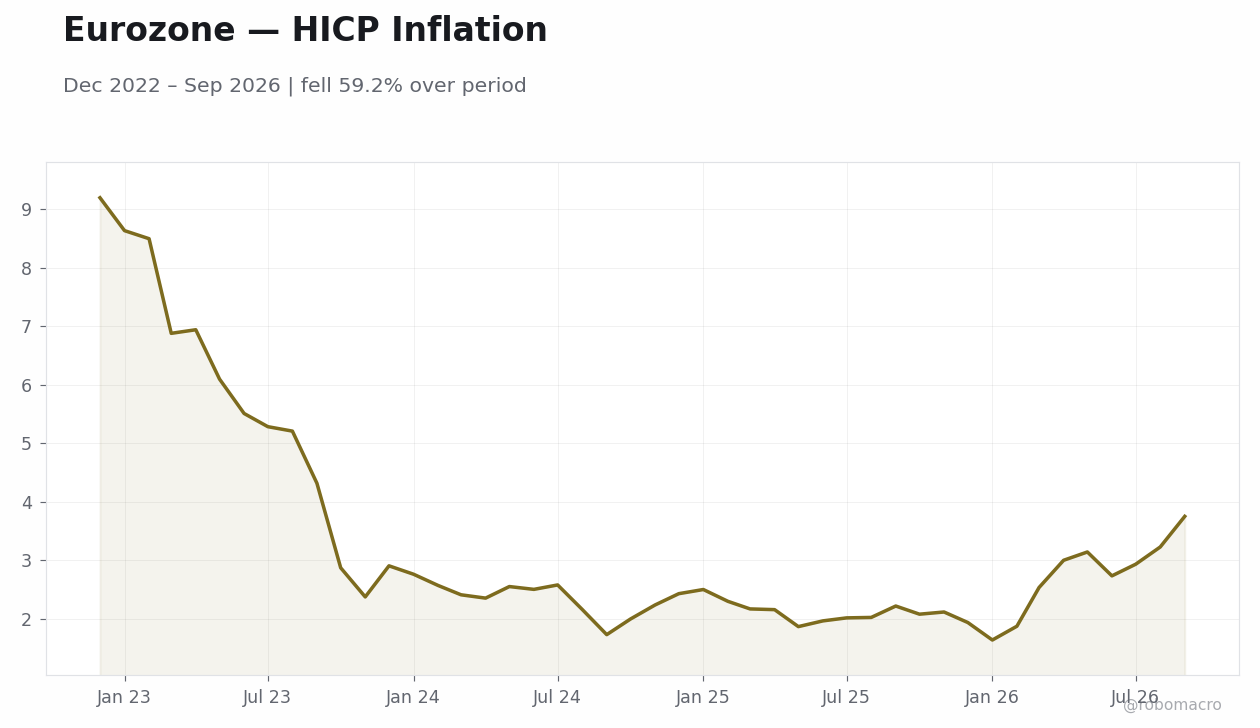
This configuration transmits uneven price signals across borders. US 10-year Treasury yields ended lower and the 2-year also moved down, producing a bear-steepening curve on growth and term-premium concerns. German 10-year Bund yields eased while the DAX rose 1.60 percent to 25,818.21. The euro area data flow itself split, with German business sentiment improving yet French consumer confidence declining sharply. Such dispersion underscores that central banks are tolerating volatility provided domestic metrics stay within recent ranges.

The mid-cycle setting amplifies the effect of these policy differences. Equity markets registered selective outcomes rather than uniform direction, and currency moves reflected the uneven yield backdrop. Markets therefore price persistent differences in policy stance even as incoming data continue to arrive at an uneven pace.
Join the AIeconomist.app Waitlist

Published every Sunday afternoon 100% AI-generated — not financial advice
RoboMacro AI Economic Research

Global Macro Watch

Week of October 26–30, 2026 robomacro.com

Policy Divergence Sets Mid-Cycle Tone

DM Central Banks Cluster Around Domestic Resilience

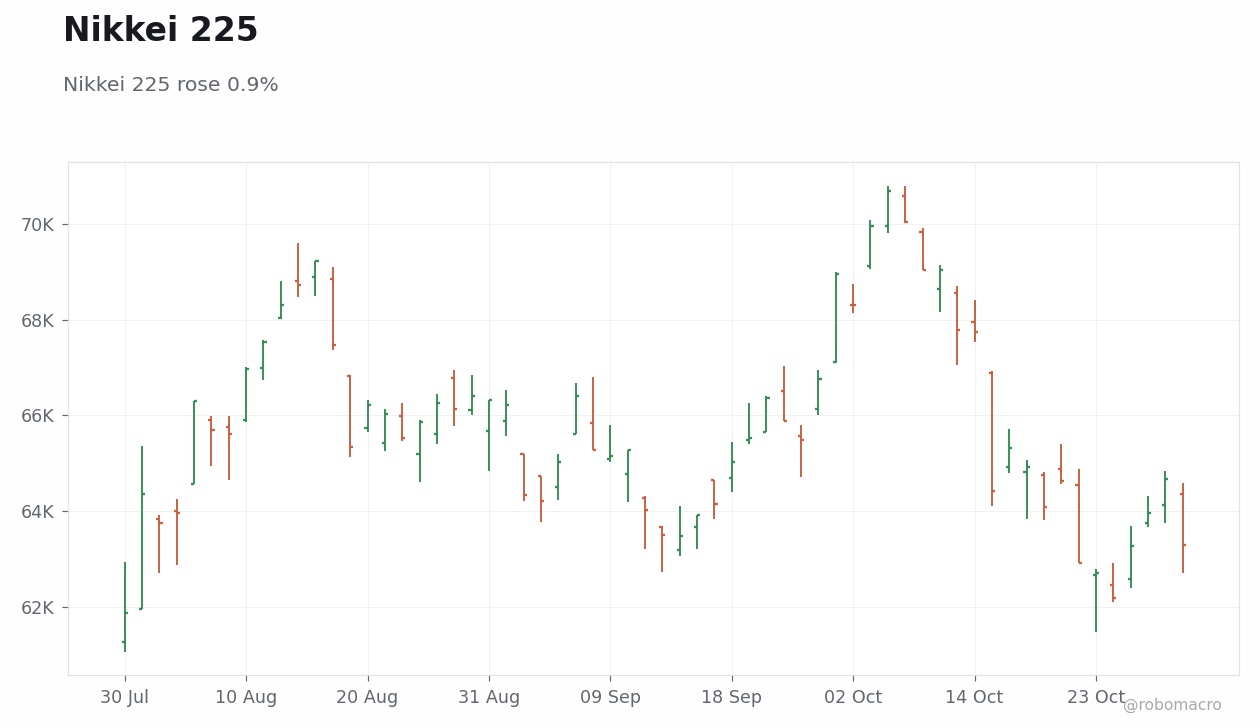
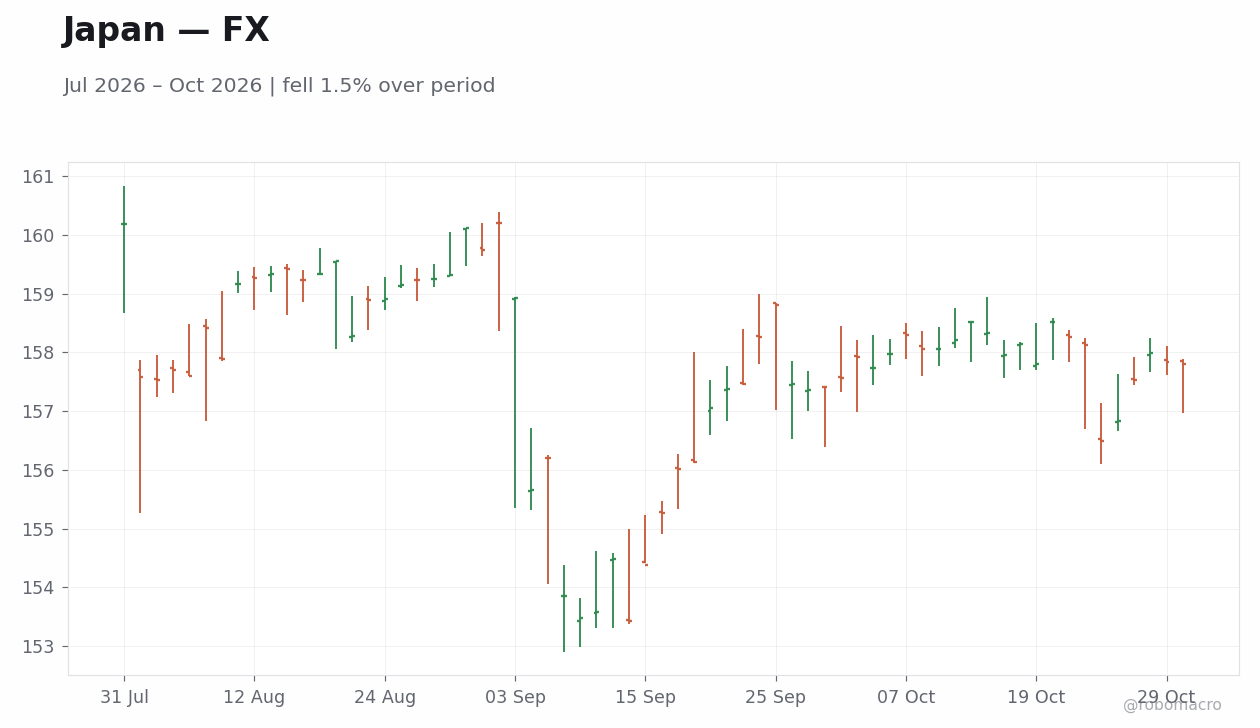
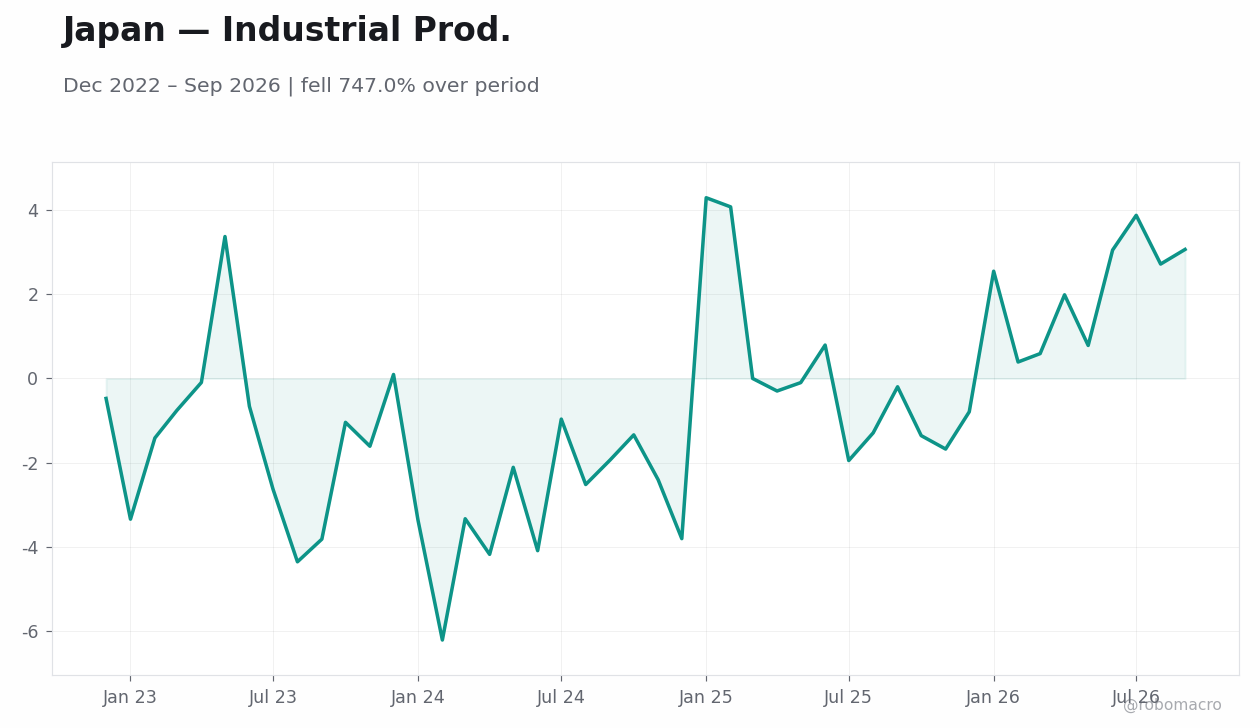
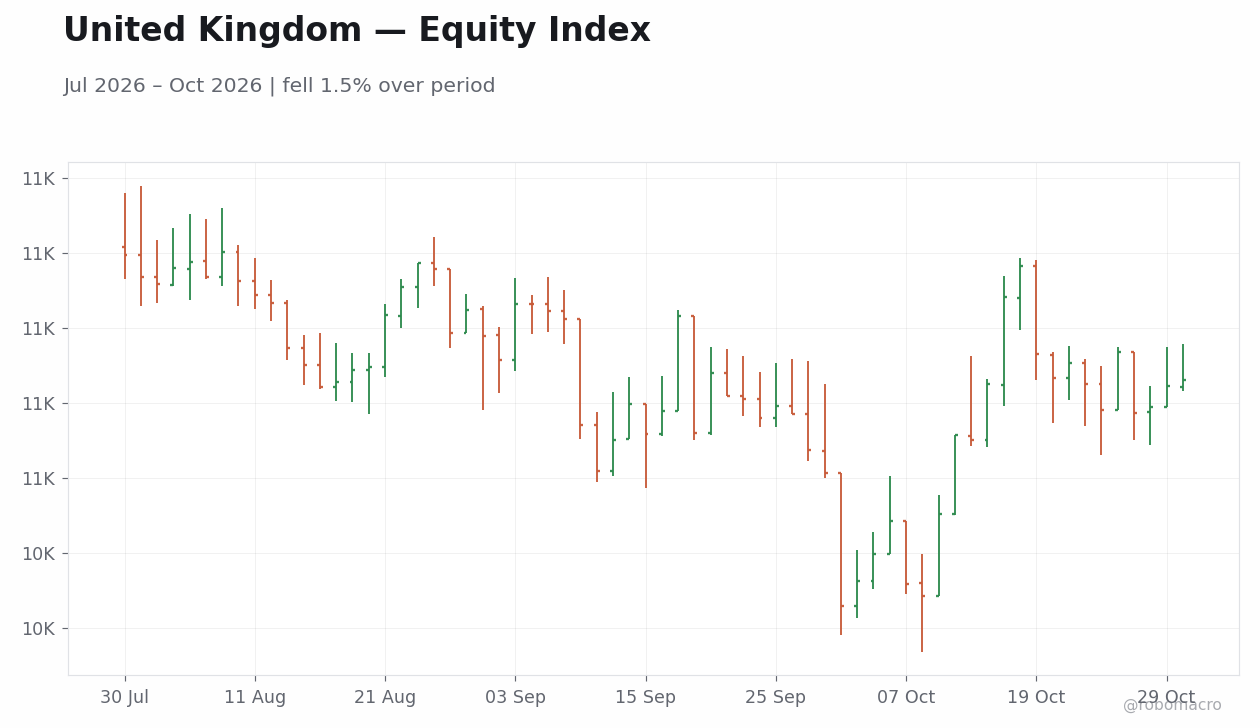
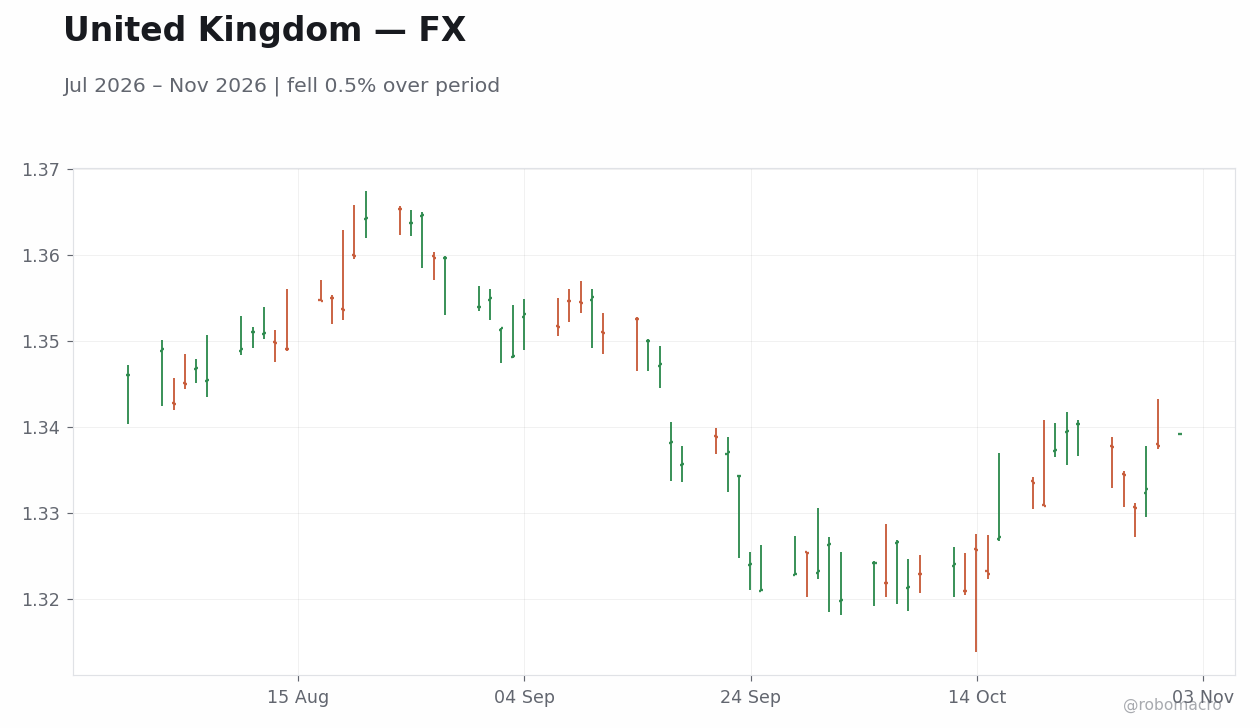
Developed-market outcomes this week clustered around the read-across from divergent policy signals. The Bank of England held its policy rate steady with no fresh forward guidance ahead of the November meeting, while CBI Distributive Trades beat expectations by a wide margin. Sterling finished at 1.34 against the dollar. In Japan, industrial production and retail sales posted mixed results that missed expectations, yet the Nikkei 225 closed at 63,290.11 after a 1.77 percent gain and USD/JPY settled at 157.80. The Bank of Japan’s decision to leave rates unchanged reinforced the gradual normalisation path already in train.

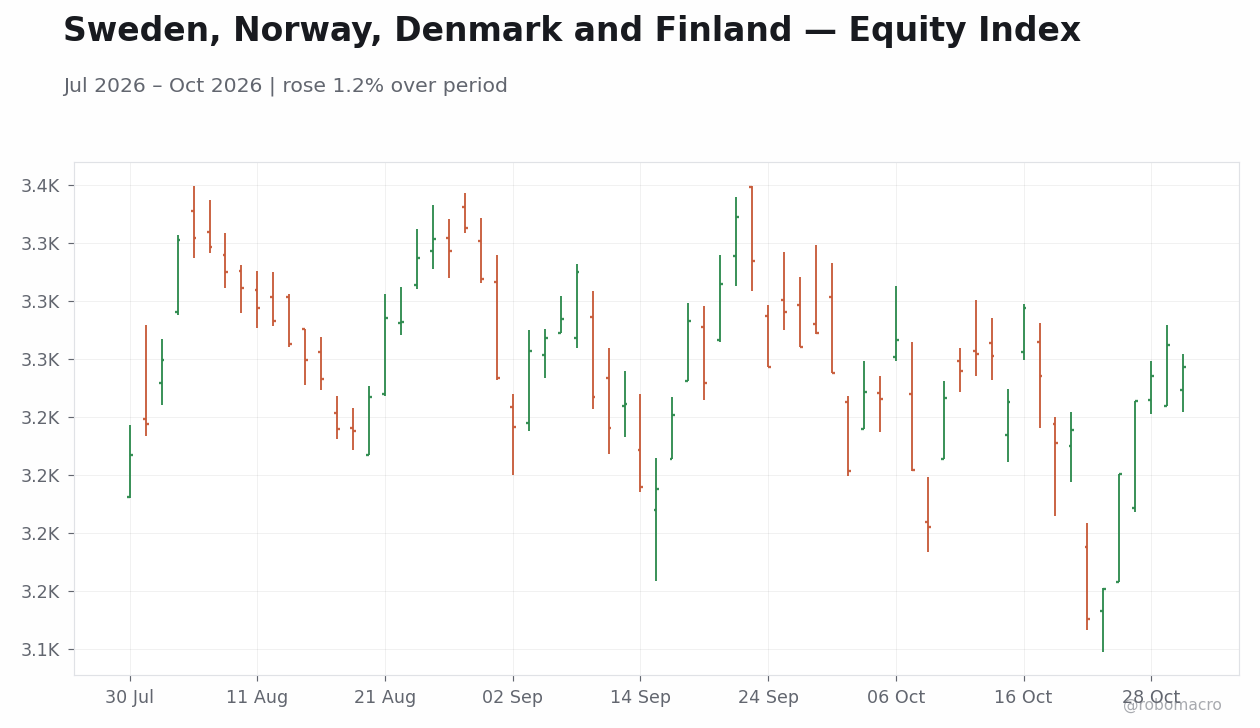
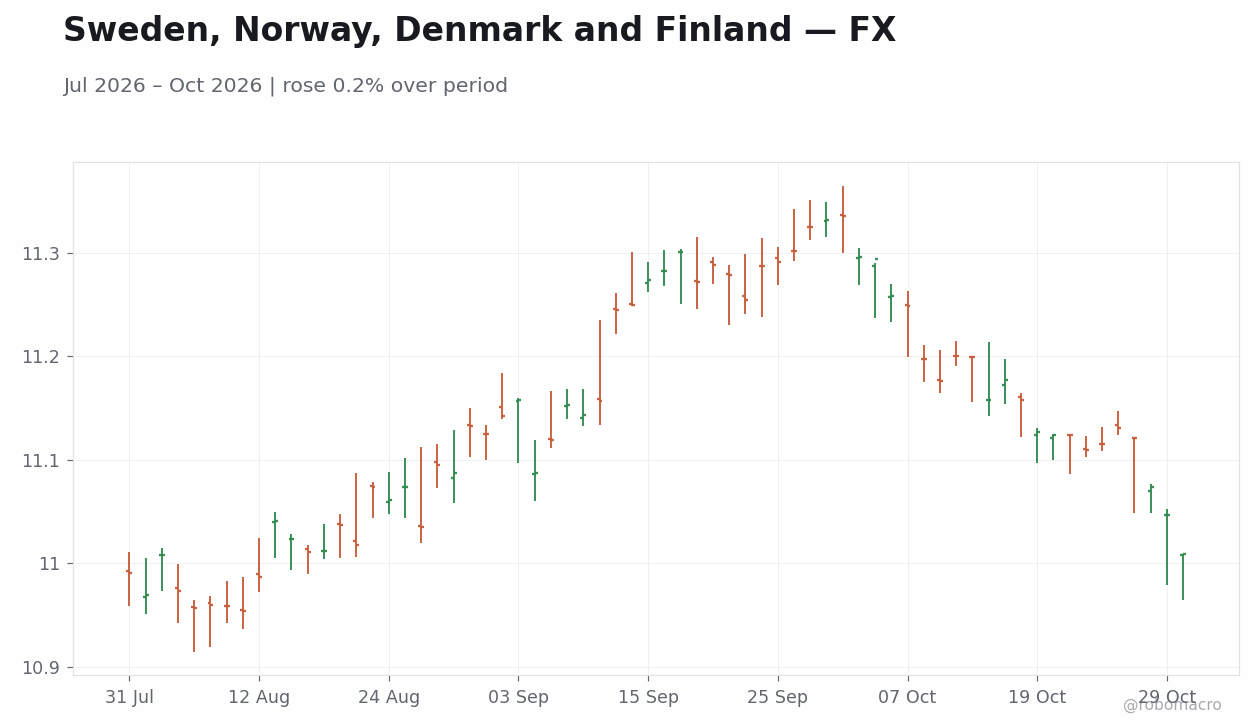
Nordic central banks issued no rate decisions or minutes, leaving policy signals steady. OMX Copenhagen 25 rose 3.55 percent to 1,974.38 while OMX Helsinki 25 fell 1.58 percent to 6,191.03, marking the clearest intra-Nordic equity split of the period. USD/SEK declined 1.11 percent to 9.81 and USD/NOK fell 1.34 percent to 9.19. These moves occurred against a backdrop of Brent crude at 113.43 dollars per barrel, illustrating that commodity price changes did not override the domestic data lens applied by Nordic policymakers.

EM Data Flows Split Along Currency and Policy Lines

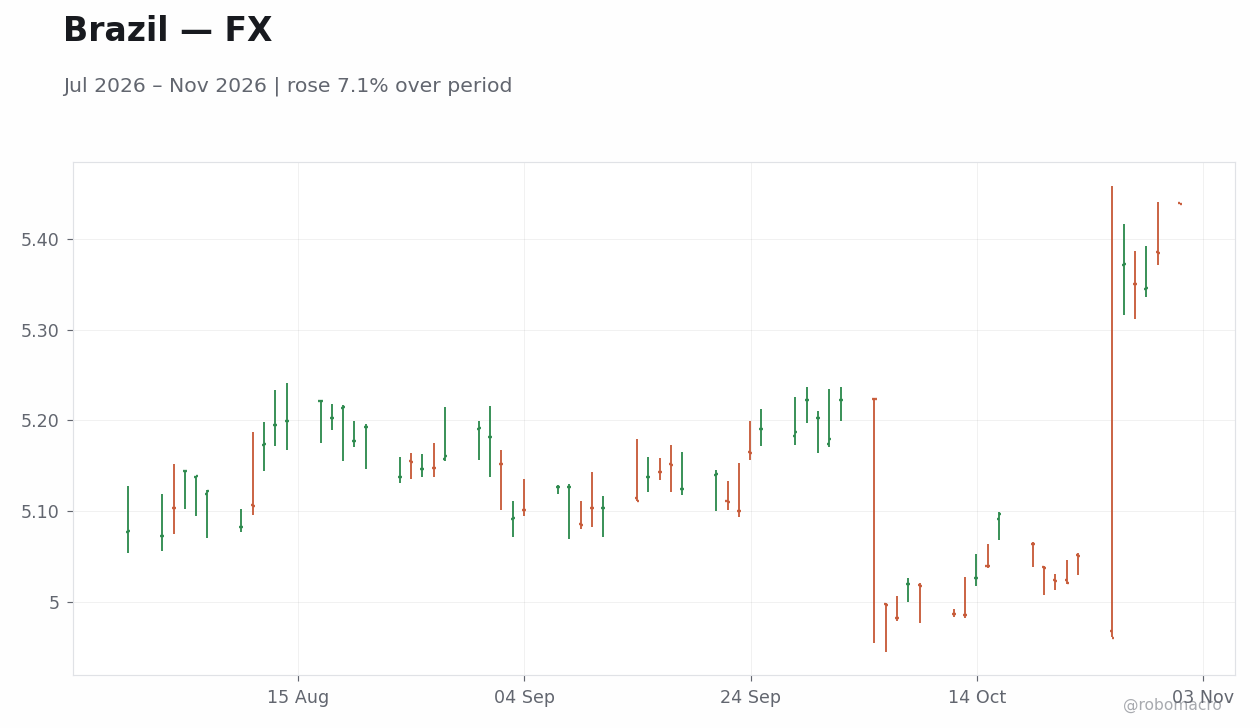
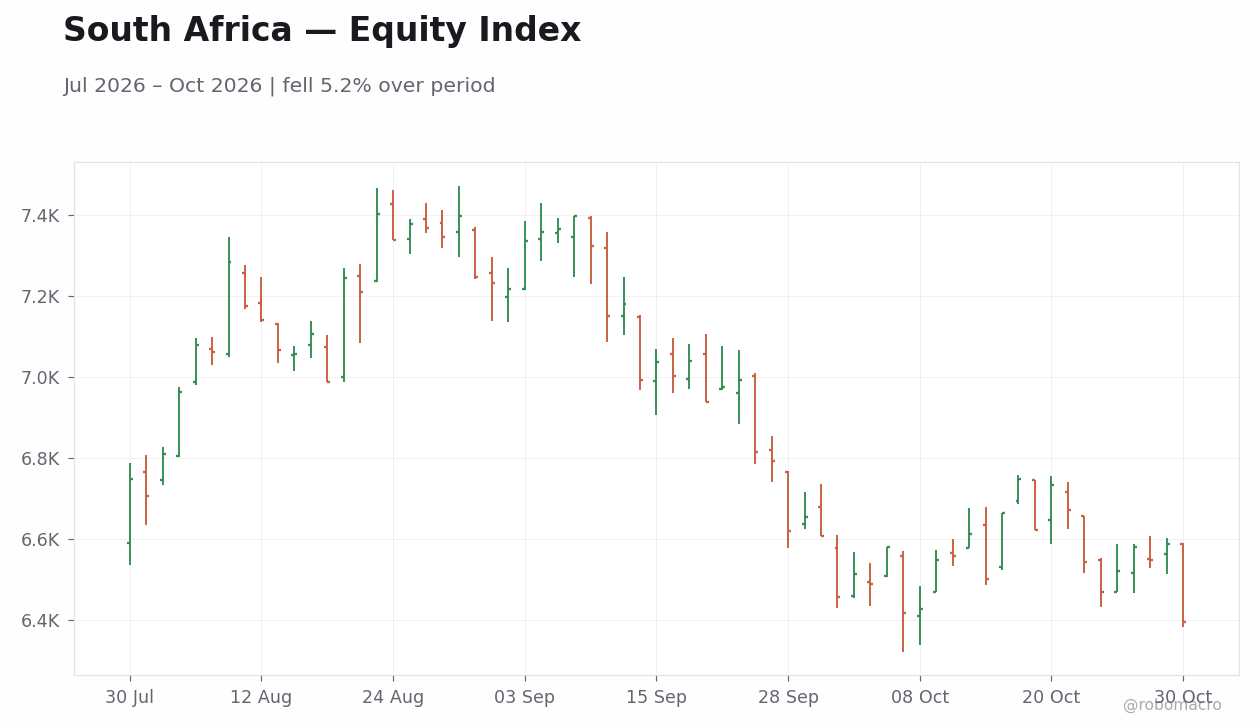
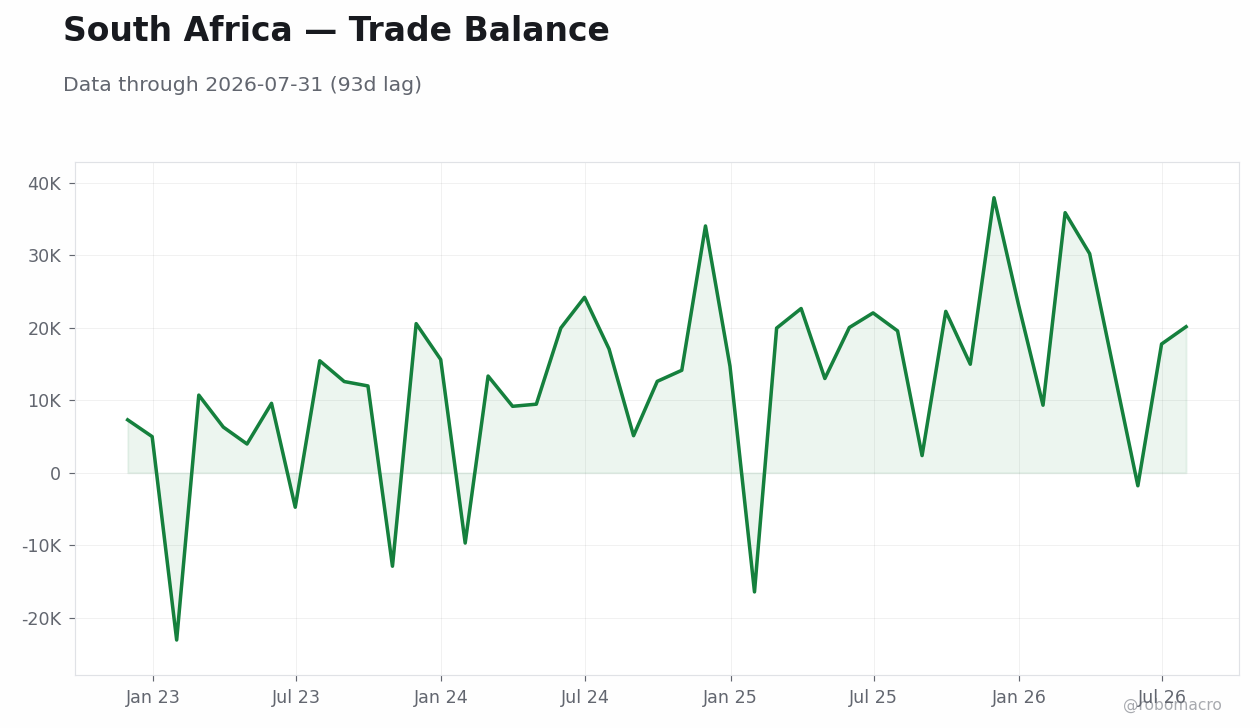
Emerging-market outcomes divided along domestic policy stance and external dollar pressure. Banco de Mexico kept its policy rate unchanged, preserving a wide real-rate buffer, while the peso weakened slightly and the equity index posted only a modest gain on contained volumes. In Brazil, the policy rate remained unchanged ahead of the next COPOM decision, yet the Bovespa closed at 167,922 and USD/BRL reached 5.44 after sharp repricing. South Africa’s October trade balance printed below the prior reading and the JSE Top 40 fell 1.55 percent to 99,412.30.

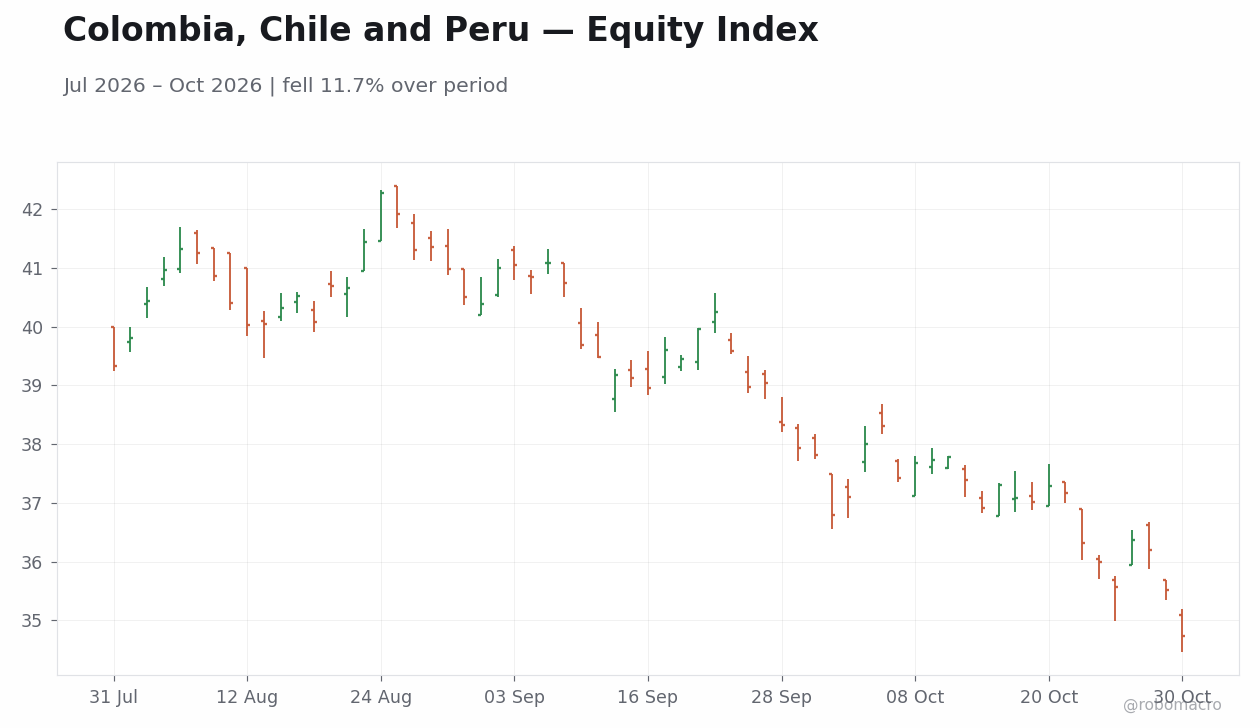
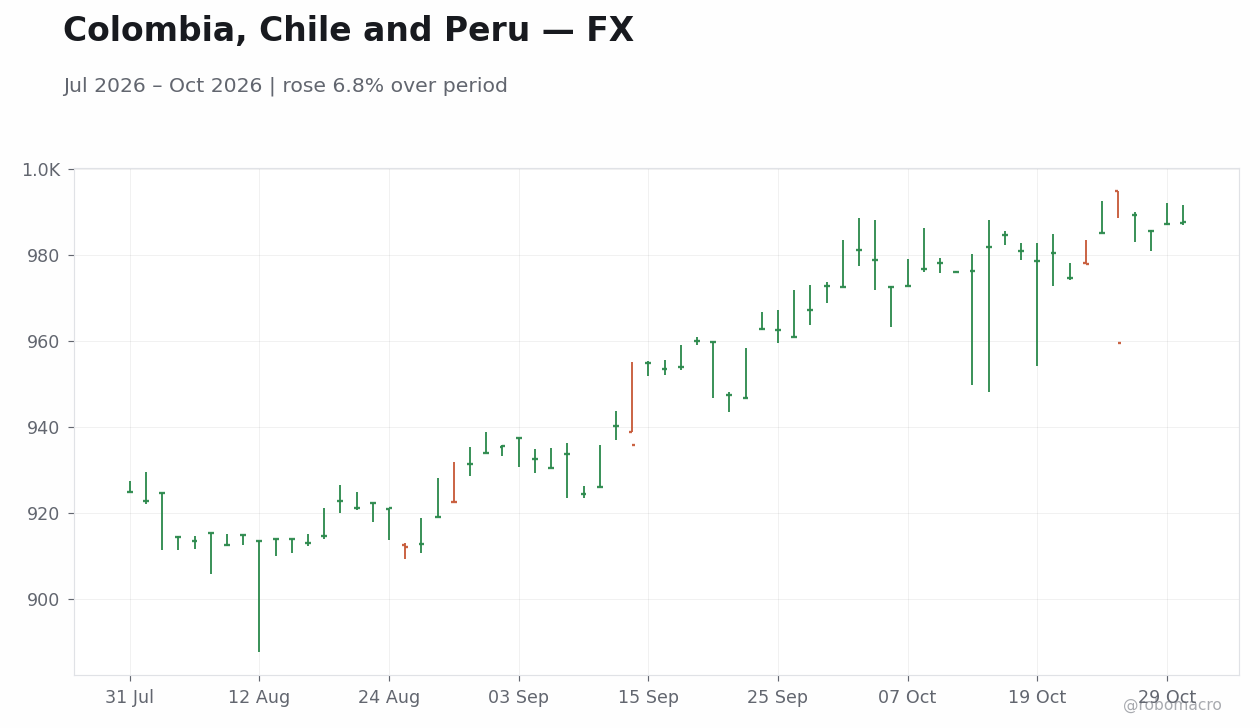
Andean central banks extended their pauses. BCCh and BanRep both held rates unchanged after recent inflation prints. MSCI Peru fell 5.0 percent to 80.18 and MSCI Chile declined 2.33 percent to 34.73 as copper slipped 0.4 percent to 6.48. USD/COP rose 5.67 percent to 3,228.9 and USD/PEN advanced 4.18 percent to 3.47. These moves highlight that external dollar strength interacted with local policy inertia to produce currency depreciation across the region.

RoboMacro AI Economic Research

Global Macro Watch

Week of October 26–30, 2026 robomacro.com

Cross-Asset Moves Reflect Policy and Growth Dispersion

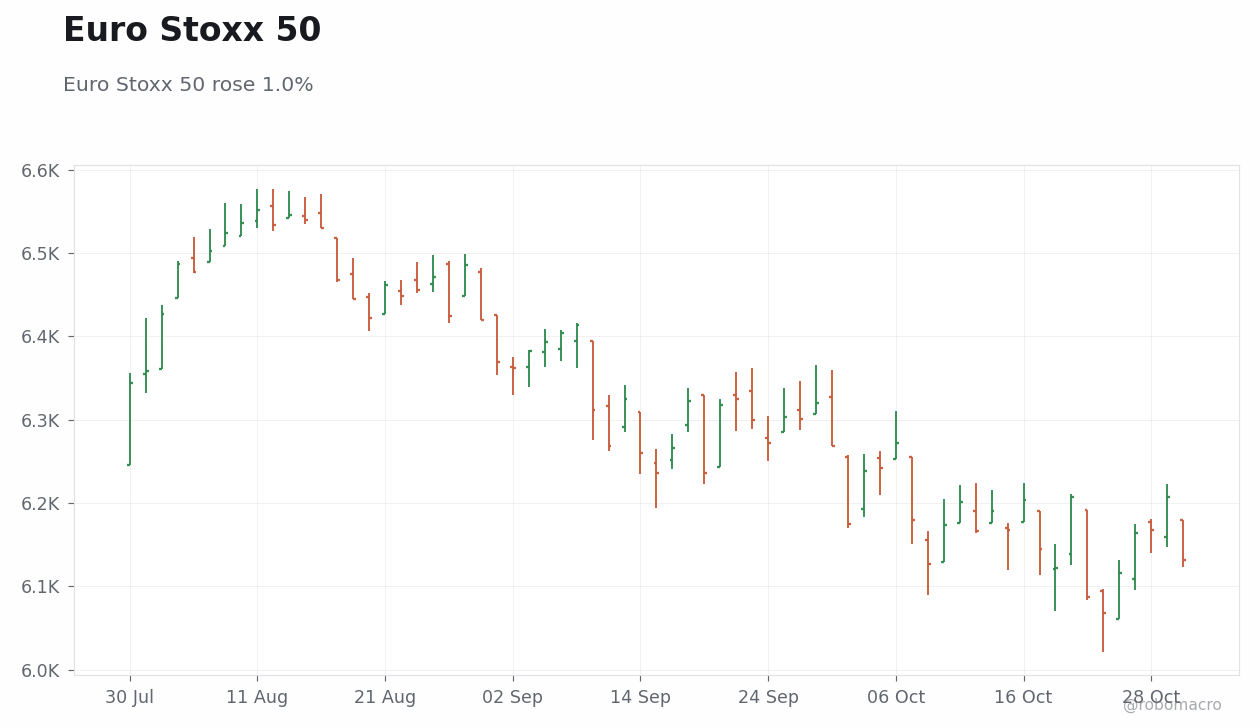
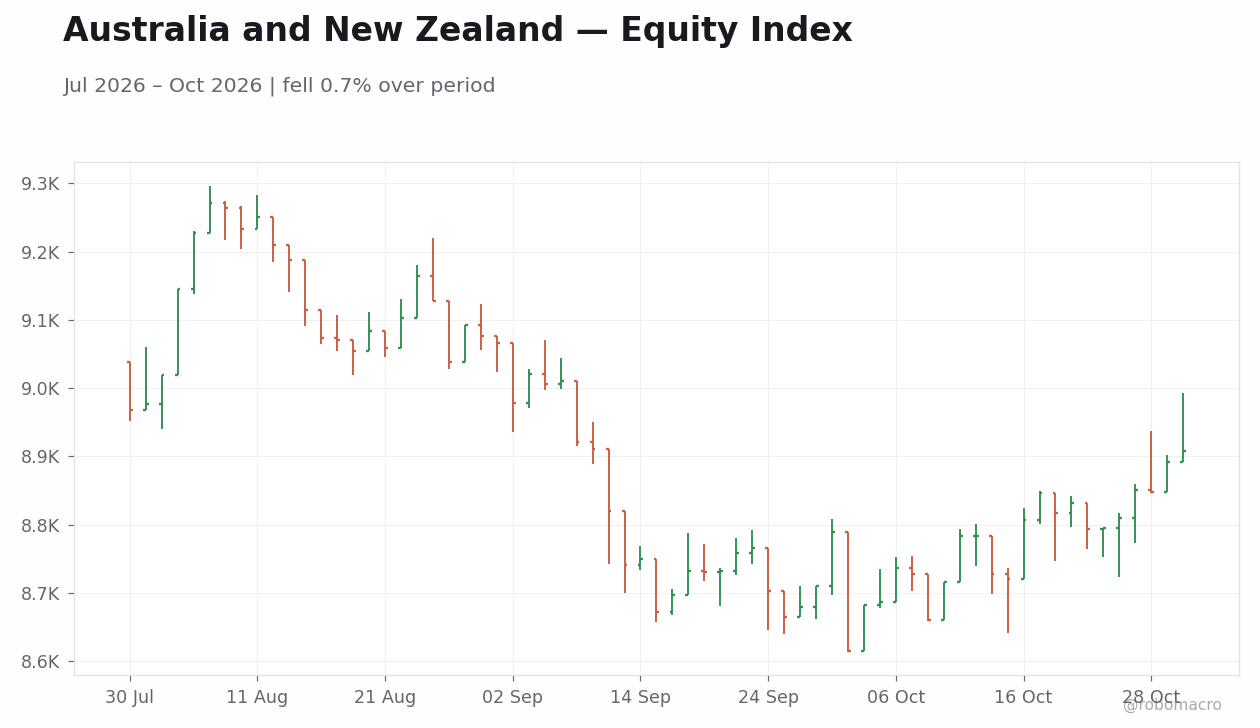
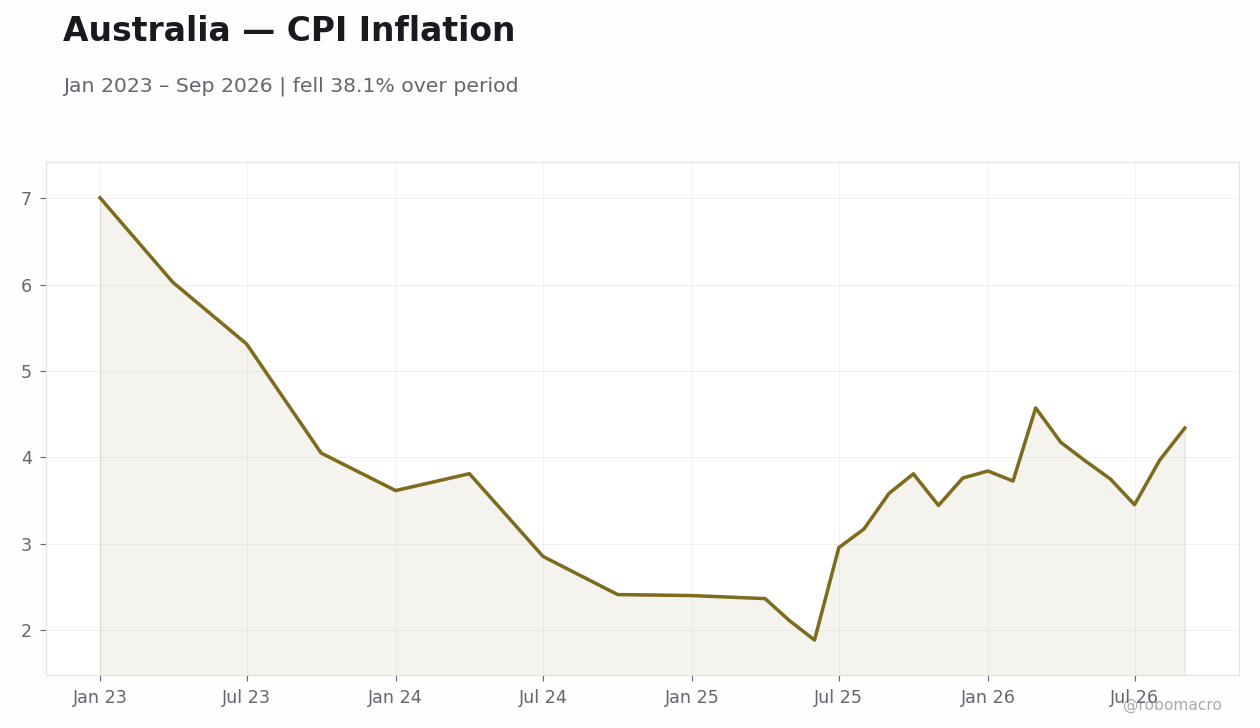
Rates, FX, equities and commodities this week pointed to the same underlying divergence. The US 10-year yield declined while the curve bear-steepened. German Bund yields eased even as the DAX advanced 1.60 percent to 25,818.21 and Euro Stoxx 50 gained 0.25 percent to 6,131.31. In Asia, the Shanghai Composite declined 2.66 percent to 3,599.02 while the Hang Seng edged up 0.36 percent to 23,294.42. Australia’s Q3 CPI rose more than expected, lifting Australian 2-year yields, and the ASX 200 rose 1.11 percent to 8,908.1.

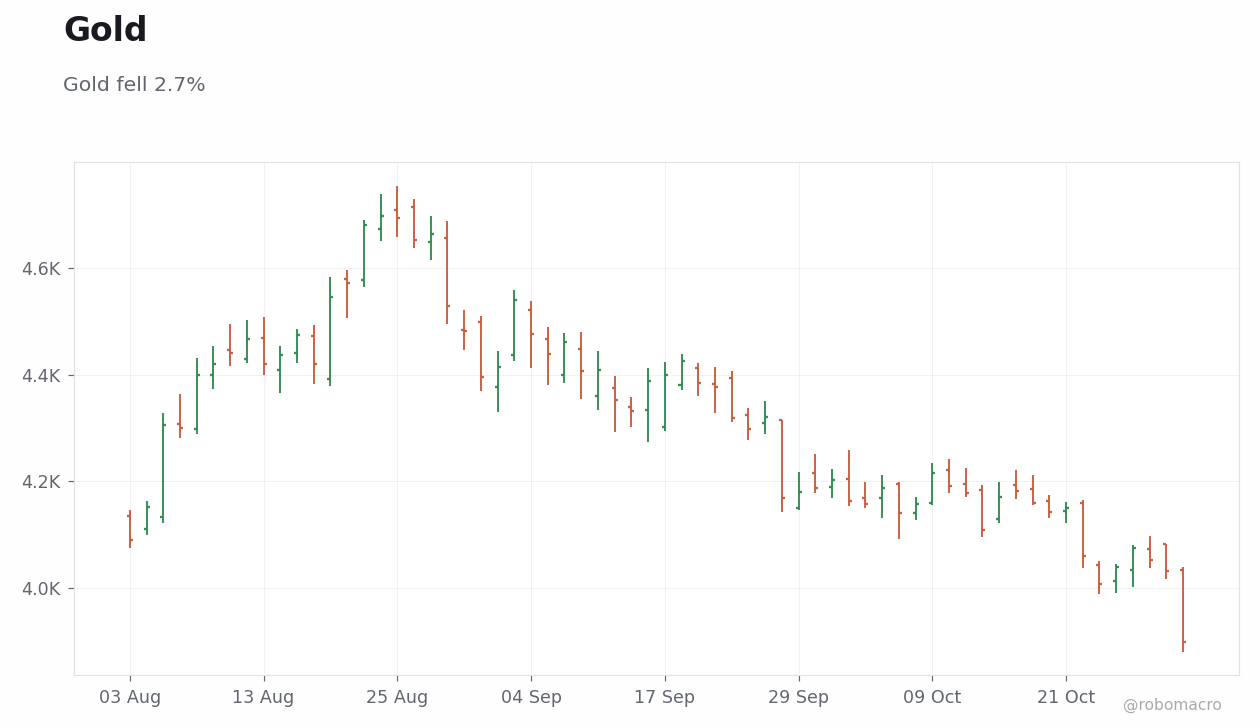
Commodity prints sat within this framework rather than driving it. Brent crude slipped 2.06 percent to 113.43 and copper fell 0.40 percent to 6.48. Gold declined 2.7 percent and silver fell 8.3 percent. These moves occurred alongside equity dispersion, with the Nasdaq 100 posting a 2.0 percent net decline while KOSPI rose 3.2 percent. The configuration indicates that commodity price changes transmitted selectively into inflation and fiscal channels without overriding the dominant policy-divergence signal.

Policy Outlook Points to Continued Separation

The global central-bank landscape remains defined by separated rate paths. The FOMC’s data-dependent stance, the Bank of Canada’s tightening signal, and the ECB’s unchanged forward guidance create a configuration in which markets must track incoming prints across multiple jurisdictions rather than a single dominant signal. Bank Indonesia held at 5.75 percent while expanding hedging incentives, and the Bank of Thailand held at 1.00 percent while raising its growth outlook. These choices preserve real-rate buffers in some jurisdictions and gradual normalisation in others.

The absence of fresh guidance from most central banks this week reinforces the data-dependent posture. Policymakers appear willing to tolerate equity and currency volatility provided domestic activity and inflation metrics remain within recent ranges. This stance leaves rate trajectories apart even as the global cycle sits in its mid-phase.

Forward Look Centers on Next Week’s Prints

Next week’s focus turns to the November MPC meeting at the Bank of England and the next round of US labor-market and inflation releases. Markets will also watch the first COPOM decision after the Brazilian election and any follow-through from the IMF staff-level agreement in Argentina. Data-dependent central banks will continue to calibrate against these prints, preserving the divergence that has defined the policy tape through late October.

RoboMacro AI Economic Research

Global Macro Watch

Week of October 26–30, 2026 robomacro.com
Global Economic Outlook Summary
IMF World Economic Outlook projections, % change year-on-year. Real GDP and average consumer prices. Retrieved November 01, 2026.
Economy Real GDP (% y/y) Consumer Prices (% y/y)
2026E2027E2028E 2026E 2027E2028E
Americas
United States2.32.32.13.62.82.1
Canada1.11.71.72.82.42.0
Mexico1.51.82.23.83.63.1
Brazil2.21.92.44.44.13.1
Argentina2.13.54.232.521.214.8
Colombia2.22.32.46.05.73.9
Chile0.62.62.43.73.53.0
Peru3.02.93.23.82.62.1
Asia / Pacific
Japan0.70.70.62.02.62.0
China4.54.04.01.01.41.6
India7.07.06.95.04.43.9
Australia1.91.61.83.93.12.5
New Zealand2.02.62.74.12.82.0
South Korea3.32.82.32.72.32.0
Indonesia5.15.15.23.32.82.5
Malaysia5.24.64.32.21.92.0
Philippines3.45.15.55.64.13.2
Singapore5.03.02.52.32.22.0
Thailand2.12.12.32.11.71.5
Taiwan10.74.33.22.01.81.6
Vietnam8.47.55.94.74.94.7
Western Europe
Euro area1.11.21.33.12.82.2
Germany1.31.11.12.73.12.0
France0.40.71.22.42.21.9
Italy0.80.60.73.32.82.3
Spain2.51.81.83.72.72.5
United Kingdom1.31.21.63.32.82.0
Sweden2.52.22.11.11.92.7
Norway1.51.31.13.22.82.3
Denmark3.72.01.81.82.52.0
Switzerland1.91.21.90.70.80.8
Netherlands1.51.31.42.92.82.6
Poland3.42.52.53.22.83.9
Czech Republic1.81.92.22.12.82.7
Hungary1.92.12.31.92.83.0
Romania-0.52.22.58.24.14.3
EMEA Emerging
Turkey2.73.64.031.226.520.6
South Africa1.01.31.54.43.93.3
Israel4.54.43.61.82.02.0
Saudi Arabia-3.37.94.81.92.22.0
UAE-3.97.77.04.52.52.0
Egypt5.14.75.013.314.88.9
Nigeria4.24.34.115.614.713.3
Kenya4.54.74.96.05.05.3
Global Aggregates
Global3.13.43.34.74.13.5
Developed markets2.11.81.73.12.72.1
Emerging markets3.74.44.35.75.14.4
E = IMF projection. Source: IMF World Economic Outlook, retrieved via the IMF DataMapper. Aggregates (Global, Developed markets, Emerging markets, Euro area) are the IMF's own groupings. A blank cell means the IMF does not publish a projection for that economy and year.
RoboMacro AI Economic Research

Global Macro Watch

Week of October 26–30, 2026 robomacro.com
Global Central Bank Watch
Policy rates as of November 01, 2026. Current rates, last changes and meeting dates are verified against central bank publications and BIS policy-rate data. Quarter columns show realized quarter-end rates for quarters that have completed.
Central Bank Instrument Current
Rate
Last
Change
bp Next
Meeting
Q1
2026
Q2
2026
Q3
2026
Q4
2026
The Americas
Federal ReserveFed funds upper4.00%Sep 2026+25Dec 93.753.754.00—
Bank of CanadaO/N rate2.25%Oct 2025-25Dec 92.252.252.25—
BCB (Brazil)SELIC13.75%Sep 2026-25Nov 414.7514.2513.75—
BanxicoO/N rate6.50%May 2026-25Nov 56.756.506.50—
BCRA (Argentina)Aggregates regime—Jul 2025——————
BanRep (Colombia)Repo12.25%Sep 2026+25—10.2511.2512.00—
BCCh (Chile)MPR4.50%Dec 2025-25—4.504.504.50—
Europe / Africa
ECBDepo rate2.50%Sep 2026+25Dec 172.002.252.50—
Bank of EnglandBank rate3.75%Dec 2025-25Nov 53.753.753.75—
RiksbankRepo rate1.75%Oct 2025-25Nov 41.751.751.75—
Norges BankDep rate4.50%Sep 2026+25Nov 54.004.254.50—
SNBPolicy rate0.00%Jun 2025-25Dec 100.000.000.00—
CNB (Czech)2-wk repo3.75%Jun 2026+25Nov 53.503.753.75—
NBH (Hungary)Base rate5.50%Aug 2026-25Nov 176.256.255.50—
NBP (Poland)Ref rate3.75%Mar 2026-25—3.753.753.75—
SARBRepo rate7.25%Sep 2026+25Nov 196.757.007.25—
CBRT (Turkey)1-wk repo36.00%Oct 2026-100Dec 1037.0037.0037.00—
Asia / Pacific
RBACash rate4.60%Sep 2026+25Nov 34.104.354.60—
RBNZOCR2.75%Sep 2026+25Dec 92.252.252.75—
BoJPol rate1.25%Sep 2026+25Dec 180.751.001.25—
PBoC1-yr LPR3.00%———3.003.003.00—
RBI (India)Repo rate5.25%Dec 2025-25—5.255.255.25—
BoK (Korea)Base rate3.00%Aug 2026+25—2.502.503.00—
BI (Indonesia)BI-Rate5.75%Jun 2026+25Nov 184.755.755.75—
BSP (Philippines)Rev repo5.50%Oct 2026+50—4.254.755.00—
BoT (Thailand)1-day repo1.00%Feb 2026-25Dec 231.001.001.00—
CBC (Taiwan)Disc rate2.00%Mar 2024+12.5—————
MAS (Singapore)SGD NEERMild appr.Apr 2026slope+—————
Changes to Consensus Rate Views This Week vs Oct 26
CBRT (Turkey) current rate: 37.00→36.00 ▼ -100bp  ·  BSP (Philippines) current rate: 5.00→5.50 ▲ +50bp
Every figure on this page is verified against official central bank publications or BIS policy-rate data; a cell we cannot verify is left blank ("n/v") rather than estimated. Quarter columns show realized quarter-end rates only — no forward rate path is published, because market-implied pricing is not sourced for these banks. Shaded rows denote regional groupings. Data as of Week of October 26–30, 2026.
RoboMacro AI Economic Research

Global Macro Watch

Week of October 26–30, 2026 robomacro.com
Activity Tracking & NowcastReal-time growth pulse
RoboMacro US Labor Nowcast — Oct 2026 NFP
Nonfarm Payrolls (m/m)+72k  80% CI +16k…+299k
Unemployment Rate4.2%
Avg Hourly Earnings (y/y)3.2%
Point estimate = median of a 10-model ensemble (ElasticNet, LightGBM, MIDAS, SARIMAX, XGBoost, VAR, UC stochastic-trend, RF, MLP, naive-AR). Bands are model dispersion, not a forecast of revisions.
RoboMacro High-Frequency Activity Nowcast
Composite weekly activity index, diffusion-style (50 = neutral; >50 expansion), seasonally adjusted. Each economy combines 2–7 weekly public indicators — among them electricity and gas demand, flights, port calls, road traffic, card and payment volumes, job postings and tax deposits. A week is published only when indicators covering at least 70% of the index weight have reported and the week has closed; the as-of date and the share of indicators reporting are shown per row. Source: RoboMacro High-Speed Macro engine.
Economy Activity Index4-wk Δ13-wk Δ Week endingIndicators Signal
Germany73.9+19.1+28.82026-10-305/6Expanding · Advancing
Poland69.0+28.4+10.12026-10-303/4Expanding · Advancing
United States61.5-1.5-0.12026-10-237/7Expanding · Retreating
Canada56.1-0.2+3.62026-10-234/8Expanding · Flat
Australia55.6-7.5+19.42026-10-233/3Expanding · Retreating
Brazil52.6-6.3-9.22026-10-303/4Expanding · Retreating
Italy49.5+0.0+6.72026-10-235/5Contracting · Flat
Japan49.4+5.6-9.12026-10-233/5Contracting · Advancing
Euro Area48.5+1.8-1.02026-10-235/5Contracting · Advancing
Spain48.3-11.9-26.02026-10-235/5Contracting · Retreating
France46.8+8.4-5.02026-10-234/5Contracting · Advancing
New Zealand37.8+1.6-4.12026-10-164/5Contracting · Advancing

Activity remains in expansion in United States, Germany, Canada, Brazil, Australia, Poland; while high-frequency trackers point to sub-trend activity in Euro Area, France, Italy, Spain, Japan, New Zealand. On a 4-week basis, momentum is improving in Euro Area, Germany, France, Japan, New Zealand, Poland and cooling in United States, Spain, Brazil, Australia. RoboMacro's labor ensemble nowcasts the next US payrolls print at +72k.

Nowcasts are model-derived from high-frequency public data and update weekly as new releases arrive. Activity-index country coverage is expanding. A cross-country PMI matrix is planned pending a verified PMI data source.
RoboMacro AI Economic Research

Global Macro Watch

Week of October 26–30, 2026 robomacro.com
Markets in ReviewRates & Fixed Income
Rates & Fixed Income Chart 1
Rates & Fixed Income Chart 2
Rates & Fixed Income Chart 3
Rates & Fixed Income Chart 4

Week in Review

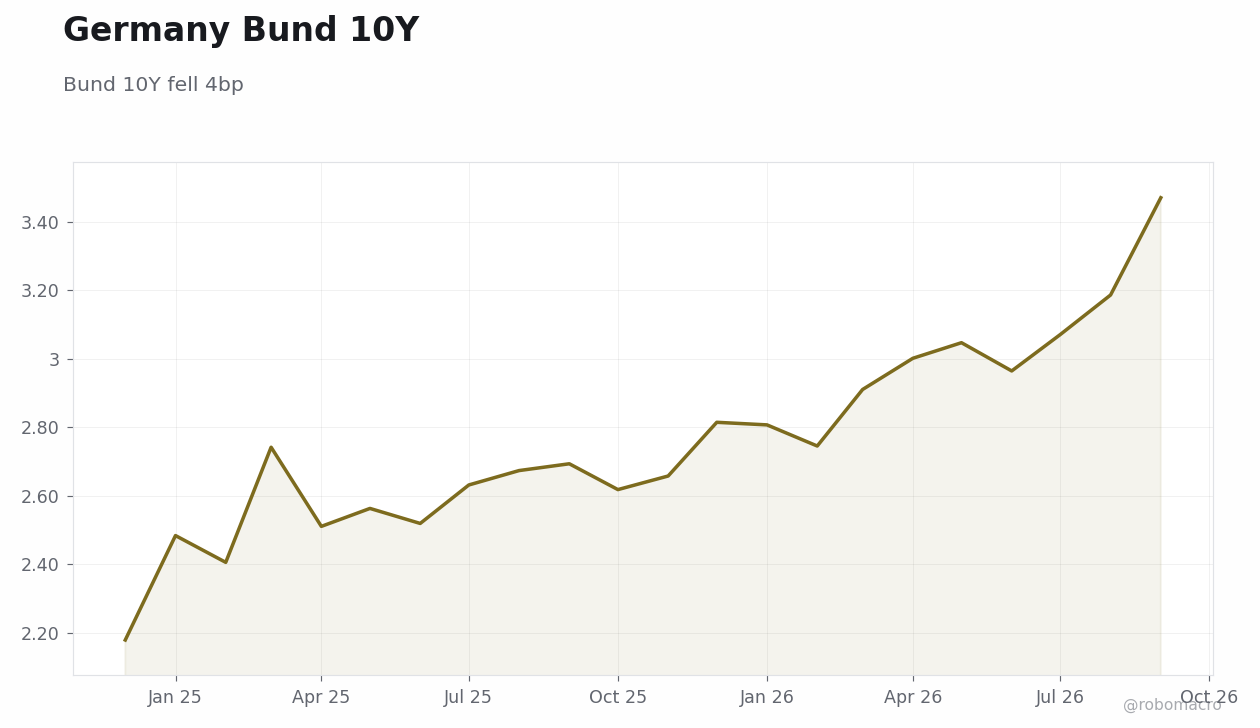
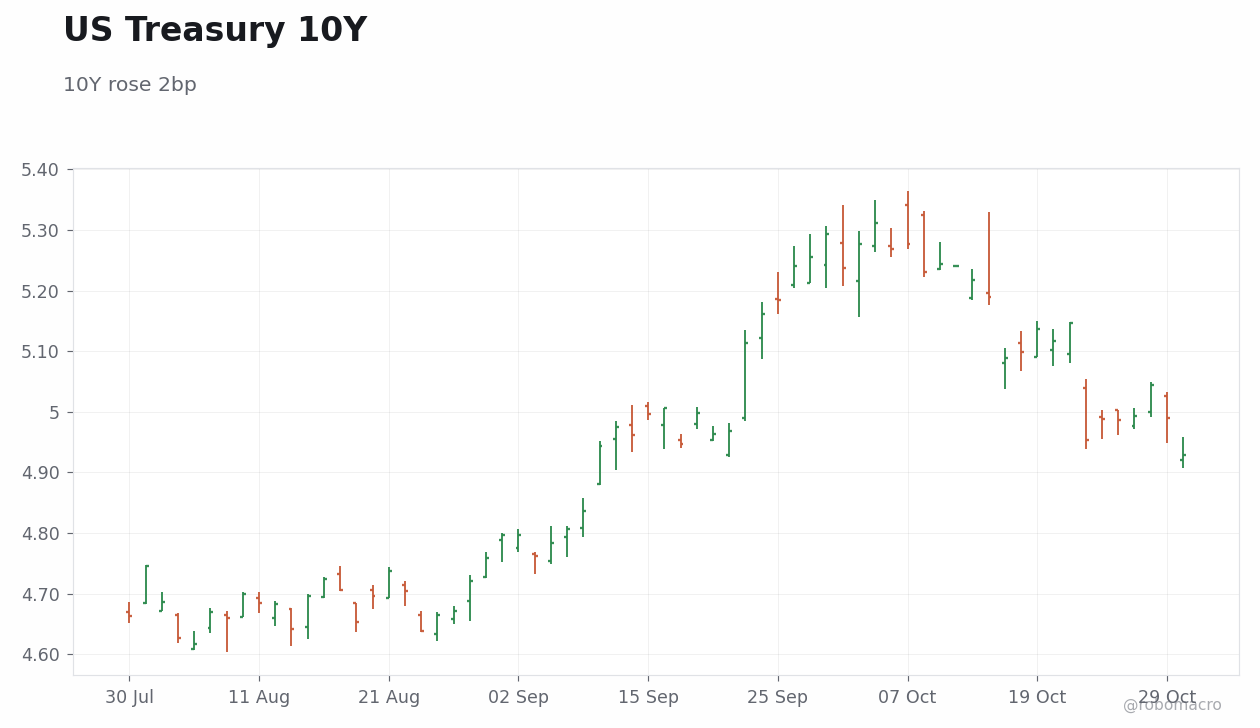
The most significant DM yield move was the 8 basis point decline in UK 10-year gilt yields to 5.29%. U.S. 10-year Treasury yields rose 2 basis points to 4.98%, increasing from 4.9860 on Monday to 5.0450 on Wednesday before falling to 4.9290 on Friday, with the 30-year yield moving from 5.3010 to 5.3610 midweek then closing at 5.3090. German 10-year Bund yields fell 4 basis points to 3.32%. Japanese 10-year JGB yields declined 3 basis points to 2.77%. These moves occurred as the Fed, ECB, BoE, and BoJ held policy rates steady amid mixed economic signals. Conference Board consumer confidence rose while advance GDP growth came in below consensus, highlighting varied activity signals across regions.

Curve & Spreads

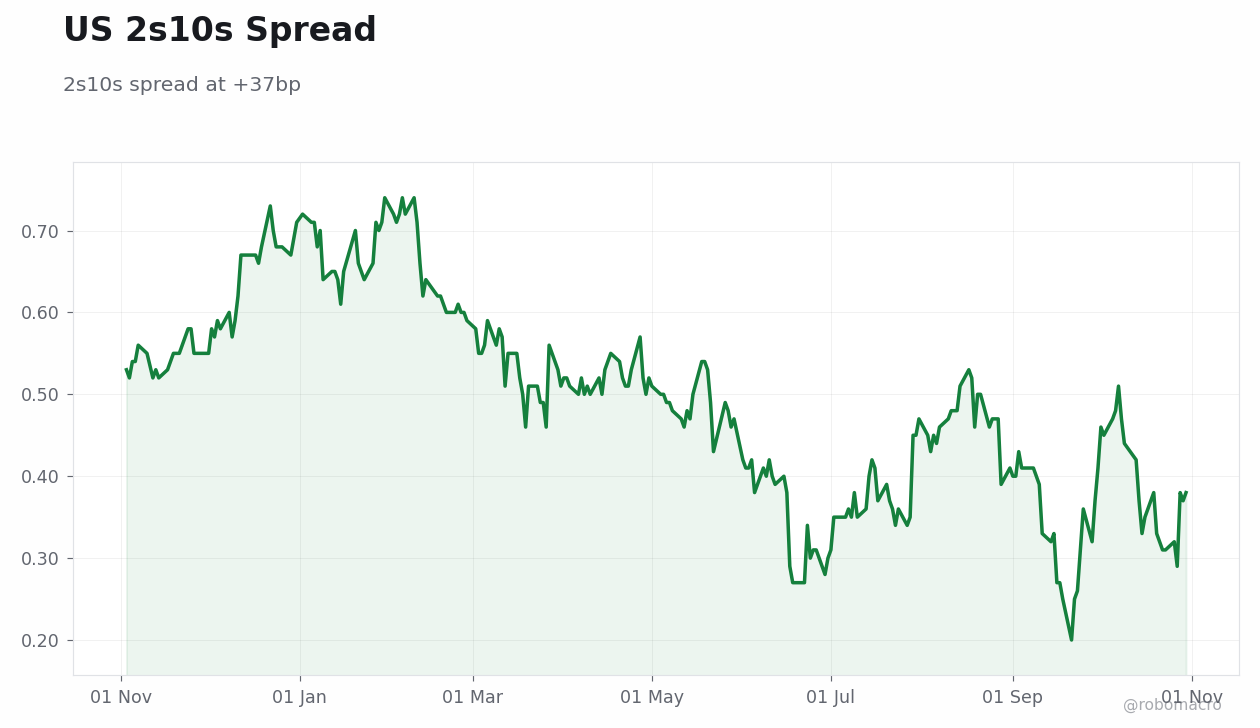
The U.S. 2s10s spread stands at +37bp, compared with +41bp in the UK and +31bp in Germany. These positive curve shapes imply directional expectations for moderating growth ahead. The U.S. experienced modest bear steepening as front-end rates fell while back-end yields edged higher, whereas Germany and the UK showed slightly flatter profiles consistent with tempered momentum expectations. Overall the configurations point to markets anticipating some softening in growth without aggressive repricing.

EM Bonds

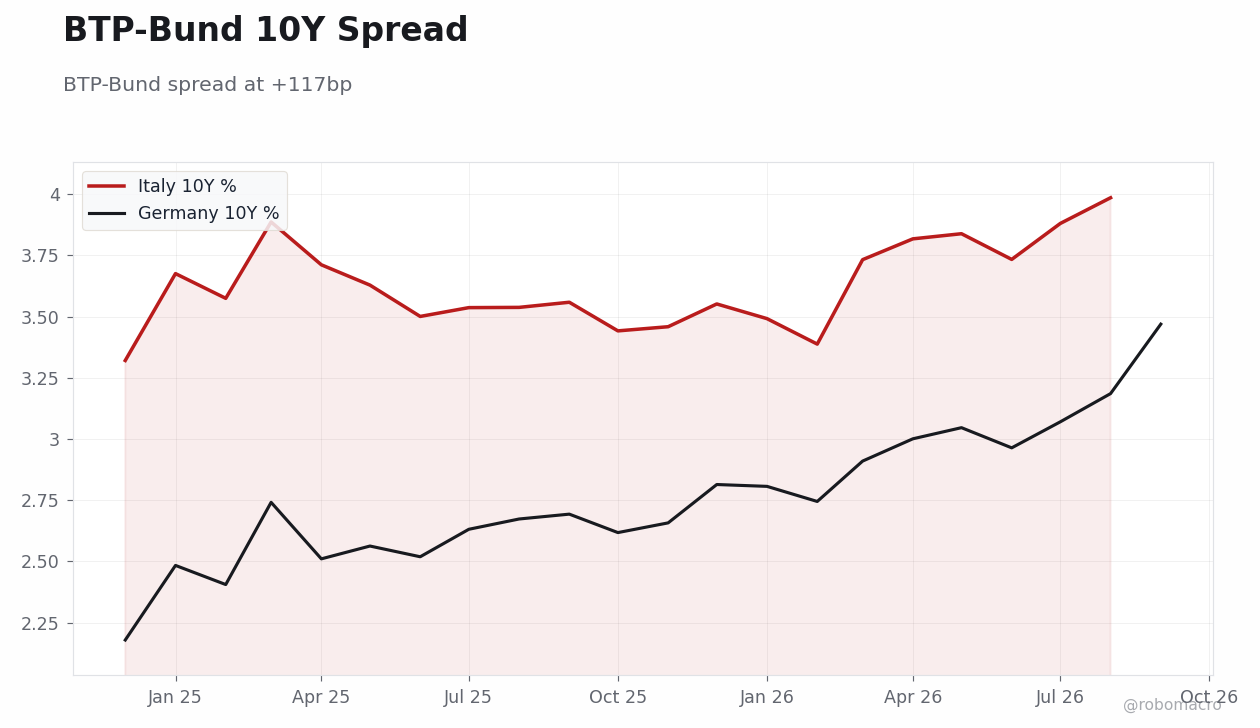
Brazilian 10-year yields stood at 15.41% after moving significantly higher while Turkish 10-year yields stood at 35.87% with the 2s10s spread at -391bp. South African 10-year yields stood at 8.73% and Indonesian 10-year yields stood at 7.64%. These EM yield levels remain markedly higher than DM counterparts such as the U.S. 10-year at 4.98% and the German 10-year at 3.32%. The persistent gap between EM and DM yields continues to reflect differentiated risk premiums and policy settings across the two universes.

Central Bank Read

The yield curve shape implies an easing bias across major central banks following this week’s decisions to hold policy rates steady. In the U.S. the 2-year yield fell 4 basis points to 4.61% while the 10-year rose 2 basis points, producing a 2s10s spread of +37bp that implies an easing bias. German 2-year yields fell 3 basis points to 3.01% against a 4 basis point decline in 10-year yields to 3.32% for a 2s10s spread of +31bp, similarly implying an easing bias. The UK 2-year fell 4 basis points to 4.88% and the 10-year fell 8 basis points to 5.29% for a 2s10s spread of +41bp, consistent with an easing bias. Japan showed a milder steepening with the 2-year rising 1 basis point to 1.87% while the 10-year fell 3 basis points to 2.77%.

Week Ahead

Decisions from the Fed and other central banks will remain in focus in the week ahead. CPI inflation prints, payrolls and jobs data, GDP releases, and Treasury auctions will also draw attention from rates investors. These events matter most for duration risk because they will help shape views on the inflation trajectory and growth momentum. Any deviation from expected paths could quickly influence yield levels and curve steepness.

RoboMacro AI Economic Research

Global Macro Watch

Week of October 26–30, 2026 robomacro.com
Markets in ReviewFixed Income
Global Government Bond Yields
Yields in %. WoW change in basis points, over the five trading sessions to the latest close. US tenors are Treasury constant-maturity yields (Federal Reserve); international tenors are benchmark government yields from public market data.
Country2Y2Y WoW10Y10Y WoW30Y30Y WoW2s10s
United States4.61%-4bp4.98%+2bp5.32%+3bp+37bp
United Kingdom4.88%-4bp5.29%-8bp5.72%-1bp+41bp
Germany3.01%-3bp3.32%-4bp3.68%-0bp+31bp
France3.67%-12bp4.97%-6bp5.47%-3bp+130bp
Italy3.44%-9bp4.49%-10bp5.08%-5bp+105bp
Spain3.18%-8bp3.95%-10bp4.45%-8bp+77bp
Japan1.87%+1bp2.77%-3bp3.84%+1bp+90bp
Canada3.31%-5bp3.80%-5bp4.12%-2bp+49bp
Australia4.93%-1bp5.15%-7bp5.55%-5bp+21bp
China1.25%+0bp1.66%+1bp2.09%+2bp+41bp
India6.90%+5bp7.40%-7bp7.84%-4bp+50bp
Brazil14.89%+211bp15.41%+242bp——+52bp
Mexico——9.28%-3bp———
South Korea3.71%-4bp4.01%-8bp4.14%-6bp+30bp
Indonesia——7.64%+20bp7.77%+31bp—
Turkey39.77%+324bp35.87%+2bp——-391bp
South Africa——8.73%-5bp8.98%-9bp—
Poland——6.38%-5bp———

US 2Y yields fell 4bp to 4.61% while the 10Y rose 2bp to 4.98%, steepening the 2s10s to +37bp. UK 10Y declined 8bp to 5.29% and France 2Y dropped 12bp, the largest move among major markets. Italy and Spain 10Y yields each fell 10bp, extending the rally in peripheral Europe. Turkey 2Y surged 324bp to 39.77% and Brazil 10Y jumped 242bp, the clearest outliers. Japan 10Y eased 3bp to 2.77% amid mixed moves across the curve. Indonesia 10Y rose 20bp while most Asian benchmarks were little changed. The 2s10s widened in nearly every market, led by France at +130bp. Next week, focus remains on inflation releases and central-bank communications that could extend or reverse these divergences.

RoboMacro AI Economic Research

Global Macro Watch

Week of October 26–30, 2026 robomacro.com
Markets in ReviewGlobal Equities
Global Equities Chart 1
Global Equities Chart 2
Global Equities Chart 3
Global Equities Chart 4

Week in Review

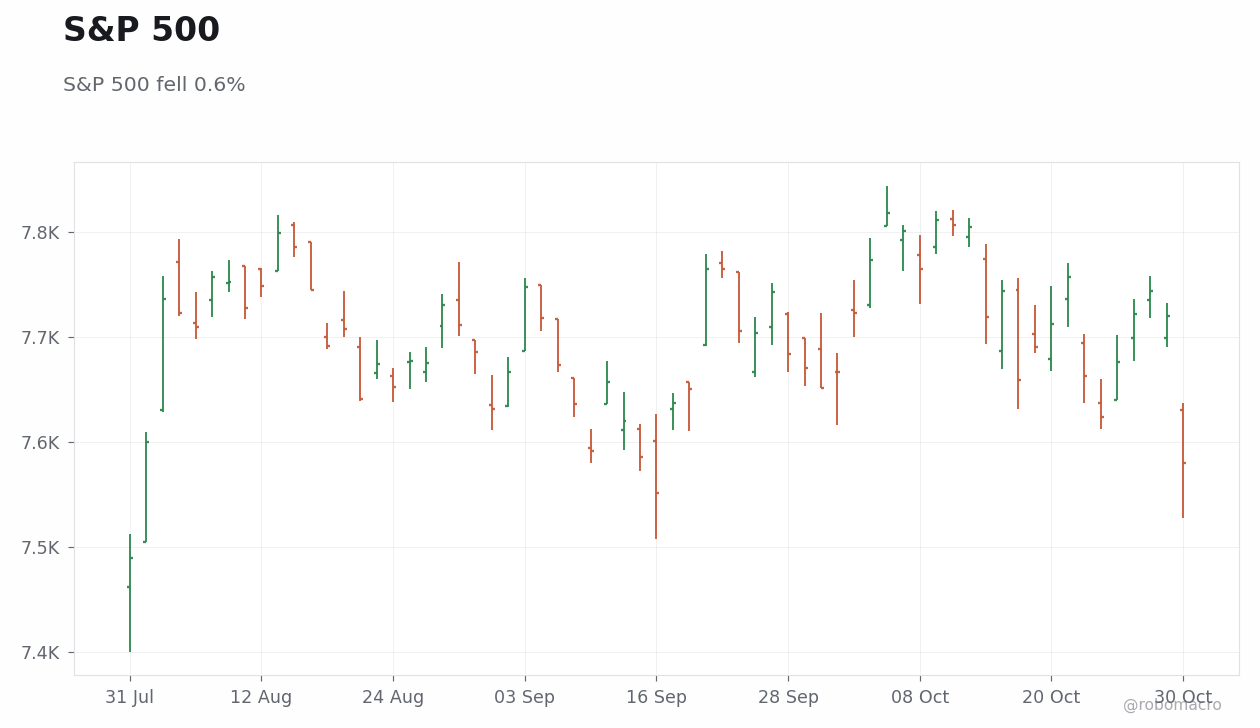
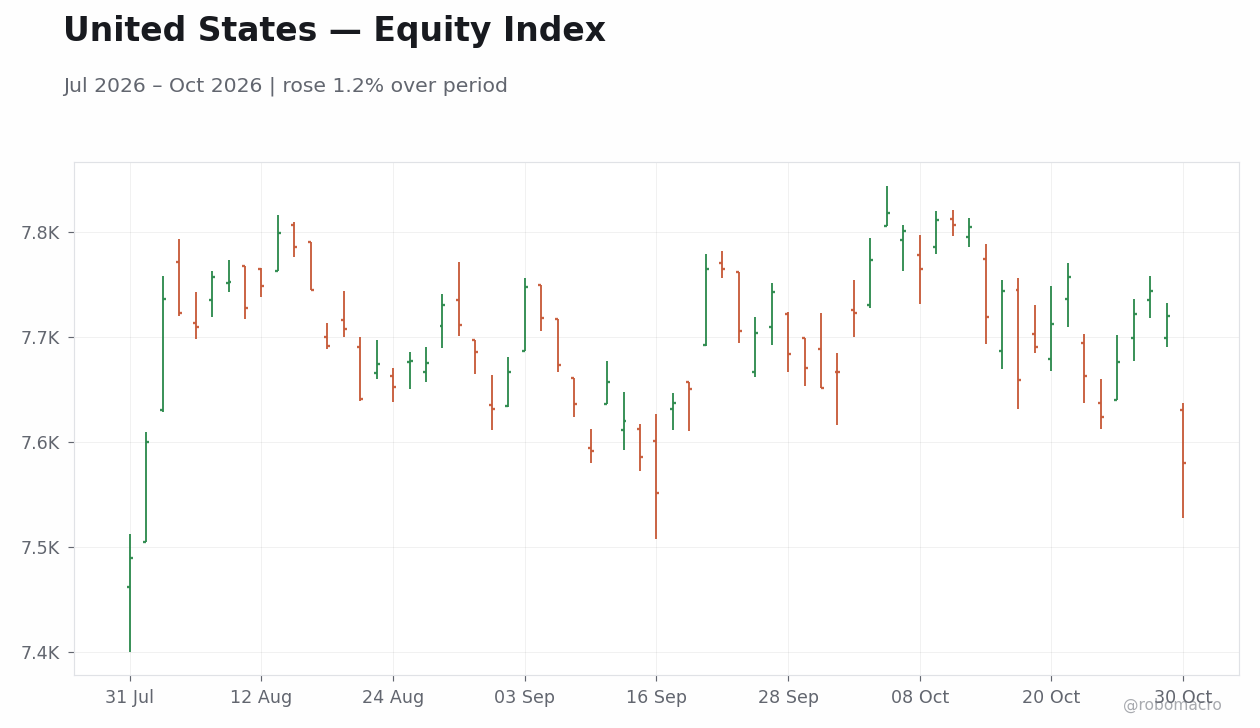
The S&P 500 fell 0.6% week-over-week. The index moved from 7,677 on Monday to 7,723 on Tuesday and peaked at 7,744 on Wednesday before falling to 7,720 on Thursday and closing at 7,580 on Friday. The Nasdaq 100 declined 2.0% and the Dow Jones fell 0.8% as late-week selling accelerated after the policy decision. The Russell 2000 gained 1.3%. European equities advanced with the Euro Stoxx 50 rising 1.0% to 6,131, the DAX up 2.5% to 25,818 and the CAC 40 gaining 2.4% to 7,969. Asian markets ended higher as the Nikkei 225 rose 0.9% closing at 63,290 after reaching 64,659 on Thursday, while emerging markets showed weakness with the Ibovespa down 18.1% to 167,922.

Regional Divergences

European indices outperformed US peers as the DAX rose 2.5% and Euro Stoxx 50 gained 1.0% amid improved German business sentiment while the ECB held policy steady. Japanese stocks posted gains with the Nikkei 225 up 0.9% after the Bank of Japan left the policy rate unchanged. US markets faced pressure with the S&P 500 down 0.6% and the Nasdaq 100 falling 2.0% following mixed signals from consumer confidence and GDP data. Brazil saw sharp losses with the Ibovespa declining 18.1% amid domestic political developments and resilient labor data. These divergences highlight how local macro catalysts influenced equity performance across regions.

Volatility & Risk Appetite

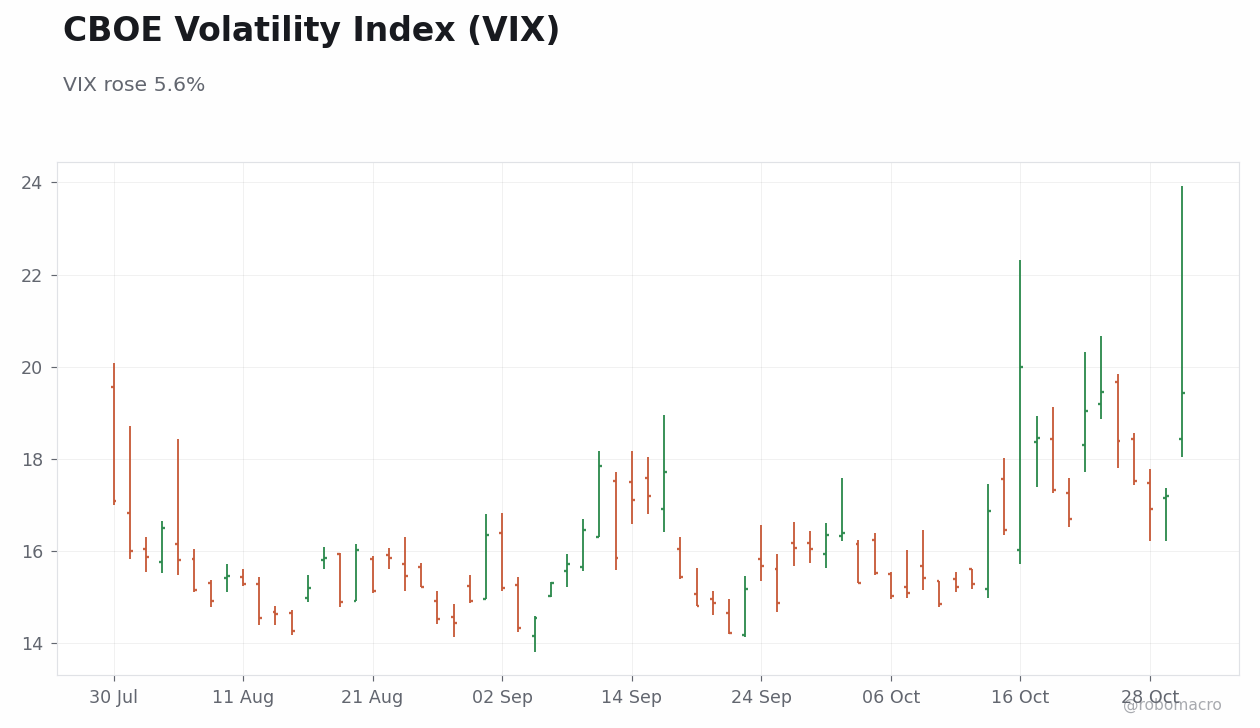
The VIX ended the week at 19.4. Growth underperformed value with the Nasdaq 100 falling 2.0% compared to a 0.8% decline in the Dow Jones. Small caps outperformed large caps as the Russell 2000 rose 1.3% versus the S&P 500's fall of 0.6%. Commodity context pointed to selective sector strength with WTI Crude rising 0.8% and Brent Crude down 2.8%, while sharp declines in gold of 2.7% and silver of 8.3% suggested waning inflation hedge demand. Overall, risk appetite weakened into the weekend close as volatility picked up.

Week Ahead

The week ahead features a light economic calendar with few major data releases scheduled. Earnings reports from technology and financial companies will be in focus throughout the week. PMI releases and GDP prints from select countries could provide additional insights into global growth. These events pose the biggest risk to equity markets if they disappoint relative to expectations, potentially favouring a risk-off tone in the near term.

RoboMacro AI Economic Research

Global Macro Watch

Week of October 26–30, 2026 robomacro.com
Markets in ReviewGlobal Equities
Global Equity Indices
Week-on-week, month-to-date, year-to-date. WoW is the change over the seven calendar days to the latest close. Source: public market data.
IndexLevelWoWMTDYTD
S&P 5007,580-0.6%-1.1%+10.5%
Nasdaq 10028,385-2.0%-6.9%+12.6%
Dow Jones51,770-0.8%+1.7%+7.0%
Russell 20002,812+1.3%+0.2%+12.1%
S&P/TSX35,620-0.5%+1.3%+11.7%
FTSE 10010,730+0.4%+2.9%+7.8%
Euro Stoxx 506,131+1.0%-0.7%+3.5%
DAX25,818+2.5%+3.5%+5.2%
CAC 407,969+2.4%+1.7%-2.8%
FTSE MIB49,501+1.9%-1.5%+9.1%
IBEX 3518,653-1.8%-1.9%+6.6%
Nikkei 22563,290+0.9%-8.2%+22.1%
Hang Seng23,294+0.9%-2.8%-11.6%
S&P/ASX 2008,908+1.3%+3.4%+2.1%
KOSPI5,731+3.2%-17.8%+33.0%
Nifty 5023,053+2.0%+2.8%-11.8%
Ibovespa167,922-18.1%-10.3%+4.6%
IPC Mexico69,779-0.1%+9.3%+8.8%
JSE Top 4099,412-0.6%-0.8%-8.2%

US large-cap benchmarks fell, with the S&P 500 down 0.6% to 7,580 and the Nasdaq 100 off 2.0% to 28,385, while the Russell 2000 rose 1.3%. European bourses diverged sharply: the DAX climbed 2.5% to 25,818 and the CAC 40 gained 2.4%, yet the IBEX 35 dropped 1.8%. In Asia, the KOSPI surged 3.2% and the Nikkei 225 added 0.9%, both outperforming the Hang Seng’s matching 0.9% gain. The Ibovespa led decliners with an 18.1% plunge. Year-to-date, the KOSPI remains the standout at +33.0%, contrasting with the Hang Seng’s -11.6% and the Nifty 50’s -11.8%. Small-cap resilience in the US and selective European strength highlighted regional divergences amid broad monthly weakness in tech indices. Next week, focus will center on fresh inflation prints and central-bank commentary for flow direction.

Equity Performance Heat Map
IndexWoWMTDYTD
S&P 500-0.6%-1.1%+10.5%
Nasdaq 100-2.0%-6.9%+12.6%
Dow Jones-0.8%+1.7%+7.0%
Russell 2000+1.3%+0.2%+12.1%
S&P/TSX-0.5%+1.3%+11.7%
FTSE 100+0.4%+2.9%+7.8%
Euro Stoxx 50+1.0%-0.7%+3.5%
DAX+2.5%+3.5%+5.2%
CAC 40+2.4%+1.7%-2.8%
FTSE MIB+1.9%-1.5%+9.1%
IBEX 35-1.8%-1.9%+6.6%
Nikkei 225+0.9%-8.2%+22.1%
Hang Seng+0.9%-2.8%-11.6%
S&P/ASX 200+1.3%+3.4%+2.1%
KOSPI+3.2%-17.8%+33.0%
Nifty 50+2.0%+2.8%-11.8%
Ibovespa-18.1%-10.3%+4.6%
IPC Mexico-0.1%+9.3%+8.8%
JSE Top 40-0.6%-0.8%-8.2%
RoboMacro AI Economic Research

Global Macro Watch

Week of October 26–30, 2026 robomacro.com
Markets in ReviewFX & Digital Assets
FX & Digital Assets Chart 1
FX & Digital Assets Chart 2
FX & Digital Assets Chart 3
FX & Digital Assets Chart 4

Week in Review

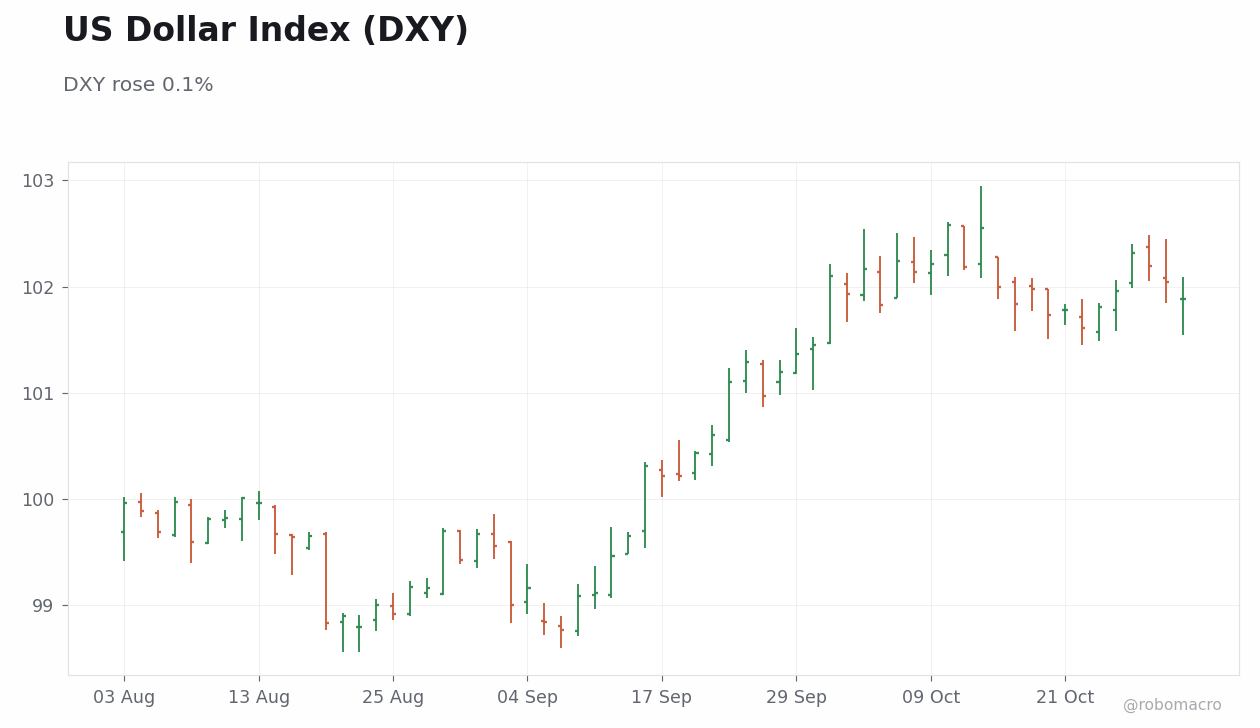
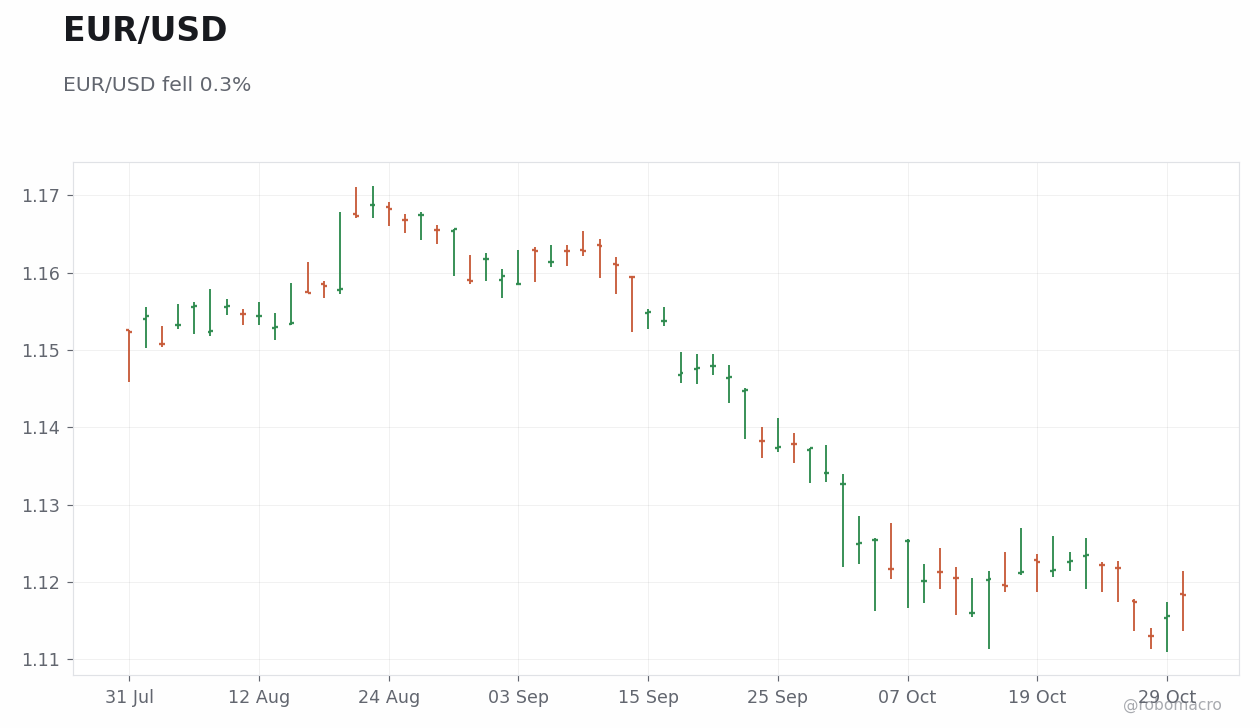
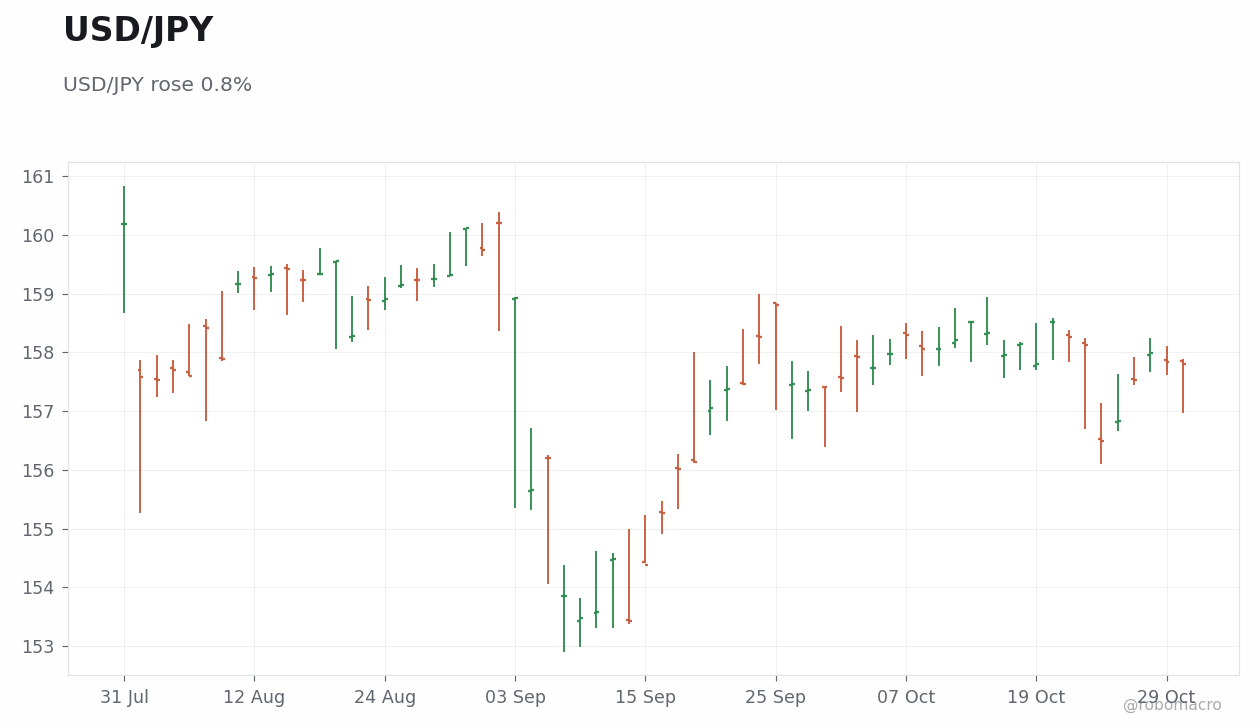
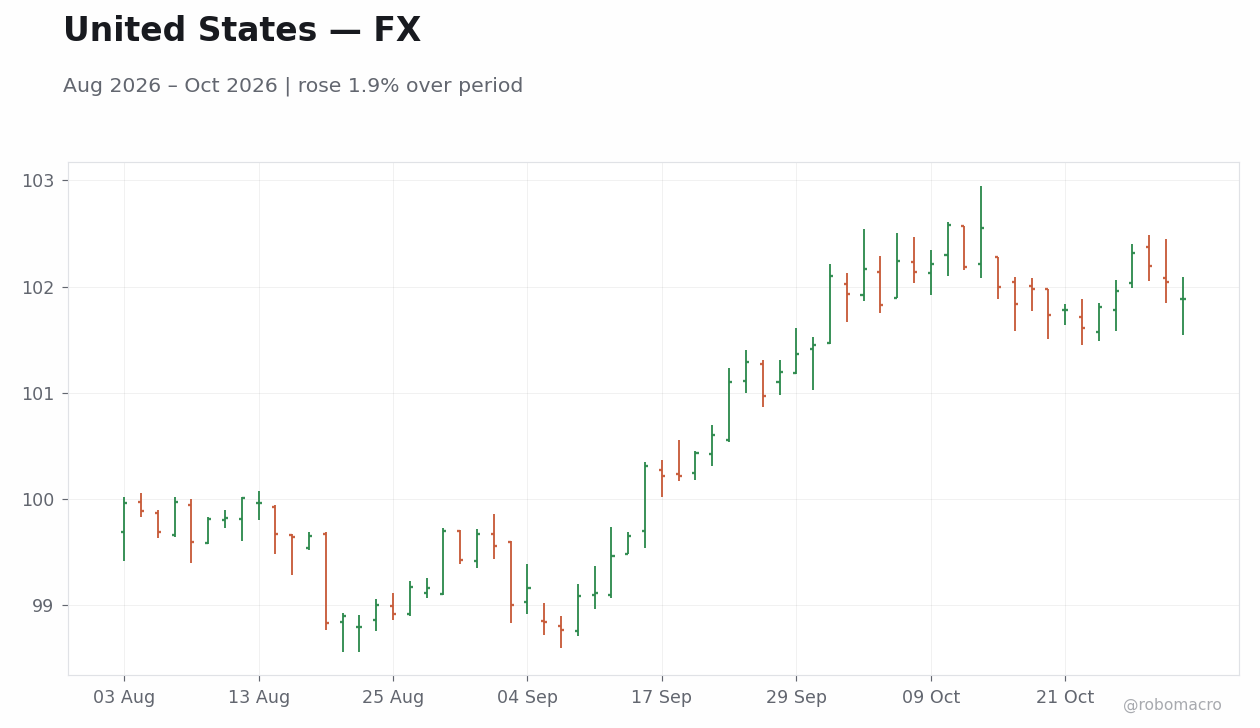
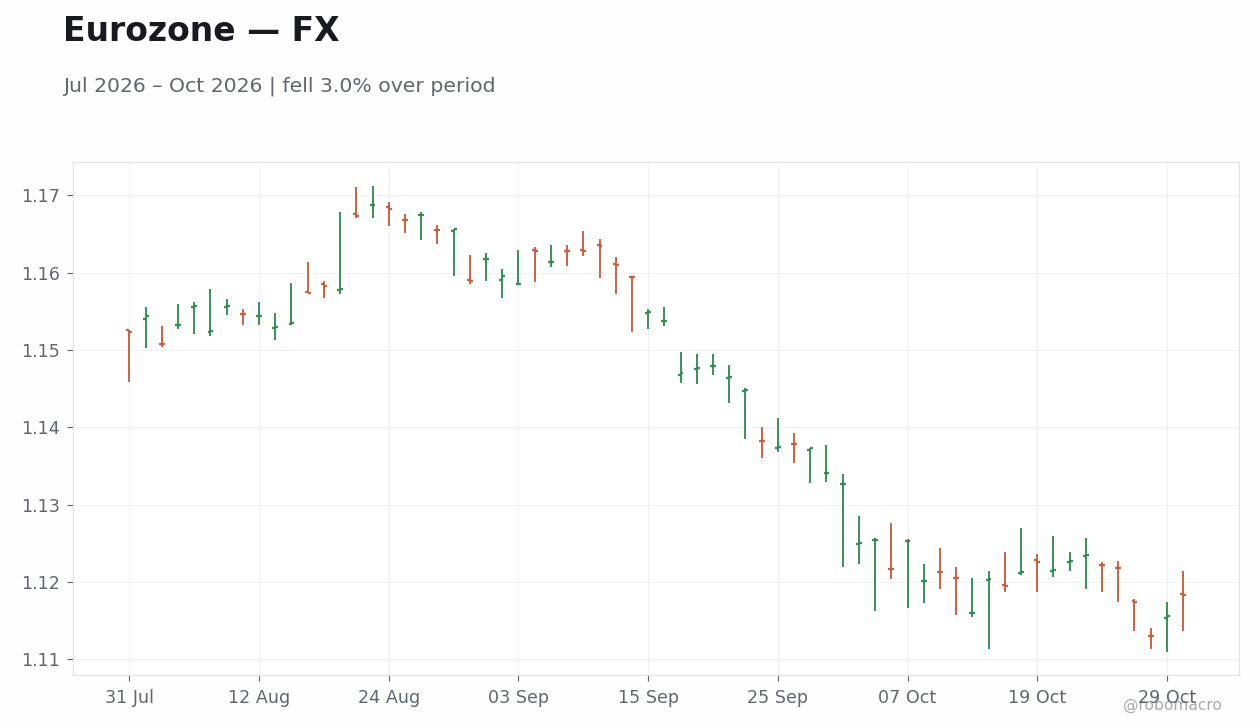
The DXY rose +0.1% week-over-week to 101.88. The index held steady at 102 from Tuesday through Friday. EUR/USD declined from 1.1218 on Monday to 1.1130 on Wednesday before recovering to close at 1.1183 on Friday, resulting in a weekly drop of 0.3%. GBP/USD moved from 1.3378 on Monday to 1.3379 on Friday to finish at 1.3393, up 0.1%. USD/JPY rose from 157 on Monday to 158 thereafter, ending at 157.80 for an advance of 0.8%. In EM, USD/BRL surged 9.7% to 5.4389 while USD/ZAR gained 0.5% to 16.71, USD/TRY rose 0.4% to 49.93, USD/MXN edged 0.3% higher to 18.77, and USD/CNY fell 0.4% to 6.6533.

Dollar & G10

DXY resilience reflected rate differentials with the US 2s10s at +37bp against the UK 2s10s at +41bp and Germany 2s10s at +31bp as the US curve bear-steepened. EUR/USD closed at 1.1183 after falling 0.3% on the week. GBP/USD ended at 1.3393, up 0.1%. USD/JPY reached 157.80, higher by 0.8% as the Japan 2s10s stood at +90bp.

EM FX

EM FX saw sharp divergence led by a 9.7% surge in USD/BRL to 5.4389 alongside Brazil 2s10s at +52bp and large yield moves. USD/MXN rose 0.3% to 18.77 while USD/ZAR gained 0.5% to 16.71. USD/TRY advanced 0.4% to 49.93 even as the Turkey 2s10s stood at -391bp. USD/CNY fell 0.4% to 6.6533, highlighting varied responses to local bond yield differentials and commodity sector pressures.

Bitcoin & Crypto

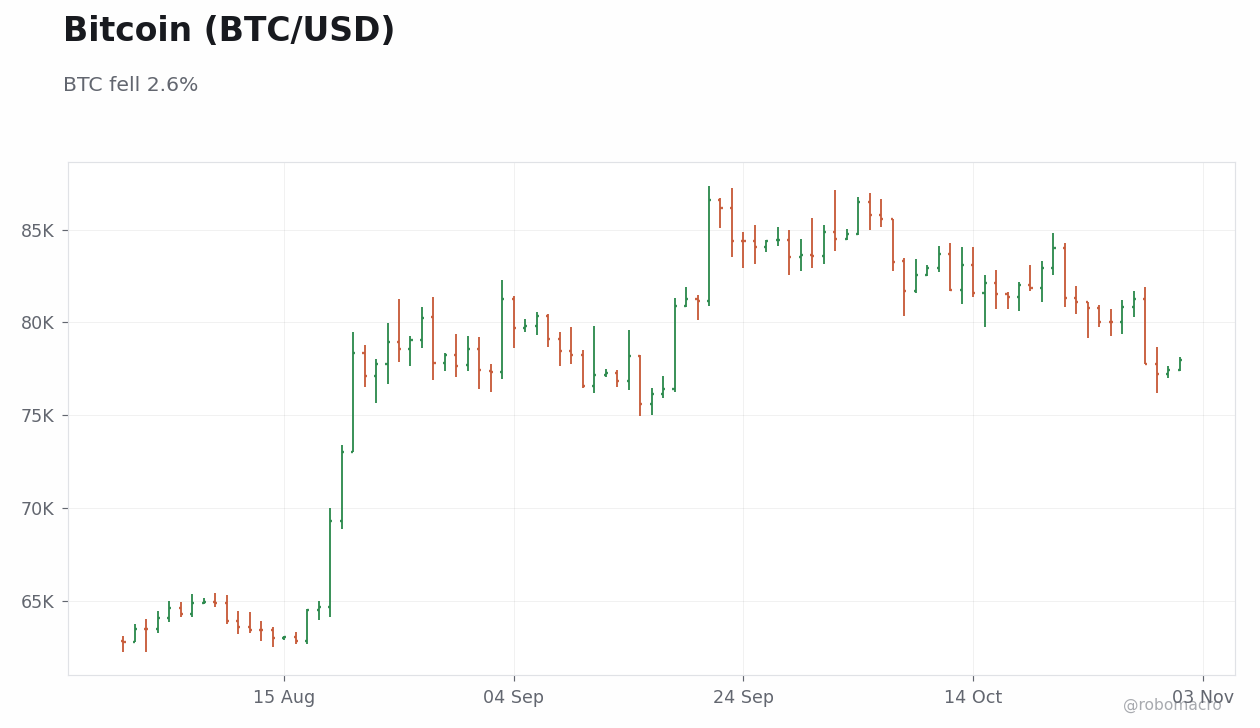
Bitcoin fell 2.6% to $77,950 after trading at 81,268 on Wednesday, 77,775 on Thursday, 77,198 on Friday, and 77,435 on Saturday. Ethereum declined 2.5% to $2,269. Solana dropped 6.2% to $95 and XRP fell 3.3% to $1. The digital asset space faced renewed questions around platform security following the Binance incident.

Week Ahead

The week ahead features central bank rate decisions that will be assessed against current curve shapes including the US 2s10s at +37bp and Japan 2s10s at +90bp. CPI releases from major economies could shift rate differentials and FX positioning. Trade balance data from select EM countries may influence currency moves in the MXN and BRL. In digital assets, regulatory and security themes are likely to remain in focus.

RoboMacro AI Economic Research

Global Macro Watch

Week of October 26–30, 2026 robomacro.com
Markets in ReviewCommodities
Commodities Chart 1
Commodities Chart 2
Commodities Chart 3
Commodities Chart 4

Week in Review

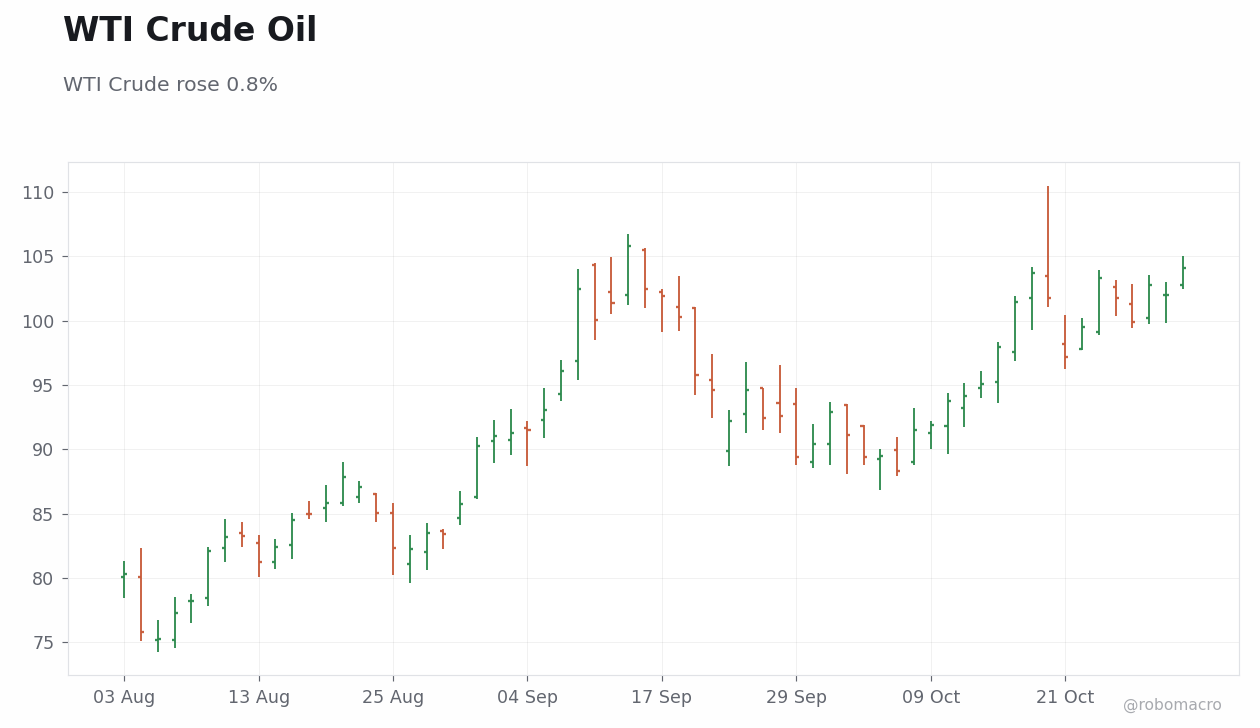
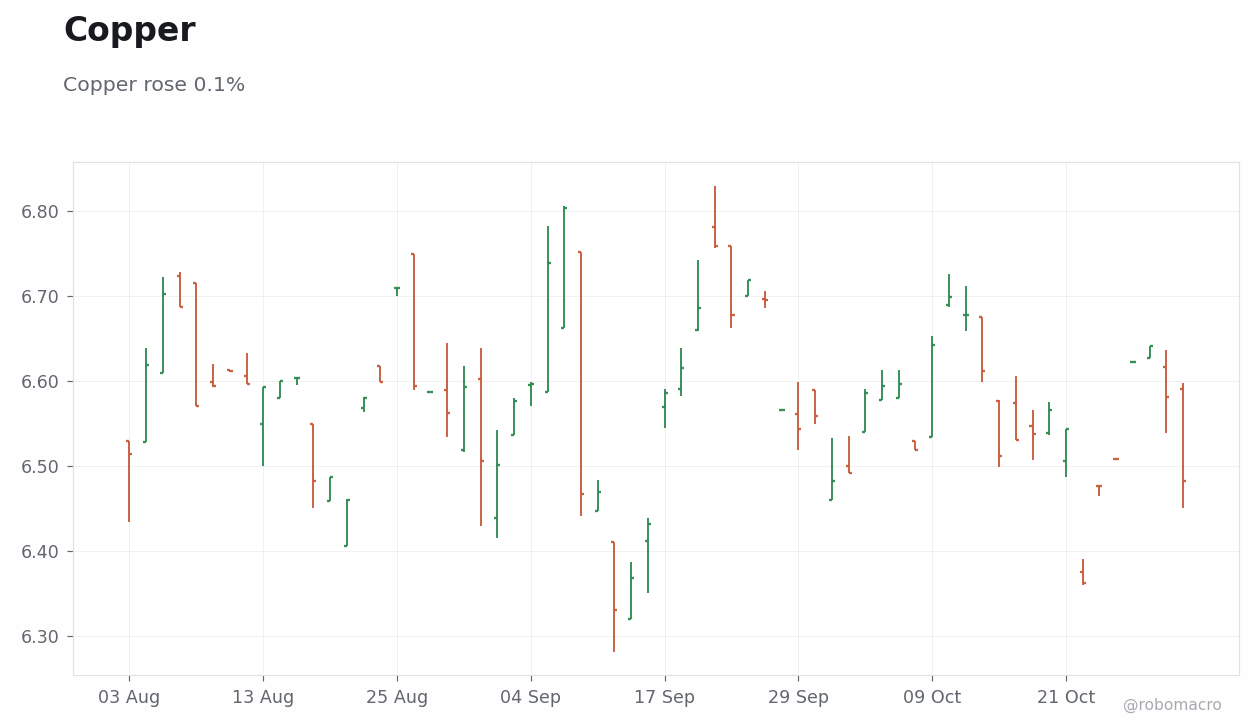
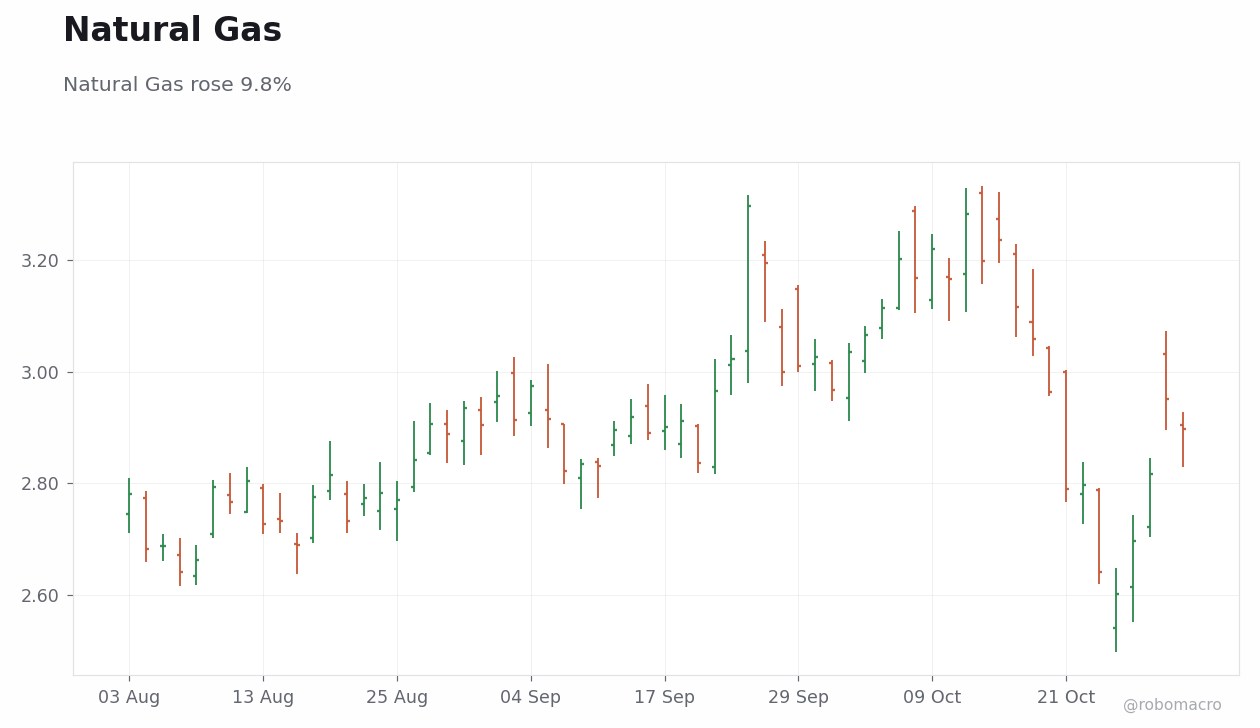
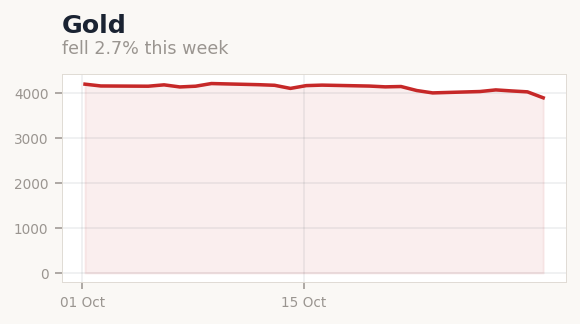
Natural Gas was the biggest mover, surging +9.8% week-over-week to 2.90. Energy markets were mixed as WTI Crude rose +0.8% to 104.12 while Brent Crude fell -2.8% to 113.43. WTI Crude climbed from 99.9 on Tuesday to 103 on Wednesday before dipping to 102 on Thursday and recovering to 104 on Friday. In precious metals, Gold fell -2.7% to 3898.90, declining steadily from 4,075 on Tuesday, to 4,052 on Wednesday, 4,031 on Thursday and 3,899 on Friday. Silver plummeted -8.3% to 49.28 with daily closes falling from 54.3 to 53.5, 52.2 and 49.3. Copper was little changed, gaining +0.1% to 6.48 with 0.0% MTD performance, while Wheat declined -3.4% to 603.50.

Energy Complex

WTI Crude settled the week at 104.12 after a +0.8% gain while Brent Crude fell -2.8% to 113.43. Natural Gas surged +9.8% to 2.90, rising from 2.6970 on Tuesday to 2.9520 on Thursday before closing at 2.8980 on Friday. The energy complex navigated geopolitical tensions including the geopolitical toll in Egypt and an oil spill in the UAE where authorities confirmed fish sold in markets remained safe to eat. Canadian oilsands producers held weekly meetings on a deal that could unlock production growth through greater fiscal certainty and regulatory reform. Overall, divergent moves across the complex reflected varied supply responses and demand signals amid these developments.

Metals & Ags

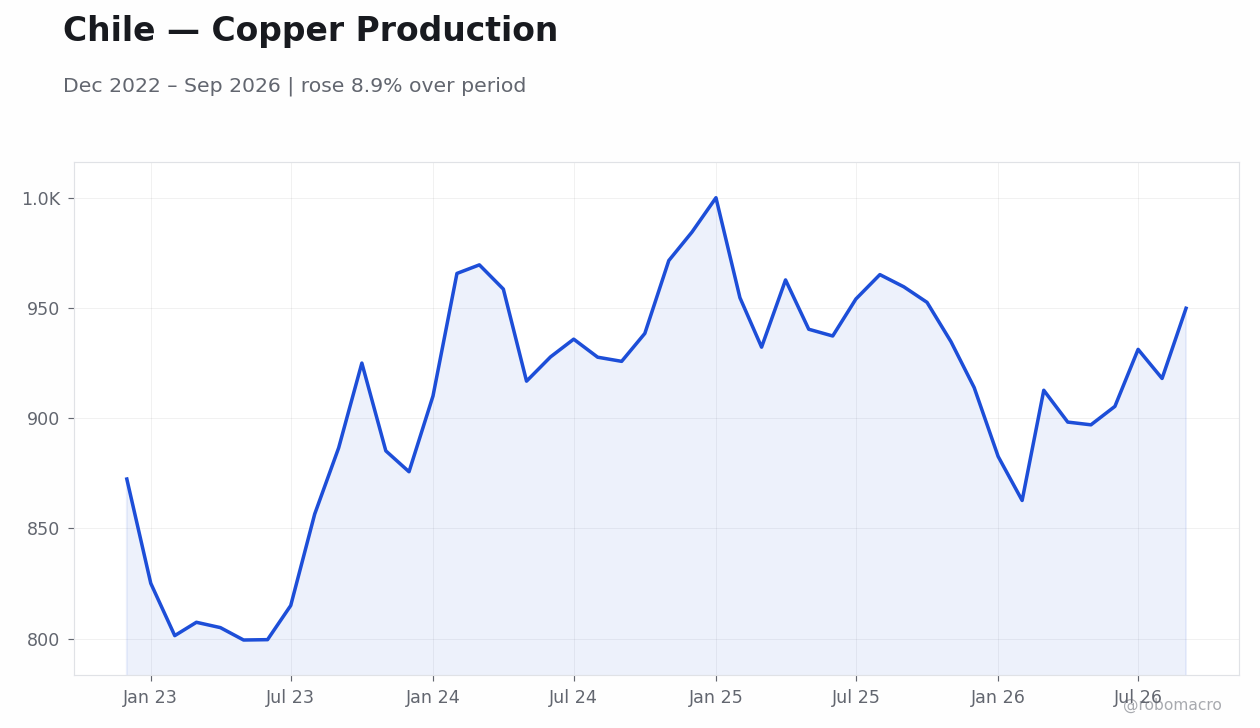
Gold declined -2.7% to 3898.90 and Silver fell -8.3% to 49.28, causing the gold-silver ratio to widen as the latter underperformed. Copper edged up +0.1% to close at 6.48, remaining unchanged on a month-to-date basis with 0.0% move. This performance comes as Chile signals a slow copper recovery from a historic output slump due to aging mines and deteriorating ore quality. Wheat prices fell -3.4% to 603.50, adding to negative sentiment in agriculture commodities. Iron Ore was nearly flat, declining -0.1% to 90.71 amid broader industrial metals softness.

Week Ahead

The economic calendar for the coming week contains no commodity-relevant events including EIA crude or gas inventories, OPEC meetings, China PMI or industrial data, US CPI, or central bank meetings that affect commodity currencies such as CAD, AUD or BRL. Market participants will therefore look beyond the calendar to non-calendar risks. Geopolitical developments, ongoing OPEC diplomacy, and potential weather impacts on natural gas demand will remain key focuses for the energy complex. Updates related to Chilean copper production and oilsands negotiations may also influence sentiment in metals and energy.

RoboMacro AI Economic Research

Global Macro Watch

Week of October 26–30, 2026 robomacro.com
Markets in ReviewFX, Commodities & Crypto
Foreign Exchange
Week-on-week, month-to-date, year-to-date. WoW is the change over the seven calendar days to the latest close. Source: public market data.
PairLevelWoWMTDYTD
DXY101.88+0.1%-0.2%+3.5%
EUR/USD1.1183-0.3%-1.3%-4.8%
GBP/USD1.3393+0.1%0.0%-0.6%
USD/JPY157.80+0.8%+0.2%+0.7%
AUD/USD0.7035+0.1%0.0%+5.3%
NZD/USD0.5633-1.2%0.0%-2.2%
USD/CAD1.3971-0.3%0.0%+1.9%
USD/CHF0.8249+0.1%0.0%+4.2%
USD/CNY6.6533-0.4%0.0%-4.9%
USD/BRL5.4389+9.7%0.0%-1.4%
USD/MXN18.77+0.3%0.0%+4.4%
USD/INR94.940.0%0.0%+5.5%
USD/ZAR16.71+0.5%0.0%+0.9%
USD/TRY49.93+0.4%0.0%+16.1%
Commodities
Week-on-week, month-to-date, year-to-date. WoW is the change over the seven calendar days to the latest close. Source: public market data.
CommodityLevelWoWMTDYTD
WTI Crude104.12+0.8%+12.1%+81.7%
Brent Crude113.43-2.8%+10.9%+86.7%
Gold3898.90-2.7%-7.2%-9.9%
Silver49.28-8.3%-18.9%-30.2%
Copper6.48+0.1%0.0%+14.9%
Natural Gas2.90+9.8%-2.3%-19.9%
Wheat603.50-3.4%-11.6%+19.1%
Iron Ore90.71-0.1%-1.5%-15.4%
Crypto Assets
Week-on-week, month-to-date, year-to-date. WoW is the change over the seven calendar days to the latest close. Source: public market data.
AssetLevelWoWMTDYTD
Bitcoin$77,950-2.6%0.0%-12.2%
Ethereum$2,269-2.5%0.0%-24.4%
Solana$95-6.2%0.0%-25.1%
XRP$1-3.3%0.0%-33.4%

DXY rose 0.1% to 101.88 as USD/BRL jumped 9.7% to 5.4389, the largest weekly gain. USD/JPY advanced 0.8% to 157.80 while EUR/USD slipped 0.3% to 1.1183. NZD/USD fell 1.2% to 0.5633, lagging AUD/USD which edged up 0.1% to 0.7035. USD/CNY declined 0.4% to 6.6533 and USD/CAD eased 0.3% to 1.3971. GBP/USD gained 0.1% to 1.3393, diverging from euro weakness. USD/ZAR rose 0.5% to 16.71 and USD/TRY added 0.4% to 49.93. USD/MXN ticked up 0.3% to 18.77. Next week, focus remains on USD/JPY at 157.80 and any follow-through in BRL.

RoboMacro AI Economic Research

Global Macro Watch

Week of October 26–30, 2026 robomacro.com
United States
Market Scorecard
AssetLevelWoW
S&P 5007580.07-1.3%
Nasdaq 10028384.85-3.0%
Dow Jones51770.31-1.1%
Russell 20002811.84+0.9%
USD/JPY157.8+0.6%
EUR/USD1.12-0.3%
GBP/USD1.34+0.1%
Gold3898.9-3.5%
WTI Crude104.12+2.3%
Bitcoin77924.67-2.6%
Chart 1
Chart 2
Chart 3
Chart 4
  • The FOMC held the policy rate steady, with PCE inflation confirming the committee’s data-dependent stance amid resilient consumer metrics.
  • The S&P 500 closed the week lower while the Nasdaq 100 posted a larger net decline as late-week selling accelerated after the policy decision.
  • Conference Board consumer confidence rose while advance GDP growth came in below consensus, highlighting mixed activity signals.
  • The US 10-year Treasury yield ended lower after a daily decline, with the 2-year also moving down as the curve bear-steepened on growth and term-premium concerns.
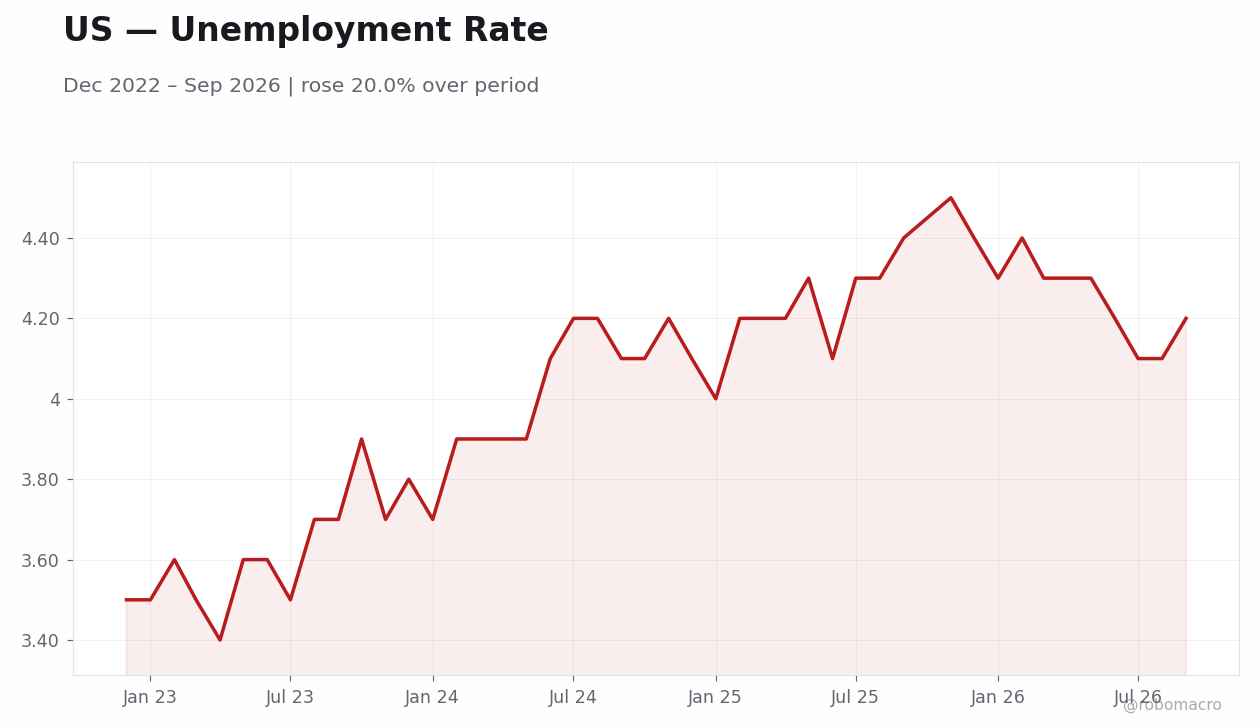
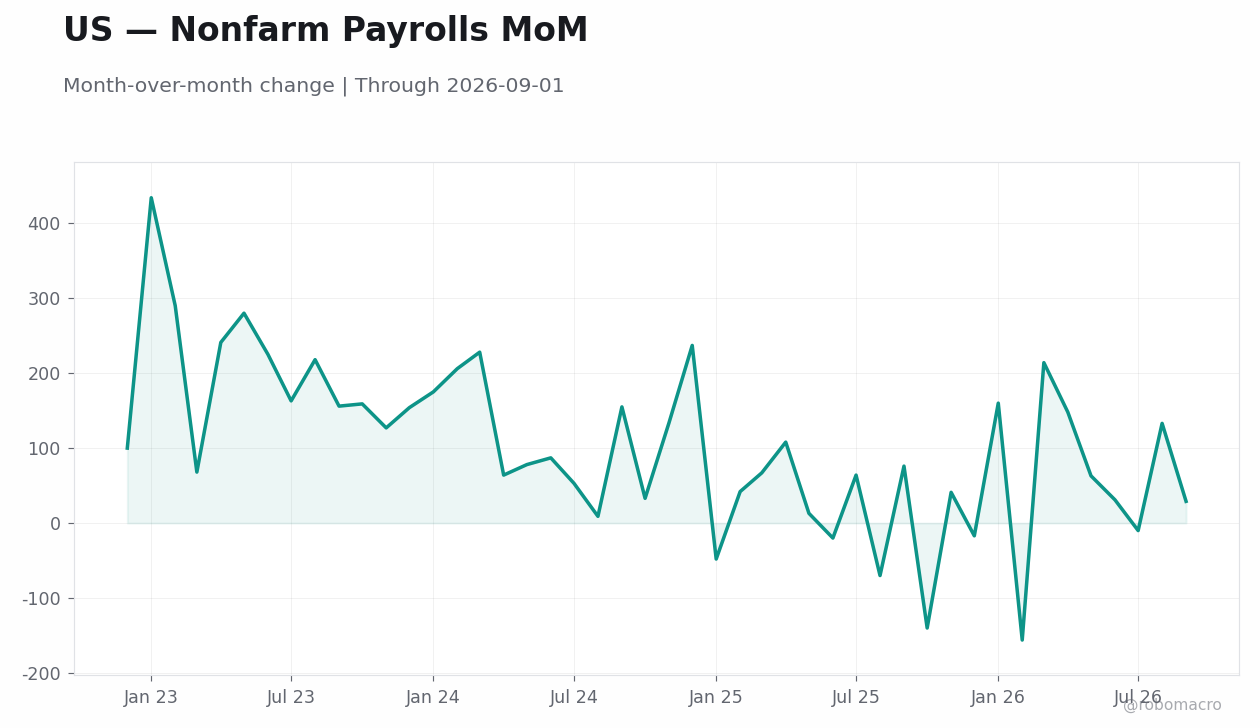
  • We forecast +72k nonfarm payrolls for the Oct 2026 report (due Nov 6; 80% band +16k to +299k), unemployment at 4.2% — RoboMacro model ensemble.

Week in Review

FOMC decision anchors policy expectations. The Federal Reserve kept the policy rate unchanged, matching the prior meeting outcome and leaving forward guidance intact. Markets interpreted the hold as consistent with the committee’s emphasis on incoming data. Consumer resilience offsets softer growth prints. Conference Board consumer confidence increased while new home sales exceeded expectations. These upside surprises contrasted with advance GDP growth printing below consensus, suggesting household spending remains supportive even as broader momentum moderates. Equity breadth narrows into month-end. The S&P 500 posted modest daily gains mid-week before closing lower on a net basis. The Nasdaq 100 advanced mid-week yet finished with a larger weekly loss, reflecting concentrated selling in technology names after the policy announcement. Yield curve steepens on term-premium concerns. The 10-year Treasury yield rose before easing, while the 2-year fell. This bear-steepening occurred alongside WTI crude advancing, adding to inflation persistence narratives. The configuration leaves the domestic cycle in a mid-phase where selective resilience in demand coexists with softening activity signals, keeping the Federal Reserve on hold without immediate recalibration.

Fed Watch

The Federal Reserve held the policy rate steady, consistent with the prior decision and leaving the target range unchanged. No fresh forward guidance revisions appeared in the statement, with the committee reiterating its data-dependent approach amid PCE inflation above target. Speakers delivered remarks without altering the medium-term rate path narrative. Consumer confidence and new home sales reinforced the view that domestic demand remains resilient enough to tolerate the current stance. Advance GDP growth below consensus provided a counterbalance that supports holding without immediate adjustment. The configuration keeps the policy rate steady while incoming prints on inflation persistence and labor-market metrics will shape the path ahead of the next meeting. The October decision preserves flexibility rather than signaling any shift in the balance of risks.

Data Review

Advance GDP growth printed below consensus while the GDP price index moderated from the prior reading. Personal income increased below expectation and personal spending rose slightly less than forecast. Core PCE advanced in line with consensus and the year-over-year measure matched expectations. Weekly jobless claims came in below anticipated levels. Consumer confidence rose above the prior reading while new home sales exceeded consensus. The employment cost index rose in line with forecast. Chicago PMI fell below consensus. These releases collectively point to a cycle where inflation remains above target while growth moderates below prior expectations, supporting the Federal Reserve’s decision to maintain the policy rate without altering the medium-term path. The data mix reinforces tolerance for volatility provided domestic demand prints stay within recent ranges.

RoboMacro AI Economic Research

Global Macro Watch

Week of October 26–30, 2026 robomacro.com
Data Review: Actual vs Consensus
DateCtryEventPrior Cons.Actual
Mon 26USChicago Fed National Activ-0.08-0.07
Mon 26USDallas Fed Manufacturing I9.8-13.4
Mon 26US3-Month Treasury Bill Auct4.1-4.0
Mon 26US6-Month Treasury Bill Auct4.2-4.2
Mon 26US2-Year Note Auction4.8-4.7
Tue 27USBuilding Permits Month-ove-2.1-0.20-0.40
Tue 27USBuilding Permits Final1.4mn1.4mn1.4mn
Tue 27USADP Employment Change Week18K-17K
Tue 27USDurable Goods Orders Month0.101.51.8
Tue 27USDurable Goods Orders Ex Tr0.300.600.50
Tue 27USDurable Goods Orders ex De0.30-2.2
Tue 27USNon Defense Goods Orders E1.60.700.50
Tue 27USRedbook Retail Sales Year-9.0-9.3
Tue 27USS&P/Case-Shiller Home Pric2.52.52.7
Week Ahead: Key Releases
DateReleasePriorCons.
2026-11-02ISM Manufacturing PMI54.554.7
2026-11-02ISM Manufacturing Employment52.7-
2026-11-02Fed Goolsbee Speech--
2026-11-03JOLTs Job Openings7.1mn7.1mn
2026-11-03Factory Orders Month-over-Month0.101.1
2026-11-03API Weekly Crude Oil Stocks-2.0mn-
2026-11-04MBA 30-Year Mortgage Rate7.4-
2026-11-04ADP Employment Change90K65K
2026-11-04Exports Level315.2bn-
2026-11-04Imports Level420.8bn-
Chart 5
Chart 6
Chart 7
Chart 8

The Week Ahead

Monday brings HSBC manufacturing PMI final for India and NEVI manufacturing PMI for the Netherlands, both low-impact releases that offer early signals on global factory conditions. Tuesday features commodity prices year-over-year for Australia and retail sales year-over-year for the Netherlands, alongside S&P Global manufacturing PMI for Russia. Wednesday includes the Reserve Bank of Australia policy decision. Thursday delivers the Bank of England policy decision and UK services PMI, while Friday features US employment situation data including nonfarm payrolls and the unemployment rate. These releases will test whether the recent moderation in US growth extends into November or whether consumer resilience sustains momentum. Central bank speakers from the Federal Reserve are scheduled mid-week, providing further color on the data-dependent stance. The slate arrives against a backdrop of higher WTI crude and 10-year yields, keeping inflation and term-premium considerations in focus.

Risks & Themes

The week’s data shift the outlook toward greater tolerance for mixed prints, with GDP growth below consensus yet consumer confidence providing an offset. Upside scenarios center on sustained household spending supporting the current policy rate without acceleration in inflation. Downside risks include further softening in Chicago PMI that could prompt earlier recalibration. Market positioning shows concentrated equity selling in the Nasdaq 100 while the bear-steepening in the 10-year versus the 2-year signals term-premium concerns. Flow considerations point to caution ahead of the November employment report, with volatility likely to rise if personal spending deviates from recent prints. The current hold stance aligns with the data dependence emphasized in official communications.

Cross-Asset

Equities closed the week lower, with the S&P 500 declining and the Nasdaq 100 posting a larger drop after mid-week gains. The Dow Jones ended lower while the Russell 2000 rose. Bonds saw the 10-year yield finish lower after a daily decline, with the 2-year also moving down. FX showed USD/JPY higher on a weekly basis while EUR/USD declined and GBP/USD advanced modestly. Commodities posted WTI crude higher while gold fell. Bitcoin closed lower. These moves reflected positioning around the policy hold and late-week growth concerns.

Global Context

Cross-border spillovers from the prior week’s equity declines continued to influence US risk appetite into late October. Trade dynamics showed USD/JPY advancing amid persistent US yield advantage on the 10-year. Geopolitical risks remained contained over the last seven days, with no fresh escalations altering commodity flows beyond WTI crude’s gain. European central bank speakers maintained a data-dependent stance, leaving rate paths divergent from the Federal Reserve’s policy rate. Emerging-market dispersion persisted, with Mexico’s IPC Bolsa showing resilience while USD/MXN held near recent levels. These external factors reinforce the domestic focus on US inflation and growth.

RoboMacro AI Economic Research

Global Macro Watch

Week of October 26–30, 2026 robomacro.com
Eurozone
Market Scorecard
AssetLevelWoW
Euro Stoxx 506131.31+0.2%
DAX25818.21+1.6%
CAC 407969.42+1.6%
EUR/USD1.12-0.3%
EUR/GBP0.84-0.3%
EUR/JPY175.65-0.1%
Gold3898.9-3.5%
Brent Crude113.43-2.1%
Bitcoin77924.68-2.6%
Chart 1
Chart 2
Chart 3
Chart 4
  • German business sentiment improved while French consumer confidence declined sharply.
  • Spanish unemployment rose and French unemployment benefit claims increased after a prior decline.
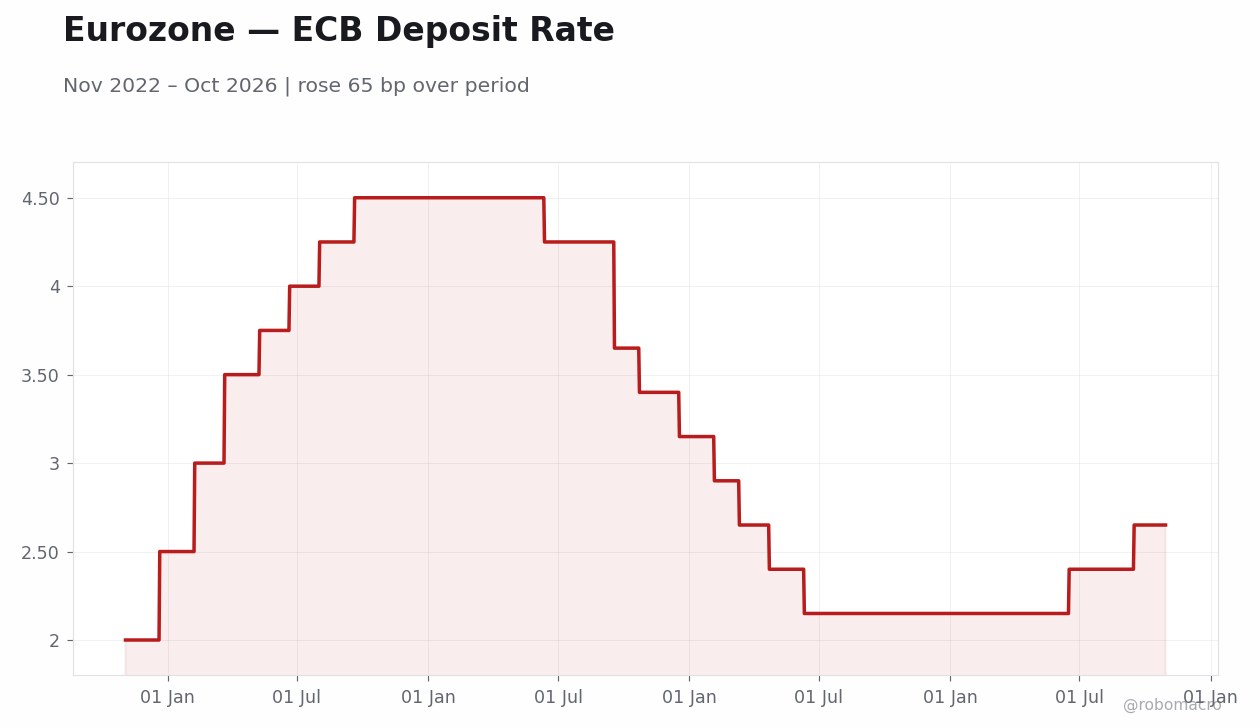
  • The ECB held policy steady with no change to forward guidance, even as French fiscal concerns widened spreads.
  • DAX rose 1.60 percent to 25,818.21 week-over-week while Euro Stoxx 50 gained 0.25 percent to 6,131.31 and German 10-year Bund yields eased.

Week in Review

German resilience amid bloc-wide divergence. German business sentiment advanced, exceeding consensus and the prior reading, while consumer confidence improved modestly. These prints supported a 1.60 percent advance in the DAX to 25,818.21 by week-end. German GDP flash estimates showed quarter-over-quarter growth above consensus, with year-over-year expansion solid.

French fiscal stress dominates sentiment. French consumer confidence plunged, missing consensus and marking the weakest level in over a decade, while unemployment benefit claims reversed sharply higher. French debt concerns drove safe-haven flows into German Bunds early in the week. The CAC 40 posted a net 1.56 percent gain to 7,969.42 despite the domestic weakness, closing flat on the final day.

Labor market softening adds to policy caution. Spanish unemployment climbed above forecast while Italian advance GDP came in below expectation. Euro Stoxx 50 recorded a weekly net gain of 0.25 percent to 6,131.31, with intraday moves reflecting rotation toward German-exposed names. EUR/USD closed the week at 1.12 after a 0.31 percent decline, pressured by positioning ahead of external central bank decisions. Overall activity data continued to show north-south divergence within the currency union, with German outperformance failing to offset French and Italian softness.

ECB Watch

The ECB maintained the deposit facility rate through the period, with no alteration to forward guidance despite mixed domestic data. Speakers maintained the data-dependent stance, noting that inflation still exceeds target while unemployment provides a buffer against rapid easing. French fiscal concerns were flagged as a transmission risk, with officials indicating no immediate bond-market intervention. German sentiment and GDP beats were viewed as supportive of the current policy setting rather than a signal for earlier adjustment. Italian inflation upside surprise reinforced caution on the medium-term rate path. Markets priced steady policy into the next scheduled meeting, with the current level viewed as appropriate given north-south divergence. Overall communication underscored tolerance for volatility provided activity prints remain within recent ranges.

Data Review

German business sentiment rose against consensus, confirming modest improvement in the bloc’s largest economy and supporting expectations for contained downside risks to growth. French consumer confidence fell sharply, a notable miss versus consensus and among the lowest prints in over a decade, highlighting household caution tied to fiscal uncertainties. Spanish headline unemployment increased, exceeding the forecast and reversing earlier labor-market gains. German consumer confidence printed slightly better than consensus yet remained deeply negative and consistent with subdued household spending. French unemployment benefit claims reversed higher after a prior decline, adding to evidence of labor-market softening. German GDP quarter-over-quarter flash came in above expected while year-over-year growth exceeded consensus, and German inflation printed below forecast. Italian inflation rose more than expected and Italian GDP quarter-over-quarter advance estimate printed below consensus. These releases collectively point to uneven progress toward the ECB’s target, with German disinflation supporting a gradual rate path while Italian upside surprises and French demand weakness complicate the medium-term outlook. The data reinforce a mid-cycle stance where the central bank tolerates mixed prints without immediate recalibration.

RoboMacro AI Economic Research

Global Macro Watch

Week of October 26–30, 2026 robomacro.com
Data Review: Actual vs Consensus
DateCtryEventPrior Cons.Actual
Mon 26FIExport Prices Year-over-Ye8.7--
Mon 26FIImport Prices Year-over-Ye7.6--
Mon 26FIProducer Price Index Year-7.3--
Mon 26EUECB Elderson Speech---
Mon 26ESProducer Price Index Year-13.2-18.3
Mon 26DEIfo Business Climate89.990.090.2
Mon 26DEIfo Current Conditions89.589.988.8
Mon 26DEIfo Expectations90.490.091.6
Mon 26BEOlo Auction---
Mon 26FR12-Month BTF Auction3.3-3.4
Mon 26FR3-Month BTF Auction2.8-2.8
Mon 26FR6-Month BTF Auction3.0-3.0
Tue 27FIBusiness Confidence Index3.0-2.0
Tue 27FIConsumer Confidence Index-4.9--9.7
Week Ahead: Key Releases
DateReleasePriorCons.
2026-11-02Retail Sales Month-over-Month1.30.50
2026-11-02Retail Sales Year-over-Year-0.40-
2026-11-02S&P Global Manufacturing PMI Index51.050.6
2026-11-02S&P Global Manufacturing PMI Index50.449.7
2026-11-03ECB Machado Speech--
2026-11-03ECB Donnery Speech--
2026-11-04Inflation Rate Year-over-Year Preli3.4-
2026-11-04Unemployment Level Change24K25K
2026-11-04S&P Global Services PMI58.357.5
2026-11-04S&P Global Services PMI51.7-

The Week Ahead

Attention turns to eurozone flash CPI and PMI prints scheduled across the coming days, with consensus expecting headline inflation to moderate further. Germany will release retail sales and industrial production, where analysts look for confirmation of the modest GDP rebound seen in the flash. France reports CPI and unemployment figures, with markets focused on whether consumer confidence stabilizes after the recent print. Italy publishes industrial production, following the weak GDP advance estimate. ECB speakers are slated for appearances, expected to reiterate the data-dependent approach. Spain releases services PMI, building on the unemployment increase. These releases will inform whether the recent German resilience extends to the broader bloc or whether French and Italian softness dominates the rate outlook.

Risks & Themes

French fiscal stress remains the dominant domestic risk, with potential for further spread widening that could impair policy transmission. German outperformance in sentiment and GDP may be misread as uniform bloc strength, yet Italian inflation upside and French demand weakness introduce downside scenarios for growth. Positioning shows modest long exposure in German equities after the DAX gain, leaving room for reversal if PMI prints disappoint. Volatility in Brent crude adds external pressure on inflation-sensitive assets. Upside risks center on faster German disinflation supporting earlier easing signals, while downside risks hinge on sustained French political paralysis. Flow data indicate continued safe-haven demand for Bunds, capping yield upside even as the curve bear-steepened modestly.

Cross-Asset

Euro Stoxx 50 closed the week at 6,131.31 after a 0.25 percent net gain. DAX advanced 1.60 percent to 25,818.21. CAC 40 rose 1.56 percent to 7,969.42. German 10-year Bund yields eased while the 2-year yield fell, reflecting safe-haven demand early in the week that later moderated. EUR/USD ended at 1.12 after a 0.31 percent weekly decline. Brent crude fell 2.06 percent to 113.43 while gold declined 3.45 percent to 3,898.90, both weighing on energy-sensitive eurozone assets. Bitcoin closed at 77,924.68 after a 2.62 percent weekly drop.

Global Context

U.S. equity declines in the prior week contributed to cautious eurozone positioning early in the period. Persistent U.S. yield advantage kept EUR/USD under pressure, closing at 1.12 after a 0.31 percent weekly decline. Global risk appetite signals remained selective, with DAX outperformance contrasting broader equity weakness. Trade dynamics showed limited direct spillover from non-eurozone data in the last seven days, though Brent crude weakness added to energy price relief. Geopolitical tensions around energy were noted but did not alter the core domestic data narrative.

RoboMacro AI Economic Research

Global Macro Watch

Week of October 26–30, 2026 robomacro.com
Japan
Market Scorecard
AssetLevelWoW
Nikkei 22563290.11+1.8%
USD/JPY157.8+0.6%
EUR/JPY175.65-0.1%
GBP/JPY211.1+0.6%
Gold3898.9-3.5%
Brent Crude113.43-2.1%
Bitcoin77924.68-2.6%
Chart 1
Chart 2
Chart 3
Chart 4
  • Japan consumer prices advanced year-over-year, arriving ahead of the Bank of Japan decision that left the policy rate unchanged.
  • Industrial production and retail sales posted mixed results that missed expectations, pointing to uneven domestic momentum.
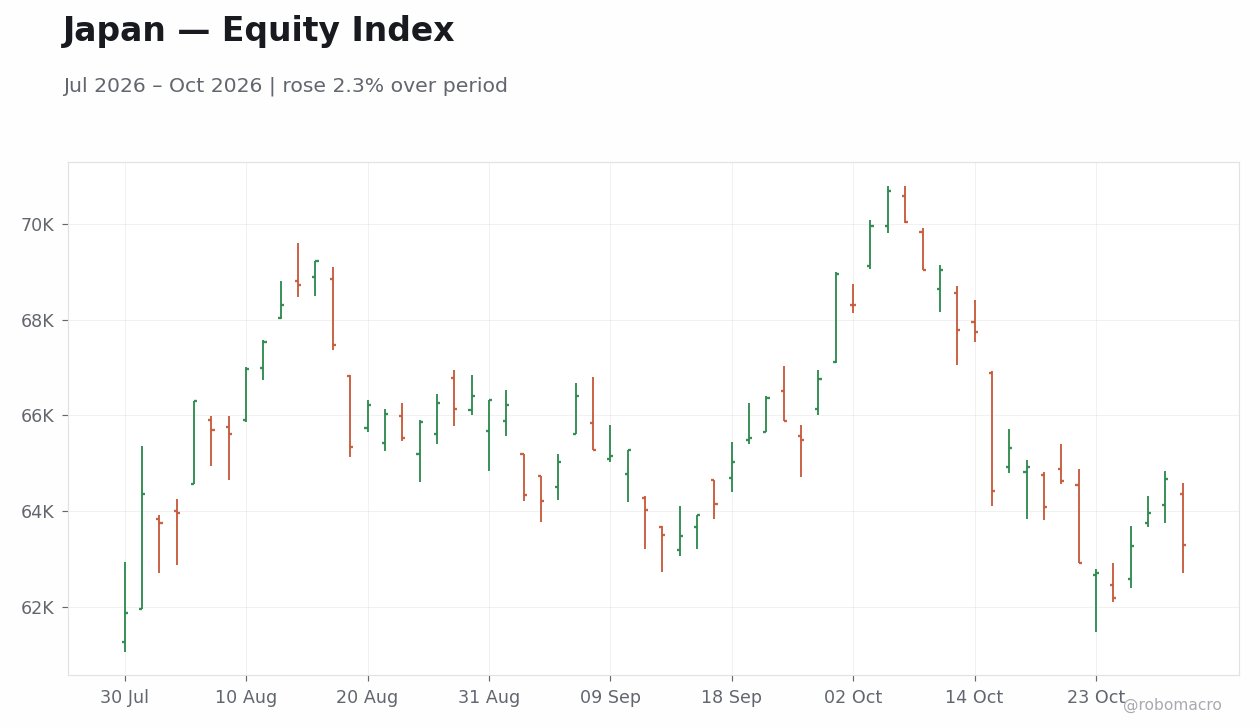
  • The Nikkei 225 closed the week at 63290.11 after a 1.77% weekly gain, with USD/JPY ending at 157.80 and EUR/JPY at 175.65.

Week in Review

Inflation print sets policy tone. Japan’s consumer prices advanced year-over-year ahead of the Bank of Japan decision. The outcome reinforced the case for gradual normalisation even as other activity indicators softened.

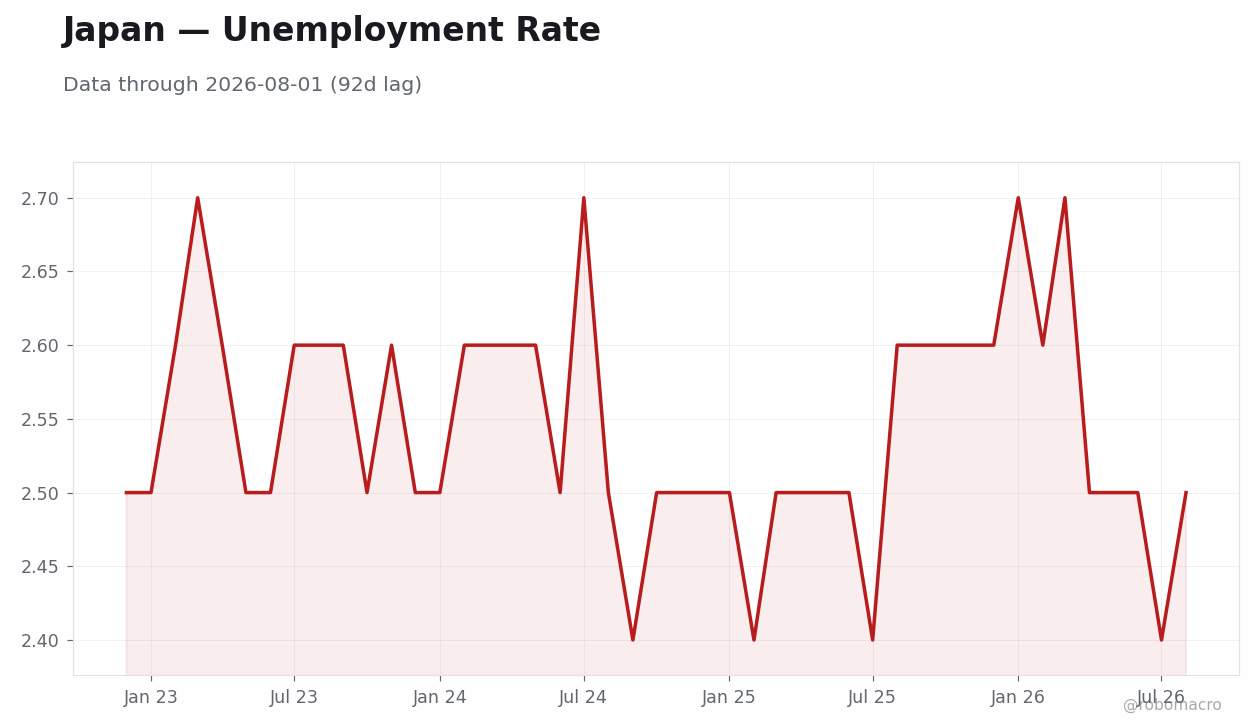
Mixed activity data challenge resilience narrative. Industrial production rebounded month-over-month while retail sales rose year-over-year at a slower pace than expected. Unemployment edged lower yet consumer confidence declined.

Equity and yield moves reflect positioning ahead of decisions. The Nikkei 225 advanced to close the week at 63290.11, posting a 1.77% weekly gain. The 10-year JGB yield rose modestly while the 2-year yield moved higher.

Currency flows remain contained. USD/JPY traded in a narrow range before ending at 157.80, a 0.62% weekly advance, with EUR/JPY closing at 175.65. Cross-yen pairs showed modest net gains, consistent with selective positioning.

Housing starts signal further softening. Housing starts declined year-over-year, adding to evidence of cooling construction activity.

Policy hold aligns with data dependence. The Bank of Japan left the policy rate unchanged and released its Quarterly Outlook Report without altering forward guidance language. Markets digested the decision alongside the fresh inflation print and mixed activity data.

Through-line points to selective resilience. The week’s arc showed inflation providing the clearest domestic support for normalisation while consumption and production data revealed pockets of weakness. Equity gains occurred alongside steady-to-higher yields, indicating investors balanced the inflation outcome against softer retail and housing figures.

Broader context tempers optimism. Earlier readings had shown the Nikkei at higher levels and machinery orders beating expectations, yet the current configuration leaves the growth impulse dependent on sustained price pressures rather than broad-based demand.

BoJ Watch

The Bank of Japan held the policy rate unchanged and issued its Quarterly Outlook Report without shifting language on the pace of normalisation. Officials have continued to frame policy as data-dependent, with the recent CPI print now cited in public commentary as evidence that the target has been reached. The accompanying statement and Governor’s press conference emphasised the need to sustain inflation rather than accelerate tightening. Industrial production’s rebound and the retail sales outcome supplied mixed signals that the committee will weigh at upcoming decisions. The Outlook Report contained no explicit revision to inflation forecasts beyond acknowledging the recent print. Housing starts added a further cautionary data point for the growth component of the policy reaction function.

RoboMacro AI Economic Research

Global Macro Watch

Week of October 26–30, 2026 robomacro.com
Data Review: Actual vs Consensus
DateCtryEventPrior Cons.Actual
Mon 26JPCoincident Index Final121-119
Mon 26JPLeading Economic Index Fin118118118
Mon 26JPServices Producer Price In3.53.73.7
Tue 27JPBoj Jgb Purchase---
Wed 28JPForeign Bond Investment Le-160.5bn--92.6bn
Wed 28JPForeign Stock Investment L-67.5bn-1180.9bn
Wed 28JP2-Year JGB Auction2.0-1.9
Wed 28JP3-Month Treasury Bill Auct1.3-1.3
Thu 29JPConsumer Confidence Index35.435.135.0
Thu 29JPHeadline Unemployment Rate2.52.52.4
Thu 29JPJobs/applications ratio1.21.21.2
Thu 29JPTokyo CPI Ex Food and Ener2.72.72.4
Thu 29JPTokyo CPI Year-over-Year2.73.32.8
Thu 29JPTokyo Core CPI Year-over-Y2.72.62.6
Week Ahead: Key Releases
DateReleasePriorCons.
2026-11-04BoJ Monetary Policy Meeting Minutes--
Chart 5
Chart 7

The Week Ahead

Attention next week turns to any follow-up commentary from Bank of Japan speakers and the next round of price and activity indicators that will inform the upcoming decision. Early-week PMI releases from regional economies will provide indirect signals on external demand facing Japanese exporters. Mid-week labour-market and retail figures will clarify whether recent prints mark a durable softening or temporary noise. The Quarterly Outlook Report’s emphasis on sustaining the inflation target will remain the reference point for any shift in tone. Housing starts data already released sets a lower bar for construction-related releases that follow. Officials are expected to maintain the data-dependent stance. Any further upside surprise in inflation prints would reinforce the case for holding the current policy setting into coming quarters while downside growth surprises could delay the next adjustment.

Risks & Themes

The inflation breach shifts the inflation outlook higher than the prior week’s trajectory and reduces the likelihood of an extended pause if subsequent prints remain firm. Downside risks centre on further misses in retail sales and housing starts that could weaken the consumption channel supporting normalisation. Equity resilience for the Nikkei may mask underlying sensitivity to external risk appetite. Upside scenarios hinge on sustained industrial production momentum feeding into corporate investment. The market appears to underweight the possibility that mixed activity data could prompt a more cautious tone in the next Outlook Report even with inflation above target. The 2-year yield level leaves limited buffer if growth surprises continue to disappoint.

RoboMacro AI Economic Research

Global Macro Watch

Week of October 26–30, 2026 robomacro.com
Canada
Market Scorecard
AssetLevelWoW
S&P/TSX35620.0-0.9%
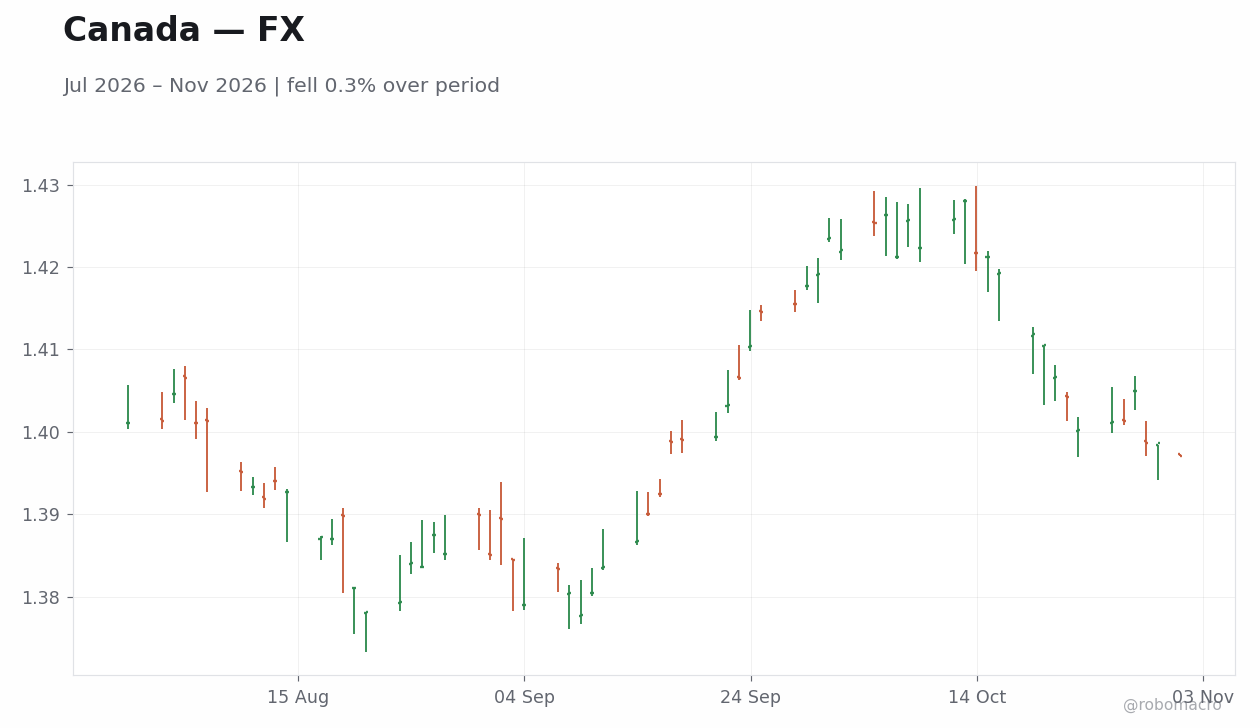
USD/CAD1.4-0.3%
EUR/CAD1.56-0.8%
WTI Crude104.12+2.3%
Natural Gas2.9+11.4%
Gold3898.9-3.5%
Brent Crude113.43-2.1%
Bitcoin77924.68-2.6%
Chart 1
Chart 2
Chart 3
Chart 4
  • Bank of Canada delivered policy tightening in late October and signaled that further moves may be required.
  • September GDP posted a flat month-over-month reading that fell short of expectations and pointed to subdued growth momentum.
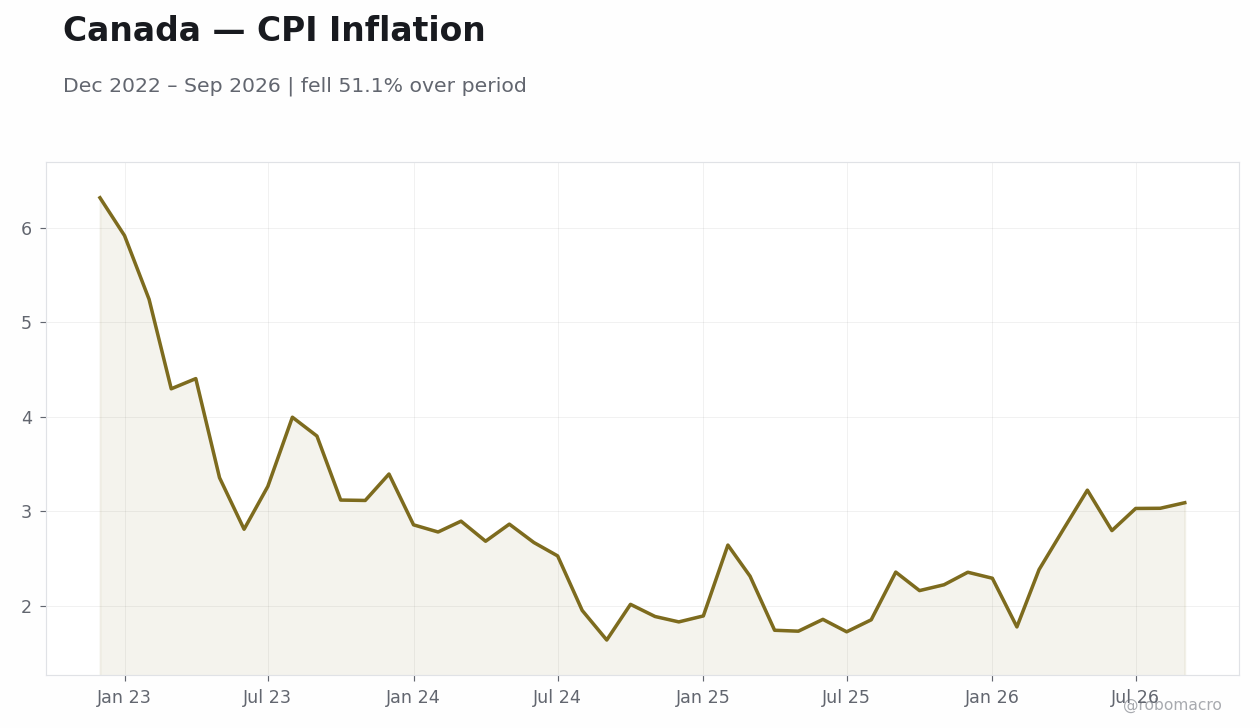
  • Headline CPI re-accelerated in September, led by a sharp rise in gasoline prices.

Week in Review

Policy Tightening Delivered The Bank of Canada raised its policy rate in late October, matching expectations and marking the first increase in more than two years. The accompanying statement and Monetary Policy Report conveyed a hawkish tone, with officials indicating that additional tightening cannot be ruled out. Canada 2-year and 10-year yields moved higher in the immediate aftermath.

Growth Momentum Fades September GDP came in flat month-over-month and below consensus, while the preliminary estimate printed negative. The soft outcome extended the recent period of essentially unchanged real GDP and left the domestic growth backdrop weak. S&P/TSX closed the week at 35,620.00, down 0.9% from the prior Friday close.

Inflation Rebound Complicates Outlook September CPI rose year-over-year, driven by gasoline prices that climbed sharply. The energy complex remained volatile, with WTI crude ending at 104.12 dollars per barrel after a 2.32% weekly gain while Brent crude fell 2.06% to 113.43 dollars per barrel. Natural gas surged 11.38% over the week to 2.90 dollars.

Currency and Yield Response USD/CAD finished at 1.40, down 0.3% on the week, while EUR/CAD declined 0.8% to 1.56. Canada 2-year and 10-year yields declined modestly over the week. Gold fell 3.45% to 3,898.90 dollars per ounce.

Cross-Asset Dispersion Bitcoin ended at 77,924.68 after a 2.62% weekly decline. The combination of the rate decision, soft GDP, and energy-driven CPI left markets focused on the balance between price stability and subdued domestic activity.

BoC Watch

The Bank of Canada delivered the late-October rate hike and used the Monetary Policy Report and press conference to signal that further tightening may be required. Officials highlighted the September CPI rebound and the gasoline-driven component as evidence that price pressures remain elevated. The flat September GDP print and negative preliminary estimate underscored the weak growth backdrop that the Bank must weigh against inflation risks. Forward guidance in the statement and MPR projections will shape expectations for the pace of any additional moves at upcoming decisions. Data released this week reinforce the tension between re-accelerating inflation and subdued activity that the Governing Council must navigate in coming quarters.

RoboMacro AI Economic Research

Global Macro Watch

Week of October 26–30, 2026 robomacro.com
Data Review: Actual vs Consensus
DateCtryEventPrior Cons.Actual
Mon 26CAWholesale Sales Month-over-1.6-0.50
Wed 28CABoC Interest Rate Decision2.22.52.5
Wed 28CABoC Monetary Policy Report---
Wed 28CABoC Rate Statement---
Wed 28CABoC Press Conference---
Thu 29CAAverage Weekly Earnings Ye3.2-3.7
Thu 29CA10-Year Bond Auction4.0-3.9
Fri 30CAGDP Month-over-Month00.200
Fri 30CAGDP Month-over-Month Prel0--0.10
Fri 30CAGovernment Budget Balance-4.8bn--220.0mn
Week Ahead: Key Releases
DateReleasePriorCons.
2026-11-02S&P Global Manufacturing PMI Index51.5-
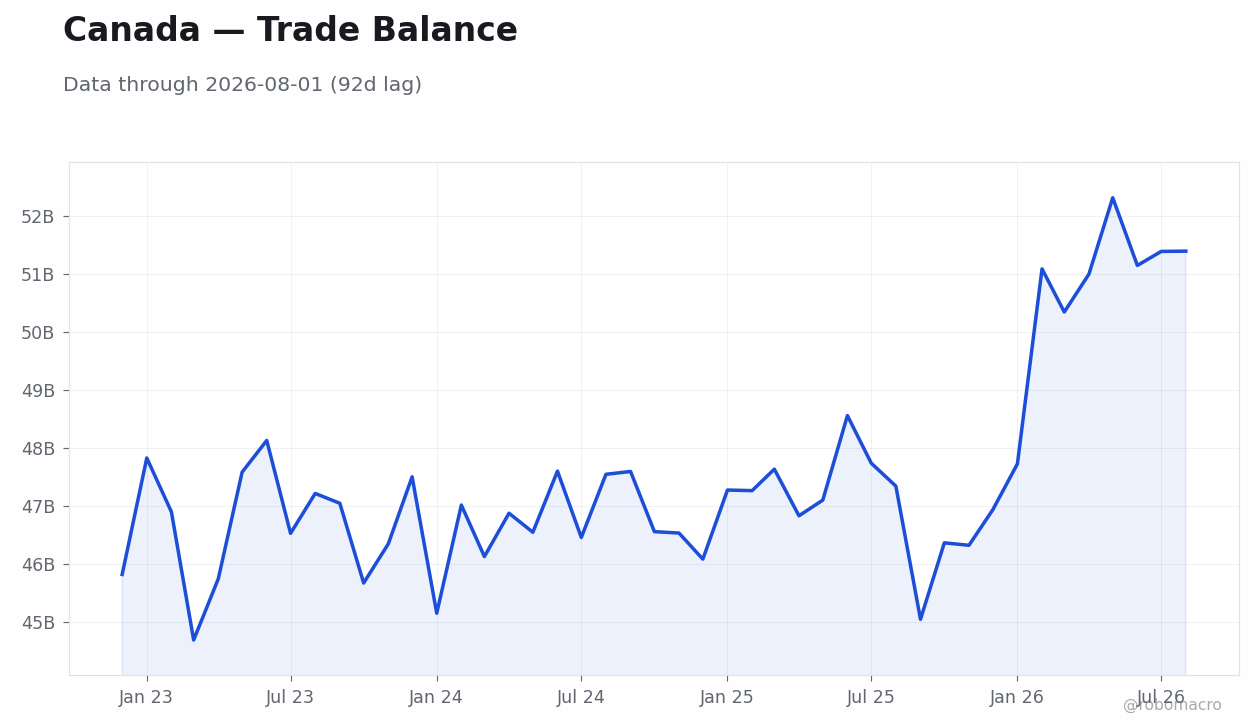
2026-11-04Trade Balance4.2bn6.1bn
2026-11-06Headline Unemployment Rate6.56.5
2026-11-06Employment Change-68K12K
2026-11-06Full-Time Employment Change-35K-
2026-11-06Labor Force Participation64.8-
2026-11-06Part-Time Employment Change-33K-
2026-11-06Ivey PMI Seasonally Adjusted58.258.0
Chart 6
Chart 7
Chart 8

The Week Ahead

Monday November 2 opens with limited tier-one Canadian releases, keeping attention on follow-through comments from Bank of Canada officials after the late-October decision. Mid-week data flows will include any updates to inflation expectations or housing indicators that could inform the next policy assessment. Thursday and Friday calendars remain light on domestic prints, shifting focus to how the recent GDP miss and CPI rebound feed into staff projections ahead of the subsequent meeting. Consensus for any early-November activity indicators will be measured against the September GDP outcome to gauge whether the soft patch persists. Releases that speak to consumer prices or labor-market slack will carry particular weight for the rate path because they directly test the inflation-versus-growth trade-off outlined in the latest Monetary Policy Report. Officials’ post-meeting communications will be parsed for any adjustment in the language around further tightening. The overall tone of incoming data will help clarify whether the October hike marks the start of a sequence or a one-off adjustment.

Risks & Themes

The GDP shortfall raises downside risks to growth that could limit the scope for additional rate increases if the pattern continues. Energy price volatility remains the dominant upside inflation risk, with gasoline already pushing September CPI higher year-over-year. A sustained rebound in oil or natural gas could keep price pressures elevated even as domestic activity stays subdued. The Bank of Canada’s explicit reference to possible further tightening creates a policy signal that incoming data must either validate or temper. Markets appear to underweight the growth weakness relative to the inflation rebound, leaving room for repricing if subsequent prints confirm the soft GDP trend.

RoboMacro AI Economic Research

Global Macro Watch

Week of October 26–30, 2026 robomacro.com
Mexico
Market Scorecard
AssetLevelWoW
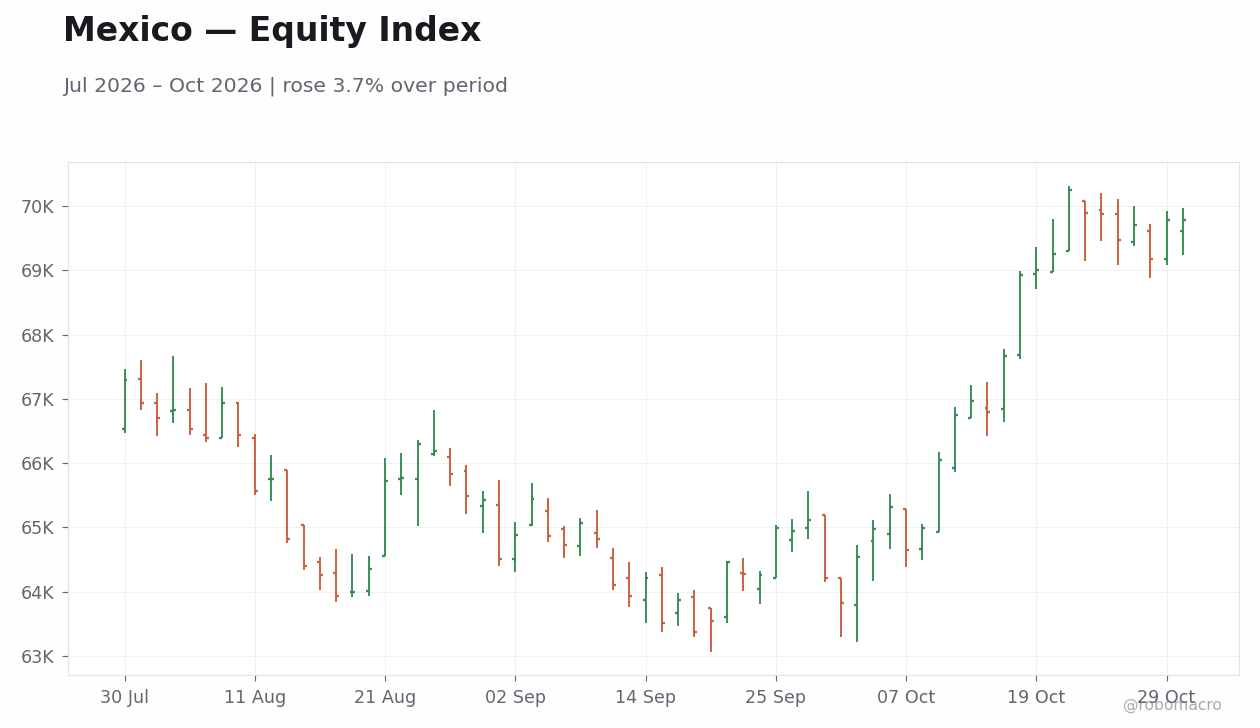
IPC Bolsa69779.2+0.4%
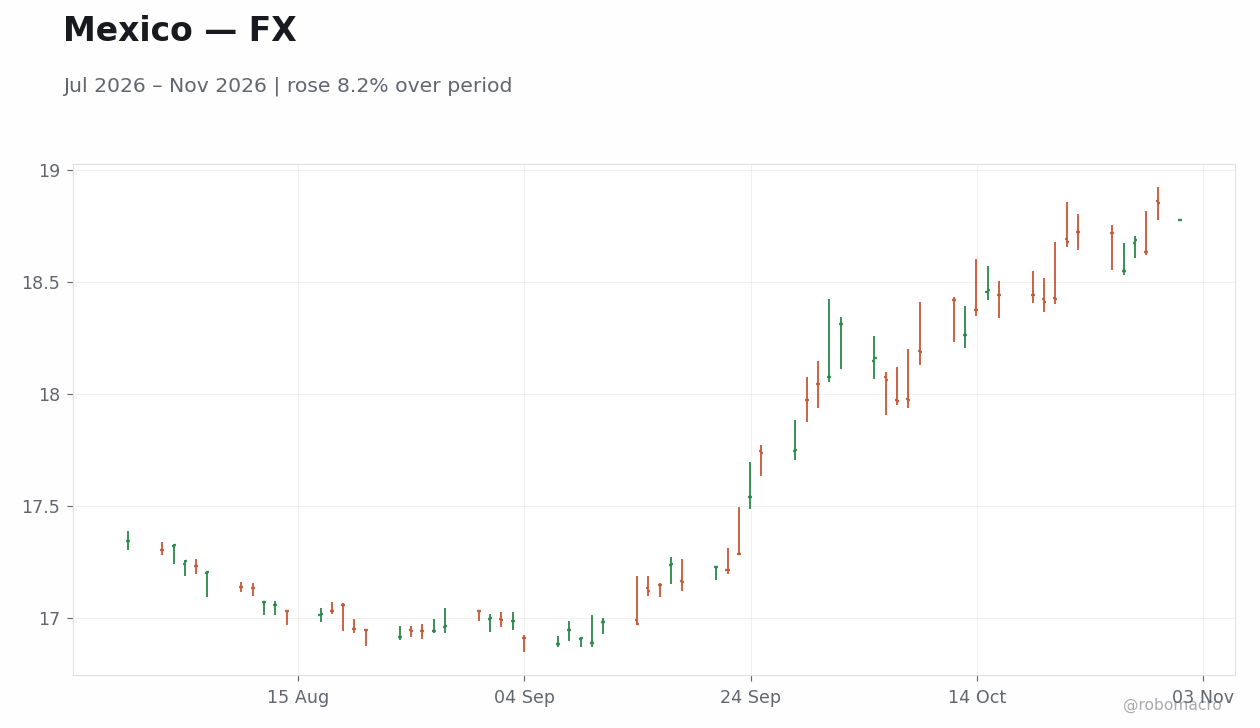
USD/MXN18.77+0.3%
EUR/MXN21.1+0.5%
WTI Crude104.12+2.3%
Silver49.28-8.9%
Gold3898.9-3.5%
Brent Crude113.43-2.1%
Bitcoin77921.48-2.6%
Chart 1
Chart 2
Chart 3
  • Mexico’s equity index posted a modest weekly gain amid contained trading volumes, while the peso weakened slightly against the dollar.
  • External accounts data pointed to softening momentum, with the trade balance moving into deficit territory.
  • Banco de Mexico kept the policy rate unchanged, preserving a wide real-rate buffer ahead of the next decision.

Week in Review

GDP Outperformance Offsets Trade Weakness Mexico’s equity market recorded a net gain for the week, supported by duration demand in local bonds despite thin trading volumes and limited domestic catalysts.

Trade Balance Reversal Highlights External Cooling The trade balance swung into deficit, reversing the prior surplus. USD/MXN rose modestly through the week and closed at 18.77.

Fixed-Income Resilience Amid Equity Volatility The IPC Bolsa index finished the week at 69,779.20, up 0.44%. Daily equity moves remained contained. The peso posted a 0.29% weekly weakening to 18.77, reflecting duration demand rather than broad risk-off flows.

Policy Rate Stability Anchors Market Focus Banco de Mexico maintained the policy rate through the period, with the next decision set for November 5. Market participants positioned ahead of incoming data without fresh inflation prints altering the outlook.

Banxico Watch

Banco de Mexico held the policy rate unchanged with the next decision on November 5. The trade deficit print introduced a modest external headwind but did not shift the central bank’s data-dependent stance. The current rate setting remains appropriate for the coming quarters absent further inflation surprises.

RoboMacro AI Economic Research

Global Macro Watch

Week of October 26–30, 2026 robomacro.com
Data Review: Actual vs Consensus
DateCtryEventPrior Cons.Actual
Tue 27MXTrade Balance605.0mn-400.0mn-606.0mn
Fri 30MXGDP Growth Quarter-over-Qu1.40.700.90
Fri 30MXGDP Growth Year-over-Year 2.12.53.2
Fri 30MXFiscal Balance-737.3bn--
Week Ahead: Key Releases
DateReleasePriorCons.
2026-11-03Business Confidence Index48.0-
2026-11-04Consumer Confidence Index45.1-
2026-11-05Central Bank Interest Rate Decision6.5-
Chart 5
Chart 7

The Week Ahead

Attention centers on Banco de Mexico’s November 5 decision. No high-impact Mexican data releases are scheduled for November 2–4, leaving external risk appetite and any USMCA-related comments as the primary drivers for USD/MXN and local yields. The November 6 calendar opens with potential follow-through commentary from officials. Positioning in the peso and local bonds is expected to remain measured until the policy statement clarifies the path for coming quarters. Broader regional flows will also influence whether the recent USD/MXN level holds.

Risks & Themes

The trade deficit raises the possibility of further external softening in coming quarters. A lower policy rate path would require renewed inflation moderation or clearer evidence of capacity constraints easing. Upside risks center on sustained nearshoring investment, while downside risks hinge on any renewed widening of the trade gap or global equity volatility transmitting to IPC Bolsa.

RoboMacro AI Economic Research

Global Macro Watch

Week of October 26–30, 2026 robomacro.com
Brazil
Market Scorecard
AssetLevelWoW
Bovespa167922.0-4.9%
USD/BRL5.44+9.7%
EUR/BRL6.02+8.7%
Vale11.39-5.1%
Petrobras22.05-2.0%
WTI Crude104.12+2.3%
Gold3898.9-3.5%
Bitcoin77906.94-2.6%
Chart 1
Chart 2
  • Equity and currency markets repriced sharply lower amid domestic political developments, with the Bovespa ending the week at 167,922 and USD/BRL closing at 5.44.
  • Labor-market data showed resilience, with the unemployment rate moving lower in line with expectations.
  • The policy rate remained unchanged, leaving the next COPOM decision as the first opportunity to assess the balance of risks following the election.

Week in Review

Election-driven repricing dominates asset moves. Markets reversed after the October 25 runoff, sending the Bovespa lower to close the week at 167,922, a 4.92 percent decline. USD/BRL rose 9.65 percent to 5.44, outpacing the 8.73 percent increase in EUR/BRL to 6.02.

Fiscal risk premium lifts yields sharply. Brazil 5-year and 10-year yields moved higher, reflecting concerns over fiscal trajectories under the incoming administration. Yields later retraced modestly but remained elevated relative to pre-election levels.

Commodity names lead equity underperformance. Vale declined 5.08 percent to 11.39 and Petrobras fell 2.0 percent to 22.05, even as WTI Crude rose 2.32 percent to 104.12. The BCB Focus Market Readout released on October 26 provided no new projections.

Labor data arrives amid the turbulence. The Headline Unemployment Rate released on October 30 printed in line with consensus and below the prior reading, offering a positive signal amid broader risk-off flows. No other major domestic releases occurred during the week.

Through-line remains fiscal sustainability. Equity and currency moves reflected rapid repricing of higher public spending risks, exceeding any immediate shift in the policy-rate outlook. Investors rotated out of cyclicals into duration as political developments dominated.

BCB Watch

Banco Central do Brasil maintained the policy rate throughout the week with no COPOM meeting scheduled. The BCB Focus Market Readout released on October 26 contained no updated projections. Officials issued no statements that altered the data-dependent stance. The unemployment print reinforced a picture of tight labor conditions that could sustain underlying price pressures. The data flow leaves the rate path unchanged absent fresh fiscal clarity. The upcoming COPOM meeting will rely on inflation and activity metrics prevailing before the election.

RoboMacro AI Economic Research

Global Macro Watch

Week of October 26–30, 2026 robomacro.com
Data Review: Actual vs Consensus
DateCtryEventPrior Cons.Actual
Mon 26BRFGV Consumer Confidence84.2-84.7
Mon 26BRBCB Focus Market Readout--""
Mon 26BRCurrent Account Balance-5.1bn-5.0bn-5.1bn
Mon 26BRForeign Direct Investment 7.4bn6.5bn11.3bn
Tue 27BRProducer Price Index Month0.34-1.5
Tue 27BRProducer Price Index Year-2.5-4.3
Thu 29BRIGP-M Inflation Month-over1.61.61.5
Thu 29BRBank Lending Month-over-Mo0.50-0.40
Thu 29BRGross Debt to GDP82.9-82.9
Fri 30BRNominal Budget Balance-116.0bn--113.0bn
Fri 30BRHeadline Unemployment Rate5.35.25.2
Week Ahead: Key Releases
DateReleasePriorCons.
2026-11-03BCB Focus Market Readout--
2026-11-04Central Bank Interest Rate Decision13.8-
2026-11-05Industrial Production Month-over-Mo-0.60-
2026-11-05S&P Global Services PMI49.2-
2026-11-06Trade Balance7.7bn-
Chart 6
Chart 7

The Week Ahead

The next COPOM decision will incorporate the October 30 unemployment release and any fiscal signals that emerge. Markets will assess whether the jobless rate alters the balance of risks around the policy rate. No major Brazilian data releases are scheduled for November 2 or 3. The November 5–6 window may bring initial cabinet or spending announcements that could influence inflation expectations. Global commodity prices will continue to affect BRL volatility around the decision.

Risks & Themes

The week’s moves shift the outlook toward greater fiscal influence over monetary policy, with yields embedding a durable risk premium that could constrain growth in coming quarters. Upside scenarios hinge on contained spending pledges that stabilize yields, while downside scenarios involve further deficit expansion that pressures the real and keeps the policy rate on hold. Equity breadth narrowed, with only selective commodity names showing resilience, confirming domestic policy risk as the dominant theme.

RoboMacro AI Economic Research

Global Macro Watch

Week of October 26–30, 2026 robomacro.com
Argentina
Market Scorecard
AssetLevelWoW
USD/ARS1534.0+0.3%
EUR/ARS1720.48+0.8%
Gold3898.9-3.5%
Brent Crude113.43-2.1%
Soybean1234.25-0.6%
Bitcoin77909.01-2.6%
Chart 2
Chart 3
  • IMF staff-level agreement on the third review of the programme advanced, with potential disbursement supporting peso stability as USD/ARS closed the week at 1534.0 after a net 0.31% rise.
  • September CPI extended the disinflation path, with the MERVAL index declining modestly amid thin volumes.
  • BCRA maintained the policy rate unchanged, anchoring the crawling-band regime as USD/ARS moved within the post-reform band across the five sessions.

Week in Review

Milei Reforms Drive Export Momentum Argentina’s energy export narrative strengthened as President Milei’s reforms continued to channel fresh investment into the sector, with soybean prices closing at 1234.25 after a weekly decline that offset earlier gains. Brent crude ended at 113.43 following a 2.06% weekly decline, easing import costs while still supporting the trade surplus through agricultural flows. The September CPI print reinforced the disinflation trajectory that has sustained market confidence since the FX regime overhaul.

Peso Crawl and Market Positioning USD/ARS posted a net weekly gain of 0.31%. EUR/ARS rose 0.82% over the week to 1720.48, reflecting modest cross-rate pressure rather than domestic outflows. The MERVAL index posted a modest decline, with energy names tracking Brent’s path amid limited domestic data.

IMF Programme and Reserve Dynamics The staff-level agreement on the programme review emerged as the dominant flow, with potential disbursement providing a buffer for reserve accumulation ahead of month-end. Soybean export proceeds offered direct support to hard-currency inflows, while Bitcoin’s 2.64% weekly drop to 77909.01 had negligible read-across for local portfolios. Gold closed at 3898.9 after a 3.45% decline, trimming reserve valuation gains.

Fiscal Consolidation Underpinning Primary surplus targets remained on track, freeing resources for debt service and limiting monetary financing pressures that had previously weighed on the peso. The absence of major calendar releases through 30 October left positioning driven by external commodity moves and IMF headlines rather than fresh domestic prints.
BCRA Watch

The Central Bank of Argentina left the policy rate unchanged throughout the week, maintaining the crawling-band framework that has kept USD/ARS moves contained. No BCRA speakers or minutes were released, leaving the September CPI print as the clearest signal that real rates remain positive and supportive of the current stance. The staff-level IMF agreement on the programme review reinforced the reserve-management approach, with export liquidation flows from soybeans providing the primary channel for accumulation. Data showed the peso firming modestly on two sessions after the IMF headline, consistent with continuity in the existing regime ahead of upcoming decisions. Officials’ silence on intervention tactics signals steady adherence to the post-reform band without fresh forward guidance.

RoboMacro AI Economic Research

Global Macro Watch

Week of October 26–30, 2026 robomacro.com

Calendar data unavailable

Chart 6

The Week Ahead

Attention next week will centre on any official confirmation of IMF disbursement timing and mechanics following the staff-level agreement, which could influence sovereign bond flows and parallel FX spreads. Soybean export proceeds will remain the key driver of reserve accumulation and peso support through the coming sessions. Traders will monitor the official wholesale FX fix for signals on crawl pace and any shift in BCRA reserve strategy. Global commodity price action, including Brent at 113.43 and soybean futures, will shape trade-balance expectations ahead of the next meeting. Fiscal-consolidation updates and adherence to IMF targets will continue to anchor medium-term debt sustainability assessments. With the domestic calendar thin, external risk appetite and energy-sector financing announcements could set the tone for asset performance. The September CPI trajectory will keep real-rate considerations central to policy continuity through coming quarters.
Risks & Themes

The week’s data shift the outlook toward greater reliance on IMF disbursements and export receipts, with any delay in disbursement raising downside pressure on reserves. Upside scenarios hinge on sustained soybean liquidation and continued energy investment under Milei reforms, which could accelerate disinflation beyond the September print. Downside risks include sharper Brent declines that weigh on energy names within the MERVAL. The market appears to underweight the narrowness of the peso band, as thin volumes left USD/ARS sensitive to even modest global commodity swings. Continued fiscal tightening remains essential to contain quasi-fiscal pressures, yet any slippage could challenge the positive real-rate backdrop that has supported the current policy path.

RoboMacro AI Economic Research

Global Macro Watch

Week of October 26–30, 2026 robomacro.com
Colombia, Chile and Peru
Market Scorecard
AssetLevelWoW
MSCI Chile34.73-2.3%
MSCI Peru80.18-5.0%
USD/COP3228.9+5.7%
USD/CLP987.87+3.0%
USD/PEN3.47+4.2%
Copper6.48-0.4%
Gold3898.9-3.5%
Brent Crude113.43-2.1%
Bitcoin77921.94-2.6%
Chart 1
Chart 2
  • BCCh and BanRep both held policy rates unchanged, confirming extended pauses after prior easing cycles amid recent inflation prints.
  • Regional equities posted sharp weekly declines, with MSCI Peru falling 5.0% to 80.18 and MSCI Chile declining 2.33% to 34.73 as copper slipped 0.4% to 6.48.
  • Andean currencies weakened markedly, led by USD/COP rising 5.67% to 3228.9 and USD/PEN advancing 4.18% to 3.47 over the five trading days.

Week in Review

Policy Holds Remove Near-Term Easing Risk The Bank of Chile held its policy rate unchanged in line with consensus, extending the pause after the prior easing cycle and anchoring the front end of the Chilean curve. BanRep followed by keeping its policy rate unchanged, leaving the latest inflation print as the dominant constraint on further cuts. These decisions aligned with the data-dependent stance observed across the region and removed immediate downside pressure on local front-end yields.

Equity Markets Record Broad Declines MSCI Peru fell 5.0% to 80.18 on a week-over-week basis while MSCI Chile declined 2.33% to 34.73, with the steepest daily drop occurring as copper traded lower. MSCI Colombia remained flat at 9.02, reflecting relative outperformance tied to carry support even as the broader risk tone softened. Daily equity moves showed clear dispersion, with Chile posting a gain immediately after the BCCh decision before reversing.

Currency Weakness Reflects Positioning and Commodity Moves USD/COP rose 5.67% to 3228.9 over the week, with the largest single-day advance ahead of the BanRep meeting. USD/CLP advanced 2.95% to 987.87 while USD/PEN gained 4.18% to 3.47, consistent with broad Andean FX pressure that intensified around the two central-bank decisions. Copper’s 0.4% weekly decline to 6.48 and Brent crude’s 2.06% drop to 113.43 added to external-balance concerns for Chile, Peru and Colombia respectively.

Commodity and Fiscal Linkages Remain Central Brent crude’s successive daily declines weighed directly on Colombia’s oil-linked fiscal accounts while copper volatility influenced mining revenues in Chile and Peru. No major macroeconomic data releases occurred in the three countries during the week, leaving commodity price action and the two policy decisions as the dominant drivers of asset-price moves.
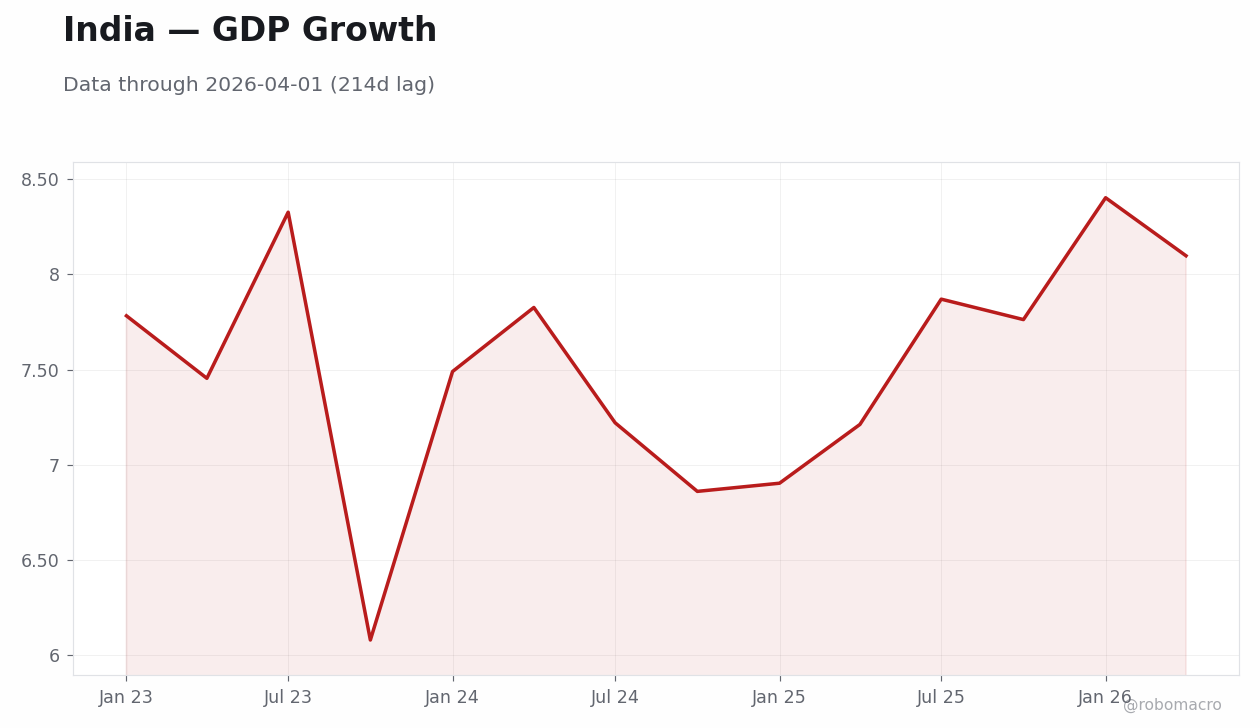
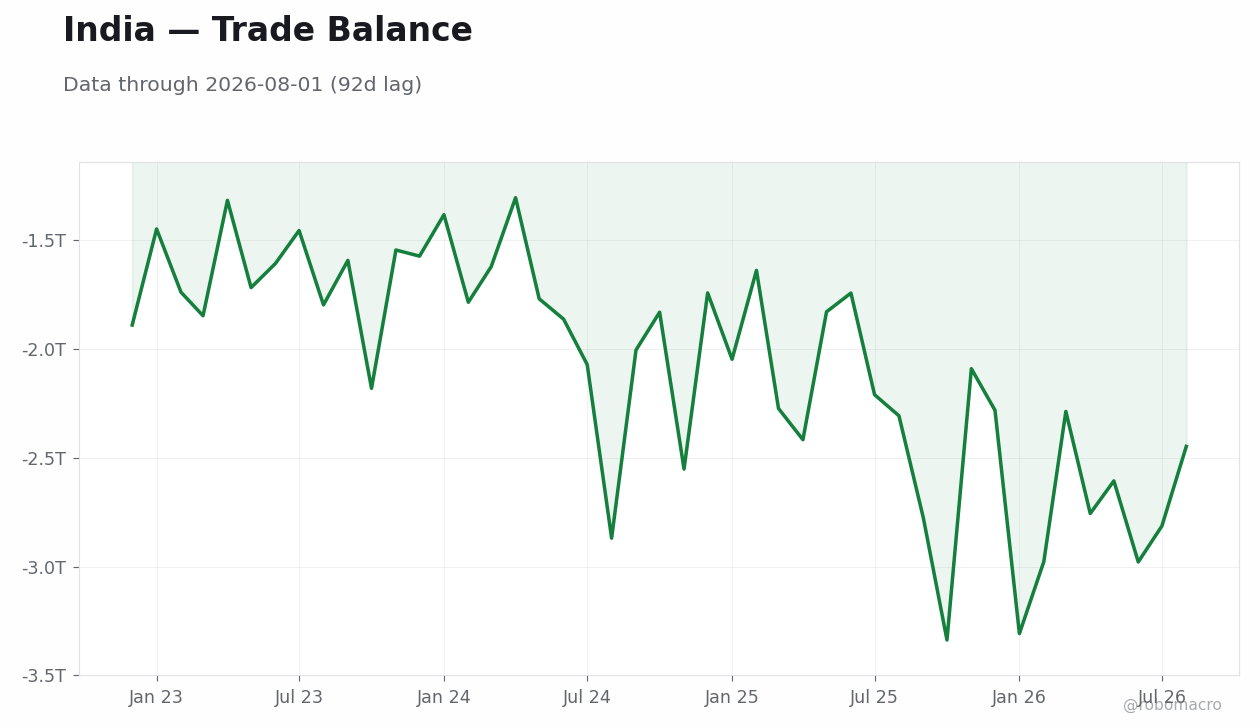
Andean Central Banks Watch

The BCCh decision to hold matched both consensus and the prior setting, with officials citing the inflation print as justification for extending the pause in the easing cycle. BanRep’s hold similarly aligned with the inflation level and preserved the wide real-rate buffer established after earlier tightening. No BCRP meeting occurred, leaving Peru’s policy rate unchanged. The two holds signal that both committees remain focused on incoming inflation and activity prints rather than pre-committing to additional cuts in the near term. Data released during the week, including the unchanged inflation prints, reinforced the case for continued data dependence ahead of upcoming decisions.
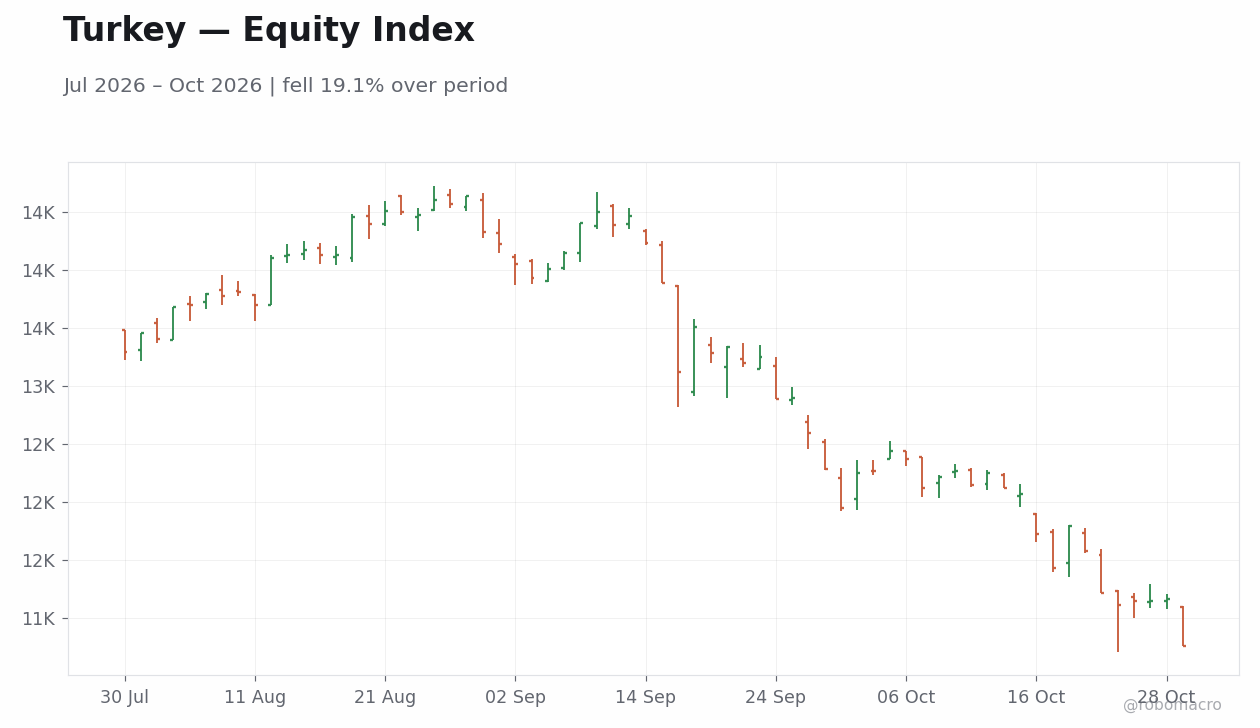
RoboMacro AI Economic Research

Global Macro Watch

Week of October 26–30, 2026 robomacro.com
Data Review: Actual vs Consensus
DateCtryEventPrior Cons.Actual
Tue 27CLCentral Bank Interest Rate4.54.54.5
Thu 29CLHeadline Unemployment Rate9.69.59.8
Thu 29COBusiness Confidence Index5.8-8.3
Fri 30CLCopper Production Year-ove-12.8--15.1
Fri 30CLIndustrial Production Year-5.7--2.7
Fri 30CLManufacturing Production Y-2.6-2.0
Fri 30CLRetail Sales Month-over-Mo1.2-1.0
Fri 30CLRetail Sales Year-over-Yea3.4-4.4
Fri 30COHeadline Unemployment Rate9.4-8.0
Fri 30COCentral Bank Interest Rate12.212.212.2
Fri 30COCement Production Year-ove2.9-2.0
Chart 5
Chart 7

The Week Ahead

No high-impact data releases are scheduled for Colombia, Chile or Peru in the coming five trading days, leaving markets to monitor any scheduled central-bank speakers for incremental guidance on the rate path. The next BanRep and BCCh meetings will be watched for updates to inflation and growth projections that could clarify the duration of the current pause. BCRP officials are expected to maintain the policy setting absent any surprise acceleration in the inflation print. Copper and Brent price action will continue to influence external-balance assessments and fiscal outlooks across the three economies. Traders will also track any follow-through in USD/COP and USD/CLP after the sharp weekly moves observed around the recent decisions.

Risks & Themes

The week’s data confirmed that Colombia’s higher inflation print continues to support a longer hold relative to Chile’s earlier pause, creating potential divergence in the timing of any future easing. Sharp equity and currency declines raise the possibility of further downside if copper or Brent extend their recent losses, particularly for Peru’s mining-heavy index. An upside scenario would require sustained commodity strength that improves fiscal balances and allows BanRep to consider modest easing sooner than currently signaled. The market appears to underweight the persistence of Colombia’s inflation relative to the regional average, leaving room for repricing if activity data soften more than expected in coming quarters.

RoboMacro AI Economic Research

Global Macro Watch

Week of October 26–30, 2026 robomacro.com
United Kingdom
Market Scorecard
AssetLevelWoW
FTSE 10010729.8-0.3%
FTSE 25024453.4-0.2%
GBP/USD1.34+0.1%
GBP/EUR1.2+0.3%
GBP/JPY211.1+0.6%
Brent Crude113.43-2.1%
Gold3898.9-3.5%
UK Nat Gas2.9+11.4%
Bitcoin77921.94-2.6%
Chart 1
Chart 2
Chart 3
  • CBI Distributive Trades beat expectations by a wide margin, delivering the clearest domestic demand signal of the week.
  • FTSE 100 closed the week at 10,729.8 after a net 0.35 percent decline while the 10-year gilt yield finished higher.
  • Bank of England held the policy rate steady with no fresh forward guidance shifts ahead of the November MPC meeting.
  • Sterling ended at 1.34 against the dollar, up 0.11 percent on the week, amid mixed global equity pressure and Brent crude at 113.43 dollars per barrel.

Week in Review

Retail survey signals stabilisation. The CBI Distributive Trades balance improved materially faster than expected, confirming stronger retailer sentiment. This print arrived alongside the Autumn Budget, which introduced sector-specific tax measures yet left mid-cap equities relatively supported. FTSE 250 rose on 27 October even as the FTSE 100 declined that day.

Housing data mixed after fiscal announcements. Nationwide house prices were unchanged month-over-month while the year-over-year rate eased. Mortgage approvals and mortgage lending both came in below expectations. These figures followed softer BoE consumer credit data.

Gilt curve reflects budget and issuance focus. The 2-year gilt yield declined on the week while the 10-year finished higher. Sterling traded in a narrow range against the dollar, closing the week at 1.34 after a 0.11 percent gain. Brent crude fell to 113.43 dollars per barrel, providing modest input-cost relief.

BoE Watch

The Bank of England maintained the policy rate through the period. Mortgage and credit data showed consumer lending below consensus, reinforcing the case for steady policy.

The Autumn Budget’s fiscal measures introduced new tax levies on banks yet left the MPC’s data-dependent stance intact. Markets continue to watch the November inflation report for signals on embedded price pressures. The combination of resilient CBI retail prints and softer mortgage approvals suggests the committee can tolerate near-term volatility without immediate recalibration. Official communications remain anchored to incoming activity and inflation prints rather than pre-committed rate paths.

Data Review

CBI Distributive Trades delivered the largest surprise of the week, beating consensus by a wide margin and indicating retail conditions improved materially faster than markets anticipated. This beat preceded the Autumn Budget, suggesting underlying consumer-facing activity held up despite new fiscal measures. Mortgage approvals and mortgage lending both missed expectations.

BoE consumer credit missed forecasts. Nationwide housing data showed month-over-month prices unchanged while the year-over-year rate eased. These prints together point to a labour market that has cooled without collapse and housing activity that remains range-bound. The combination supports the view that the Bank of England can maintain the current policy rate for now while monitoring inflation persistence into the November report.

RoboMacro AI Economic Research

Global Macro Watch

Week of October 26–30, 2026 robomacro.com
Data Review: Actual vs Consensus
DateCtryEventPrior Cons.Actual
Mon 26GBCBI Distributive Trades-55.0-47.0-10.0
Mon 26GBBRC Shop Price Inflation1.41.62.1
Tue 27GBTreasury Gilt 2032 Auction4.8-5.0
Wed 28GBAutumn Budget--""
Wed 28GBAutumn Forecast Statement--""
Wed 28GBCar Production Year-over-Y6.1-38.6
Thu 29GBBoE Consumer Credit2.7bn2.2bn1.9bn
Thu 29GBMortgage Approvals55K54K53K
Thu 29GBMortgage Lending Level4.2bn4.2bn3.9bn
Thu 29GBM4 Money Supply Month-over0.400.300.10
Thu 29GBNet Lending to Individuals6.9bn6.2bn5.8bn
Thu 29GBTreasury Gilt 2031 Auction4.8-4.8
Fri 30GBNationwide Housing Prices -0.30-0.100
Fri 30GBNationwide Housing Prices 0.800.600.50
Week Ahead: Key Releases
DateReleasePriorCons.
2026-11-05S&P Global Construction PMI46.146.5
2026-11-05BoE Interest Rate Decision3.84.0
2026-11-05BoE MPC Vote Cut0-
2026-11-05BoE MPC Vote Hike3.0-
2026-11-05BoE MPC Vote Unchanged6.0-
2026-11-05BoE Monetary Policy Report--
2026-11-05MPC Meeting Minutes--
2026-11-06Lloyds House Price Index Month-over00.10
2026-11-06Lloyds House Price Index Year-over-0-
2026-11-06BoE Pill Speech--
Chart 5
Chart 6
Chart 7

The Week Ahead

Monday brings limited UK-specific releases, with focus shifting to the November MPC meeting where the policy rate is expected to remain unchanged. Tuesday features no major domestic data but includes potential follow-up commentary from Bank of England officials. Wednesday may see additional fiscal clarification after the Autumn Budget.

Thursday could include any early reactions to euro-area PMI prints that carry read-across for UK growth. Friday delivers the November inflation report, the highest-impact release of the period, with markets focused on whether core pressures have moderated. Central bank speakers scheduled for the week will be scrutinised for any nuance around the medium-term rate outlook. Housing and credit momentum from the prior week’s prints will frame expectations for consumer resilience into year-end.

Risks & Themes

The CBI beat reduces downside risks to near-term growth but leaves fiscal credibility as the dominant uncertainty after the Autumn Budget. Positioning in gilts reflects heavy issuance expectations, with the 2-year yield declining while the 10-year held higher. Equity dispersion between FTSE 100 and FTSE 250 highlights rotation toward domestically exposed names amid bank-tax concerns.

Volatility in UK natural gas keeps upside inflation risks alive despite Brent crude’s decline. Sterling’s modest gain against the dollar suggests limited carry appeal until the inflation report clarifies the rate path. Market pricing continues to embed a steady policy rate through the near term, with limited room for surprise easing unless November data deteriorate sharply.

Cross-Asset

FTSE 100 ended the week at 10,729.8, down 0.35 percent net. FTSE 250 closed at 24,453.4, down 0.20 percent on the week. The 10-year gilt yield finished higher while the 2-year yield declined.

GBP/USD closed at 1.34, up 0.11 percent on the week. GBP/EUR rose 0.32 percent to 1.20 and GBP/JPY gained 0.62 percent to 211.10. Brent crude fell 2.06 percent to 113.43 dollars per barrel while UK natural gas rose 11.38 percent to 2.90. Gold declined 3.45 percent to 3,898.90, reflecting broader commodity pressure.

Global Context

Global equity weakness persisted from the prior week, with the risk metric remaining elevated and selective DM resilience appearing only where domestic data outperformed. US 10-year yields moved lower while euro-area spreads widened on fiscal concerns, transmitting modest pressure into sterling crosses. Brent crude’s weekly decline offered imported disinflation relief for the UK.

Trade and geopolitical spillovers remained contained within the last seven days, with no fresh escalation affecting UK-specific supply chains. The configuration leaves the Bank of England’s data-dependent stance aligned with peers that continue to tolerate equity volatility provided domestic prints stay within recent ranges.

RoboMacro AI Economic Research

Global Macro Watch

Week of October 26–30, 2026 robomacro.com
Sweden, Norway, Denmark and Finland
Market Scorecard
AssetLevelWoW
OMX Stockholm 303271.4+1.4%
Oslo Bors2144.97+0.9%
OMX Copenhagen 251974.38+3.5%
OMX Helsinki 256191.03-1.6%
USD/SEK9.81-1.1%
USD/NOK9.19-1.3%
EUR/SEK11.01-1.1%
EUR/NOK10.34-1.0%
Brent Crude113.43-2.1%
Gold3898.9-3.5%
Bitcoin77913.43-2.6%
Chart 1
Chart 2
Chart 4
  • OMX Copenhagen 25 rose 3.55 percent week-over-week to 1974.38 while OMX Helsinki 25 fell 1.58 percent to 6191.03, marking the clearest intra-Nordic equity divergence of the period.
  • USD/SEK declined 1.11 percent to 9.81 and USD/NOK fell 1.34 percent to 9.19 as both currencies strengthened against the dollar despite Brent crude dropping 2.06 percent to 113.43.
  • Nordic central banks maintained steady policy signals with no rate decisions or minutes released during the week.

Week in Review

Equity Divergence Across Nordics Nordic equity markets delivered a split performance over the five trading days ending October 30. The OMX Copenhagen 25 advanced 3.55 percent to 1974.38, led by a single-day gain of 2.80 percent on October 28. In contrast, the OMX Helsinki 25 declined 1.58 percent to 6191.03, with a 1.25 percent drop on the final day. The OMX Stockholm 30 rose 1.43 percent to 3271.40 while the Oslo Bors gained 0.94 percent to 2144.97. These moves occurred against a backdrop of global equity weakness referenced in prior weeks.

Currency Strength Amid Commodity Weakness The Swedish krona and Norwegian krone both firmed against the dollar. USD/SEK ended at 9.81 after a 1.11 percent weekly decline, while USD/NOK closed at 9.19 following a 1.34 percent drop. EUR/SEK fell 1.10 percent to 11.01 and EUR/NOK declined 1.02 percent to 10.34. Brent crude fell 2.06 percent to 113.43 over the same period, weighing on Norway’s petroleum-linked fiscal outlook without producing immediate krone depreciation.

Rates and Policy Signals Sweden’s 10-year government yield remained near 3.11-3.12 percent across the week, closing the period at 3.11 percent after a 1 basis point decline on the final day. No Nordic data releases occurred between October 26 and October 30.

Inflation and External Context The absence of fresh prints left markets focused on external drivers, including the sharp Brent decline that pressured Norwegian energy revenues while supporting manufacturing margins in Sweden and Denmark.

Nordic Central Banks Watch

No rate decisions or minutes were released by the Riksbank, Norges Bank, Danmarks Nationalbank or Bank of Finland during the week. Danmarks Nationalbank adjusted fixed-term deposit rates upward in a technical move to maintain the EUR/DKK peg. The data flow left forward guidance anchored to incoming activity and inflation prints rather than any shift in communicated rate paths.

RoboMacro AI Economic Research

Global Macro Watch

Week of October 26–30, 2026 robomacro.com
Data Review: Actual vs Consensus
DateCtryEventPrior Cons.Actual
Mon 26FIExport Prices Year-over-Ye8.7--
Mon 26FIImport Prices Year-over-Ye7.6--
Mon 26FIProducer Price Index Year-7.3--
Mon 26SEProducer Price Index Month0.90--
Mon 26SEProducer Price Index Year-6.8--
Tue 27FIBusiness Confidence Index3.0-2.0
Tue 27FIConsumer Confidence Index-4.9--9.7
Tue 27SEHousehold Lending Growth Y3.3-3.4
Tue 27SETrade Balance-11.9bn-4.1bn
Tue 27SET-Bill Auction---
Wed 28NOLoan Growth Year-over-Year4.5--
Wed 28NORetail Sales Month-over-Mo0.60--0.40
Wed 28NONgb Auction---
Wed 28SESgb Auction---
Week Ahead: Key Releases
DateReleasePriorCons.
2026-11-04Riksbank Rate Decision1.82.0
2026-11-04Riksbank Press Conference--
2026-11-05Norges Bank Interest Rate Decision4.5-
Chart 6
Chart 7
Chart 8

The Week Ahead

The Nordic calendar opens with limited scheduled releases, directing attention to external prints that feed into domestic rate assessments. Early-week manufacturing PMI data from peer economies will provide indirect context for Swedish and Danish export sectors ahead of the next Riksbank and Danmarks Nationalbank meetings. Mid-week inflation or labor figures from larger euro-area economies will inform Bank of Finland views on the ECB deposit rate trajectory. Norway will monitor oil-price stability given its direct link to fiscal balances and Norges Bank revenue assumptions. Markets will watch for confirmation that recent krona and krone strength persists or reverses ahead of coming-quarter growth assessments.

Risks & Themes

The week’s equity dispersion underscores selective resilience rather than uniform risk appetite across the region. Continued Brent weakness poses downside risk to Norwegian fiscal balances and external accounts even as the krone strengthened. The absence of domestic data leaves the outlook exposed to global commodity and equity moves that have already transmitted unevenly into Nordic assets.

RoboMacro AI Economic Research

Global Macro Watch

Week of October 26–30, 2026 robomacro.com
Poland, Czech Republic, Hungary, Romania and Turkey
Market Scorecard
AssetLevelWoW
BIST 10010759.6-3.5%
iShares Poland43.4-0.4%
EUR/PLN4.39-0.2%
EUR/HUF365.050.0%
EUR/CZK24.33+0.2%
USD/TRY49.93+0.4%
Brent Crude113.43-2.1%
Gold3898.9-3.5%
Bitcoin77908.74-2.6%
Chart 2
Chart 4
  • Regional central banks held policy rates steady with no fresh forward guidance issued.
  • Regional equities posted net losses, with BIST 100 and iShares Poland declining as Brent crude moved lower.
  • Forint and lira tracked external dollar strength while the zloty and koruna posted modest weekly changes.

Week in Review

Poland inflation surprise anchors the narrative. The zloty touched a three-year low early in the week before closing lower, reflecting domestic political friction rather than data alone.

Turkey labor and trade prints diverge. USD/TRY edged higher on the week as CBRT speakers remained silent.

Forint and koruna track external dollar strength. EUR/HUF settled flat after testing higher mid-week, while EUR/CZK posted a modest weekly gain. Hungarian and Czech assets showed limited equity follow-through.

Energy price relief fails to lift sentiment. Brent crude’s weekly decline offered a disinflationary tailwind for the region’s net importers, yet equities closed lower across the board.

Political noise amplifies FX volatility. Polish domestic tensions coincided with the zloty’s weakest levels since 2023. Regional equity flows remained selective.

Cross-border spillovers stay contained. Gold’s weekly decline and Bitcoin’s drop provided no offset for CEE risk assets. The week’s data arc therefore points to steady central-bank rates across the region.

Emerging Europe Central Banks Watch

NBP maintained its policy rate with no new speakers or minutes released. CNB held its policy rate unchanged following the prior meeting, with no fresh forward guidance issued during the week. MNB kept settings steady amid forint pressure, while BNR and CBRT also refrained from policy adjustments. The week’s data therefore support unchanged rates across the five central banks in the near term.

Data Review

No high-impact releases emerged from Poland, Czech Republic, Hungary, Romania or Turkey, leaving policy rates unchanged. The absence of fresh data from these markets reinforced the view that domestic cycles remain in mid-phase with limited momentum shifts. Overall, the week’s prints tilt the regional growth-inflation mix toward steady central-bank rate paths in the near term.

RoboMacro AI Economic Research

Global Macro Watch

Week of October 26–30, 2026 robomacro.com
Data Review: Actual vs Consensus
DateCtryEventPrior Cons.Actual
Mon 26CZBusiness Confidence Index98.4--
Mon 26CZConsumer Confidence Index105--
Tue 27HU3-Month Dtb Auction--5.2
Thu 29HUProducer Price Index Year---6.9
Thu 29HUTrade Balance--907.0mn
Thu 29HU10-Year Bond Auction---
Thu 29HU3-Year Bond Auction---
Thu 29HU5-Year Bond Auction---
Fri 30ROHeadline Unemployment Rate--6.3
Fri 30HUGDP Growth Quarter-over-Qu0.50-0.10
Fri 30HUGDP Growth Year-over-Year 1.7-1.5
Fri 30CZGDP Growth Quarter-over-Qu--0.50
Fri 30CZGDP Growth Year-over-Year --1.6
Fri 30PLInflation Rate Year-over-Y4.1-3.5
Week Ahead: Key Releases
DateReleasePriorCons.
2026-11-04Central Bank Interest Rate Decision3.83.8
Chart 5
Chart 7

The Week Ahead

Attention centers on scheduled central-bank meetings for NBP and CNB early in the week of November 2–6. Czech Republic data flows remain light, leaving CNB speakers as the primary domestic catalyst. Hungary and Romania calendars show no high-impact releases, directing focus to forint and leu reactions to external flows. Turkey’s next labor and external-account updates are not due until later in November, so CBRT commentary will dominate. Markets will also monitor any follow-through from Poland-Germany cooperation announcements and regional equity responses to global risk sentiment. Brent crude movements remain relevant for energy importers across the five economies.

Risks & Themes

Forint positioning near current levels leaves MNB exposed to further dollar strength, with limited room for intervention signals. Equity flows into BIST 100 and iShares Poland turned negative on the week, suggesting crowded long positions may unwind further if Brent remains elevated. Regional volatility stayed contained despite political noise in Poland, yet any escalation in top-court tensions could pressure the zloty. The configuration favors defensive positioning in local rates and selective FX hedges.

Cross-Asset

BIST 100 closed the week lower, with daily moves showing a modest gain before the larger drop. iShares Poland ended lower after intraday gains were erased. EUR/PLN finished lower on the week. EUR/HUF settled flat after reaching higher levels mid-week. EUR/CZK rose modestly. USD/TRY advanced. Brent crude declined, while gold fell. No 10-year government yield prints were recorded for Poland or Hungary during the period.

Global Context

Brent crude’s weekly decline provided a modest disinflationary input for the energy-importing economies in the region. Gold’s drop offered no safe-haven bid for CEE assets. Broader equity weakness transmitted risk-off sentiment that weighed on BIST 100 and Polish equities. No new trade or geopolitical developments specific to the five markets emerged in the last seven days beyond ongoing Poland-Germany commercial ties. The global cycle remains in its mid-phase with selective resilience in domestic data, leaving CEE markets sensitive to external dollar and commodity swings.

RoboMacro AI Economic Research

Global Macro Watch

Week of October 26–30, 2026 robomacro.com
South Africa
Market Scorecard
AssetLevelWoW
JSE Top 4099412.3-1.6%
USD/ZAR16.71+0.5%
EUR/ZAR18.64-0.0%
Platinum1436.0-6.5%
Gold3898.9-3.5%
Brent Crude113.43-2.1%
Naspers67860.0+0.2%
Bitcoin77902.65-2.6%
Chart 1
Chart 2
  • South Africa’s October trade balance printed below the prior reading, marking the first post-month-end gauge of export performance amid softer commodity prices.
  • JSE Top 40 fell 1.55 percent week-over-week to close at 99,412.30, with a 2.42 percent single-day drop on October 30 that erased earlier gains.
  • South African 10-year government yields eased while the 5-year yield also moved lower, consistent with duration bids ahead of the next SARB decision.

Week in Review

Equity and currency consolidation amid commodity pressure South African assets recorded a net defensive tone over the five sessions. The JSE Top 40 advanced on October 27 and 28 before giving back ground, finishing the week 1.55 percent lower at 99,412.30. USD/ZAR rose 0.49 percent to 16.71 while EUR/ZAR ended essentially flat at 18.64.

Fixed-income outperformance on modest duration demand The 10-year yield declined and the 5-year yield also fell. These moves occurred against a backdrop of no domestic data releases until the Friday trade print.

Trade balance delivers first post-month-end signal The October trade surplus arrived below the prior print. The modest shortfall coincided with platinum and gold price declines of 6.55 percent and 3.45 percent respectively.

Commodity-linked sentiment weighed on broader risk appetite Brent crude fell 2.06 percent to 113.43 while platinum closed at 1,436.00. Naspers posted a 0.2 percent weekly gain to 67,860.00, providing limited offset to the equity index decline.

Positioning ahead of external catalysts shaped flows Markets operated with limited local data and focused on offshore cues including the Federal Reserve decision. The rand held in a narrow range through most of the week before the final session move.

Absence of policy communication left rate-path expectations data-dependent No SARB speakers or minutes appeared during the period. The next decision remains several weeks away.

Current-account support channels showed mixed resilience Elevated gold prices earlier in the week offered some offset to rand softness, yet the final trade figure reflected the pullback in platinum and oil-related import costs.

Week closed with clear risk-off tilt into month-end Bitcoin’s 2.65 percent decline and the equity sell-off on October 30 reinforced the cautious close. Overall, the data flow confirmed external commodity sensitivity rather than any domestic surprise.

SARB Watch

The South African Reserve Bank maintained its policy rate with no speakers or minutes released during the week. The October trade balance arrived below the prior print and coincided with lower platinum and gold prices, which typically feed into export receipts and inflation dynamics. Fixed-income markets saw modest buying that lowered the 10-year yield, reflecting positioning consistent with a steady policy stance into the next meeting. Officials have previously anchored guidance to incoming activity and price data; the softer trade outcome and commodity price declines provide no immediate upward pressure on the inflation outlook. The absence of fresh communication leaves the rate path dependent on subsequent prints ahead of upcoming decisions.

RoboMacro AI Economic Research

Global Macro Watch

Week of October 26–30, 2026 robomacro.com
Data Review: Actual vs Consensus
DateCtryEventPrior Cons.Actual
Mon 26ZA182-Day T-Bill Auction7.7-7.7
Mon 26ZA273-Day T-Bill Auction8.0-7.9
Mon 26ZA364-Day T-Bill Auction8.1-8.1
Mon 26ZA91-Day T-Bill Auction7.2-7.3
Tue 27ZALeading Business Cycle Ind-0.80-1.1
Tue 27ZA2039 Bond Auction9.2-9.0
Tue 27ZA2040 Bond Auction9.2-9.1
Tue 27ZA2042 Bond Auction9.4-9.1
Thu 29ZAM3 Money Supply Year-over-8.9-7.9
Thu 29ZAPrivate Sector Credit Year7.5-6.2
Thu 29ZAProducer Price Index Month-0.40-1.0
Thu 29ZAProducer Price Index Year-5.05.76.2
Fri 30ZATrade Balance20.5bn-19.8bn
Fri 30ZAGovernment Budget Balance19.9bn--22.1bn
Chart 6
Chart 7
Chart 8

The Week Ahead

Monday opens with limited South African-specific releases, directing attention to global manufacturing PMI prints that could influence external demand signals for local exports. Tuesday and Wednesday feature no high-impact domestic data, keeping focus on commodity price trends and any follow-through from the recent trade balance. Thursday brings potential updates on leading indicators that markets will cross-reference with the October surplus. The coming week’s global risk sentiment will matter for rand flows ahead of the next SARB decision, as lower Brent and platinum levels could ease import-cost pressures while testing export momentum. Investors will monitor whether the current-account support observed in prior periods holds or erodes further. Any sustained commodity weakness would reinforce the data-dependent stance already signaled by officials. Overall, the calendar offers few direct constraints on the rate outlook, leaving the path sensitive to the next round of activity and price prints.

Risks & Themes

The week’s softer trade outcome and commodity price declines shift the near-term growth signal toward external dependence rather than domestic resilience. Upside scenarios would require a rebound in platinum and gold that lifts export receipts above the October level and supports rand stability. Downside risks center on further equity weakness extending the JSE Top 40 decline and pressuring fiscal revenue assumptions. Markets appear to price limited immediate inflation pressure from the data, yet any reversal in the recent yield easing could signal renewed term-premium concerns. The regulatory shift allowing full offshore allocation by local managers remains a medium-term capital-flow variable that could amplify rand volatility if global risk appetite deteriorates.

RoboMacro AI Economic Research

Global Macro Watch

Week of October 26–30, 2026 robomacro.com
Australia and New Zealand
Market Scorecard
AssetLevelWoW
ASX 2008908.1+1.1%
NZX 5013797.0+0.8%
AUD/USD0.7+0.1%
NZD/USD0.56-1.2%
AUD/NZD1.25+1.3%
BHP57.56+3.5%
Gold3898.9-3.5%
Brent Crude113.43-2.1%
Bitcoin77927.08-2.6%
Chart 1
Chart 2
Chart 3
Chart 4
  • Australia's Q3 CPI rose more than expected, confirming sticky price pressures and supporting expectations for RBA action at the next meeting.
  • RBNZ held the OCR against consensus for a hike, triggering NZD/USD decline while AUD/NZD advanced.
  • ASX 200 rose 1.11% week-over-week to 8908.1 while NZX 50 gained 0.85% to 13797.0, with Australian 2-year yields moving higher.

Week in Review

Inflation Print Surprises Higher Australia's Q3 CPI delivered a clear upside surprise on 27 October, with the headline rising more than consensus on both a month-over-month and year-over-year basis. The hotter headline component reinforced perceptions of persistent services and energy-driven pressures.

Policy Divergence Emerges The RBNZ's 27 October decision to hold the OCR contrasted sharply with consensus, producing a sharp move in AUD/NZD. Australia's subsequent PPI release remained above consensus and added to pipeline inflation concerns.

Equity and Yield Response The ASX 200 advanced steadily across the week, closing at 8908.1 after gains on 29 October and 30 October, supported by BHP strength. Australian 2-year and 10-year yields rose as markets adjusted to the hotter CPI. NZX 50 posted more modest gains, finishing at 13797.0.

Cross-Currency and Commodity Context AUD/USD held near 0.70 while NZD/USD fell to 0.56, widening the policy differential visible in the AUD/NZD cross reaching 1.25. Brent crude declined 2.06% week-over-week to 113.43, providing limited offset to domestic inflation readings in both economies.

ANZ Central Banks Watch

The RBA Senate appearance on 27 October coincided with the hotter Q3 CPI release, highlighting ongoing concerns over government spending and energy prices as obstacles to returning inflation to the 2-3% target band. The RBNZ's 27 October statement and press conference after holding the OCR left the door open for a move at the subsequent decision while acknowledging housing-market risks. Australia's trimmed-mean outcome confirmed that underlying pressures have not yet moderated sufficiently for the RBA to pause. New Zealand's data flow, including the ANZ Business Confidence lift, offered little counterweight to the RBNZ's cautious stance. The combined prints suggest the RBA faces a clearer path toward further tightening at the next meeting than the RBNZ, whose forward guidance now hinges more heavily on incoming activity and inflation releases.

RoboMacro AI Economic Research

Global Macro Watch

Week of October 26–30, 2026 robomacro.com
Data Review: Actual vs Consensus
DateCtryEventPrior Cons.Actual
Mon 26NZ3-Month Treasury Bill Auct3.1-3.2
Mon 26NZ6-Month Treasury Bill Auct3.3-3.4
Tue 27AURBA Senate Appearance--""
Tue 27AUInflation Rate Month-over-0.400.700.80
Tue 27AUInflation Rate Year-over-Y4.04.24.3
Tue 27AURBA Trimmed Mean CPI Month0.200.300.30
Tue 27AURBA Trimmed Mean CPI Year-3.53.63.6
Tue 27AUConsumer Price Index104-104
Tue 27AUQuarterly Inflation Rate Q0.601.31.3
Tue 27AUQuarterly Inflation Rate Y3.93.93.9
Tue 27AUQuarterly RBA Trimmed Mean0.801.01.0
Tue 27AUQuarterly RBA Trimmed Mean3.63.63.7
Tue 27AURBA Weighted Median CPI Mo0.30-0.20
Tue 27AURBA Weighted Median CPI Ye3.6-3.4
Week Ahead: Key Releases
DateReleasePriorCons.
2026-11-02RBA Interest Rate Decision4.64.8
2026-11-02RBA Monetary Policy Statement--
2026-11-02RBA Rate Statement--
2026-11-02RBA Press Conference--
2026-11-03Employment Change Quarter-over-Quar0.500.40
2026-11-03Headline Unemployment Rate5.65.5
2026-11-03Ai Group Industry Index-24.2-
2026-11-04Trade Balance495.0mn1.0bn
Chart 5
Chart 7

The Week Ahead

Attention centers on the RBA decision early in the week, where the Q3 CPI surprise will shape guidance on the policy rate path. Australia's Commodity Prices year-over-year release on 2 November will provide an early read on export revenue trends relevant to both central banks. Mid-week data in New Zealand, including any updates on retail or housing metrics, will test whether the RBNZ's hold decision requires revision at upcoming meetings. Australia's PPI follow-through and any additional inflation-related prints will refine views on pipeline pressures heading into coming quarters. The RBNZ's next statement timing will determine whether the current OCR level is maintained or adjusted based on the latest activity evidence. Markets will monitor whether the AUD/NZD spread continues to reflect the policy divergence established this week.

Risks & Themes

The hotter Australian CPI raises the possibility that RBA tightening extends further into coming quarters than previously anticipated, while the RBNZ hold introduces downside risk to NZD if subsequent data fail to justify an earlier hike. Equity resilience in the ASX 200 could fade if commodity prices, already down 2.06% week-over-week in Brent, extend their decline and pressure mining revenues. Divergence between the two policy paths may amplify AUD/NZD volatility beyond the 1.25 level reached this week if incoming growth prints diverge further. Upside inflation surprises in Australia could challenge the assumption that trimmed-mean measures will ease steadily, whereas New Zealand's softer currency response may mask underlying demand strength visible in business confidence.

RoboMacro AI Economic Research

Global Macro Watch

Week of October 26–30, 2026 robomacro.com
China, Hong Kong and Taiwan
Market Scorecard
AssetLevelWoW
Shanghai Composite3599.02-2.7%
Hang Seng23294.42+0.4%
TAIEX45211.83-1.9%
USD/CNY6.65-0.4%
USD/HKD7.84+0.0%
Copper6.48-0.4%
Brent Crude113.43-2.1%
Gold3898.9-3.5%
Bitcoin77919.21-2.6%
Chart 1
Chart 2
  • China’s NBS Manufacturing PMI fell below the expansion threshold against consensus, marking the first contraction reading in two months and confirming that export-led Q3 GDP growth failed to lift domestic momentum.
  • Shanghai Composite declined 2.66 percent to 3,599.02 while the Hang Seng edged up 0.36 percent to 23,294.42 as HKMA liquidity measures supported offshore sentiment.
  • PBoC maintained steady liquidity operations with no rate adjustment signaled, while HKMA expanded the offshore yuan repo facility and appointed additional primary liquidity providers.
  • USD/CNY declined 0.37 percent to 6.65 amid firmer yuan conversions, copper fell 0.40 percent to 6.48, and Brent crude slipped 2.06 percent to 113.43 as China demand signals diverged from global energy prices.

Week in Review

Export resilience supports Q3 expansion but domestic indicators soften. China reported year-over-year GDP growth for the July-September quarter, driven by export value gains that offset persistent property weakness. Mainland equities opened the week higher before giving back gains ahead of the PMI release.

Policy measures target offshore yuan depth amid mixed equity performance. HKMA designated additional primary liquidity providers and lifted the yuan repo facility, measures that coincided with record-low yields on offshore yuan government bonds sold in Hong Kong. The Hang Seng posted a modest weekly gain while the TAIEX declined on semiconductor supply-chain concerns.

Yuan stability contrasts with commodity price swings. USD/CNY eased over the five trading days, reflecting continued currency conversions. Copper, a direct China demand proxy, traded lower before closing down. Brent crude fell, easing imported cost pressures even as gold declined.

Positioning ahead of PMI prints produced daily divergence. State-backed ETF inflows reached elevated levels, yet further downside risk for Chinese shares was flagged given softening consumption. The week closed with mainland indices extending losses on the soft PMI prints, underscoring the limits of export strength in supporting broader activity.

Greater China Central Banks Watch

The PBoC maintained unchanged policy settings with no rate decision or forward guidance issued during the week, consistent with its emphasis on industrial competitiveness over currency depreciation as the driver of export gains. HKMA took concrete steps to deepen offshore yuan liquidity by appointing additional primary providers and expanding the repo facility, directly supporting the record-low yields achieved on Hong Kong-issued yuan government bonds.

CBC maintained its data-dependent stance amid Taiwan equity underperformance linked to global semiconductor demand fluctuations. The soft PMI prints released on October 30 reinforce expectations that the PBoC will continue targeted liquidity operations rather than broad rate adjustments in the medium term. No central bank speakers delivered new quotes during the period, leaving policy communication anchored to the observed divergence between external and domestic demand. These measures signal a preference for market-function support over outright easing while reserves provide ample room for intervention if needed.

Data Review

The October NBS Manufacturing PMI printed below consensus and prior, crossing below the expansion threshold for the first time in two months and confirming the industrial slowdown already visible in September export momentum. The Non-Manufacturing PMI also missed consensus, extending the contraction signal into services and highlighting that Q3’s GDP outturn relied heavily on external demand.

These misses versus consensus align with subdued domestic price pressures and reinforced expectations for targeted rather than broad-based stimulus. Foreign exchange reserves provided ample buffer for PBoC liquidity operations without immediate pressure on the policy rate. The data flow places the cycle in a mid-phase where export competitiveness continues to mask domestic demand shortfalls, keeping the medium-term rate path on hold.

Bridgewater’s China arm adopted a prudently optimistic equity stance while trimming gold exposure, consistent with the observed divergence between industrial resilience and consumption softness. Overall, the PMI prints revise downward the near-term growth trajectory and increase the likelihood of further selective liquidity support rather than outright easing.

RoboMacro AI Economic Research

Global Macro Watch

Week of October 26–30, 2026 robomacro.com
Data Review: Actual vs Consensus
DateCtryEventPrior Cons.Actual
Mon 26CNIndustrial Profits (YTD) Y15.7-15.5
Tue 27CNCommunist Party Fifth Plen--""
Tue 27TWConsumer Confidence Index--66.3
Wed 28HKExports Year-over-Year53.0-64.9
Wed 28HKImports Year-over-Year60.0-57.8
Wed 28HKTrade Balance-71.2bn--46.3bn
Wed 28CNCommunist Party Fifth Plen--""
Thu 29CNCommunist Party Fifth Plen--""
Fri 30TWGDP Growth Year-over-Year 12.9-14.4
Fri 30CNNBS Manufacturing PMI50.150.049.3
Fri 30CNNBS Non-Manufacturing PMI50.250.549.7
Fri 30CNNBS General PMI50.7-49.7
Week Ahead: Key Releases
DateReleasePriorCons.
2026-11-03RatingDog Services PMI51.651.5

The Week Ahead

Markets enter the week of November 2–6 with a light Greater China data calendar after the high-impact PMI releases. Attention will center on any follow-through commentary from the State Council regarding stimulus implementation and PBoC liquidity operations scheduled for early November.

On November 2, regional PMI finals from Australia and the Netherlands may offer indirect color on external demand facing Chinese exporters. November 3 brings potential updates on cross-strait trade flows and any additional HKMA liquidity designations. November 4–5 feature monitoring of semiconductor supply-chain developments from Taiwan alongside possible PBoC open-market operations.

November 6 could see further signals on developer refinancing as banks respond to HKMA guidance amid the K-shaped property recovery. Consensus expectations remain for steady policy rates across the PBoC, HKMA, and CBC, with any deviation likely to hinge on incoming export and industrial data rather than domestic consumption prints.

Risks & Themes

The PMI contraction signals raise downside risks to the Q4 growth outlook and increase the probability of further targeted stimulus if domestic demand fails to stabilize. Upside scenarios hinge on sustained export momentum and continued state-backed ETF inflows. Market positioning shows clear dispersion, with Hong Kong outperforming mainland indices on a weekly basis, suggesting investors are favoring offshore liquidity support over onshore growth exposure.

Volatility remains elevated in Taiwan equities, where the TAIEX posted a single-day decline amid AI-related supply-chain concerns. Flow considerations point to ongoing yuan conversions that have supported the currency despite the soft PMI prints, reducing the likelihood of near-term depreciation pressure. Mispricing signals appear in copper, which fell despite the earlier export strength narrative, indicating traders are now discounting the durability of industrial demand.

Cross-Asset

Equities closed the week with the Shanghai Composite at 3,599.02 after a 2.66 percent decline, while the Hang Seng rose 0.36 percent to 23,294.42 and the TAIEX fell 1.92 percent to 45,211.83. Daily moves showed clear rotation, and the Hang Seng added ground on the final trading day.

Bonds saw onshore debt rally in tandem with offshore yuan government bond issuance at record-low yields, though specific 10-year yield levels remained unreported in the period. FX markets delivered a weekly appreciation in the yuan to 6.65, with USD/CNY moving lower across the five sessions and USD/HKD holding steady near 7.84.

Commodities reflected mixed China demand signals: copper declined 0.40 percent to 6.48 after touching higher intraday, Brent crude fell 2.06 percent to 113.43, and gold dropped 3.45 percent to 3,898.90. Bitcoin ended 2.63 percent lower, tracking broader risk sentiment.

Global Context

Global equity weakness created a risk-off backdrop that weighed on Taiwan’s semiconductor-linked TAIEX. US September CPI reinforced data dependence among major central banks and limited spillovers into Asian FX markets during the past seven days.

Trade dynamics showed continued China-Africa linkages, with the African Export-Import Bank considering a potential offshore yuan tranche in a syndicated loan. Geopolitical risks remained contained, though cross-strait semiconductor flows continued to influence daily equity moves in both mainland China and Taiwan. No new major global commodity shocks emerged to alter the observed decline in Brent crude and copper prices.

RoboMacro AI Economic Research

Global Macro Watch

Week of October 26–30, 2026 robomacro.com
South Korea
Market Scorecard
AssetLevelWoW
KOSPI5730.74+4.8%
KOSDAQ724.38-0.4%
USD/KRW1333.44+0.9%
Samsung225000.0+5.6%
SK Hynix1418000.0+11.2%
Brent Crude113.43-2.1%
Gold3898.9-3.5%
Bitcoin77919.78-2.6%
Chart 1
Chart 2
Chart 4
  • South Korea’s Q3 advance GDP beat consensus, confirming AI-driven export and investment momentum.
  • October exports rose year-over-year, exceeding consensus and extending the semiconductor-led rebound.
  • The Bank of Korea held the policy rate steady with hawkish forward guidance that supported won consolidation despite later volatility.

Week in Review

GDP outperformance anchors the narrative. Advance estimates showed third-quarter GDP expanding above consensus and prior readings. The beat was driven by semiconductor exports and fixed investment.

Sentiment indicators lagged the hard data. Consumer and business confidence eased, indicating household and corporate caution beneath the headline growth.

Equity markets traced a volatile arc tied to chip names. KOSPI closed the week at 5730.74 for a 4.78% gain from the prior Friday. SK Hynix shares ended at 1418000 won, up 11.22% week-over-week, while Samsung finished at 225000 won, up 5.63% for the week.

Currency and rates diverged. USD/KRW rose to 1333.44 for a 0.88% weekly increase. The 10-year government yield climbed.

Export data extended the momentum. October exports printed above consensus and the prior figure, confirming the chip cycle carried into the final quarter.

Broader risk appetite remained selective. KOSDAQ ended at 724.38, down 0.39% for the week, as gains concentrated in AI-exposed names while other sectors faced pressure from global equity weakness.

BoK Watch

The Bank of Korea held the policy rate steady, maintaining the range established since the prior cycle. Officials paired the decision with hawkish forward guidance that lifted growth and currency forecasts, citing export resilience. The Q3 GDP beat reinforced the view that external demand remains supportive even as domestic sentiment softened. October’s export growth further signals that semiconductor momentum is sustaining activity into the final quarter. Business and consumer confidence prints highlight the divergence between hard data and sentiment that the central bank must monitor ahead of upcoming decisions. The data flow suggests the current stance can remain data-dependent without immediate recalibration.

RoboMacro AI Economic Research

Global Macro Watch

Week of October 26–30, 2026 robomacro.com
Data Review: Actual vs Consensus
DateCtryEventPrior Cons.Actual
Mon 26KRConsumer Confidence Index107-105
Mon 26KRGDP Growth Quarter-over-Qu0.600.701.0
Mon 26KRGDP Growth Year-over-Year 3.73.03.4
Mon 26KR20-Year KTB Auction4.5-4.2
Wed 28KRBusiness Confidence Index79.0-78.0
Thu 29KRIndustrial Production Mont-4.6-9.0
Thu 29KRIndustrial Production Year-1.7-1.2
Thu 29KRRetail Sales Month-over-Mo-1.8-3.6
Sat 31KRExports Year-over-Year83.793.293.7
Sat 31KRImports Year-over-Year26.039.936.0
Sat 31KRTrade Balance50.0bn37.2bn42.5bn
Week Ahead: Key Releases
DateReleasePriorCons.
2026-11-02Inflation Rate Year-over-Year2.92.9
Chart 6

The Week Ahead

The domestic calendar is light through the first half of next week, with no top-tier releases scheduled. Attention will center on any follow-up comments from Monetary Policy Committee members ahead of the next policy meeting. October export details already released will continue to inform views on whether semiconductor shipments sustain momentum into coming quarters. Global risk sentiment, particularly equity moves in chip names, will influence capital-flow dynamics and won stability. The Bank of Korea will assess how the Q3 GDP outperformance alters the balance of risks for upcoming decisions. Any additional corporate earnings from the semiconductor sector could provide further color on fixed-investment trends. Policymakers will weigh financial-stability considerations against the growth momentum.

Risks & Themes

Rising household and SME stress could weigh on domestic demand in coming quarters. Accounting-ranking concerns flagged by the FSC chair introduce potential regulatory overhang for corporate governance. AI-doubt narratives triggered sharp daily equity reversals, highlighting concentration risk in chip names. The gap between the GDP print and softer sentiment readings creates uncertainty about consumption sustainability. Export strength may prove sensitive to any global demand shift, while the won’s weekly rise in USD/KRW underscores external volatility transmission.

RoboMacro AI Economic Research

Global Macro Watch

Week of October 26–30, 2026 robomacro.com
Indonesia, Thailand, Malaysia, Philippines, Singapore and Vietnam
Market Scorecard
AssetLevelWoW
JCI5057.05-5.9%
KLCI1615.6+0.7%
STI5376.74-0.7%
USD/IDR18138.0+0.3%
USD/THB33.74-0.0%
USD/MYR4.05-0.7%
USD/PHP63.72+0.4%
USD/SGD1.28-0.0%
Brent Crude113.43-2.1%
Gold3898.9-3.5%
Bitcoin77919.78-2.6%
Chart 1
Chart 2
Chart 3
  • JCI fell 5.88 percent week-over-week to 5,057.05 as foreign outflows pressured the rupiah to 18,138 and equity sentiment deteriorated sharply.
  • Bank Indonesia held the policy rate at 5.75 percent while expanding hedging incentives; Bank of Thailand held at 1.00 percent and raised its growth outlook on AI-related exports.
  • Regional currencies showed modest net moves with USD/MYR declining 0.71 percent to 4.05 while USD/IDR rose 0.32 percent, underscoring divergent domestic resilience across ASEAN.

Week in Review

Equity and currency pressure concentrated in Indonesia. Jakarta Composite Index declined 5.88 percent to 5,057.05 across the five trading days. The rupiah closed at 18,138, reflecting sustained foreign outflows and MSCI-related concerns.

Thailand policy hold supported modest baht stability. Bank of Thailand maintained the 1.00 percent policy rate and upgraded its growth assessment citing AI-linked exports. USD/THB ended the week at 33.74, little changed from the prior Friday close.

Malaysia and Singapore posted relative resilience. KLCI rose 0.70 percent to 1,615.60 while the ringgit strengthened 0.71 percent to 4.05. STI declined 0.72 percent to 5,376.74 amid thinner trading volumes and limited domestic data.

Commodity backdrop eased imported inflation risks. Brent crude fell 2.06 percent to 113.43 and gold declined 3.45 percent to 3,898.90, providing a net positive for net energy importers across the region. No high-impact statistical releases occurred in any of the six economies during the week.

Cross-border financial initiatives advanced quietly. Malaysia, Thailand and Singapore progressed on digital settlement cooperation with MAS, though market impact remained negligible given the absence of concrete implementation timelines.

Vietnam and Philippines data flows stayed absent. No central bank communications or macroeconomic prints emerged from either economy, leaving focus on Indonesia and Thailand developments.

Overall regional dispersion widened. Equity and currency outcomes split along domestic fundamentals rather than uniform external flows, with Indonesia bearing the brunt of sentiment deterioration while Malaysia recorded the clearest positive moves.

ASEAN Central Banks Watch

Bank Indonesia held the policy rate at 5.75 percent and expanded hedging tools to support the rupiah near record lows. Bank of Thailand kept its policy rate at 1.00 percent and explicitly lifted its growth forecast on the back of AI-related export strength. No other central bank decisions or minutes were released across BNM, BSP, MAS or SBV. The data calendar contained zero high-impact releases, so officials relied on existing forward guidance that emphasized policy-mix approaches balancing growth and external stability. The absence of fresh inflation or activity prints left rate paths anchored to prior communications without new signals on the timing of upcoming decisions.

RoboMacro AI Economic Research

Global Macro Watch

Week of October 26–30, 2026 robomacro.com
Data Review: Actual vs Consensus
DateCtryEventPrior Cons.Actual
Tue 27SGMAS 12-Week Bill Auction--1.9
Tue 27SGMAS 4-Week Bill Auction--1.7
Tue 27SGMas 36-Week Bill Auction--1.9
Tue 27THNew Car Sales Year-over-Ye25.6-14.3
Wed 28MYProducer Price Index Year-10.7-12.0
Wed 28SG5-Year Bond Auction1.8-2.1
Wed 28THCentral Bank Interest Rate1.01.01.0
Wed 28SGExport Prices Year-over-Ye---
Wed 28SGImport Prices Year-over-Ye---
Wed 28SGProducer Price Index Year----
Thu 29PHExports Year-over-Year---
Thu 29PHImports Year-over-Year---
Thu 29PHProducer Price Index Year----
Thu 29PHTrade Balance---
Week Ahead: Key Releases
DateReleasePriorCons.
2026-11-04Inflation Rate Year-over-Year7.2-
2026-11-04GDP Growth Year-over-Year5.3-
2026-11-05Central Bank Interest Rate Decision2.8-
2026-11-05Headline Unemployment Rate5.3-
Chart 6

The Week Ahead

Monday brings Indonesia Tourist Arrivals Year-over-Year data that will provide an early read on services momentum ahead of the next BI meeting. Mid-week features limited ASEAN-specific releases, with attention turning to any follow-up statements from BNM or BSP on their respective policy rates. Thursday and Friday calendars remain light across the six economies, offering no new statistical anchors for rate-path assessments. Markets will monitor whether the prior week's BoT growth upgrade alters expectations for the next policy decision. Any commentary from MAS on digital settlement progress could influence SGD flows. The overall data vacuum keeps focus on external drivers and officials' existing guidance on balancing currency defense with domestic activity.

Risks & Themes

Indonesia's equity and currency weakness raises the possibility of further capital outflows if fiscal concerns persist without additional policy support. Thailand's upgraded growth outlook could prove vulnerable if AI export momentum fades in coming quarters. Regional divergence in currency performance highlights the risk that domestic fundamentals increasingly decouple from global commodity moves. The lack of fresh data leaves markets reliant on older prints, increasing the chance that incoming releases surprise on either side of consensus. Foreign outflow commentary on the rupiah suggests downside scenarios for IDR could intensify if equity sentiment fails to stabilize.

RoboMacro AI Economic Research

Global Macro Watch

Week of October 26–30, 2026 robomacro.com
India
Market Scorecard
AssetLevelWoW
Nifty 5023053.1+1.3%
Sensex74459.53+1.2%
USD/INR94.940.0%
EUR/INR105.95+0.1%
Reliance1164.9-3.1%
HDFC Bank692.8+0.7%
Brent Crude113.43-2.1%
Gold3898.9-3.5%
Bitcoin77923.43-2.6%
Chart 1
Chart 2
Chart 4
  • Industrial production missed consensus expectations and slowed from the prior print, with manufacturing output also easing.
  • Nifty 50 closed the week at 23053.1 for a 1.32% gain while USD/INR settled at 94.94, showing modest equity resilience alongside contained currency pressure.
  • RBI messaging continued to emphasize volatility control, with liquidity tightened after banking-system cash surplus declined sharply.

Week in Review

Industrial production shortfall sets the tone. India’s industrial production release fell short of consensus and marked a clear deceleration from the prior print, while manufacturing output also slowed. The miss arrived after HSBC Flash PMI had reached a four-month high earlier in the week, highlighting a divergence between survey and hard data.

Equity markets staged a measured rebound. Nifty 50 advanced 1.32% to close at 23053.1 and Sensex rose 1.16% to 74459.53 despite intraday reversals and a decline in Reliance. The gains occurred alongside a decline in Brent crude, which eased pressure on the import bill.

Rupee stability proved fragile. USD/INR traded in a narrow range over the five sessions, ending flat on the week after RBI interventions that reduced the banking-system cash surplus. Forex reserves fell for a seventh consecutive week.

RBI messaging remained consistent. The RBI Bulletin stressed resilient domestic fundamentals and policy support, while Governor Malhotra repeated that the central bank targets volatility rather than any specific rupee level. Prime Minister Modi’s visit to RBI facilities underscored cyber-security priorities without altering the growth narrative.

Liquidity and external pressures converged. Foreign holdings of index-linked bonds reached a four-month low as oil stayed elevated for most of the period. The combination of softer IIP and persistent external headwinds left the growth outlook more data-dependent ahead of the next policy meeting.

RBI Watch

Reserve Bank of India officials maintained a steady policy rate throughout the week. Governor Malhotra and Finance Minister Sitharaman both stated that the institution targets excessive volatility rather than any particular exchange-rate level. The RBI Bulletin released mid-week highlighted strong macroeconomic fundamentals and continued policy support for growth. Industrial production and manufacturing data will feed into the assessment of domestic demand momentum ahead of the next decision. The central board reviewed economic risks and challenges, reinforcing a data-dependent stance without fresh forward guidance. Liquidity tightening from rupee defence operations has raised funding costs, which the RBI will monitor for any spillover into credit conditions.

RoboMacro AI Economic Research

Global Macro Watch

Week of October 26–30, 2026 robomacro.com
Data Review: Actual vs Consensus
DateCtryEventPrior Cons.Actual
Wed 28INIndustrial Production Year8.07.26.7
Wed 28INManufacturing Production Y9.0-7.6
Fri 30INGovernment Budget Value-7102.5bn--7144.1bn
Fri 30INBank Loan Growth Year-over19.4-18.2
Fri 30INDeposit Growth Year-over-Y17.8-16.7
Fri 30INForeign Exchange Reserves 721.0bn-719.8bn
Chart 8

The Week Ahead

HSBC Manufacturing PMI Final is scheduled for November 2 and will provide the first survey update since the IIP miss. On November 3, markets will watch for any follow-up comments from RBI speakers on liquidity management. November 4 brings potential updates on foreign trade and services data that feed into the current-account assessment. November 5 features the next round of PMI prints for services and composite activity, which will be compared against the earlier four-month high in private-sector expansion. November 6 closes the period with any additional central-bank or government releases on capital flows. These prints will help gauge whether the October industrial slowdown was temporary or signals broader moderation in goods-sector momentum. The data flow will inform the Reserve Bank of India’s evaluation of demand resilience and inflation risks for upcoming decisions. Officials are expected to continue balancing domestic growth support against external pressures on the rupee and reserves.

Risks & Themes

The industrial production print introduces downside risk to the near-term growth trajectory if the goods-sector slowdown persists into coming quarters. Continued forex-reserve depletion and the sharp drop in banking-system cash surplus raise the possibility of tighter liquidity conditions that could lift funding costs. Oil remaining elevated keeps the current-account and inflation outlook sensitive to any renewed energy-price spike. Equity resilience on the Nifty may prove vulnerable if global risk sentiment deteriorates further, given the week’s dispersion between survey strength and hard-data weakness. The RBI’s focus on volatility control rather than a fixed rupee level suggests tolerance for gradual depreciation, yet sustained reserve losses could eventually constrain policy space.

RoboMacro AI Economic Research

Global Macro Watch

Week of October 26–30, 2026 robomacro.com
Turkey
Market Scorecard
AssetLevelWoW
BIST 10010759.6-3.5%
USD/TRY49.93+0.4%
EUR/TRY55.86+0.1%
GBP/TRY66.82+0.4%
Gold (TRY)3898.9-3.5%
Brent Crude113.43-2.1%
EUR/USD1.12-0.3%
Bitcoin77923.43-2.6%
Chart 1
Chart 2
Chart 4
  • No high-impact Turkish data releases occurred during the week.
  • BIST 100 declined 3.52 percent week-over-week to close at 10,759.60.
  • USD/TRY rose 0.39 percent to 49.93 while EUR/TRY advanced 0.05 percent to 55.86.

Week in Review

Limited Domestic Data Flow No high-impact Turkish releases printed during the period. Attention remained on external risk signals rather than local activity prints.

Equity Market Pressure BIST 100 declined 3.52 percent from the prior Friday close to end the week at 10,759.60. USD/TRY rose 0.39 percent over the same five-day window to 49.93, while EUR/TRY advanced 0.05 percent to 55.86.

Global Context Transmission Prior-week global equity weakness coincided with the Turkish equity decline. Local risk assets transmitted external sentiment more directly than any domestic macro release.

Policy Data Dependence Reinforced With no Central Bank of the Republic of Turkey speakers or decisions scheduled, markets received no fresh domestic inputs for assessing the growth backdrop. The absence of releases left the data-dependent stance unchanged.

Through-Line Across the Arc The week’s narrative centered on equity price action that transmitted global risk signals. No Turkish data prints altered the observed policy path.

CBRT Watch

No Central Bank of the Republic of Turkey speakers or minutes were released during the week, leaving the policy signal to rest on the data flow itself. Officials have previously anchored forward guidance to incoming activity and inflation prints. The absence of verbal intervention kept the policy path description tied directly to the lack of new domestic outcomes rather than to any new rhetoric.

RoboMacro AI Economic Research

Global Macro Watch

Week of October 26–30, 2026 robomacro.com
Data Review: Actual vs Consensus
DateCtryEventPrior Cons.Actual
Tue 27TRHeadline Unemployment Rate7.9-8.4
Tue 27TRLabor Force Participation52.6-52.7
Wed 28TRBalance of Trade Final-5.2bn-5.2bn-5.2bn
Wed 28TRExports Final23.5bn26.0bn26.0bn
Wed 28TRImports Final28.7bn31.2bn31.1bn
Fri 30TREconomic Confidence Index101-97.3
Fri 30TRTourism Revenues15.9bn-25.5bn
Fri 30TRTourist Arrivals Year-over-0.03-0.40
Fri 30TRMPC Meeting Summary---
Week Ahead: Key Releases
DateReleasePriorCons.
2026-11-03Inflation Rate Month-over-Month1.8-
2026-11-03Inflation Rate Year-over-Year29.7-
Chart 6
Chart 8

The Week Ahead

The coming period opens with limited Turkey-specific releases, directing attention to global prints that feed into Central Bank of the Republic of Turkey assessments of external demand and imported inflation. Monday features HSBC Manufacturing PMI Final for India and NEVI Manufacturing PMI for the Netherlands, both of which carry implications for Turkish export orders. Mid-week Australian commodity prices and Russian manufacturing PMI will provide further color on external demand conditions relevant to the trade balance. Later in the week, euro-area and U.S. data on services and labor markets are expected to shape views on global growth momentum that the Central Bank of the Republic of Turkey has cited in recent communications. These releases matter because they inform the external backdrop against which domestic activity prints will be judged at upcoming decisions. With no high-impact Turkish calendar items listed, markets will rely on the cumulative weight of these global indicators to update growth and inflation outlooks for coming quarters.

Risks & Themes

Equity weakness of 3.52 percent on the BIST 100 highlights downside risk from external sentiment transmission, particularly if global risk metrics remain elevated. A rebound in equity metrics would support the current data-dependent holding pattern. The market appears to price external moves more heavily than absent domestic prints, creating scope for repricing if subsequent activity data shift the growth outlook.

RoboMacro AI Economic Research

Global Macro Watch

Week of October 26–30, 2026 robomacro.com
Gulf Cooperation Council
Market Scorecard
AssetLevelWoW
Saudi Aramco25.92+2.9%
MSCI Saudi34.22+0.7%
MSCI UAE19.0-0.9%
MSCI Qatar16.17+3.0%
MSCI Kuwait35.1-0.6%
Brent Crude113.43-2.1%
WTI Crude104.12+2.3%
Gold3898.9-3.5%
USD/SAR3.75+3.2%
USD/AED3.67+0.0%
USD/KWD0.31-0.6%
Bitcoin77949.98-2.6%
Chart 1
Chart 2
  • MSCI Qatar rose 2.99 percent week-over-week to 16.17 while MSCI UAE declined 0.89 percent to 19.0, showing dispersion in regional equity performance.
  • GCC central banks maintained policy stances aligned with the USD/SAR peg at 3.75, leaving markets data-dependent ahead of upcoming decisions.

Week in Review

Equity markets show selective resilience. MSCI Qatar advanced 2.99 percent to 16.17 over the week while MSCI Saudi gained 0.65 percent to 34.22 and Saudi Aramco rose 2.94 percent to 25.92. In contrast, MSCI UAE fell 0.89 percent to 19.0 and MSCI Kuwait declined 0.61 percent to 35.1, reflecting uneven risk appetite across the region.

Brent crude volatility tests non-oil sentiment. Brent Crude ended the week at 113.43 after a 2.06 percent decline, while WTI Crude rose 2.32 percent to 104.12. Gold fell 3.45 percent to 3,898.90.

Calendar remains thin. No major GCC data releases occurred between October 26 and October 30. The USD/SAR rate fixed at 3.75 with only minor daily moves, confirming the peg’s stability throughout the period.

GCC Central Banks Watch

No GCC central-bank speakers or minutes were released during the week, and the absence of new forward guidance left rate paths anchored to incoming activity prints. Kuwait’s approval of an excise tax plan on energy drinks and tobacco added a fiscal layer but did not alter the monetary stance. All six central banks stayed in holding pattern, with the USD/SAR peg at 3.75 reinforcing that policy will track external rates and regional growth data rather than independent signals.

RoboMacro AI Economic Research

Global Macro Watch

Week of October 26–30, 2026 robomacro.com
Data Review: Actual vs Consensus
DateCtryEventPrior Cons.Actual
Mon 26SAExports Level84.5bn-87.2bn
Mon 26SAImports Level71.2bn-71.6bn
Mon 26SATrade Balance13.2bn-15.6bn
Fri 30SAM3 Money Supply Year-over-5.6-4.8
Fri 30SAPrivate Bank Lending Year-6.0-6.0
Sun 1SAGDP Growth Year-over-Year -4.7--3.8
Chart 8

The Week Ahead

The calendar opens with limited GCC-specific releases. Monday brings HSBC Manufacturing PMI Final for India and NEVI Manufacturing PMI for the Netherlands, both watched for external demand signals that could influence Gulf export outlooks. Mid-week Australian Commodity Prices Year-over-Year and Russian S&P Global Manufacturing PMI Index will provide further global growth context. Later in the period, any OPEC+ commentary or Saudi security updates could shift the risk premium embedded in Brent Crude at 113.43. Markets will also track USD/SAR stability at 3.75 for any signs of peg pressure.

Risks & Themes

Equity dispersion—MSCI Qatar up 2.99 percent versus MSCI UAE down 0.89 percent—suggests markets are pricing mediation potential in Doha more favorably than broader regional risk. Brent at 113.43 after a 2.06 percent weekly decline indicates the supply-risk premium has not fully dissipated, raising downside scenarios if Red Sea disruptions intensify. The data does not yet shift the rate outlook, but sustained security headlines could challenge the assumption of contained spillovers into domestic demand in coming quarters.

RoboMacro AI Economic Research

Global Macro Watch

Week of October 26–30, 2026 robomacro.com
Week Ahead CalendarNovember 02 – November 06, 2026
Time Country Event Our Est. Consensus Prior Impact
MONDAY, NOVEMBER 2
01:00🇷🇺S&P Global Manufacturing PMI Index——49.8●●○
02:00🇩🇪Retail Sales Month-over-Month—0.501.3●●○
02:00🇩🇪Retail Sales Year-over-Year——-0.40●●○
02:30🇨🇭Retail Sales Year-over-Year—33.2●●○
03:15🇪🇸S&P Global Manufacturing PMI Index—50.651●●○
03:30🇨🇭procure.ch Manufacturing PMI—55.755.3●●○
03:45🇮🇹S&P Global Manufacturing PMI Index—49.750.4●●○
09:30🇨🇦S&P Global Manufacturing PMI Index——51.5●●○
10:00🇺🇸ISM Manufacturing PMI—54.754.5●●●
10:00🇺🇸ISM Manufacturing Employment——52.7●●○
11:15🇺🇸Fed Goolsbee Speech CB———●●●
18:00🇰🇷Inflation Rate Year-over-Year—2.92.9●●○
22:30🇦🇺RBA Interest Rate Decision CB—4.84.6●●●
22:30🇦🇺RBA Monetary Policy Statement CB———●●●
22:30🇦🇺RBA Rate Statement CB———●●●
23:30🇦🇺RBA Press Conference CB———●●●
TUESDAY, NOVEMBER 3
02:00🇹🇷Inflation Rate Month-over-Month——1.8●●○
02:00🇹🇷Inflation Rate Year-over-Year——29.7●●○
02:30🇨🇭Inflation Rate Year-over-Year—1.31●●○
03:45EUECB Machado Speech CB———●●●
06:30🇧🇷BCB Focus Market Readout———●●○
07:00🇲🇽Business Confidence Index——48●●○
09:00EUECB Donnery Speech CB———●●●
10:00🇺🇸JOLTs Job Openings—7.1M7.1M●●●
10:00🇺🇸Factory Orders Month-over-Month—1.10.10●●○
16:30🇺🇸API Weekly Crude Oil Stocks——-2.0M●●○
16:45🇳🇿Employment Change Quarter-over-Quarter—0.400.50●●○
16:45🇳🇿Headline Unemployment Rate—5.55.6●●○
17:00🇦🇺Ai Group Industry Index——-24.2●●○
20:45🇨🇳RatingDog Services PMI—51.551.6●●○
WEDNESDAY, NOVEMBER 4
00:30🇳🇱Inflation Rate Year-over-Year Preliminary——3.4●●○
03:00🇪🇸Unemployment Level Change—25,30023,587●●○
03:15🇪🇸S&P Global Services PMI—57.558.3●●○
03:30🇸🇪Riksbank Rate Decision CB—21.8●●●
03:45🇮🇹S&P Global Services PMI——51.7●●○
05:00EUInflation Rate Year-over-Year Flash Estimate—3.93.8●●●
05:00EUCore Inflation Rate Year-over-Year Flash—2.52.5●●○
05:00EUInflation Rate Month-over-Month Flash——0.60●●○
05:00🇸🇪Riksbank Press Conference CB———●●●
07:00🇲🇽Consumer Confidence Index——45.1●●○
07:00🇺🇸MBA 30-Year Mortgage Rate——7.4●●○
08:15🇺🇸ADP Employment Change—65,00090,000●●○
08:20EUECB Lane Speech CB———●●●
08:30🇨🇦Trade Balance—6.1B4.2B●●○
08:30🇺🇸Exports Level——315.2B●●○
08:30🇺🇸Imports Level——420.8B●●○
08:30🇺🇸Trade Balance—-107.6B-105.6B●●○
09:00🇵🇱Central Bank Interest Rate Decision CB—3.83.8●●●
10:00🇺🇸Services Sector PMI—54.854.9●●●
10:30🇺🇸EIA Weekly Crude Oil Inventory——-1.9M●●○
10:30🇺🇸EIA Weekly Gasoline Inventory——3.9M●●○
16:30🇧🇷Central Bank Interest Rate Decision CB——13.8●●●
18:50🇯🇵BoJ Monetary Policy Meeting Minutes CB———●●●
19:30🇦🇺Trade Balance—1.0B495.0M●●●
20:00🇵🇭Inflation Rate Year-over-Year——7.2●●○
23:00🇮🇩GDP Growth Year-over-Year——5.3●●○
●●● High impact    ●●○ Medium impact    CB Central bank event    Our Est. = RoboMacro model forecast. Shown only where a model covers the release; a blank means we publish no estimate for it.    Source: RoboMacro Economic Calendar
RoboMacro AI Economic Research

Global Macro Watch

Week of October 26–30, 2026 robomacro.com
Week Ahead CalendarNovember 02 – November 06, 2026
Time Country Event Our Est. Consensus Prior Impact
THURSDAY, NOVEMBER 5
02:00🇩🇪Factory Orders Month-over-Month—5.1-10.6●●○
02:00🇲🇾Central Bank Interest Rate Decision CB——2.8●●●
02:45🇫🇷Industrial Production Month-over-Month—0.40-0.30●●○
03:00🇨🇭Headline Unemployment Rate——3●●○
03:05EUECB Schnabel Speech CB———●●●
04:00🇮🇹Retail Sales Month-over-Month—0.200.30●●○
04:00🇳🇴Norges Bank Interest Rate Decision CB——4.5●●●
04:30🇬🇧S&P Global Construction PMI—46.546.1●●○
07:00🇧🇷Industrial Production Month-over-Month——-0.60●●○
07:00🇬🇧BoE Interest Rate Decision CB—43.8●●●
07:00🇬🇧BoE MPC Vote Cut——0●●○
07:00🇬🇧BoE MPC Vote Hike——3●●○
07:00🇬🇧BoE MPC Vote Unchanged——6●●○
07:00🇬🇧BoE Monetary Policy Report———●●○
07:00🇬🇧MPC Meeting Minutes———●●○
08:00🇧🇷S&P Global Services PMI——49.2●●○
08:30🇺🇸Nonfarm Productivity Quarter-over-Quarter Prel—3.11.4●●○
08:30🇺🇸Weekly Jobless Claims—197,000194,000●●○
08:50🇺🇸Fed Hammack Speech CB———●●●
09:10🇺🇸Speech by Fed's Barkin———●●○
10:00EUECB President Lagarde Speech CB———●●●
10:40EUECB Lane Speech CB———●●●
14:00🇲🇽Central Bank Interest Rate Decision CB——6.5●●●
19:00🇺🇸Speech by Fed's Logan———●●○
20:00🇵🇭Headline Unemployment Rate——5.3●●○
FRIDAY, NOVEMBER 6
02:00🇩🇪Industrial Production Month-over-Month—0.502●●○
02:00🇬🇧Lloyds House Price Index Month-over-Month—0.100●●○
02:00🇬🇧Lloyds House Price Index Year-over-Year——0●●○
02:45🇫🇷Trade Balance—-5.8B-6.1B●●○
03:00🇨🇭Consumer Confidence Index—-35-36●●○
04:00EUECB Donnery Speech CB———●●●
04:30🇺🇸Speech by Fed's Williams———●●○
05:00EURetail Sales Month-over-Month—-0.100.10●●○
07:15🇬🇧BoE Pill Speech CB———●●●
08:30🇨🇦Headline Unemployment Rate—6.56.5●●●
08:30🇨🇦Employment Change—12,500-68,300●●○
08:30🇨🇦Full-Time Employment Change——-35,400●●○
08:30🇨🇦Labor Force Participation——64.8●●○
08:30🇨🇦Part-Time Employment Change——-32,900●●○
08:30🇺🇸Headline Unemployment Rate4.2% M4.24.2●●●
08:30🇺🇸Payroll Jobs Growth—65,00029,000●●●
08:30🇺🇸Annual Wage Growth——3●●○
08:30🇺🇸Labor Force Participation——61.8●●○
08:30🇺🇸Monthly Wage Growth—0.300.10●●○
09:10🇺🇸Speech by Fed's Musalem———●●○
10:00🇨🇦Ivey PMI Seasonally Adjusted—5858.2●●●
10:00🇺🇸Michigan Consumer Sentiment Prel—47.348●●●
12:15🇺🇸Speech by Fed's Bowman———●●○
13:00🇧🇷Trade Balance——7.7B●●○
●●● High impact    ●●○ Medium impact    CB Central bank event    Our Est. = RoboMacro model forecast. Shown only where a model covers the release; a blank means we publish no estimate for it.    Source: RoboMacro Economic Calendar
RoboMacro AI Economic Research

Global Macro Watch

Week of October 26–30, 2026 robomacro.com

Disclosures & Important Information

AI-Generated Content: This publication is 100% generated by artificial intelligence systems and should not be considered as financial advice, investment recommendation, or professional research. All analysis, forecasts, and commentary are algorithmically produced.

Data Sources: Market data from public exchange and market-data providers. US Treasury yields from the Federal Reserve (FRED constant-maturity series). Macroeconomic data from central banks and national statistics offices. Economic calendar data from RoboMacro Economic Calendar. All data subject to revision and may be delayed.

No Warranty: RoboMacro makes no warranty, express or implied, regarding the accuracy, completeness, or reliability of the information contained in this publication. Data may be delayed, incomplete, or contain errors. Past performance is not indicative of future results.

Not Financial Advice: Nothing in this publication constitutes investment advice, tax advice, legal advice, or any other form of professional advice. Any opinions expressed are AI-generated and do not represent the views of any individual or organisation. Readers should consult qualified professionals before making investment decisions.

Nowcasts and Model Output: The US labour nowcast is the median of a ten-model ensemble. Activity indices are composite z-scores of weekly public high-frequency indicators, seasonally adjusted, published only for weeks meeting a minimum indicator-coverage threshold; the as-of date and coverage are shown on every row. All model output carries significant uncertainty.

Contact: [email protected] | robomacro.com

Publication: Global Macro Watch is published weekly on Sundays, covering the preceding Monday-to-Friday week. © 2026 RoboMacro. All rights reserved.